The Order of Prayer at Beit Ha-Shunamite from the Home of Rabbi Chaim Kanievsky
Beit Ha-Shunamite—a Place of a Double Miracle
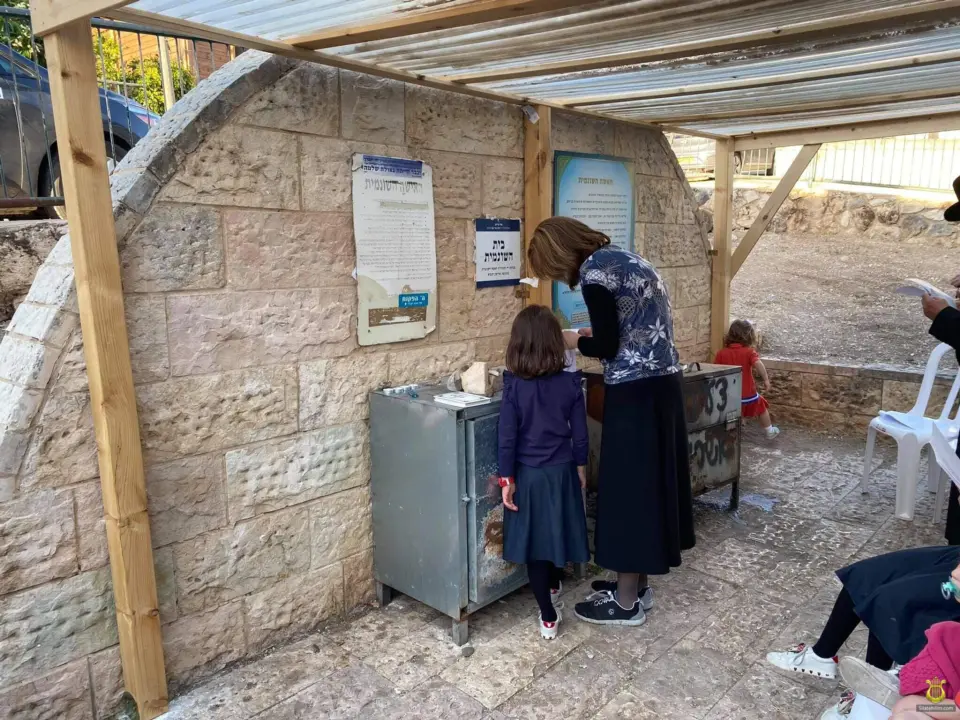
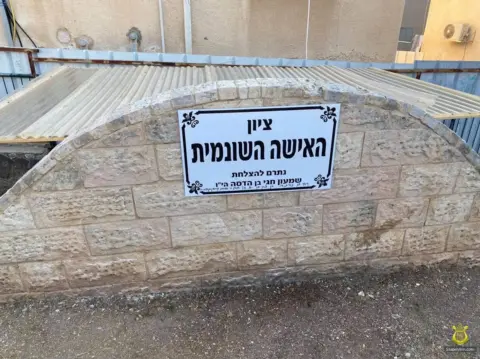
Not far from Afula, in the remote Arab village of Sulam (Shunem), beside an ordinary old house, are the grave and a wall from the home of Isha Ha-Shunamite. The route passes through Moshav Merhavia along a dirt road.
The prophet Elisha blessed the childless woman from Shunem for her hospitality and care with the birth of a son (the prophet Habakkuk), and it was here that he also revived young Habakkuk from the dead.
The Gaon, the Steipler, writes in Derech Sichah (Lech Lecha 53) that a place where a prayer was once answered remains a channel through which prayers may be answered in the future as well. Rabbi Chaim Kanievsky (shlita) and Rebbetzin Batsheva Kanievsky prayed this prayer at Beit Ha-Shunamite.
The Order of Prayer at Beit Ha-Shunamite from the Kanievsky Home
Tehillim 121 and 130 [the leader reads line by line, and the others repeat after him].
Tehillim 121
1. A Song of Ascents. I lift my eyes to the mountains; from where will my help come?
2. My help is from Ha-Shem, Maker of heaven and earth.
3. He will not let your foot falter; your Guardian will not slumber.
4. Behold, the Guardian of Israel neither slumbers nor sleeps.
5. Ha-Shem is your Guardian; Ha-Shem is your shade at your right hand.
6. By day the sun will not strike you, nor the moon by night.
7. Ha-Shem will guard you from all evil; He will guard your soul.
8. Ha-Shem will guard your going out and your coming in, from now and forever.
Tehillim 130
1. A Song of Ascents. From the depths I call to You, Ha-Shem.
2. Ha-Shem, hear my voice; let Your ears be attentive to the voice of my supplications.
3. If You were to preserve iniquities, O G-d, Ha-Shem, who could endure?
4. For forgiveness is with You, that You may be revered.
5. I hope in Ha-Shem; my soul hopes, and I await His word.
6. My soul waits for Ha-Shem more than watchmen wait for the morning, more than watchmen wait for the morning.
7. Israel, hope in Ha-Shem, for with Ha-Shem is kindness, and abundant redemption is with Him.
8. And He will redeem Israel from all its iniquities.
Tehillim 102 and 103 [everyone reads together]
1. A prayer of the afflicted when he is faint and pours out his lament before Ha-Shem.
2. Ha-Shem, hear my prayer; let my cry reach You.
3. Do not hide Your face from me on the day of my distress; incline Your ear to me; on the day I call, answer me swiftly.
4. For my days have vanished in smoke, and my bones are charred like a hearth.
5. My heart is stricken like grass and withered, for I have forgotten to eat my bread.
6. Because of the sound of my sighing, my bones cling to my flesh.
7. I resemble a desert owl; I am like an owl among the ruins.
8. I lie awake and am like a solitary bird on a roof.
9. All day long my enemies taunt me; those who mock me swear by me.
10. For I have eaten ashes like bread, and mingled my drink with tears.
11. Because of Your wrath and indignation, for You lifted me up and cast me down.
12. My days are like a lengthening shadow, and I wither like grass.
13. But You, Ha-Shem, abide forever, and Your remembrance from generation to generation.
14. You will arise and have mercy on Zion, for it is time to favor her; the appointed time has come.
15. For Your servants cherish her stones and favor her dust.
16. The nations will fear the Name of Ha-Shem, and all the kings of the earth Your glory.
17. For Ha-Shem has built Zion; He has appeared in His glory.
18. He has turned to the prayer of the destitute and has not despised their prayer.
19. Let this be recorded for the last generation, so that a people yet to be created may praise G-d.
20. For He has looked down from His holy height; Ha-Shem has gazed from heaven upon the earth.
21. To hear the groaning of the prisoner, to release those condemned to death.
22. To declare the Name of Ha-Shem in Zion, and His praise in Jerusalem.
23. When peoples gather together, and kingdoms, to serve Ha-Shem.
24. He weakened my strength on the way; He shortened my days.
25. I said: My G-d, do not take me away in the midst of my days; Your years endure through all generations.
26. In the beginning You founded the earth, and the heavens are the work of Your hands.
27. They will perish, but You will endure; they will all wear out like a garment. You will change them like clothing, and they will pass away.
28. But You are He, and Your years will never end.
29. The children of Your servants will dwell securely, and their descendants will be established before You.
Tehillim 103
1. Of David. Bless Ha-Shem, O my soul, and all that is within me, His holy Name.
2. Bless Ha-Shem, O my soul, and do not forget all His favors.
3. He forgives all your iniquities and heals all your illnesses.
4. He redeems your life from the grave and crowns you with kindness and mercy.
5. He satisfies you with goodness; your youth is renewed like the eagle's.
6. Ha-Shem performs acts of righteousness and justice for all the oppressed.
7. He made His ways known to Moses, His deeds to the children of Israel.
8. Compassionate and gracious is Ha-Shem, slow to anger and abundant in kindness.
9. He will not contend forever, nor harbor anger eternally.
10. He has not dealt with us according to our sins, nor repaid us according to our iniquities.
11. For as high as heaven is above the earth, so great is His kindness toward those who fear Him.
12. As far as east is from west, so has He distanced our transgressions from us.
13. As a father has compassion for his children, so has Ha-Shem had compassion for those who fear Him.
14. For He knows our nature; He remembers that we are dust.
15. Man is like grass; his days are like a flower of the field.
16. When a wind passes over it, it is gone, and its place recognizes it no more.
17. But the kindness of Ha-Shem is forever and ever upon those who fear Him, and His righteousness is for children's children.
18. For those who keep His covenant and remember His commandments to fulfill them.
19. Ha-Shem has established His throne in heaven, and His kingship rules over all.
20. Bless Ha-Shem, His angels, mighty in strength, who do His word, obeying the voice of His word.
21. Bless Ha-Shem, all His hosts, His servants who do His will.
22. Bless Ha-Shem, all His works, in all the places of His dominion. Bless Ha-Shem, O my soul.
An excerpt from the Book of I Samuel, chapters 1–2 [everyone reads together]
1. “There was a certain man from Ramathaim-Zophim, from the hill country of Ephraim, whose name was Elkanah son of Jeroham, son of Elihu, son of Tohu, son of Zuph, an Ephraimite. 2) He had two wives: the name of one was Hannah, and the name of the other was Peninnah. Peninnah had children, but Hannah had no children. 3) That man would go up from his city from year to year to worship and to offer sacrifices to Ha-Shem of Hosts in Shiloh. The two sons of Eli, Hophni and Phinehas, were priests of Ha-Shem there. 4) One day Elkanah sacrificed, and he gave portions to Peninnah his wife, and to all her sons and daughters. 5) But to Hannah he gave one portion of honor, for he loved Hannah, although Ha-Shem had closed her womb. 6) Her rival would anger her continually, in order to provoke her, because Ha-Shem had closed her womb. 7) So he did year after year, whenever she went up to the House of Ha-Shem; she would provoke her, and she would weep and not eat. 8) Elkanah her husband said to her: Hannah, why are you weeping, and why do you not eat, and why is your heart troubled? Am I not better to you than ten sons? 9) Hannah rose after eating and drinking in Shiloh. Eli the priest was sitting on a chair beside the doorpost of the Sanctuary of Ha-Shem. 10) She was bitter of spirit, and she prayed to Ha-Shem and wept greatly. 11) She made a vow and said: Ha-Shem of Hosts, if You will indeed see the suffering of Your maidservant, remember me and do not forget Your maidservant, and give Your maidservant a male child, then I will dedicate him to Ha-Shem all the days of his life, and no razor shall touch his head. 12) As she continued praying before Ha-Shem, Eli watched her mouth. 13) Hannah was speaking in her heart; only her lips moved, and her voice was not heard. Eli thought she was drunk. 14) Eli said to her: How long will you remain drunk? Put away your wine from you. 15) Hannah answered and said: No, my lord; I am a woman of anguished spirit. I have drunk neither wine nor strong drink, but I have poured out my soul before Ha-Shem. 16) Do not consider your maidservant a wicked woman, for it is out of my great anguish and sorrow that I have spoken until now. 17) Eli answered and said: Go in peace, and may the G-d of Israel grant your request—the request you made of Him. 18) She said: Let your maidservant find favor in your eyes. The woman went on her way, ate, and her face was no longer sad. 19) They rose early in the morning, bowed before Ha-Shem, and returned to their home in Ramah. Elkanah knew Hannah his wife, and Ha-Shem remembered her. 20) In due time Hannah conceived and gave birth to a son. She named him Samuel, for I asked him of Ha-Shem. 21) The man Elkanah and all his household went up to offer Ha-Shem the yearly sacrifice and fulfill his vow. 22) Hannah did not go, for she said to her husband: Once the child is weaned, I will bring him, and he will appear before Ha-Shem and remain there forever. 23) Elkanah her husband said to her: Do what seems good in your eyes; remain until you have weaned him. May Ha-Shem only fulfill His word. The woman remained and nursed her son until she had weaned him. 24) When she had weaned him, she brought him up with her, together with three bulls, one ephah of flour, and a flask of wine, and brought him to the House of Ha-Shem in Shiloh. The child was still young. 25) They slaughtered the bull and brought the child to Eli.
Translation:
(1) There was a certain man from Ramathaim-Zophim, from the hill country of Ephraim; his name was Elkanah, son of Jeroham, son of Elihu, son of Tohu, son of Zuph, an Ephraimite. (2) He had two wives: the name of one was Hannah and the name of the other Peninnah. Peninnah had children, but Hannah had no children. (3) This man would go up from his city to Shiloh year after year to bow down and offer sacrifices to Ha-Shem of Hosts; there were the two sons of Eli, Hophni and Phinehas, priests of Ha-Shem. (4) When Elkanah brought sacrifices, he gave portions to Peninnah his wife, and to all her sons and daughters. (5) To Hannah he gave a double portion, because he loved Hannah, although Ha-Shem had closed her womb. (6) Her rival would constantly provoke her, in order to anger her because Ha-Shem had closed her womb. (7) He did this year after year whenever she went up to the House of Ha-Shem; she provoked her, while she wept and did not eat. (8) Elkanah her husband said to her: Hannah, why do you weep, why do you not eat, and why is your heart sad? Am I not better for you than ten sons? (9) Hannah rose after eating and drinking in Shiloh. Eli the priest was sitting on his chair beside the doorpost of the Sanctuary of Ha-Shem. (10) In her deep anguish she prayed to Ha-Shem and wept bitterly. (11) She made a vow and said: Ha-Shem of Hosts, if You will look upon the suffering of Your maidservant, remember me and do not forget Your maidservant, and give Your maidservant a male child, I will dedicate him to Ha-Shem all the days of his life, and no razor shall come upon his head. (12) As she continued praying before Ha-Shem, Eli watched her mouth. (13) Hannah spoke in her heart; only her lips moved, and her voice was not heard. Eli thought she was drunk. (14) Eli said to her: How long will you remain drunk? Remove your wine from you. (15) Hannah answered: No, my lord; I am a woman of a sorrowful spirit. I have drunk neither wine nor strong drink, but I am pouring out my soul before Ha-Shem. (16) Do not consider your maidservant a worthless woman, for it is from my great sorrow and distress that I have spoken until now. (17) Eli answered: Go in peace, and may the G-d of Israel grant your request, that which you asked of Him. (18) She said: May your maidservant find favor in your eyes. The woman went on her way, ate, and her face was no longer sad. (19) They rose early in the morning, bowed before Ha-Shem, and returned to their home in Ramah. Elkanah knew Hannah his wife, and Ha-Shem remembered her. (20) In due time Hannah conceived and gave birth to a son. She named him Samuel, for I asked him of Ha-Shem. (21) Elkanah and all his household went up to offer the yearly sacrifice to Ha-Shem and fulfill his vow. (22) Hannah did not go, for she said to her husband: Once the child is weaned, I will bring him, and he will appear before Ha-Shem and remain there forever. (23) Elkanah her husband said to her: Do what is good in your eyes; remain until you have weaned him. May Ha-Shem only fulfill His word. The woman remained and nursed her son until she had weaned him. (24) When she had weaned him, she brought him up with her, taking three bulls, one ephah of flour, and a flask of wine, and brought him to the House of Ha-Shem in Shiloh; the child was still young. (25) They slaughtered the bull and brought the child to Eli.
Everyone recites together:
26) Vatomer bi Adonai, chei nafshecha Adonai. Ani ha-ishah hanitzzevet imcha bazeh lehitpalel la-Adonai. 27) El hana'ar hazeh hitpalalti, vayiten Adonai li et she'elati asher sha'alti me'imo.”
(26) And she said: Please listen to me, my lord; as your soul lives, my lord, I am the woman who stood here with you to pray to Ha-Shem. (27) It was for this child that I prayed, and Ha-Shem granted me my request, that which I asked of Him.
Hannah's Prayer [everyone continues together]
28) Gam anochi hish'iltihu la-Adonai kol hayamim asher hayah, hu shaul la-Adonai. Vayishtachu sham la-Adonai.
1) Vatitpalel Hannah vatomer: Alatz libi ba-Adonai, ramah karni ba-Adonai; rachav pi al oyevai, ki samachti bishu'atecha. 2) Ein kadosh ka-Adonai, ki ein biltecha, ve-ein tzur ke-Eloheinu. 3) Al tarbu tedabberu gevohah gevohah; yetze atak mipichem, ki El de'ot Adonai, velo nitkenu alilot. 4) Keshet gibborim chatim, venichshalim azru chayil. 5) Seve'im balachem niskaru, ure'evim chadelu; ad akarah yal'dah shiv'ah, verabat banim umlalah. 6) Adonai memit umechayeh, morid Sheol vaya'al. 7) Adonai morish uma'ashir, mashpil af meromem. 8) Meikim me'afar dal, me'ashpot yarim evyon, lehoshiv im nedivim, vechiseh chavod yanchilem; ki la-Adonai metzukei aretz, vayashet aleihem tevel. 9) Raglei chasidav yishmor, uresha'im bachoshech yidamu; ki lo vechoach yigbar ish. 10) Adonai yechatu merivav; alav bashamayim yarem Adonai, yadin afsei aretz. Vayiten oz lemal'ko, vayerem keren Meshicho.
Translation:
(28) I have dedicated him to Ha-Shem all the days that he lives; he is dedicated to Ha-Shem. And he bowed there before Ha-Shem.
1. “Hannah prayed and said: My heart rejoices in Ha-Shem; my strength is raised up through Ha-Shem. My mouth is opened against my enemies, for I rejoice in Your salvation. There is none as holy as Ha-Shem, for there is none besides You, and there is no rock like our G-d.
Do not speak arrogantly; let haughty words not come from your mouths, for Ha-Shem is a G-d of knowledge, and deeds are weighed by Him.
The bows of mighty warriors are broken, while those who stumbled gird themselves with strength.
Those who were satiated hire themselves out for bread, while the hungry cease to hunger. The barren woman bears seven, while she who had many children languishes.
Ha-Shem brings death and gives life; He brings down to the grave and raises up. Ha-Shem impoverishes and enriches; He humbles and also elevates. He raises the poor from the dust and lifts the needy from the refuse, to seat them with nobles and grant them a throne of glory.
For the pillars of the earth belong to Ha-Shem, and He set the world upon them. He guards the way of His faithful ones, while the wicked are silenced in darkness, for man does not prevail through strength. Ha-Shem's adversaries will be shattered; from heaven He will thunder against them. Ha-Shem will judge the ends of the earth, grant strength to His king, and raise the horn of His anointed one.”
II Kings, chapter 4 [everyone continues together]:
1) “A certain woman, one of the wives of the sons of the prophets, cried out to Elisha, saying: Your servant, my husband, has died, and you know that your servant feared Ha-Shem. Now the creditor has come to take my two children as slaves. 2) Elisha said to her: What shall I do for you? Tell me, what do you have in the house? She said: Your maidservant has nothing in the house except a jar of oil. 3) He said: Go and borrow vessels for yourself from all your neighbors—empty vessels, not a few. 4) Then go in, shut the door behind you and your sons, and pour into all these vessels; set aside each full one. 5) She went from him and shut the door behind her and her sons. They brought her the vessels, and she poured. 6) When the vessels were full, she said to her son: Bring me another vessel. He said to her: There is no more vessel. And the oil stopped. 7) She came and told the man of G-d, and he said: Go, sell the oil and pay your debt; and you and your sons shall live from what remains. 8) One day Elisha passed through Shunem, where there was a prominent woman, and she urged him to eat bread. Whenever he passed by, he would turn in there to eat bread. 9) She said to her husband: I know now that he is a holy man of G-d who constantly passes by us. 10) Let us make a small upper room, and place there a bed, a table, a chair, and a lampstand for him; whenever he comes to us, he will turn in there. 11) One day he came there, went up to the upper room, and lay down there. 12) He said to Gehazi his servant: Call this Shunamite woman. He called her, and she stood before him. 13) He said to him: Please say to her: You have shown us all this concern; what can I do for you? Should I speak for you to the king or to the commander of the army? She said: I dwell among my own people. 14) He said: What then can be done for her? Gehazi said: Indeed, she has no son, and her husband is old. 15) He said: Call her. He called her, and she stood at the doorway.
Everyone together:
16) “Lamo'ed hazeh ka'et chayah, at choveqet ben. Vatomer: Al adoni, ish ha-Elohim, al techazev beshifchatecha. 17) Vatahar ha-ishah vateled ben lamo'ed hazeh ka'et chayah, asher diber eleha Elisha.”
(16) He said: At this time next year, you will be embracing a son. She said: No, my lord, man of G-d; do not deceive your maidservant. (17) The woman conceived and gave birth to a son at that time the following year, as Elisha had told her.
18) The child grew, and one day he went out to his father, to the reapers. 19) He said to his father: My head, my head! His father said to his servant: Carry him to his mother. 20) He carried him and brought him to his mother. He sat on her knees until noon, and then died. 21) She went up and laid him on the bed of the man of G-d, shut the door behind him, and went out. 22) She called her husband and said: Please send me one of the servants and one of the donkeys; I will hurry to the man of G-d and return. 23) He said: Why are you going to him today? It is neither the New Moon nor Shabbat. She said: Shalom. 24) She saddled the donkey and said to her servant: Lead on and go; do not slow my riding unless I tell you. 25) She went and came to the man of G-d, to Mount Carmel. When the man of G-d saw her from afar, he said to Gehazi his servant: There is the Shunamite woman. 26) Run now to meet her and say: Are you well? Is your husband well? Is the child well? She said: They are well. 27) She came to the man of G-d on the mountain and grasped his feet. Gehazi approached to push her away, but the man of G-d said: Leave her, for her soul is bitter, and Ha-Shem has concealed it from me and has not told me. 28) She said: Did I ask my lord for a son? Did I not say: Do not mislead me with a false promise? 29) He said to Gehazi: Gird your loins, take my staff in your hand, and go. If you meet anyone, do not greet him, and if anyone greets you, do not answer him. Place my staff upon the child's face. 30) The child's mother said: As Ha-Shem lives and as your soul lives, I will not leave you. He arose and followed her. 31) Gehazi passed before them and placed the staff upon the child's face, but there was neither sound nor response. He returned to meet him and told him: The child has not awakened. 32) Elisha came into the house, and the dead child was lying on his bed. 33) He entered, shut the door behind them both, and prayed to Ha-Shem. 34) He went up and lay upon the child, placing his mouth upon the child's mouth, his eyes upon his eyes, and his hands upon his hands; he stretched himself over him, and the child's flesh grew warm. 35) He returned and walked through the house once, then went up and stretched himself over him. The child sneezed seven times, and the child opened his eyes. 36) He called Gehazi and said: Call this Shunamite woman. He called her, and she came to him. He said: Take your son. 37) She came, fell at his feet, and bowed to the ground. She took her son and went out.
Tehillim 127–128 [everyone together]
Tehillim 127
1. A Song of Ascents, by Solomon. If Ha-Shem does not build the house, its builders labor on it in vain; if Ha-Shem does not guard the city, the watchman keeps watch in vain.
2. It is in vain for you to rise early, to sit up late, to eat the bread of toil; He grants sleep to His beloved.
3. Behold, children are a heritage from Ha-Shem; the fruit of the womb is a reward.
4. Like arrows in the hand of a warrior, so are the children of one's youth.
5. Fortunate is the man who fills his quiver with them; they will not be shamed when they speak with enemies at the gate.
Tehillim 128
1. A Song of Ascents. Fortunate is everyone who fears Ha-Shem, who walks in His ways.
2. When you eat the labor of your hands, you are fortunate, and it is good for you.
3. Your wife will be like a fruitful vine within your home; your children like olive saplings around your table.
4. Behold, so will the man who fears Ha-Shem be blessed.
5. May Ha-Shem bless you from Zion; may you see the goodness of Jerusalem all the days of your life.
6. May you see children of your children. Peace upon Israel.
Everyone together:
“As You answered the tzadikim in this place, so may You hear our supplication and accept our prayers with love and favor, and may You soon remember, with enduring mercy, the seed of (name and mother's name) and his wife (name and mother's name), and all those who donated to the city's charity fund for the sake of this prayer. May the words of my mouth and the meditation of my heart be acceptable before You, Ha-Shem, my Rock and my Redeemer.”
The Prayer of the Shelah Ha-Kadosh for Children
“You are Ha-Shem, our G-d, before You created the world, and You are Ha-Shem, our G-d, since You created the world; from everlasting to everlasting You are G-d. You created Your world so that Your Divinity would be recognized through Your holy Torah, as our Sages of blessed memory said: ‘In the beginning’—for the sake of Torah and for the sake of Israel, for they are Your people and Your heritage, whom You chose from among all the nations, and You gave them Your holy Torah and brought them close to Your great Name.
For the continued existence of the world and the continued existence of the Torah, You gave us, Ha-Shem our G-d, two commandments: You wrote in Your Torah, ‘Be fruitful and multiply,’ and You wrote in Your Torah, ‘And you shall teach them to your children.’ The intention of both is one: You did not create the world for chaos, but for habitation; and for Your glory You created, formed, and made it, so that we, our children, and the children of our children's children, all Your people, the House of Israel, would know Your Name and study Your Torah.
Therefore I come before You, Ha-Shem, King, King of kings, and pour out my supplication. My eyes are lifted to You until You have mercy on me and hear my prayer: to grant me sons and daughters, and that they too should be fruitful and multiply, they, their children, and their children's children, until the end of all generations. May they, and I, and all of us engage in Your holy Torah, study and teach it, guard it, perform it, and fulfill all the words of the teaching of Your Torah with love. Enlighten our eyes with Your Torah, draw our hearts to Your commandments, so that we may love Your Name and revere it.
Our Father, merciful Father, grant us all long and blessed lives. Who is like You, Father of mercy, remembering Your creatures for life with compassion? Remember us for life everlasting, as our forefather Abraham prayed: ‘If only Ishmael might live before You,’ which our Sages of blessed memory interpreted as ‘in Your fear.’ Therefore I have come to ask and plead before You that my seed and the seed of my seed forever be a kosher seed. May no blemish or shame ever be found in me, in my descendants, or in their descendants, but only peace and truth, goodness and uprightness in the eyes of G-d and in the eyes of people. May they be learned in Torah—masters of Scripture, Mishnah, Talmud, and the Hidden Torah; masters of mitzvot, kindness, and elevated character traits. May they serve You with love and inner reverence, not merely outward fear. Grant each of them whatever they need for a dignified life; grant them health, honor, strength, stature, beauty, grace, and favor. May love, brotherly affection, and peace prevail among them. Provide them with suitable spouses from families of Torah scholars and tzadikim, and may they themselves be worthy spouses, as I have prayed for them, for I ask the same for both sides.
You, G-d, know all secrets, and before You the hidden thoughts of my heart are revealed: I intend all this for the sake of Your great and holy Name and for the sake of Your holy Torah. Therefore answer me, Ha-Shem, answer me for the sake of our holy forefathers, Abraham, Isaac, and Jacob, and for their sake save the children, so that the branches may resemble the roots; and for the sake of David Your servant, the fourth support of the Chariot, the singer inspired by Your holy spirit.
A Song of Ascents. Fortunate is everyone who fears Ha-Shem, who walks in His ways. You will eat the labor of your hands; you are fortunate, and it is good for you. Your wife will be like a fruitful vine within your home; your children like olive saplings around your table. Behold, so will the man who fears Ha-Shem be blessed. May Ha-Shem bless you from Zion, and may you see the goodness of Jerusalem all the days of your life. May you see children of your children. Peace upon Israel.
I beseech You, Ha-Shem, Who hears prayer: Let the verse be fulfilled in me: ‘And as for Me, this is My covenant with them, said Ha-Shem: My spirit that is upon you and My words that I have placed in your mouth shall not depart from your mouth, nor from the mouth of your children, nor from the mouth of your children's children, said Ha-Shem, from now and forever.’
The Seder continues with Ateret Klalot by Rabbeinu Chida.
(The site can provide the entire Order of Prayer in Hebrew, as well as Ateret Klalot by Rabbeinu Chida, upon request)
(Silatehilim.com thanks Rabbi Bentzion Melamed for providing the Order of Prayer from the Kanievsky home during the trip to Beit Ha-Shunamite.)
Was this helpful?
100% of readers found this article helpful (7 votes).
Please note: some articles on our site contain the holy Names of the Almighty. If you print these articles, they may not be thrown away or destroyed. Please handle printed copies with care and respect.
Material from our site may be copied for the purpose of spreading Torah, provided a link to Silatehilim.com is included. Any use of the site's material in print publications or for commercial purposes is prohibited without the rights holder's consent.