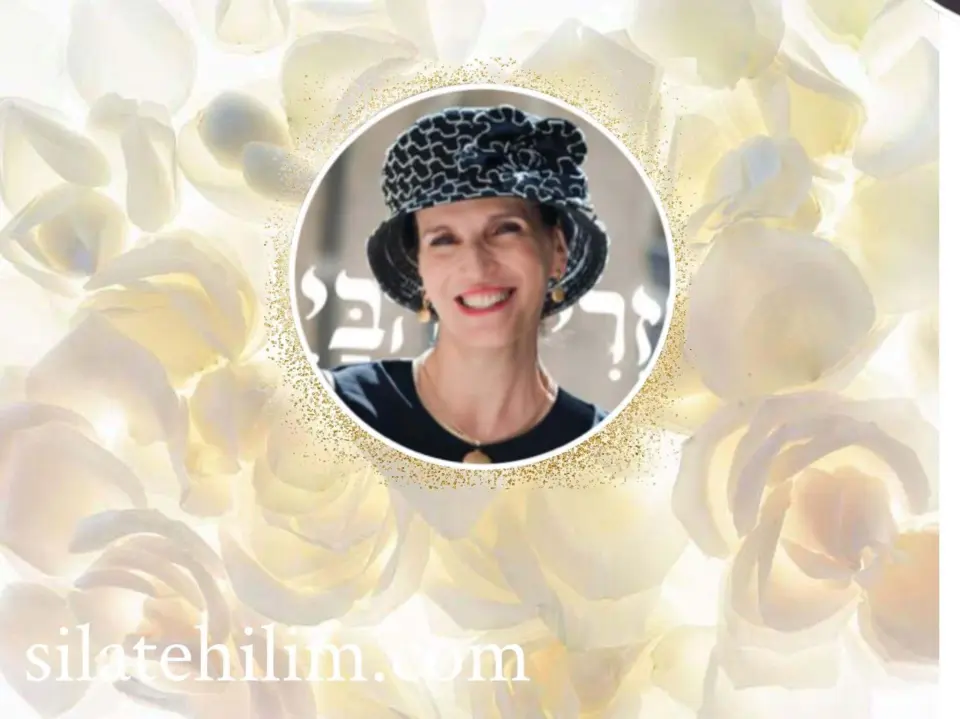
Segulot for Hoshana Rabbah by Rabbanit Yemima Mizrachi
Segulot for Hoshana Rabbah by Rabbanit Yemima Mizrachi
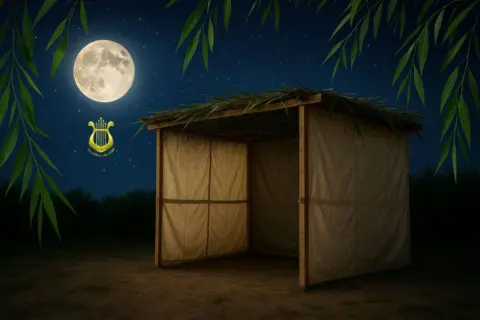
According to the Zohar HaKadosh, Hoshana Rabbah is the holiest and most critical night of the year. In earlier times, those who understood the significance of this day would go outside and examine their shadows by moonlight in order to foresee whether they would have a good year or a difficult one. In our times, the deeper aspects of this tradition have been lost.
1. Tehillim
It is especially powerful to recite Tehillim on Hoshana Rabbah, because this is the day of the aravot (we perform many rituals with aravot, willow branches—and they symbolize lips and mouths). Prayer accomplishes 50%, because we are not all-powerful; the other 50% is in the hands of the Creator. Prayer is a form of language, and the Creator responds to us in His language. Thus, the mouth becomes like the aravot (like willow leaves).
Rabbi Yitzhak Hutner, may the memory of the righteous be a blessing, taught that on Hoshana Rabbah, every chapter of Tehillim that we open and read is precisely the salvation we need. We need only open the book and recite these words of Tehillim with kavanot, and then the Creator will answer us in His language. In this way, everything becomes a mouth, like a willow leaf.
2. Lashon HaraThe Rabbi of Gur (zechuto yagen aleinu) taught that it is a great segula to ask the Creator to give us the strength to guard our mouths from speaking lashon hara throughout the entire year.
Whoever undertakes to guard his or her mouth from speaking lashon hara and asks Ha-Shem on Simchat Torah: “Place Torah in my mouth and in the mouths of our descendants,” will merit righteous children, who will be granted the Torah for the entire year on the holiday of Simchat Torah. Our child's path depends on our mouths. Try, on these two important days—Hoshana Rabbah and Simchat Torah—not to speak about trivial matters; this will lay the foundation for the entire year.
3. Seven Hakafot
The seven hakafot (circling the bimah) that we perform on Simchat Torah correspond to the hakafot performed by Bnei Yisrael in Jericho. Whoever performs or watches the hakafot should envision his enemies and oppressors falling.
4. Candles for Tzadikim
A good segula is to light as many candles as possible for the tzadikim on the night of Hoshana Rabbah—or, for anyone who did not light at night, during the day on Hoshana Rabbah. The first candle, however, should be for Rachel Imeinu.
5. Zera Shel Kayama
A segula from Ben Ish Chai (zechuto yagen aleinu) for those who do not have children is to strike the aravot against the ground five times on Hoshana Rabbah and say: “Ribono shel Olam, just as the sand of the earth is without number, so may my offspring be without number.” The secret is that the gematria of the word “zera” (277) is equal to the gematria of the word “aravah” (277).
6. An Easy Birth with an Etrog
According to one interpretation, the tree from which Adam and Chava ate was an etrog tree.
The Midrash Mateh Ephraim teaches that on Hoshana Rabbah, a pregnant woman should take an etrog after completing all the mitzvot and hakafot and say the following:
“Ribono shel Olam, because Chava ate from the Etz HaDa'at, pain during childbirth became a punishment for all women. If I had lived in those times, I would never have eaten from that tree. Just as I did not eat an etrog throughout the entire festival of Sukkot, but only now—now, now—when all the mitzvot involving the etrog have been completed, I wish to taste this fruit. Please protect me from Chava's curse, so that I will not have a painful labor. Please preserve the lives of me and my child during childbirth, and let it pass easily and quickly. May my child and I be healthy and blessed. May my child enter a good and peaceful life. Amen!” After this, she should bite off the tip of the etrog.
7. A Segula Against FearBen Ish Chai (zechuto yagen aleinu) advised anyone who experiences fear to take the aravot that were struck against the ground on Hoshana Rabbah and place them beneath the pillow or carry them along (in one's documents nowadays). Whenever you feel afraid, remember where the aravah is and recite the phrase “Ana Ad-nai Hoshia Na.”8. Nishmat Kol Chai—for preserving one's life until the coming year.Ben Ish Chai (zechuto yagen aleinu) advised a segula that can help preserve one's life throughout the year. To do this, one should say the following in the morning on Hoshana Rabbah:
“Ribono Shel Olam, today, on Hoshana Rabbah, I undertake to recite the prayer ‘Nishmat Kol Chai,’ and also, on this day of Hoshana Rabbah in the coming year 5782, I undertake to pray ‘Nishmat Kol Chai.’”
“By undertaking such a commitment,” Ben Ish Chai teaches, “you thereby ensure the preservation of your life throughout the entire coming year, for the Almighty will have to help a person who has promised to perform a mitzvah—to recite the prayer in the coming year.”
9. Saying Farewell to the Sukkah
Before Hoshana Rabbah ends, it is good to eat a satisfying meal in the sukkah—a farewell meal. Then kiss the four walls of the sukkah and ask for your personal needs. Rabbi Aharon of Karlin said that Hoshana Rabbah is Yom Nashik—“the day of the kiss.” When our lips touch the lips of the Creator, blessed be He, through this kiss we will remember throughout the entire year how the sukkah envelops and protects us.
(Based on a lecture by Rabbanit Yemima Mizrachi—translated and edited by the silatehilim.com website)
Was this helpful?
100% of readers found this article helpful (105 votes).
Please note: some articles on our site contain the holy Names of the Almighty. If you print these articles, they may not be thrown away or destroyed. Please handle printed copies with care and respect.
Material from our site may be copied for the purpose of spreading Torah, provided a link to Silatehilim.com is included. Any use of the site's material in print publications or for commercial purposes is prohibited without the rights holder's consent.