Yahrzeit and Why We Connect with Tzadikim on Their Yahrzeit
The Yahrzeit of Tzadikim and Why We Connect with Tzadikim on Their Yahrzeit
Kabbalah teaches us that when a tzadik passes away, his soul ascends to Heaven, but a small part of the lower level of his soul remains at the place of burial. This place is called a “Tziyun,” meaning “sign.” The burial place of a tzadik is a spiritual marker directed toward the higher realms. Because of this, we can invoke the tzadik and his merit as a vehicle for our prayers.
Rabbi Chaim Vital, a disciple of the Holy Ari, writes in the book Shaar HaGilgulim: “It is pleasing to visit the graves of tzadikim and pray there.” Prayers at the Tziyun of a tzadik are more readily accepted in Heaven, because the tzadik’s merit helps elevate our prayers.
Rabbi Avraham Azulai tells us in his book Chesed L’Avraham that when we look at holy things, it adds strength to our souls.
Rabbi Yosef (Shlomo) Dayan (one of the 36 hidden righteous men of our generation) taught that in order for a person to rectify himself and cleanse his soul of sins, he should go to the grave of tzadikim and pray there, pleading with them to awaken Heavenly mercy to rectify his mind, spirit, and soul: “One hour of prayer and study at the graves of the righteous is worth 100 hours of study,” and this is especially beneficial when access to a tzadik’s grave is difficult and exhausting. Every step taken in such a place mitigates harsh Heavenly judgments, because “according to the pain is the reward.”
Rabbi Yosef Dayan believed that even if a person has suffered greatly because of his sins and feels hopeless, he should simply come to the grave of a tzadik, pray while prostrating himself at the grave—this will help him cleanse himself of his sins and rise from the deepest abyss into which he has fallen.
Rabbi Yosef Dayan himself often visited the grave of Shmuel HaNavi and said that anyone who performs a tikkun at the grave of Shmuel HaNavi can be certain that Heaven will help him.
When Is the Best Time to Visit Tzadikim?
The best days to visit tzadikim are the 15th and 29th days of the Hebrew month. This is when the tzadik’s soul is fully present at the place of burial. We do not visit cemeteries during the month of Nisan, except for the Tziyuns of the Rashbi, Rabbi Akiva, Rabbi Meir Baal HaNes, and other great tzadikim whose Tziyuns are not located in cemeteries but are situated separately.
How to Connect with a Tzadik at His Tziyun
Before arriving at a tzadik’s Tziyun, we should learn as much as possible about him. Once there, we should take time to read the headstone.
Then walk around the stone seven times, reading one line of Ana B’Koach each time. Through this process, we create an elevation that helps us connect with the tzadik.
After that, we recite Tehillim 29, which mentions seven “voices.” This creates another level of elevation, and now we are ready to establish a connection with the tzadik.
We then place our left hand on the stone and, if possible, rest our head on our hand and offer our prayers. Women should preferably use a piece of cloth when touching the stone (this is an additional stringency).
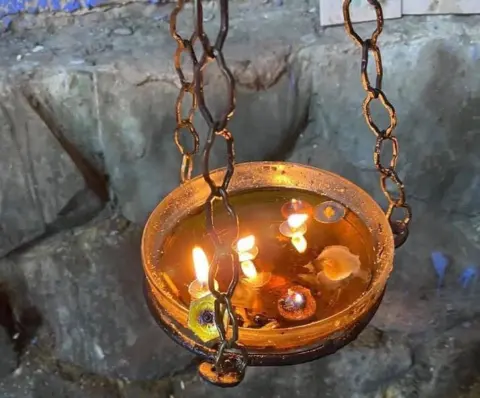
Candles should be lit in a place specifically designated for this purpose (candles placed directly on the gravestone leave behind dirty wax, which is disrespectful to the tzadik).
If we are not at the Tziyun of a tzadik, we light a candle while pronouncing his name and stating that the candle is for the elevation of his soul.
The Western Wall (the Kotel) is the most important Tziyun, because it is the place of the Shechinah. The west represents the aspect of the sefirah Yesod, which connects Malchut with Zeir Anpin. If a person visits holy sites in Israel, it is best to begin by visiting and praying at the Kotel.
The Cave of Machpelah is the second most important site to visit in Israel. Adam and the Patriarchs are buried in the Cave of Machpelah. It is a connection to Gan Eden.
What to Ask of a Tzadik
A tzadik is a person who became a great channel of Light and helped many people during his incarnations. The Zohar teaches us that whatever the tzadik decrees, G-d fulfills. All fulfillment comes from G-d, while the tzadik is merely a channel.
We should not pray to a tzadik or ask him directly to perform miracles for us. This resembles idolatry. The proper way is to pray to G-d and ask Him to answer your prayers in the zechut (merit) of the tzadik you visited.
If you are present at the Tziyun and study the tzadik’s words, you may ask him to become an emissary of goodwill and present your prayers to G-d.
Every tzadik is known for his particular contribution to the world. We ask the tzadik to carry our prayers in accordance with his unique spiritual path: whether he possessed healing powers, helped with sustenance, or performed various miracles.
It is important to know about the tzadik you are visiting. If you read what is written on the stone and give tzedakah with a pure heart, the tzadik will sense you and help you with your prayers.
There are some tzadikim whose date of death we do not know. For them, candles may be lit on Erev Rosh Chodesh, Rosh Chodesh, and the day of the full moon (the 15th day of each Hebrew month), which are auspicious days for connecting with tzadikim.
(“Tzadikim” website)
Why Is It So Important to Light a Ner Neshamah?
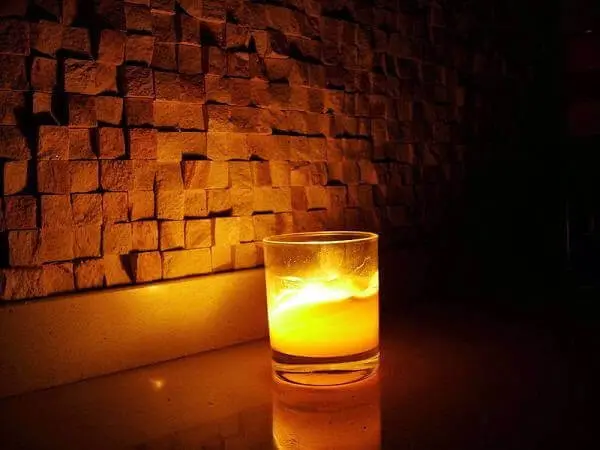
“Ner neshamah” in Hebrew means a soul candle, or a memorial candle. In Hebrew, instead of “for the repose of the soul,” the expression “Leilui” is used, meaning the elevation of the soul. Lighting a candle leilui nishmat the deceased is mentioned in several sources.
“It is known that the soul derives pleasure from the lighting of candles; it moves amid the splendor of Heaven, joy spreads from the source of light, and it yearns for that light. Although the light of a candle’s flame is material, the light of the soul is spiritual, pure, and simple.”
(Rabbeinu Bachya, Terumah “Offerings”)
- “הרי לך שהנשמה יש לה הנאה מןהאור” - “There the souls delight in the light, and one should not be surprised that even fragrance is beloved by the soul when it is in the body.”
Ben Ish Chai teaches that the soul of a righteous person rejoices when a memorial candle is lit for him, and his soul ascends to Hashem and intercedes on behalf of the person who lit the ner neshamah in his honor.
(Ben Ish Chai, Torah Lishmah, 520)
The origin of this custom is associated with Rabbi Yehudah HaNasi, the compiler of the Mishnah, who instructed his family:
“נריהיה דלוק במקומו” - “A candle shall be lit in his place”, - which expresses respect for the deceased.
“The Name of the Almighty is present in the name of the righteous person. It ‘clothes itself’ in him. From this we learn that when the name of the righteous person is spread, the Name of the Blessed One is spread. The greater the name of the righteous person, the greater the Name of the Almighty, because the Name of the Almighty dwells alongside the name of the righteous person.” (Chazal)
“After death, tzadikim have an even greater influence on the welfare of the world than during their lifetimes.” (The Holy Zohar on Vayikra, 71a).
The Zohar (Shemot, 16b) writes that if the departed did not pray to the Almighty on behalf of the living, we would not be able to endure even half a day.
Elsewhere, the Zohar (Vayikra, 70b) states: “When the world is in distress, the especially worthy representatives of the people inform the souls of the righteous and weep at their graves. Then the souls of the righteous awaken, gather together, and go and ascend to those ‘sleeping’ in Hebron, telling them of the distress. Then they all enter together through ‘that very entrance’ and inform the ‘Spirit’ of the distress. The ‘Spirits’ crowned in the Garden of Eden, and the higher angels, go and tell everything to the ‘Soul,’ and the ‘Soul,’ in turn, tells the Almighty. They all ask for mercy for the living. And the Almighty, for their sake, shows mercy to the earth.”
A twenty-four-hour candle or an oil candle is used for lighting a candle leilui nishmat. Before lighting the candle, money should be set aside for a tzedakah fund.
The candle is lit with the words: “Hareini madlik ner leChvod Rabbi… Ribono shel Olam, beZchut Tzadik Rabbi”... (personal requests)
(based on materials from the “Sila Tehilim” group on Odnoklassniki)
Was this helpful?
100% of readers found this article helpful (4 votes).
Please note: some articles on our site contain the holy Names of the Almighty. If you print these articles, they may not be thrown away or destroyed. Please handle printed copies with care and respect.
Tags: Yahrzeit, Ner Neshama, Yahrzeit of Tzadikim, Why We Connect with Tzadikim on Their Yahrzeit, Why It Is So Important to Connect with Tzadikim