The Name of the Angel of Parnassah
Where the Name of the Angel Responsible for Parnassah Is Hidden
1. Tehillim 145:16
Traditionally, during prayer, when having kavanot for Parnassah, we focus on the pasuk in Tehillim 145:16:
פּוֹתֵ֥חַ אֶת־יָדֶ֑ךָ וּמַשְׂבִּ֖יעַ לְכָל־חַ֣י רָצֽוֹן
“Pote'ach et yadecha umasbia lechol chai ratzon” -
(You open Your hand and satisfy every living thing with favor);
The final letters of this pasuk are:
ח ת ך
forming the word חתך - “Chatach” (to cut), and this verse is connected with abundance.
On Rosh Hashanah, G-d is the One Who חותך חיים לכל חי - “Chotech chayim lechol chai” - (cuts off the life of every living creature).
“Chatach” חתך means “to cut”, and this is the Name of the Angel responsible for livelihood: נגד השם הפרנסה המרומז בס״ת של פותח את ידיך.
The next word in this verse, “Umasbia” (to satisfy) — referring to the desire of every living creature — has a gematria of 428, the same as the word “Chatach” — 428. (“Nitei Gavriel” 11:1)
Moreover, the initial letters of this phrase
פאי (gematria 91) have the same gematria as the Name יאהדונה׳י
חתך — through Atbash substitution, yields the Name סאל, which also has the same gematria as the Name יאהדונה׳י
The word וּמַשְׂבִּ֖יעַ “Umasbia” (You satisfy) has a gematria of 428 — equal to the Name חתך — “Chatach”;
2. Kaparot
Remarkably, the Name “Chatach”, which influences a person’s Parnassah, is also an acronym formed from the key words of Kaparot, the ritual we perform before Yom Kippur:
ח – Chalifati
ת – Temurati
כ – Kaparati
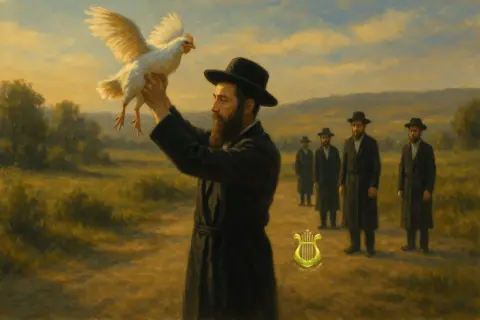
The Mekubalim say that Kaparot contains the Sod of Parnassah (the secret of Parnassah). One should take money and rotate it over one’s head three times (over the head and at chest level), saying: “Zeh Chalifati, zeh Temurati, zeh Kaparati,” with kavanah directed toward these letters, and say in one’s own words that this money should serve as an atonement for our Parnassah.
3. Connection to Sukkot
The Kotzker Rebbe, zekhutō yagen aleinu, said that Shemini Atzeret is the time when a person’s Parnassah, his livelihood, is judged. His son, Rebbe Dovid, would often pray beyechidut, in seclusion. On Shemini Atzeret, the Kotzker Rebbe summoned him and said that on this day it is important to pray with a minyan, because on this day it is decided how much money would be allotted to him for the coming year.
There is a hint to this in the words of Parashat Re'eh (Devarim 16:15): “vehayita ach sameach” — (and you shall rejoice), which, as the Gemara says, refer to Shemini Atzeret, and whose final letters form the abbreviation of the Name of the Angel “Chatach”, who is responsible for Parnassah:
והיית אך שמח - “vehayita ach sameach” - חתך.
Serving Hashem with joy, especially during the festival of Sukkot, is a guarantee of success in Parnassah.
(compiled by the site from materials by Rabbi Elimelech Biderman, “The Well of Torah”; and from Rav Yitzchak Aizik Eichenstein’s book “Segulot of Israel”)
Was this helpful?
100% of readers found this article helpful (38 votes).
Please note: some articles on our site contain the holy Names of the Almighty. If you print these articles, they may not be thrown away or destroyed. Please handle printed copies with care and respect.
Tags: Parnasah, Name of the Angel and Parnassus, Hatach