

Zohar on Tehillim 118 and the Yetzer Hara
Tehillim 118:13
- "Dacho dechitani linpol, vaAd-nai azarani" - (He pushed me hard so that I would fall, but G-d saved me).
Rabbi Elazar says: Is this really how it should be written?
Perhaps it should not be "dacho dechitani" - (you pushed me away by driving me away), but rather "dacho dhuni - (I was pushed away). Did the Almighty push David away?
Why, when addressing the Almighty, does he say: "you pushed me away by driving me away" - while immediately saying the opposite - "the Almighty saved me".
How are we to understand this?
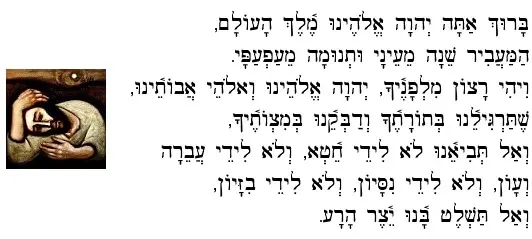
The answer is: It is the impure force that urges a person to stray from the path leading to the Almighty. This is his Yetzer Hara, which is constantly at his side—and it was to it that King David addressed the words: "Dacho dechitani linpol".
He said this because the Yetzer Hara was trying to distance him from the Almighty by sending him numerous troubles and misfortunes. "Dacho dechitani" - "You pushed me away, driving me toward falling into Gehinnom," David says of the Yetzer Hara, while the Almighty helped him—"I was not delivered into your hands."
He, the Almighty, is the Master. Whatever troubles may befall a person, he must understand that there is a Master—the Almighty—and if troubles have come, it is because the Master allowed them to come, so that we would come to our senses, correct our ways, and rise another level above the Yetzer Hara. A person must beware of it (the Yetzer Hara) and not grant it power. Then the Almighty will protect him on all his paths, as it is written: "Then you will walk securely on your way, and your foot will not stumble." You will walk, and your steps will not be hindered.
(Zohar Vayishlach, Sulam, Tzvi Nisanzon)