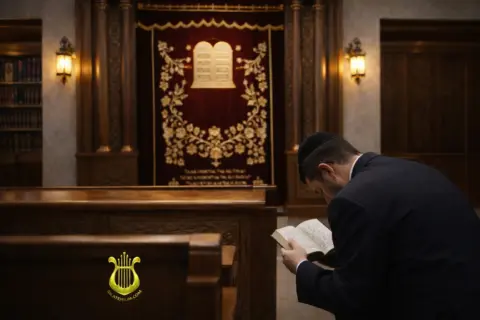
The word אמנ Amen comes from the word אמונה - emunah (faith).
“Amen” is an acronym formed from three words: “El Melech Ne’eman” - (G-d, the King, Who is faithful).
When we say “Amen”, we have the kavanah that we are affirming our faith that Ha-Shem is the one and only G-d and Ruler.
Those who answer “Amen” are protected from Heaven. Each time we say “Amen” with kavanah, we create an angel; this is hinted at by the fact that the gematria of “Amen” is 91, which is also the gematria of the word “malach” (angel). (Rokeach, “Notrei Amen”)The Gemara states that the person who answers “Amen” is greater than the person who recites the blessing. (Berachot 53b) “Amen” completes the blessing, affirming the praise that has just been recited.
It is stated in Devarim (10:12): “And now, Israel, what does Ha-Shem your G-d require of you? Only to fear Ha-Shem your G-d.”
The Sages teach: Do not read “what” (מה, mah), but rather מאה “one hundred – 100” (me’ah). This hints that in order to attain the level of “yirat Shamayim”—fear of Heaven—one must recite 100 blessings a day.
The Hebrew word for “faithful”—נאמנ—is composed of the word אמ (mother) and two letters “nun” = 100. This means that when a mother teaches her children to recite blessings clearly and answer “Amen”, it is a faithful Jewish home.
Rabbi Simcha of Kelm said: “It was worthwhile for G-d to create an entire universe and sustain it for 6,000 years solely so that one Jew would say at least once in his lifetime: ‘Baruch Hu ve-Baruch Shemo’—(Blessed is He, and blessed is His Name). And the reward for saying the word “Amen” is 1,000 times greater than the reward for saying “Baruch Hu ve-Baruch Shemo.” And the reward for saying “Amen, yehei shemei rabbah” in Kaddish is another 1,000 times greater than the reward for saying one “Amen.”
The “Megillat Esther” states: «ויהי אמנ את הדסה» - (and Mordechai was Hadassah’s guardian). The Sages teach that the word “omen” (guardian) is written without the letter “vav”, and can therefore be read as “Amen,” hinting that because he taught Esther to say “Amen” correctly, she merited saving the Jewish people. (Yalkut Me’am Loez Ha-Kadmon)
The Zohar Ha-Kadosh states that when the soul leaves this world, if a person consistently and clearly answered “Amen”, his soul rises, and it is proclaimed before it: “Open the gates for her!” – and all the gates fly open, and she takes her rightful place.
If a child died in infancy, does he have a portion in the World to Come?
It is taught in the name of Rabbi Meir: “From the moment he says ‘Amen’—yes, as it is stated: ‘Open the gates, so that the righteous nation that keeps faith may enter.’” The Sages teach: Do not read שומר אמונימ (shomer emunim—one who keeps faith), but rather read שאומרימ אמנ (she’omrim amen—those who say amen). (Talmud)
Why a Blessing Should Be Recited Aloud Rather Than Whispered
Rabbeinu Chida points out that this is hinted at in the word “Bereishit.” The word “Bereishit” is an acronym for the following phrase: בקול רמ אברכ שמ י-ה תמיד (bekol ram avarech shem “Yud-Kei” tamid)—(I will bless the Name of G-d aloud always).
Talking During Prayer and Missing “Amen”
Ramak (Rabbi Moshe Cordovero) taught that the word שיבה “seivah” (old age) is an acronym for the phrase: שתיקה יפה בעת התפילה (shtikah yafah bet hatefillah)—(one should remain silent during prayer).
For anyone who answers: “Amen. Amen, yehei shemei rabbah” during Kaddish— a 70-year decree is annulled. (Berachot, Rif 13b, Rosh 3:19)
Maharal of Prague explains that the words “70 years” refer to the mazal (constellation) under which a person was born, as it is stated in Tehillim (90:10): “The days of our lives are seventy years.” The words “Amen. Amen, yehei shemei rabbah” during Kaddish can change a person’s mazal—the destiny under which he was born—whether he will be rich or poor, successful or unsuccessful, and so on. These words also annul decrees resulting from sins.
(from the book “Just One Word” by Esther Stern)