Tehillim 16:3
David HaMelech says in Tehillim (16:3):
“Le-kedoshim asher ba'aretz hemah, ve'adirei kol chefzi vam” — “As for the holy ones who are in the earth, and the mighty ones—for in them is all my desire.”
The Midrash Rabbah (Ki Tisa 19) offers an explanation based on Tehillim 80:9 for the pasuk: “Remember Avraham...” (Shemot 32:13): “You uprooted a vine from Egypt.”
Just as a living vine relies on dead trees for support, so too the Jewish people, alive and existing, rely on their Forefathers, who have departed from this world.
Just consider how many prayers Eliyahu HaNavi offered on Mount Carmel for fire to descend from Heaven, pleading: “Answer me, L-rd, answer me.”
Yet his prayer remained unanswered.
But as soon as he mentioned the Forefathers—“Answer me, G-d of Avraham, Yitzchak, and Yaakov”—his prayer was immediately answered, as it says there: “Then the fire of the L-rd fell.”
Similarly, Moshe Rabbeinu, when the Jewish people made the Golden Calf, pleaded for them day and night for forty days. Yet his prayer remained unanswered.
But as soon as he mentioned the Forefathers, the Almighty immediately had mercy on the Jewish people, as it says: “Remember Avraham, Yitzchak, and Yaakov.” And the L-rd renounced the evil He had said He would do to His people.
Thus, just as a living vine relies on dead trees for support, so too the Jewish people live by virtue of relying on the Forefathers who have departed from this world, as it says: “Remember Avraham, Yitzchak, and Yaakov.”
The holy book the Zohar (Acharei, 70–71) also presents wondrous and remarkable teachings concerning this most important subject. It says:
“Rabbi Yehuda said: Once, when Rabbi Chizkiya and Rabbi Yosei were traveling, they stopped to rest near a cemetery. They said: ‘Certainly, when there are no worthy people in the world, it exists solely in the merit of those who have departed.’
Rabbi Yosei said: ‘Why, when the world needs rain, do we go to the dead? It is written: “There shall not be found among you ... one who inquires of the dead!”—which means that this is forbidden!’
Rabbi Chizkiya said to him: ‘You have still not merited seeing the wing of a bird from Gan Eden! Of which dead does the verse say, “There shall not be found among you ... one who inquires of the dead”? It refers specifically to those who are truly dead—that is, wicked idolaters, who are considered dead even during their lifetimes.‘But concerning the righteous of Israel, Shlomo said (Kohelet 4:2): “And I praised the dead who have already died”—those who died long ago; long ago, but not now. Now, after their passing, they are alive.’
When the children of Israel come to their departed ones, they come with broken hearts—in repentance and fasting before Him, blessed be He. They come so that the holy souls of the deceased will plead for them before the Holy One, blessed be He. And the Almighty has mercy and compassion on the world on their account.
A tzadik, even though he has departed from this world, has not left or disappeared from all the worlds, for he is present in all the worlds even more than during his lifetime.
During his lifetime, he was present only in this world. But afterward, he is present in three worlds and exists in all of them.
From all the statements cited above, we see how great is the merit of the righteous who have departed for the World to Come. Fortunate is the person who relies on their merit throughout his life—in both spiritual and material matters—raising his hands and heart in faith to the Almighty, blessed be He.
He will certainly be saved, as it says: “As for the holy ones who are in the earth, and the mighty ones—for in them is all my desire” (Tehillim 16:3).
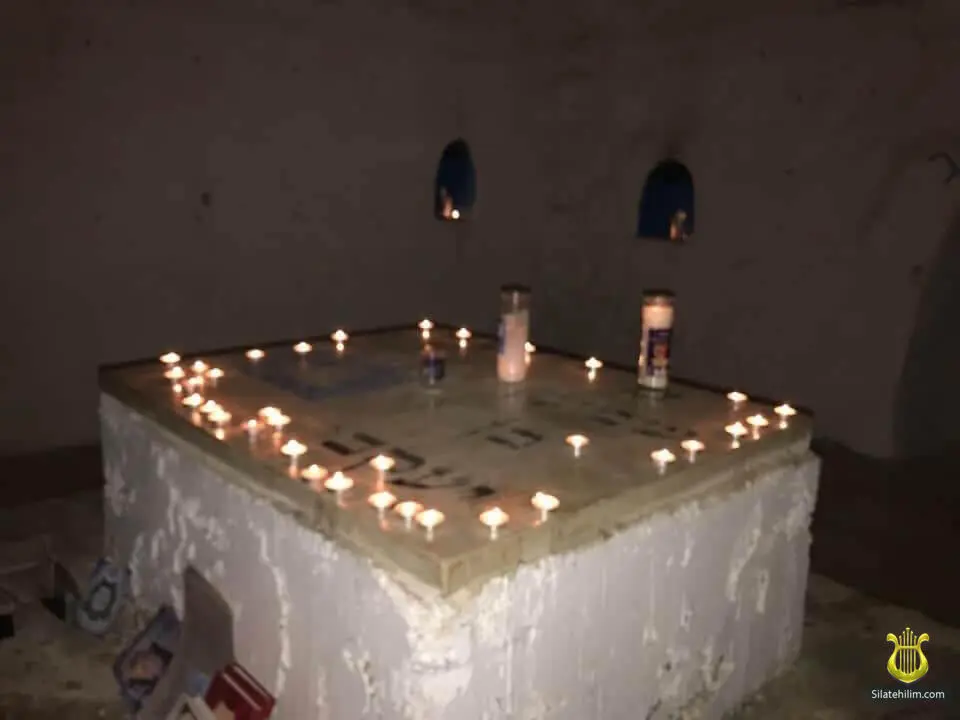
This is especially effective when one visits their holy graves, as Rashi explains regarding the verse:
“And he came to Hebron” (Bamidbar 13:22).
Rashi explains that Kalev went to Hebron to pray at the graves of the Forefathers to be saved from the influence of the wicked.
We also find this in Rashi’s explanation of the verse: “And I, when I came from Paddan, Rachel died by me... and I buried her there on the road to Efrat, which is Beit Lechem” (Bereishit 48:31).
This is how Rashi explains the verse: “Yaakov explained to Yosef: ‘And I buried her there’—I did not even carry her to Beit Lechem... And I know that in your heart you reproach me. But you should know that, by Divine command, I buried her there so that she would help her children when Nevuzaradan would exile them and they would pass by that place. Rachel then emerged from her grave, wept, and pleaded for mercy on their behalf, as it says: “A voice is heard in Ramah, lamentation and bitter weeping; Rachel weeps for her children.” (Yirmiyahu 31:16)
And the Almighty answers her: “There is a reward for your labor, and your children will return to their borders.”
It is also stated in the tractate Sotah (14a): “Rabbi Chama, son of Rabbi Chanina, said: Why was the burial place of Moshe hidden from human eyes? Because the Holy One, blessed be He, knew that in the future the Temple would be destroyed and the Jewish people would be exiled from their land. Perhaps they would then come to Moshe’s grave, weep, and plead with Moshe: ‘Our teacher, arise and pray for us!’ Moshe would then arise and annul the decree, for the righteous are more desirable after their passing than during their lifetimes...”
It is clear from all this that when a person prays directly at the graves of the righteous, it is more effective than merely mentioning their merits while praying elsewhere.
Although mentioning the merits of the righteous is itself a great and effective practice,
praying directly at the grave of a tzadik is incomparably more powerful, as we see from the words of our Sages concerning Kalev and our matriarch Rachel, and from our Sages’ explanation of why Moshe’s grave was concealed.
May we merit visiting the graves of the righteous and increasing our prayers there, pouring out our hearts before the Almighty. Then salvation will surely come.
Amen; may it be His will.
(From the collection of prayers “Tikkun HaKlali,” published by the Rabbi Yisrael Dov Odesser Foundation)
Was this helpful?
100% of readers found this article helpful (3 votes).
Please note: some articles on our site contain the holy Names of the Almighty. If you print these articles, they may not be thrown away or destroyed. Please handle printed copies with care and respect.
Material from our site may be copied for the purpose of spreading Torah, provided a link to Silatehilim.com is included. Any use of the site's material in print publications or for commercial purposes is prohibited without the rights holder's consent.