Birkat Ilanot According to the Ben Ish Chai — the Blessing over Blossoming Trees in the Month of Nisan
Birkat Ilanot According to the Ben Ish Chai — the Blessing over Blossoming Trees in the Month of Nisan
It is stated in the Talmud:
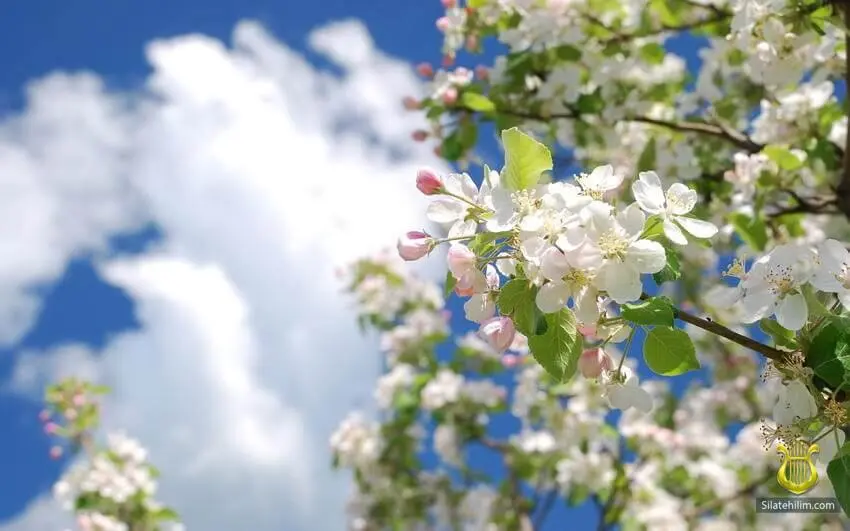
“Whoever goes out during Nisan and sees trees in bloom recites the blessing: ‘Blessed are You, G-d, our G-d, King of the universe, Who has withheld nothing from His world and has created within it beautiful creatures and beautiful trees, for the benefit of human beings.’”
The Shulchan Aruch devotes a separate chapter to the blessing over trees during their blossoming season, rather than placing it alongside the other blessings over unusual sights.
This alone shows us that there is something special about this blessing.
Moreover, it is one of those blessings that every Jew should strive to recite.
During the month of Nisan, one should go to gardens to admire the blossoming trees and recite the prescribed blessing. It is no coincidence that one of the greatest Torah scholars of the twentieth century, Rabbi Shlomo Zalman Auerbach, took pride in having never missed this mitzvah since his bar mitzvah.
The mekubalim, however, maintain that this blessing should be recited in a garden with many blossoming trees, preferably in the presence of a minyan (ten adult men). Moreover, they surround this blessing with the customary kabbalistic passages, beginning with the words “Le-Shem Yichud Kudsha…” and concluding with an excerpt from the Zohar HaKadosh: “Eliyahu [the prophet] revealed the mystery and said…”
The mekubalim prefer to go outside the city to recite this blessing, “because wandering souls are found there.”
This hints that the blessing over blossoming trees is a blessing for the dead as well as the living. It not only expresses our gratitude to the Almighty; when recited properly and with the proper intention, it opens the way to eternal life for lost souls.
Rambam wrote: “Anyone who goes out in Nisan into a field or garden and sees blossoming trees with swelling buds must recite the following blessing:
‘Blessed are You, G-d, our G-d, King of the universe, for You have withheld nothing from this world, and have created within it beautiful creatures, beautiful and good trees, for people to benefit from them.’
Sephardim follow Rambam’s text, omitting only two words (they say ‘beautiful trees,’ omitting ‘and good’).
The blessing is not recited on Shabbat or festivals. On weekdays, it is recited only over fruit trees (and at least two blossoming trees must be within the speaker’s field of vision); it does not apply to trees that do not bear edible fruit. In addition, these trees must not be orlah—that is, they must be more than three years old.
Birkat Ilanot According to the Ben Ish Chai
- “Le-shem yichud Kudsha Berich Hu u-Shechintei bidchilu u-rechimu u-rechimu bidchilu, le-yachada Shem ot ‘yud,’ ot ‘hei,’ be-ot ‘vav’ ot ‘hei,’ be-yichuda shlim be-shem kol Yisrael, u-ve-shem kol ha-nefashot, ruchot ha-neshamot, ha-mityachasim el sharshēi nafsheinu ruchēinu ve-nishmotēinu u-malbusheihem ve-ha-krovim lahem, she-miklalut Atzilut, Beriah, Yetzirah, Asiyah u-mi-kol pirtei Atzilut Beriah Yetzirah Asiyah, harei anachnu muchanim u-mezumanim le-kayem mitzvat ha-berachah she-tiknu chachamim, zichronam li-vrachah, al re’iyat ilanēi dimelavlevēi, ve-ya’ale lefanecha Ha-Shem Eloheinu ve-Elohei avoteinu ke’ilu kivanu be-kol ha-kavanot ha-re’uyot lechaven ba-berachah ha-zot ve-sodoteha, ve-tihye chashuvah u-mekubelet u-retzuyah lefanecha berachah zo, levarer u-leha’alot al yadah kol nitzotzei ha-kedushah ha-me’oravim ba-tzome’ach ve-chol nefashot, ruchot u-neshamot ha-megulgalot bo. Ve-Atah Ha-El be-middat tuvcha, u-ve-chasdecha ha-gadol ta’ir lahem be-or panֶcha, ve-tashlim berurām ve-tikunam. Barchem ta’arēm rachamei tzedakatecha tamid gemlem.”
(In the name of the unification of the Holy One, blessed be He, and His Shechinah, with awe and love, and love and awe, to unite the Name—the letter Yud, the letter Hei, with the letter Vav and the letter Hei—in perfect unity, in the name of all Israel and in the name of all the souls—nefesh, ruach, and neshamah—connected to the roots of our souls—nefesh, ruach, and neshamah—and their garments and all those close to them, who derive from the unity of the worlds of Atzilut, Beriah, Yetzirah, and Asiyah, and from all the individual aspects of Atzilut, Beriah, Yetzirah, and Asiyah. Behold, we are prepared and ready to fulfill the mitzvah of the blessing established by our Sages of blessed memory upon seeing blossoming trees. May it be accounted before You, Ha-Shem, our G-d and the G-d of our fathers, as though we had directed all the appropriate kavanot, understanding this blessing and its mysteries. May this blessing be important, accepted, and pleasing before You, to clarify and elevate through it all the sparks of holiness mixed into the plants, and all the souls—nefesh, ruach, and neshamah—that have been reincarnated in them. And You, O G-d, through Your great attribute of goodness and Your abundant kindness, illuminate them with the light of Your countenance, and complete their refinement and rectification. Bless them, purify them, have mercy on them, and grant them Your enduring righteousness.)
- “Yehi ratzon milfanecha Ado-nai, Eloheinu ve-Elohei avoteinu, she-bi-zchut ha-berachah ha-zot asher nevarech kiyem banu ma’amar: ‘Re’eh re’ach beni ke-re’ach sadeh asher bercho Ado-nai,’ u-nekabel shefa eser ha-berachot, ka-katuv. ‘Ve-yiten lecha ha-Elohim mi-tal ha-shamayim (Chochmah) u-mi-shmanֵi ha-aretz (Binah), ve-rov dagan (דעת) ve-tirosh (Chesed). Ya’avducha amim (Gevurah) ve-yishtachavu lecha le’umim (Tiferet); hevֵe gevir (Netzach) le-achecha (Hod), ve-yishtachavu lecha bnei imecha (Yesod); orerecha arur u-mevarchecha baruch (Malchut).’ Yihyu le-ratzon imrei fi ve-hegyon libi lefanecha Ado-nai tzuri ve-go’ali.”
(May it be Your will, Ha-Shem, our G-d and the G-d of our fathers, that in the merit of this blessing, which we are about to recite, the words be fulfilled for us: “See, the fragrance of my son is like the fragrance of a field that Ha-Shem has blessed.” And may we receive the abundance of the ten blessings, as it is written: “May G-d give you of the dew of heaven (the sefirah of Chochmah) and of the richness of the earth (the sefirah of Binah), and an abundance of grain (the sefirah of Da’at) and wine (the sefirah of Chesed). May peoples serve you (the sefirah of Gevurah), and nations bow down to you (the sefirah of Tiferet); be a master (the sefirah of Netzach) over your brothers (Hod), and may the sons of your mother bow down to you (Yesod); those who curse you shall be cursed, and those who bless you shall be blessed (the sefirah of Malchut).” May the words of my mouth and the meditation of my heart be acceptable before You, Ha-Shem, my Rock and my Redeemer.)
- “Vihi noam Ado-nai Eloheinu aleinu, u-ma’aseh yadeinu konenah aleinu, u-ma’aseh yadeinu konenehu.”
(May the pleasantness of the L-rd our G-d rest upon us; establish for us the work of our hands—yes, establish the work of our hands.)
- “Baruch Atah Ado-nai, Eloheinu Melech ha-olam, she-lo chiser be-olamo klum, u-vara vo briyot tovot ve-ilanot tovot, le-hanot bahem bnei adam.”
(Blessed are You, Ha-Shem, our G-d, King of the universe, in Whose world nothing is lacking, Who created in it beautiful creatures and beautiful trees for people to enjoy.)
- “Yehi ratzon milfanecha Ado-nai, Eloheinu ve-Elohei avoteinu, she-ta’alenu be-simchah le-artzeinu, ve-tita’einu bi-gvuleinu, ve-sham nekayem mitzvat terumot u-ma’asrot ve-et mitzvot ha-teluyot ba-aretz asher hinchalta la-avoteinu, hi eretz zavat chalav u-devash: ‘Eretz nachalei mayim, ayanot u-tehomot yotz’im ba-bikah u-va-har. Eretz chitah u-se’orah ve-gefen u-te’enah ve-rimon, eretz zayit shemen u-devash,’ ka-asher tzivitanu be-Toratecha al yedei Moshe avdecha. Ana Ado-nai, le-ma’an Shimcha ha-Gadol, hagdel chasdecha imanu ve-kayem lanu et ha-davar asher hivtachtanu al yedei Moshe avdecha. ‘Ve-natati gishmeichem be-itam ve-natenah ha-aretz yevulah ve-etz ha-sadeh yiten piryo. Ve-isig lachem daish et batzir u-vatzir yasig et zara, va-achaltem lachmechem la-sova vi-shavtem la-vetach be-artzechem.’”
(May it be Your will, Ha-Shem, our G-d and the G-d of our fathers, that we ascend joyfully to our land and become firmly established within our borders, and there fulfill the commandments of terumah (the offering given to the kohanim), ma’aser (the tithes given to Levites and the poor), and all the mitzvot dependent on the Land of Israel, which You gave as an inheritance to our fathers—the land flowing with milk and honey: “A land of streams of water, springs and fountains issuing forth in valleys and mountains; a land of wheat and barley, vines, figs and pomegranates; a land of olive trees and honey,” as You commanded us in Your Torah through Moshe, Your servant. We beseech You, Ha-Shem: for the sake of Your great Name, increase Your kindness toward us and fulfill for us the promise made to us through Moshe, Your servant: “I will give you rains in their season, and the land shall yield its produce, and the trees of the field shall yield their fruit. Your threshing shall reach the vintage, and the vintage shall reach the sowing; you shall eat your bread to satiety and dwell securely in your land.”)
- “Vekayem banu et ha-davar asher hivtachtanu al yedei Yeshayahu nevi’echa: ‘Bayom ha-hu yihyeh tzemach Ado-nai li-tzvi u-le-chavod, u-feri ha-aretz le-ga’on u-le-tiferet li-fleitat Yisrael.’ Ve-ne’emar: ‘U-vanu batim ve-yashavu, ve-natu keramim ve-yachlu piryam.’ Ve-kayem banu asher hivtachtanu al yedei Amos nevi’echa: ‘Hineh yamim ba’im ne’um Ado-nai ve-nigash choresh ba-kotzer ve-dorech anavim be-moshech ha-zara, ve-itfu he-harim asis ve-chol ha-geva’ot titmogagnah. Ve-shavti et shevut ami Yisrael u-vanu arim neshamot ve-yashavu, ve-natu keramim ve-shatu et yeinam, ve-asu ganot ve-achlu et piryam.’ Ve-kayem banu asher hivtachtanu al yedei Yechezkel nevi’echa: ‘Ve-hirbeiti et peri ha-etz u-tnuvat ha-sadeh, le-ma’an asher lo tikchu od cherpat ra’av ba-goyim.’ Ve-ne’emar: ‘Ve-al ha-nachal ya’aleh al sefatо mi-zeh u-mi-zeh kol etz ma’achal lo yibol alehu ve-lo yitom piryо la-chodashav yevaker, ki meimav min-ha-Mikdash hemah yotz’im, ve-hayah piryo le-ma’achal ve-alֵיhu li-trufah.’”
(May the words that You promised us through the prophet Yeshayahu be fulfilled for us: “On that day, the shoot of Ha-Shem shall be for beauty and glory, and the fruit of the land for pride and splendor for the survivors of Israel.” And it is said: “They shall build houses and dwell in them; they shall plant vineyards and eat their fruit.” May the words that You promised us through the prophet Amos be fulfilled for us: “Behold, days are coming, says Ha-Shem, when the plowman shall meet the reaper, and the vintner the sower; the mountains shall drip with wine, and all the hills shall melt. I will restore the fortunes of My people Israel; they shall rebuild ruined cities and dwell in them, plant vineyards and drink their wine, and make gardens and eat their fruit.” May the words that You promised us through the prophet Yechezkel be fulfilled for us: “I will increase the fruit of the tree and the produce of the field, so that you will no longer suffer the disgrace of famine among the nations.” And it is said: “And beside the stream, on its banks on both sides, will grow every kind of tree yielding edible fruit; its leaves shall not wither and its fruit shall not fail. Each month it shall produce new fruit, because its waters flow from the Sanctuary; its fruit shall be for food and its leaves for healing.”)
- “Eloheinu ve-Elohei avoteinu, Melech rachaman, rachem aleinu, tov u-meitiv, hidareish lanu, shuvah aleinu ba-amon rachamecha, biglal avot she-asu retzonecha, bnei veitecha ke-vatchilah. Konen Beit Mikdashecha al mechono, arenu be-vinyano, samechenu be-tikuno, ve-hashev Shechinatecha le-tocho, ve-hashev kohanim la-avodatam, u-Levi’im le-duchanam, le-shiram u-le-zimram, ve-hashev Yisrael li-nvei’em. Ve-sham na’aleh ve-nera’eh ve-nishtachaveh lefanecha, be-shalosh pe’amim regaleinu be-chol shanah ve-shanah, ka-katuv: ‘Shalosh pe’amim ba-shanah yera’eh kol zechurecha et penei Ado-nai Elohecha ba-makom asher yivchar, be-Chag ha-Matzot u-ve-Chag ha-Shavuot u-ve-Chag ha-Sukkot, ve-lo yera’eh et penei Ado-nai reikam. Ish ke-matnat yado, ke-virkat Ado-nai Elohecha asher natan lach.’ Ve-timloch Atah Hu Ado-nai Eloheinu meherah al kol ma’asecha, bachar Tziyon—mishkan kevodecha—u-vi-Yerushalayim ir Mikdashecha, ka-katuv be-divrei kodshecha: ‘Yimloch Ado-nai le-olam, Elohayich Tziyon le-dor va-dor. Halleluyah.’”
(Our G-d and the G-d of our fathers, merciful King, have mercy on us. O Good One who does good, seek us out; return to us in the abundance of Your compassion, for the sake of our fathers who fulfilled Your will, as in the beginning. Establish Your Temple in its place; show us its rebuilding and gladden us with its restoration; return Your Shechinah within it; return the kohanim to their service and the Levites to their platform, to sing and play their instruments; and return the people of Israel to their glory. There we shall ascend, appear before You, and bow down three times each year, as it is written: “Three times a year all your males shall appear before Ha-Shem your G-d at the place that He will choose: on the Festival of Matzot (Pesach), on the Festival of Shavuot, and on the Festival of Sukkot; and none shall appear before Ha-Shem empty-handed. Each according to the gift of his hand, according to the blessing of Ha-Shem your G-d that He has given you.” May You, Ha-Shem our G-d, soon reign over all Your works, in Mount Zion, the dwelling place of Your glory, and in Jerusalem, Your holy city, as it is written in the words of Your holiness: “Ha-Shem shall reign forever; your G-d, O Zion, throughout all generations. Halleluyah.”)
Tehillim 121
Shir ha-ma’alot le-David. Samachti be-omrim li: Beit Ado-nai nelekh. Om dot hayu ragleinu, bi-sha’arayikh Yerushalayim. Yerushalayim ha-benuyah ke-ir she-chubrah lah yachdav. She-sham alu shevatim, shivtei Yah, edut le-Yisrael, le-hodot le-Shem Ado-nai. Ki shamah yashvu chis’ot le-mishpat, kis’ot le-veit David. Sha’alu shelom Yerushalayim, yishlayu ohavayikh. Yehi shalom be-cheileikh, shalvah be-armonotayikh. Le-ma’an achai ve-re’ai, adaber na shalom bach. Le-ma’an Beit Ado-nai Eloheinu avaksheh tov lach.
A Song of Ascents of David. I rejoiced when they said to me: “Let us go to the House of Ha-Shem.” Our feet stood within your gates, O Jerusalem. Jerusalem, built up as a city joined together, where the tribes ascended—the tribes of Yah—as a testimony for Israel, to give thanks to the Name of Ha-Shem. For there stood the thrones of judgment, the thrones of the house of David. Pray for the peace of Jerusalem; may those who love you prosper. May there be peace within your walls, tranquility within your palaces. For the sake of my brothers and friends I will say: “May peace be within you.” For the sake of the House of Ha-Shem our G-d, I will seek your good.
(Transliteration and translation by Alexander Zvi Sypkov)
Was this helpful?
100% of readers found this article helpful (60 votes).
Please note: some articles on our site contain the holy Names of the Almighty. If you print these articles, they may not be thrown away or destroyed. Please handle printed copies with care and respect.
Material from our site may be copied for the purpose of spreading Torah, provided a link to Silatehilim.com is included. Any use of the site's material in print publications or for commercial purposes is prohibited without the rights holder's consent.