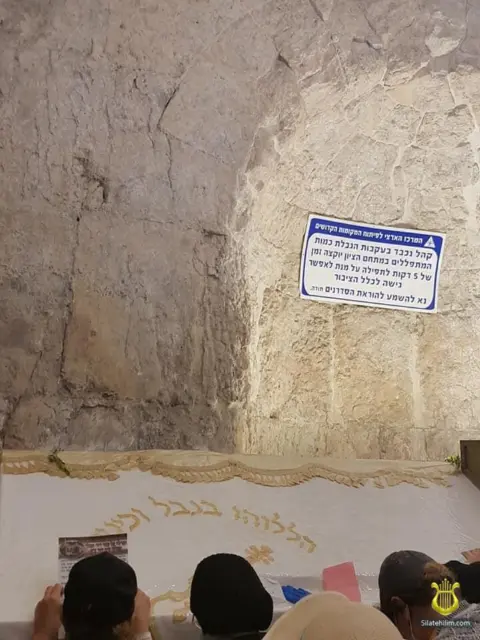
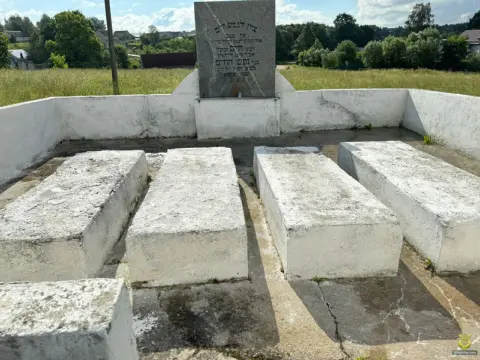
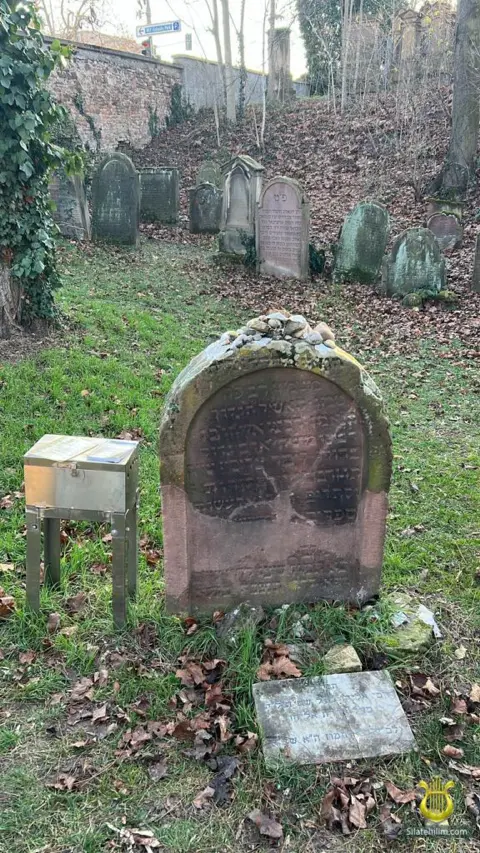
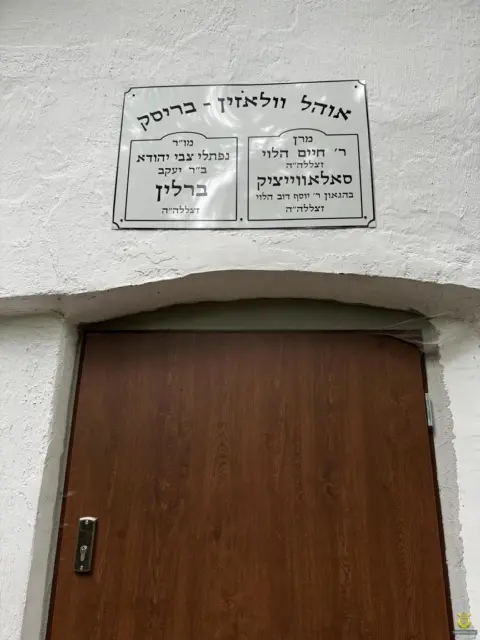
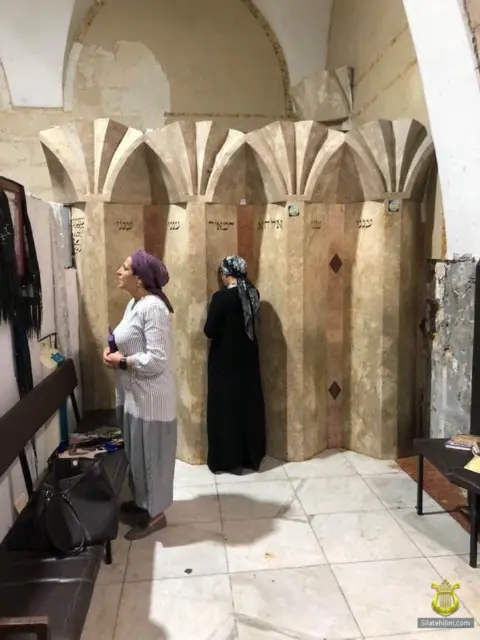
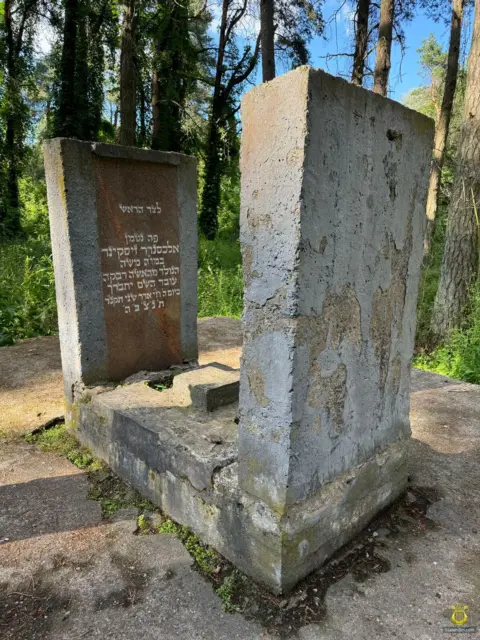
Grave
David HaMelech
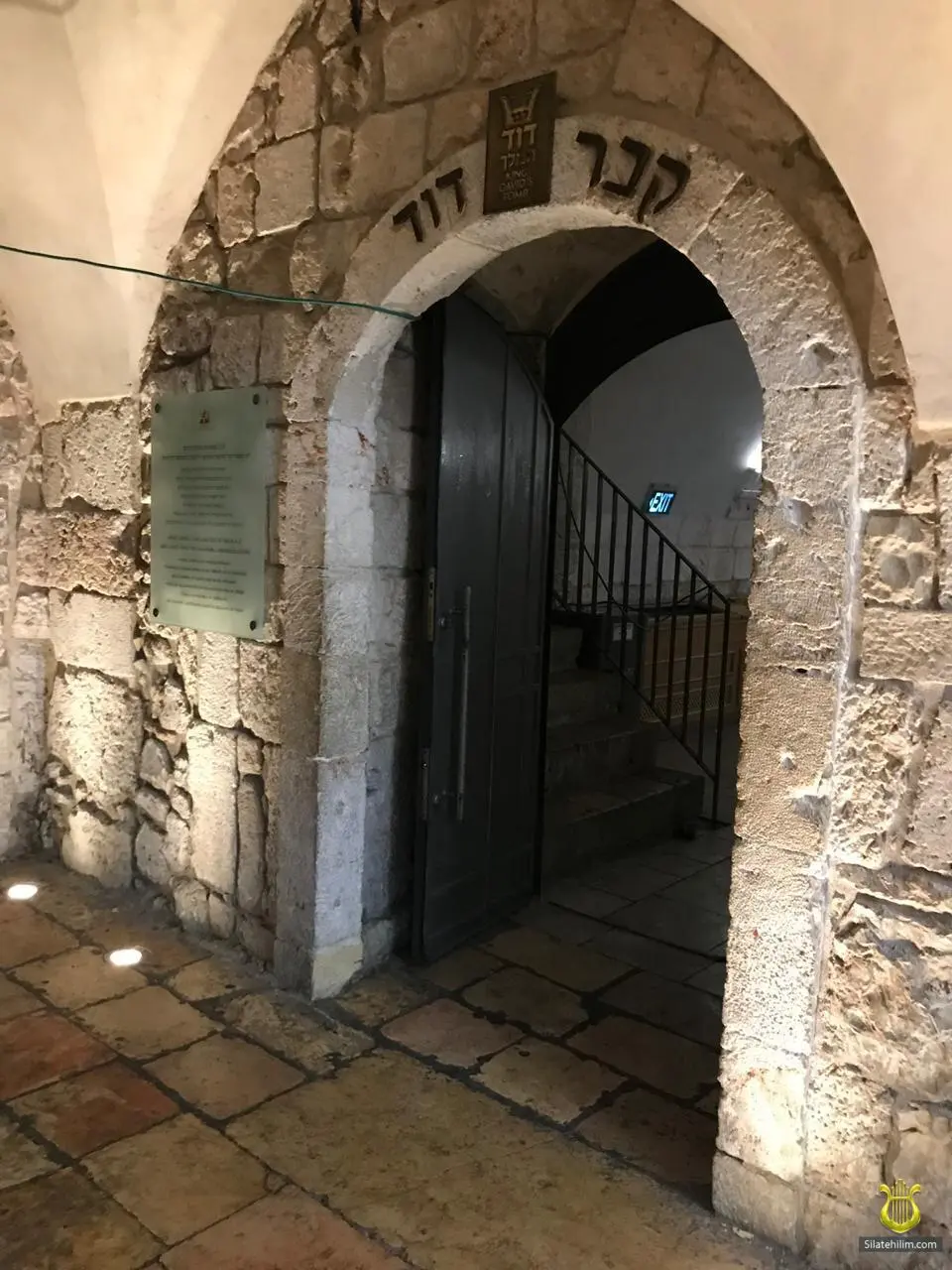
Yahrzeit (Hillula)
- 6 Sivan — David HaMelech
- 10 Tammuz — Rabbi David Ben Hassin - "Migdal David"
David Melech Yisrael Chai VeKayam
There is a great secret in the words: “David Melech Yisrael Chai VeKayam!” –
(David lives and will exist forever, for all eternity).
David HaMelech was careful all the days of his life not to taste death.
Because sleep is 1/60th of death.
And David's place is “chai” – life.
King David never slept for more than 60 breaths in a row.
Even if it were one breath less than 60 – it is entirely “chai” – life.
But starting from 60 and above, a person tastes death and the spirit of impurity gains power over him.
David HaMelech guarded himself and never tasted death, so that the spirit of impurity would not rule over him, because
60 minus 1 neshamot (breaths) = the secret of life above.
Up to 60 is the higher 60 breaths on which Life depends.
And more than that is the secret of death.
That is why Rabbi Yehuda said that David slept like a horse – no more than 59 breaths.
According to another opinion, King David never slept more than half an hour, so that from the standpoint of Halacha he did not need to do
netilat yadayim (washing of the hands).
Because impurity does not settle upon a person unless he has slept
for half an hour.
At the same time, King David never once missed midnight -
he would rise and study Torah until morning.
From midnight on he did not sleep or doze at all – he studied Torah and praised the Creator with psalms.
When night came he would sit with the leaders of the generation, examine legal cases, and study Torah.
He would go to sleep not at the beginning of the night,
but closer to midnight.
At midnight he would rise and once again begin his work for the sake of the Almighty,
praising Him and composing songs in His honor.
When midnight arrives, the Higher Holiness awakens.
And if a person sleeps, not hurrying to behold the Honor of his Master, it is as if he tastes death.
That is why studying at midnight has great significance.
Midnight is the time when the Kadosh Baruch Hu enters the Garden of Eden to the righteous and studies Torah with them.
This is the explanation of the midnight rectification -
Tikkun Chatzot. (Zohar, Vayigash, Sulam, Tzvi Nisanzon)
The Harp and King David
“A harp hung above David's bed. At midnight a north wind would rise, blow upon it, and it would play by itself.”
A person is a musical instrument of the Creator. Our soul is called a “harp” (kinor) and its strings tremble at the touch of light. This trembling is a concern to bring pleasure to the Creator. David's harp played by itself, because his soul was in union with the Creator. We are all different, and together we form an “orchestra” performing a symphony of light. (Baal HaSulam, “Letters of Wisdom”)
The five-stringed harp corresponds to the Torah (the five books)
and it is written in the book of Zohar:
“And those who hold the Torah are those who hold the harp”
. (Zohar, Tzav 32)
“The lungs have 5 sections (literally “ears” – since they resemble ears in shape).
For the spirit of life dwells in the lungs, and from there the spirit extends during breathing, as is evident to everyone.
And so there are 5 sections in the lungs,
corresponding to the 5 books of the Torah,
and to the 5 strings of David's harp – the vessels of the spirit of life. (“Likutei Moharan,” Rabbi Nachman of Breslov)
David HaMelech
The Sages of the Talmud (Sanhedrin 107) pointed out that the root of King David's sin was his excessive self-confidence:
“Test me, Almighty, try me!” – King David asked. (Tehillim 26:2)
After these words the Almighty sent him the trial with Bat-Sheva, which David could not withstand. David's sin taught him humility, and his great repentance became an example for all generations of Jews.
From the entry of the people of Israel into their land to the birth of King David, about 370 years passed:
from the Exodus from Egypt to the building of the First Temple – 480 years. (Melachim I, 6:1)
If we subtract from this number 40 years (in the desert) and 70 years of King David's life (since the building of the Temple began after his death) – we get 370 years.
This period of 370 years is divided into 4 generations: Salmon, Boaz, Oved, and Yishai.
The same place that Moshe Rabbeinu occupies among all the prophets is occupied by David, king of Israel, among all those who possessed the spirit of holiness.
Moshe Rabbeinu possessed the gift of prophecy of the highest degree, and David had such a level of ruach hakodesh that no one could compare with him in this. And it was expressed in a creation that at all times and everywhere has been and continues to be considered an unsurpassed masterpiece of poetry, namely the book of Tehillim – “Psalms.” From ancient times, no other book of the Tanach has been read as often as this one.
The entire book is divided into 5 sections – similar to the Five Books of the Torah – as well as into 7 parts corresponding to the days of the week, and into 30 days of the month. Whoever wishes may finish it in a week or in a month. At times when special help from Above is needed, it is customary to read especially many psalms. In editions of Tehillim, prayers are usually printed at the beginning and end that are recited before and after reading the psalms. They mention that both the first and last letters of the words of Tehillim form Names of the Almighty – names known only to kabbalists. So when these words are read, even without understanding their meaning, the Almighty is called upon by His hidden Names – and He answers! (Rav Yehuda Wexler)
The Aspect of the King
The main aspect of a king is glory (as we say in the blessing over a Jewish king: “...Who has given from His glory to those who fear Him”). It was David, who “carried” within himself the Jewish monarchy, who restored glory to our people by killing Goliath (Shmuel I 17:10)
And the Philistine (Goliath) said: “Today I have disgraced the army of Israel. Give me a man, and let us fight!”
For 40 days he disgraced the Jewish troops, and no one went out to him out of fear. David went out and killed him. Moreover, David married Michal (daughter of the first Jewish king, Shaul) as a result of killing 100 Philistines. And thereby he bound himself to the royal family.
In removing the disgrace and mockery from the Philistines is born the foundation of our glory – the kingdom of David:
“This day the L-rd has delivered you into my hands, and I will remove the disgrace, and all the world will know that there is a G-d in the midst of Israel.” (Shmuel I 17:46)
It is written by Rabbeinu Bachya that those wells are the source of faith, and digging out this source is the removal of the dust – the food of the Serpent, which is the hardest material. The task of each of us is to dig out and remove the dust of the Philistines, so that the spring of living water may once again gush forth and flow.
This is yet another understanding of what the Sages said:
“In the future the Almighty will make a great feast for the righteous, when He will repay good to the descendants of Yitzchak.”
Namely: the potential to dig anew what the Philistines filled in is ours from Yitzchak. And the complete victory over them is the potential of David, who killed “that Philistine” and afterward conquered all their land, and destroyed them. (Gaon Moshe Shapiro)
David and Goliath
Goliath was a relative of David – the son of Orpah (Ruth's sister): “from the ranks of the Philistines.” (Shmuel I, 17).
Do not read ממערכות (from the ranks), but read ממערות (from the caves). This is said because Goliath made something like a cave for his mother. And it is said there also: “And the Philistine cursed David by his god” – David looked at him with an evil eye. And wherever David looked with an evil eye, all sorts of leprosy were drawn there – from David's eyes. So it was also with Yoav: when David looked at him with an evil eye, he became afflicted with leprosy.
When the Philistine cursed the Name, David looked at him with an evil eye and saw that leprosy had appeared on his forehead; immediately the stone sank into his forehead. David's eye was like a multicolored fabric: there were no eyes in the world as beautiful as David's eyes – all the colors of the world shimmered and sparkled in them, and his gaze radiated love toward all people who feared sin, as it is written: “Those who fear You will see me and rejoice.” (Tehillim 119:74) They rejoiced when they saw David, while sinners feared him. (Zohar on Balak, Sulam, Tzvi Nisanzon)
Gallery