

 Sila Tehilim
כוחה של תהילים
silatehilim.com
Sila Tehilim
כוחה של תהילים
silatehilim.com
Grave
Akiva ben Yosef
Tanna
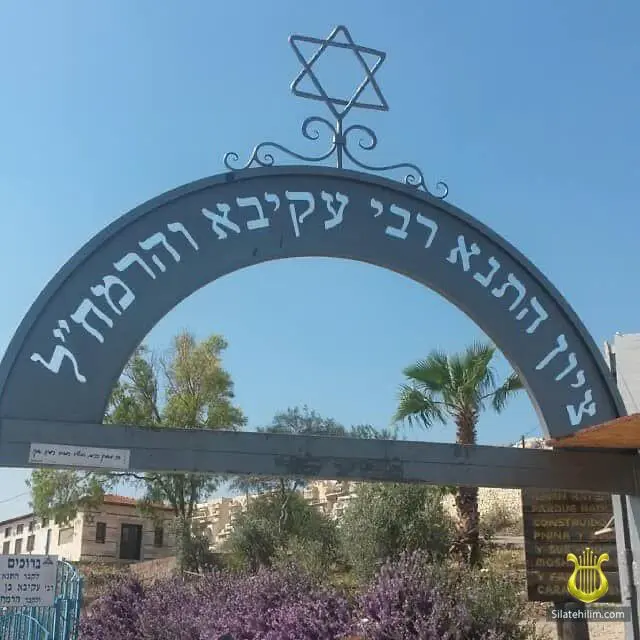
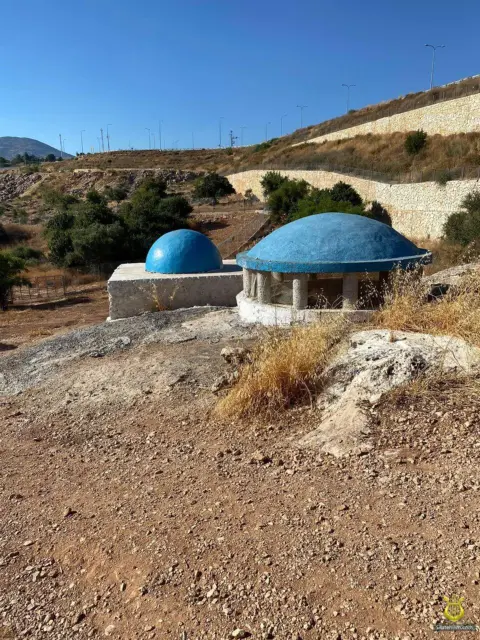
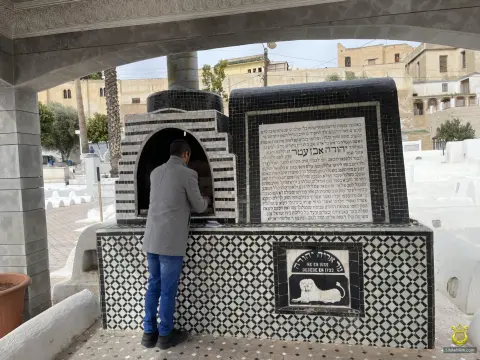
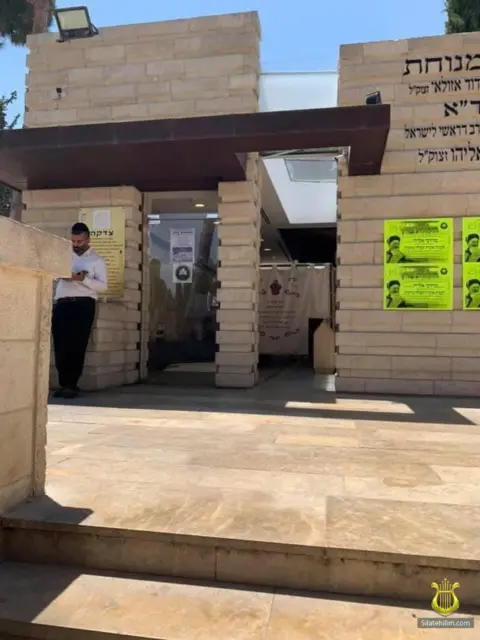
Resting Place of Rabbi Akiva ben Yosef
Yahrzeit - Yom Kippur - the 10th of Tishrei;
Burial place - Tiberias;
Rabbi Akiva was a pillar of the Oral Torah.
Rabbi Tzadok HaKohen of Lublin explains (Pri Tzadik, Lag BaOmer) that on the day of Rabbi Akiva's death it was forbidden to establish a hillula, because the Romans put Rabbi Akiva to a cruel death. Therefore the hillula was established on the day of the passing of his student, Rabbi Shimon bar Yochai. Thus the hillula of Rabbi Shimon includes within it the hillula of Rabbi Akiva as well, and so on Lag BaOmer one should also recall the greatness of Rabbi Akiva and his teachings.
There was probably no one in the world who began studying Torah under more difficult circumstances than Rabbi Akiva. And yet, through diligence and great faith, he reached the highest level (see Avot D'Rabbi Natan, ch. 6). This was due in large part to his wife Rachel, daughter of the wealthy landowner Kalba Savua. Rachel recognized the greatness of Rabbi Akiva's soul while he was working as a shepherd for her father, and promised she would marry him if he devoted himself to studying Torah. For this her wealthy father disinherited her, but she did not go back on her word and married the shepherd Akiva. They lived in poverty, yet she selflessly continued to insist that her husband study Torah. Having become the greatest sage of his generation, Rabbi Akiva said to his students about Rachel: "All that is mine and all that is yours is hers" (Babylonian Talmud, tractate Ketubot, 63a).
"Rabbi Yehuda said in the name of Rav: at the hour when Moshe ascended to Heaven (to receive the Torah), he saw the Holy One, blessed be He, adorning the letters [of the Torah] with crowns. He said to Him: 'Master of the Universe, who needs these crowns?' He answered: 'There is a man who will live several generations from now - Akiva, son of Yosef, is his name. He will be able to derive from every stroke of these crowns mountains upon mountains of laws'... [Moshe] said before Him: 'Master of the Universe! You have such a man, and yet You wish to give the Torah through me?!' He said to him: 'Be silent, such is My plan'" (Babylonian Talmud, tractate Menachot, 29b).
From the fact that among all the sages of Israel, the Al-mighty showed Moshe specifically Rabbi Akiva, it follows that he is considered the greatest sage of the Oral Torah (Sanhedrin, 86a), where it is stated:
"Every anonymous teaching in the Mishnah comes from Rabbi Meir, every anonymous teaching in the Tosefta - from Rabbi Nechemya, every anonymous teaching in the Sifra - from Rabbi Yehuda, and every anonymous teaching in the Sifrei - from Rabbi Shimon; and all of them follow the views of Rabbi Akiva."
He was boundlessly devoted to the Torah and to the Jewish faith, and even after twenty-four thousand of his students died, he did not lose his faith.
He ordained new students, through whom Torah spread among the people of Israel. And when he saw a fox running out of the Holy of Holies of the Jerusalem Temple, and the sages accompanying him wept, he laughed, for he was filled with faith that just as the prophecies of calamity had been fulfilled, so too would the prophecies of comfort and rebirth be fulfilled (see Babylonian Talmud, tractate Makkot, 24b).
When the Romans issued a decree forbidding the study of Torah, he, at the risk of his life, continued to teach Torah to the masses of the Jewish people. The Romans seized him, threw him into prison, and sentenced him to a cruel death. Our sages said (Berachot, 61b):
"When Rabbi Akiva was being executed, it was the time for reciting the Shema Yisrael. [The executioners] tore at his flesh with iron combs, while he accepted upon himself the yoke of the Kingdom of Heaven. His students said to him: 'Teacher, is this not enough?'
[Rabbi Akiva] said to them: 'All my life I have grieved over the words: "...with all your soul" - even if your soul is taken from you. I said: when will it be given to me to fulfill this? Now that it has been given to me, shall I not fulfill it?!' And he drew out the word "echad" for a very long time, until his soul departed. Then a Heavenly Voice (Bat Kol) rang out: 'Happy are you, Rabbi Akiva, that your soul departed on the word "echad"!... Happy are you, Rabbi Akiva, for you have been granted life in the World to Come!'"
The Hidden Meaning of "Ad Kan"
Tractate Berachot, page 66, describes the last hours of Rabbi Akiva's life and how, during his torture, he recited the "Shema." His students witness this terrible scene and ask their teacher: "Rabbeinu, ad kan?"
Rabbi Akiva answered that all his life, reciting these words, he had dreamed of fulfilling them: "to love G-d with all your heart."
Why did the students ask Rabbi Akiva "ad kan" - (until now)?
Rabbi Shimshon of Ostropol revealed that in fact Rabbi Akiva only recited the first part of the "Shema," ending with the words "Baruch Shem Kevod."
Rabbi Akiva - the teacher of the great Rashbi, who revealed the entire hidden Torah - knew the secrets of the Shema, and knew that in the next line of the Shema: "VeAhavta et Ad-nai Elohecha" - את יהוה אלהיך - the sofei tevot (final letters) of the three words - form the Name of the Al-mighty - כהת.
With this Name Rabbi Akiva could have freed himself and put his executioners to death, but Rabbi Akiva knew that the sentence had to be carried out - he knew that he was a gilgul (reincarnation) of one of the ten brothers of Yosef.(Based on a lesson by Rav Yisrael Yakobov)
Location
Ha-Tana Nakhum Ish Gamzu St 127, Tiberias, Israel
Gallery
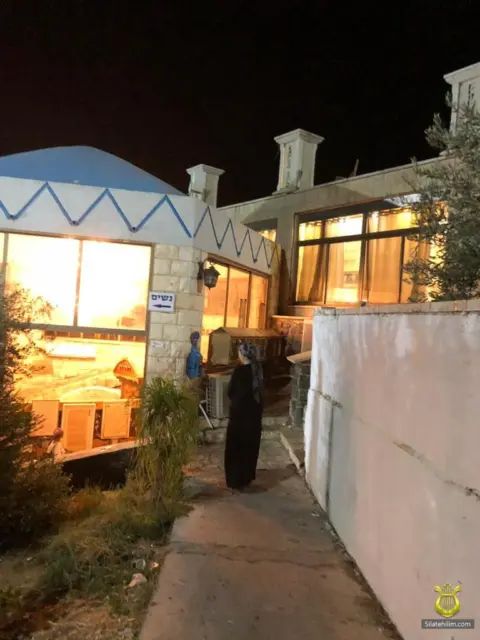

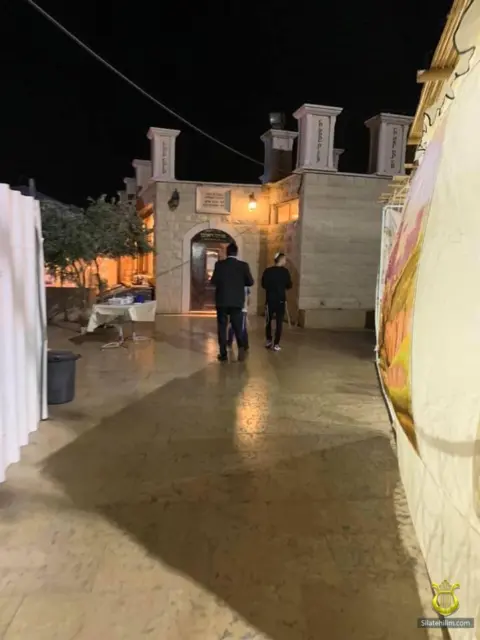
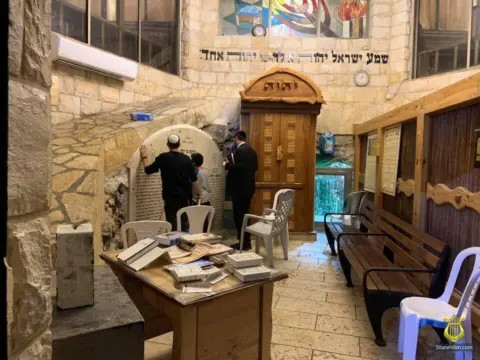
Other graves
Source: https://silatehilim.com/en/kivrei_tsadikim/27974/
Material from our site may be copied for the purpose of spreading Torah, provided a link to Silatehilim.com is included. Any use of the site's material in print publications or for commercial purposes is prohibited without the rights holder's consent.