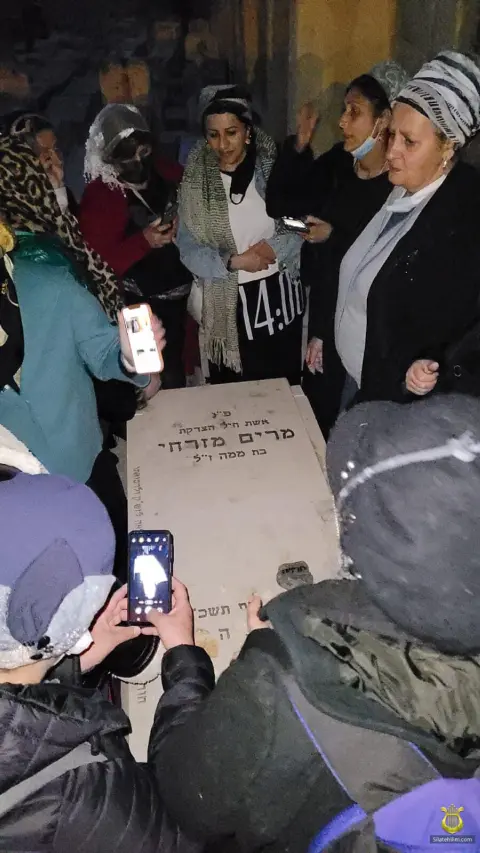
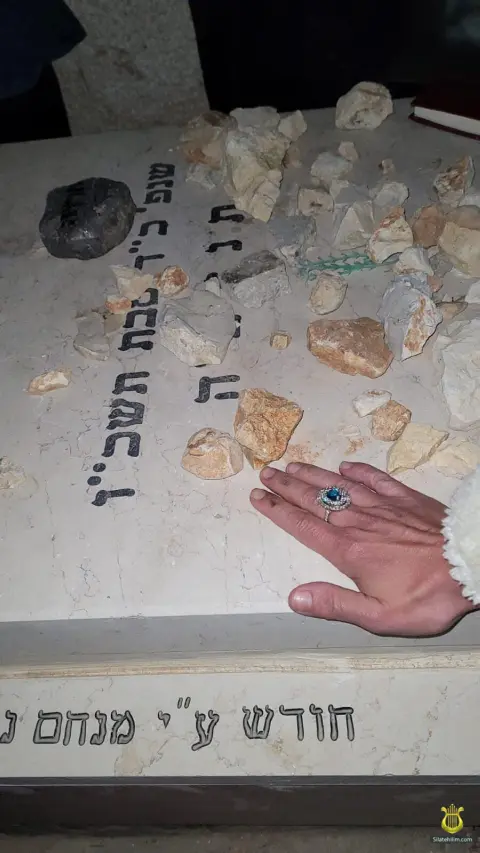
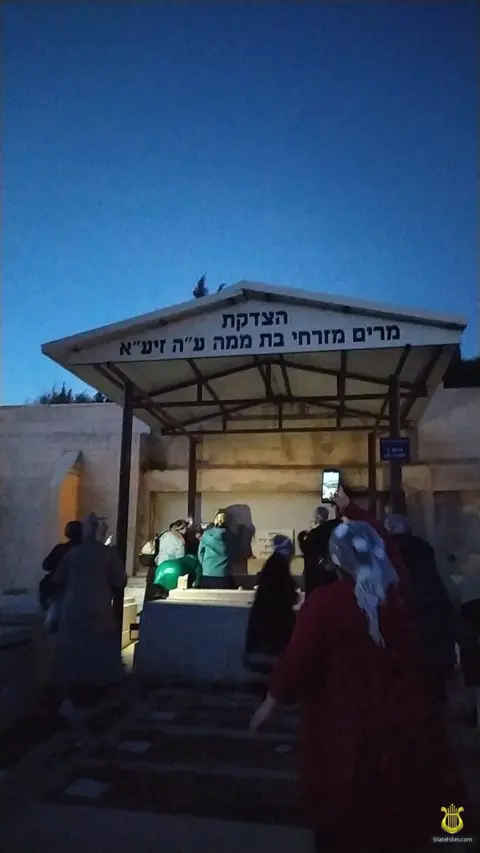
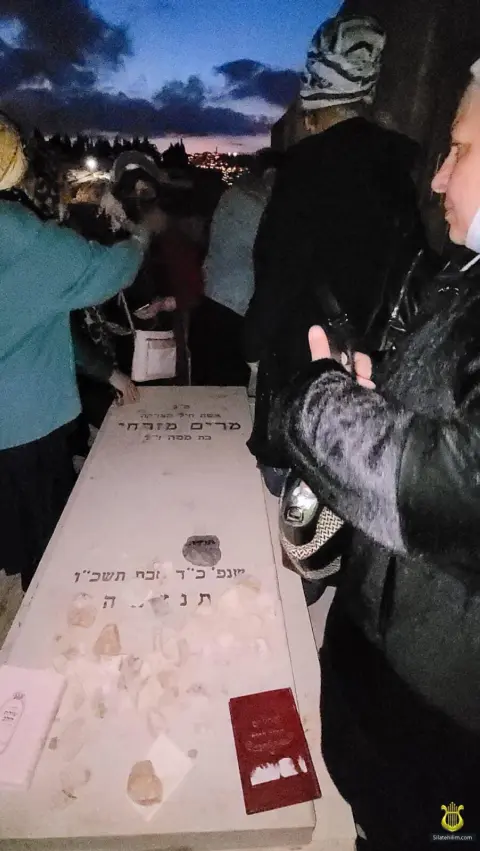
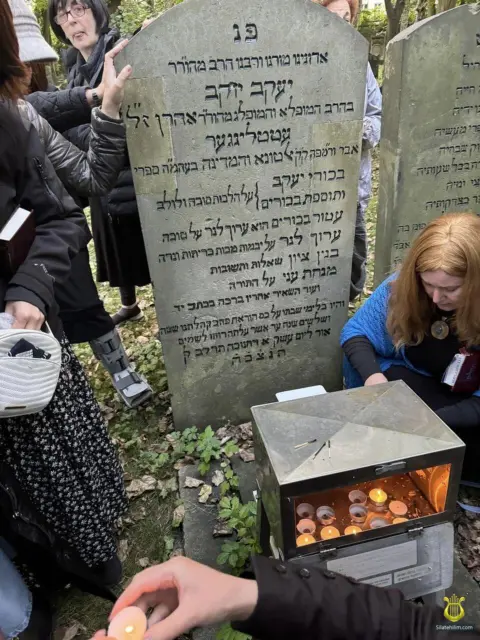
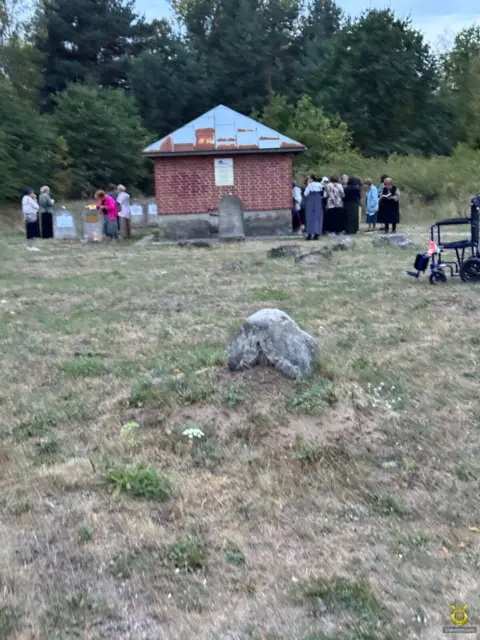
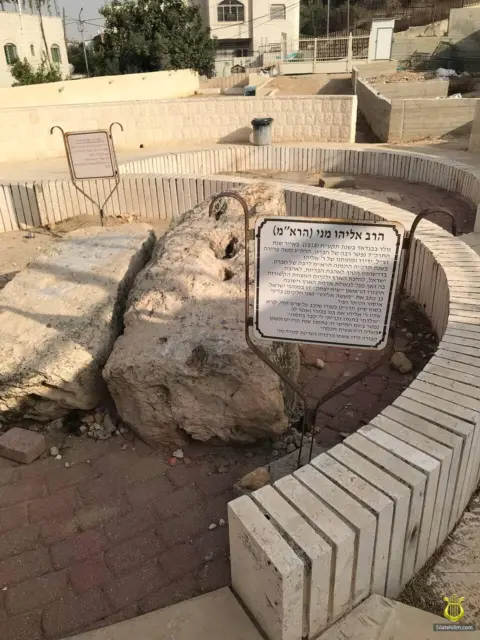
Grave
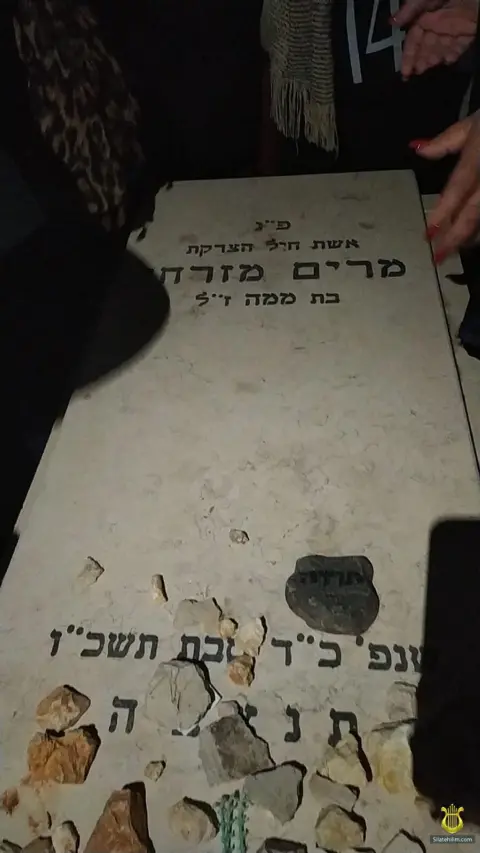
Miriam Mizrachi
Miriam HaKoveset
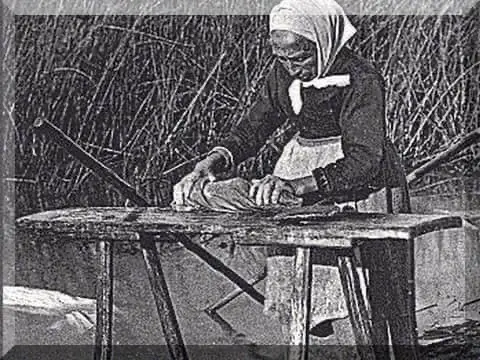
Yahrzeit (Hillula)
- 24 Tevet — Miriam Mizrahi - Miriam Ha-Koveset (the Launderer)
Miriam bat Mama HaKoveset (the Laundress) was born in Kurdistan in the late 19th century. She and her husband were childless.
When they moved to Jerusalem, Miriam began working as a laundress in Mea Shearim.
Among the families she worked for was the family of the Rebbe Shloymke of Zvhill — the Zvhiller Rebbe — widely known as a miracle worker.
Miriam was a very simple woman, her hands swollen from constant washing.
She was illiterate — unable to read or write. Yet she was deeply G-d-fearing and earned the nickname "Miriam HaNeviah" — Miriam the Prophetess.
The son of Rebbe Shloymke, Rabbi Gedalya Moshe of Zvhill — whose grave, statistically, is the third most visited pilgrimage site after the Kotel and Meron — had known Miriam since childhood and always spoke of her warmly:
"I never imagined she would become so well known — she was a very simple woman who could neither read nor write.
When she had to recite a blessing over bread, instead of saying the actual blessing she would say 'Thank you,' kiss the bread, and eat it. Even after finishing the bread she would say 'Thank you' — and that was all.
But there was one remarkable thing: during the High Holy Days, from the beginning of the month of Elul through Rosh HaShanah, she fasted forty consecutive days and ate only at night, usually receiving food from the families she worked for.
Before Purim she would also fast for three days.
She also loved to travel to Meron to pray.
All who knew her recognized that she was a special woman, and they asked her to pray on their behalf — and she agreed, and prayed for them at holy sites.
My mother told me that in the morning, when Miriam woke up, she would raise her hands and say:
'Shalom Shechinah [the Divine Presence], Shalom Avraham Avinu, Shalom Moshe Rabbeinu' — and many more greetings to many tzadikim.
Then she would sit down to eat, say 'Thank you,' kiss the bread, and eat."
One day, when her work was done, she stood in the doorway of Rebbe Shloymke's room and asked him to bless her so that she might have a child. Lost in thought for several minutes, he shook his head and told her: "I cannot help you." She was stunned by this answer, but a moment later the Rebbe added: "I bless you that you should have the zechut to bless other women to have children."
Miriam carried the Rebbe Shloymke of Zvhill's blessing with her for many years, until she passed away in 1964.
Twenty-nine years later, in 1993, the time came for that promise to be fulfilled.
Segula — to pray for children and about children
One of her neighbors described a dream in which Miriam appeared to her and said: "I was a laundress in the home of the Admor, Rebbe Shloymele of Zvhill. I was childless and asked him for a blessing and salvation.
The Rebbe said: 'I cannot help you, but I bless you that you should have the zechut to bless others to have children.' The time has come for holy souls to descend into Olam HaZeh. I am asking people to come to my grave and pray for the elevation of my neshamah. I promise barren women that they will have children."
She also gave a precise description of where her grave could be found.
The woman who had the dream told a friend, and after discussing it at a women's shiur (Torah class) in Jerusalem, they followed Miriam's directions and easily found her grave — though it is one among thousands on Har HaMenuchot.
That very year, 32 women who had been childless for many years gave birth — and from then on, her grave became a place of constant pilgrimage with prayers for children.
May the zechut of Miriam HaKoveset protect our people!
(https://silatehilim.com/24-тевета-йорцайт-мириям-а-ковесет-пра/)
Gallery