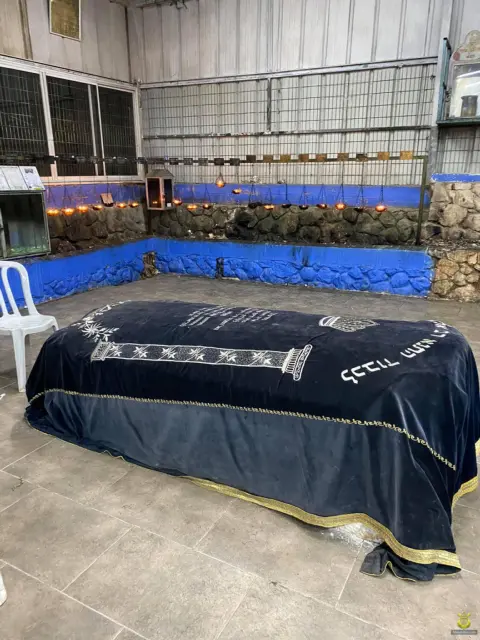
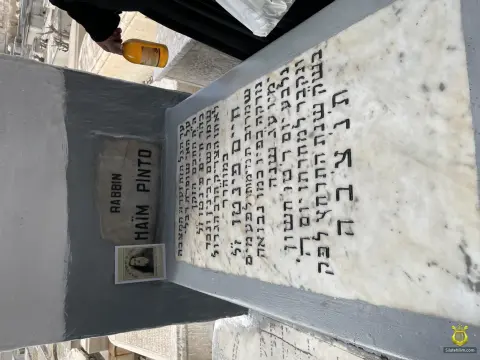
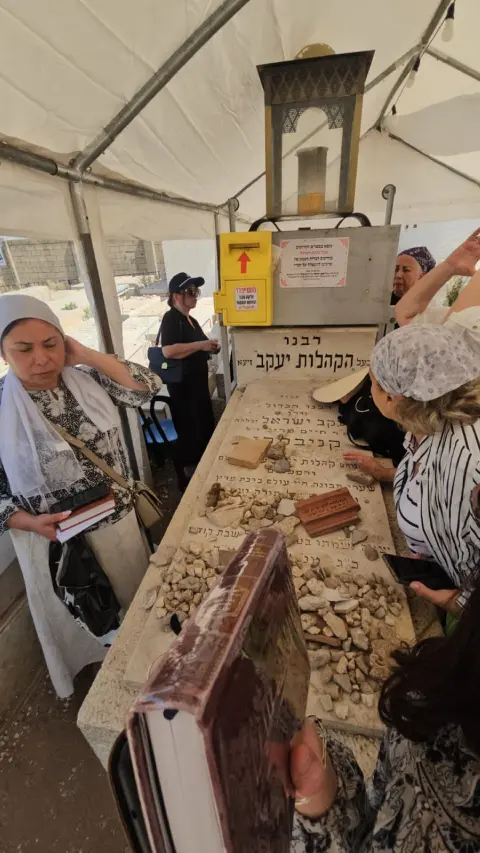
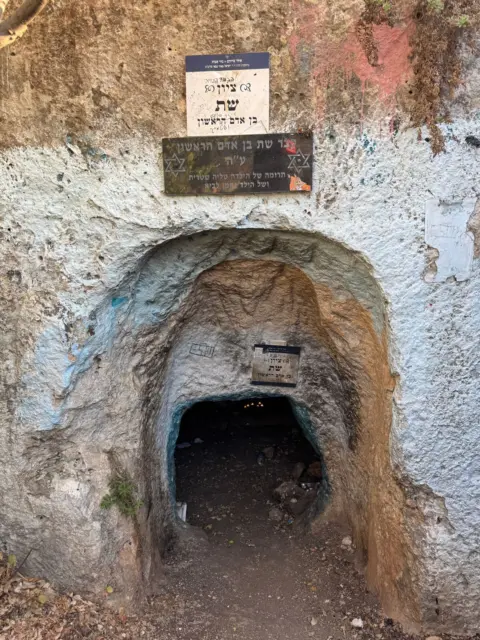
Grave
Rambam
Rabbi Moshe ben Maimon
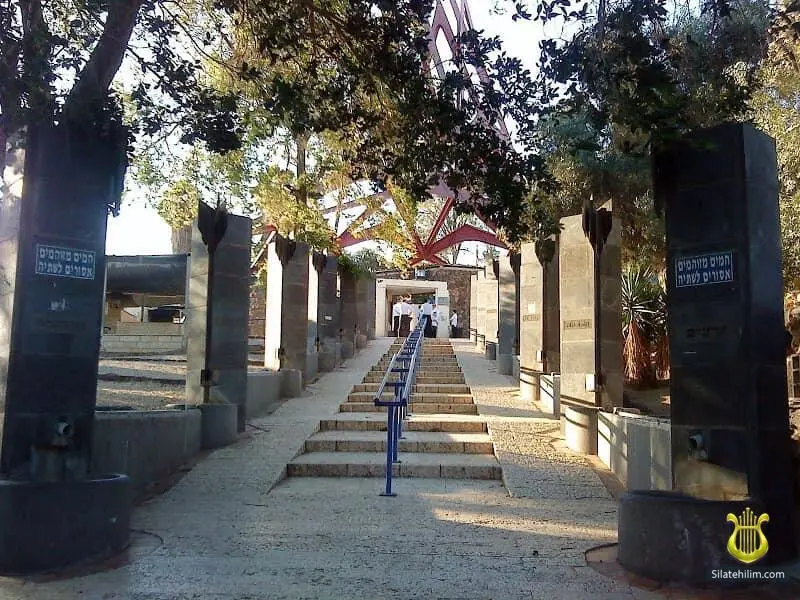
Yahrzeit (Hillula)
- 20 Tevet — Rabbi Moshe ben Maimon – the Rambam
Maimonides - Rabbi Moshe ben Maimon — the most famous Jewish philosopher, rabbi and physician. He was a great scholar and a master of the laws of the Torah.
The Rambam was born in 1135 in Cordoba, Spain. The city was then under Muslim rule. Maimonides' father, Rabbi Maimon, was a dayan of Cordoba's flourishing Jewish community. He gave his son a brilliant education: besides Torah and Talmud, the young Maimonides studied Arabic, mathematics, logic, philosophy and other sciences.
When Moshe turned 13, the Almohads invaded southern Spain from Africa — Muslim fanatics who were intolerant not only of Jews and Christians, but even of "less devout" Muslims.
After this, a period of wandering began for the Rambam's family, first through Spain and then through North Africa. Despite the harsh life and constant relocations, the Rambam never stopped learning, and it was during this time that he wrote his first book — a commentary on the Mishnah.
In 1165, Maimonides set sail for the Land of Israel together with his relatives. The journey through the Holy Land made a tremendous impression on him. He visited the main holy sites: the place where the Second Temple had stood, and the Cave of Machpelah, where the Patriarchs are buried. But life in the Land of Israel was very dangerous, since a fierce war for the holy places was raging between the Crusaders and the warriors of Allah.
Half a year later, Maimonides and his family moved to Egypt, settling in a suburb of Cairo.
For a long time, the family's main provider was the Rambam's brother, David, who traded in precious stones. But tragedy struck: David perished in a shipwreck in the Indian Ocean. All the family's savings went down with the ship. The Rambam took his brother's death very hard, unable to rise from his bed for an entire year. Yet the responsibility for the family's welfare fell upon his shoulders. After much deliberation, he decided to take up medicine.
Maimonides gained a reputation as one of the finest physicians in Egypt. He became the court physician, first to the chief vizier and then to the ruler of the country — the famed warrior Saladin. The fame of Maimonides the physician resounded even beyond Egypt's borders: according to tradition, the English King Richard the Lionheart, while in the Land of Israel, repeatedly invited Maimonides to attend him, but the great Rambam refused to treat a hater and persecutor of the Jews.
When the halacha follows the Rambam
Once a chassid came to the Alter Rebbe who had been childless for many years, seeking a blessing for children. The Baal HaTanya said he could not help him, but if the chassid could reach Rabbi Shlomo of Karlin (zechuto yagen aleinu) before shkiah (sunset), and the tzadik blessed him, then the chassid would have children.
The Rebbe had spoken — the chassid obeyed. The chassid listened and set out for Karlin, managing to reach the Rebbe of Karlin before sunset. He came to Rabbi Shlomo full of hope, and Rabbi Shlomo said to him: "I am ready to bless you for 130 rubles."
In those days, this was an enormous sum. The chassid, realizing what a large sum this was, said he needed to consult with his wife. By the time he traveled home, discussed the sum with his wife, and returned — the sun had already set; it was already shkiah. He came to Rabbi Shlomo and said: "My wife and I are ready to give this sum."
To which the Rebbe replied that it was already too late — shkiah had passed, the time had gone, and he could no longer help him.
Horrified, the chassid asked: why, what had changed, could just 10-20 minutes really make such a difference?
Rabbi Shlomo of Karlin answered: "Until shkiah, it was still the 20th of Tevet, the yahrzeit of the Rambam.
On the day of a tzadik's hillula, the halacha is decreed in Heaven according to his opinion, even if not everyone follows his view; but on the yahrzeit of a tzadik, the halacha follows him alone.
Once, you insulted a talmid chacham. For this there is no forgiveness according to halacha. And Above, a decree was issued against you — childlessness. But according to the Rambam's opinion, there is atonement for this sin — and it is equivalent to a sum of 130 rubles. Had you given this money on the Rambam's yahrzeit, then according to the Rambam's opinion you would have atoned for this sin, and I could have blessed you with children. But since you were late, come back next year."
(From Rav Shlomo Deitsch, head of the Tzemach Tzedek Kollel, with gratitude to Ora Z.)