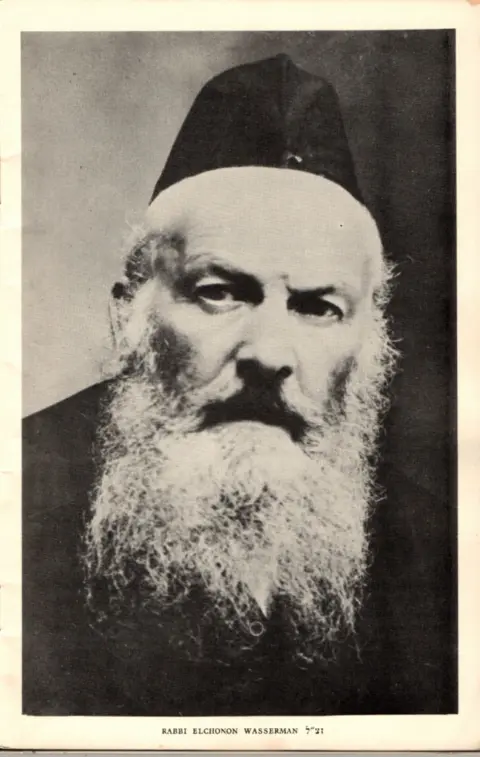
Rabbi Elchanan Bunim ben Naftali Beinish Wasserman — Al Kiddush Hashem
Yahrzeit — 13 Tammuz
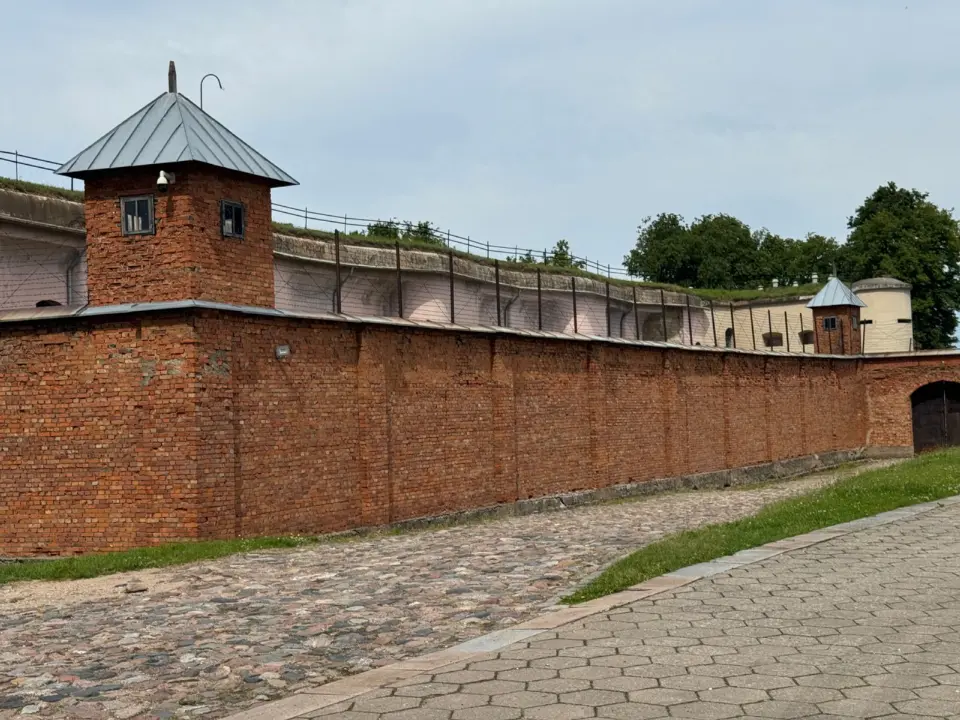
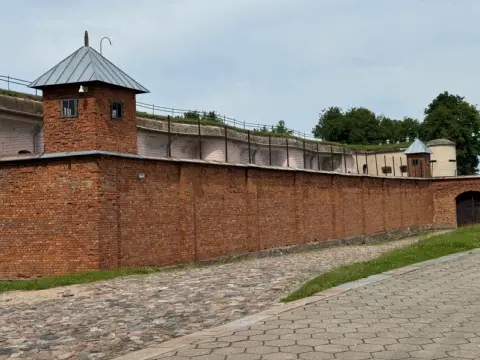
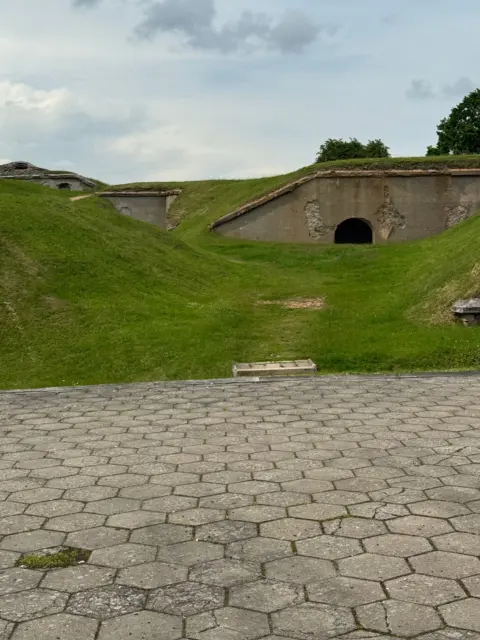
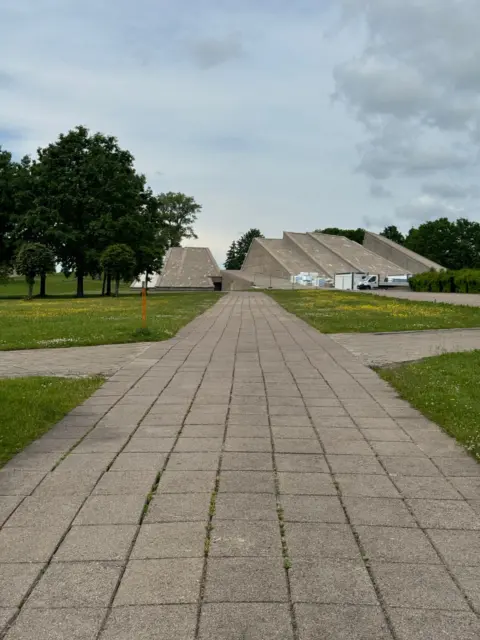
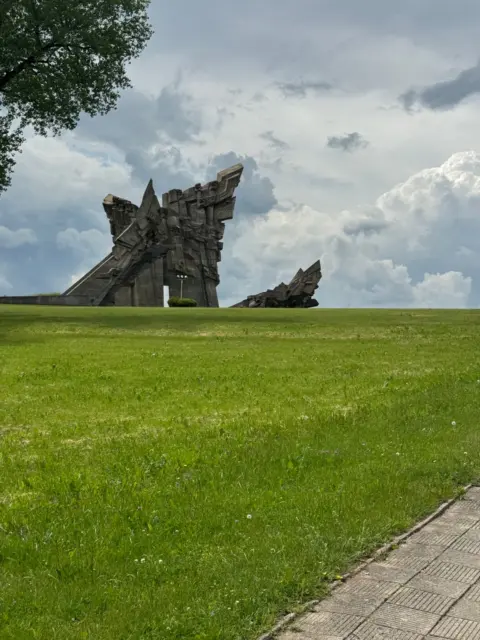
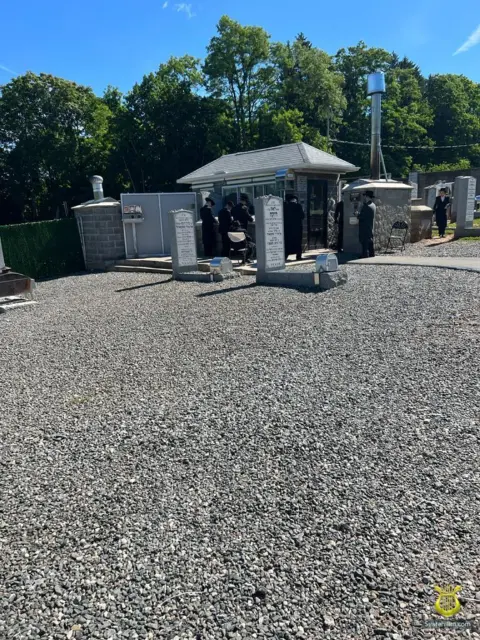
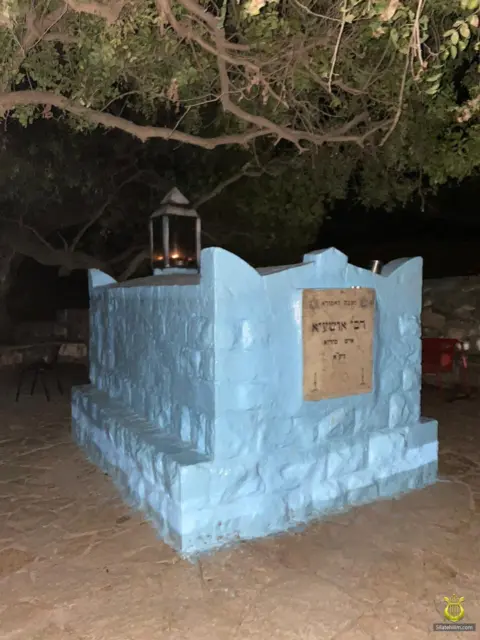
Resting place — Kaunas, Lithuania - the 9th Fort (mass grave)
He was born in the town of Birzai (Lithuania). He acquired the foundations of his Torah at the Telz Yeshiva under the Gaon Rabbi E. Gordon and the Gaon Rabbi Sh. Shkop, and later under the Gaon Rabbi Chaim of Brisk. In 1899 he married the daughter of the Gaon Rabbi M. Atlas, head of the Torah court of the towns of Salant and Shavli (Šiauliai).
In 1903, together with Rabbi Yoel Baranchik of Riga, he founded a yeshiva in the city of Amcislaw (Mstislavl, Belarus), leading and teaching there for about four years.
In 1907 he joined the Chofetz Chaim's Kollel Kodashim [a special study program he founded for the study of the order of Kodashim, dealing with the Temple sacrifices. Sensing the approach of Mashiach, the Chofetz Chaim did a great deal to spread the study of this order], and the Chofetz Chaim became his "rav muvhak" [primary teacher and mentor, his highest authority].
In 1910 he became a teacher at the Brisk Yeshiva and remained there until the outbreak of World War I. He then returned to Radin and traveled together with the Chofetz Chaim's Yeshiva to Smilovichi, where together with the Gaon Rabbi Sh. Eiman he founded a yeshiva and taught there for five years. In 1921 he founded his own yeshiva, "Ohel Torah," in Baranovichi. This yeshiva gained worldwide renown, and students flocked to it in great numbers. Besides teaching at the yeshiva, he himself became one of the outstanding leaders of the Agudat Yisrael movement, fearlessly voicing the Torah view everywhere, both orally and in writing. In 1938, due to the financial difficulties of his yeshiva, he traveled to the United States, where he defended the Torah viewpoint with dignity, regardless of the financial cost involved. His presence strengthened Torah Jewry in the United States, in places where it was still in the early stages of its development at that time.
In 1939, shortly before the outbreak of the war, he returned to Baranovichi, despite the dangerous situation in Poland. His seforim are widely used in yeshivas and include Kovetz Ha'orot, Kovetz Shiurim, Kovetz Ma'amarim, and Ikvasa D'Meshicha.
Al Kiddush Hashem
Reb Elchanan was murdered in cold blood along with many other Jews when the Nazi army entered Lithuania. Rabbi Ephraim Oshry, who later became a rabbi on the Lower East Side of Manhattan, was 27 years old at the time. He was one of the few who managed to escape. He later recounted the last words spoken to them by Reb Elchanan.
When they saw that the end was near, Rabbi Elchanan stood up and spoke to them. He spoke just as he always did; he was calm, with no sign of panic. He said the following: "It appears that in Heaven we are regarded as tzadikim, since we have been chosen as korbanot for Klal Yisrael. Therefore we must do teshuva now. We have little time left. It is better that our korban come through teshuva. In this way we will save the Jews of America. Let no extraneous thought enter our minds, chas v'shalom, for that would render us pigul, an unfit korban. Right now we are performing the greatest mitzvah; Jerusalem was destroyed by fire and will be rebuilt by fire. The very fire that will consume our bodies will one day rebuild Klal Yisrael."
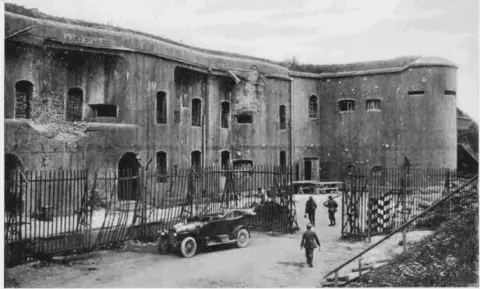
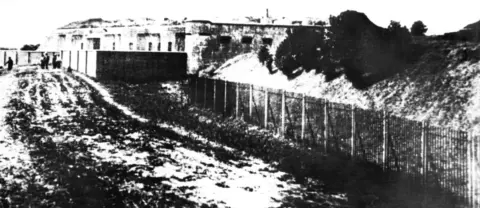
The 9th Fort
On Sunday, the 11th of Tammuz (July 6), 1941, several well-known rabbis who found themselves in Kovno at the outbreak of the war, along with yeshiva students, were gathered in the 9th Fort (Kovno) — everyone who could squeeze into this modest space. Beside the head of the yeshiva,
Rav Elchanan Spektor, sat
Rav Chaim Zaks — head of the Ohel Moshe Yeshiva,
Rav Yisrael Yaakov Lubchansky — mashgiach of the Baranovichi Yeshiva,
Rav Moshe Reiz — a teacher at the yeshiva in the city of Slonim,
Rav Shabtai Vernikovsky — mashgiach of the Lomza Yeshiva, and several other rabbis surrounded by their students. In those days, an elevated atmosphere of holiness reigned among these sages of Torah, doomed to death, who devoted their last days and hours to the study of the Divine Covenant and to reverent service of Heaven. Everyone privileged to witness this directly sensed the Divine Presence!
Rav Elchanan Wasserman was giving a lesson on the daily page of Talmud — Tractate Niddah — and all those present were absorbed in a deep Talmudic discussion. Suddenly the gate burst open, and four armed Lithuanian Nazis entered the yard. At first their shouts went unnoticed, since everyone present was completely absorbed in the Talmudic subject being studied. When the murderers saw that the rabbis did not notice them, they fired several shots, at which everyone jumped up from their seats. The Lithuanians responded with brutal laughter. "We know that you are planning to organize an uprising, with the goal of escaping to Palestine!" they said. "Line up in a column and follow me," one of them ordered. The rabbis lined up, but the murderers began rearranging their captives. They placed Rav Elchanan Wasserman first, with the other rabbis behind him. Rav Avraham Grodzensky was suffering from a leg ailment and was in bed at the time, so the tormentors decided not to take him along. The Lithuanian nationalists intended to hold a triumphant procession with the heads of the Jewish community through the streets of Slobodka, for which the sick were not suitable. While the Lithuanians were arranging the rabbis in the order they had planned, Rav Elchanan addressed the sages of Torah. His voice, as always, was completely calm, and his face radiated greatness. It was clear to everyone that these were his final words. The rabbi spoke not of anything personal; he did not even address his own son Naftali, who lay in the same building with a broken leg.
His words were addressed to the entire Jewish people: "It appears that in Heaven we are considered righteous, since it is desired that our lives become an atonement for the whole Jewish people. We must repent immediately now. There is very little time left; the 9th Fort is too close. We must prepare ourselves for the sanctification of the Divine Name. If we repent, we can save the remaining Jews, so that our brothers and sisters may preserve the Torah."
The column of rabbis being led to their deaths moved through the streets of Kovno. There was no fear in their eyes; they walked forward bravely, understanding that their deaths would become an atonement for the entire Jewish people. They were shot that same night in the pit of the 9th Fort — may Ha-Shem avenge their blood.
Several women released from the fort the next day told of hearing bursts of machine-gun fire cut short the recitation of the "Shema Yisrael" prayer, which these great teachers of Torah offered before death, proclaiming the unity of the Creator within His created world. (
https://toldot.com/articles/articles_33943.html)
Limud
- "Silence the mouths of our adversaries and accusers."
"The Vilna Gaon teaches that everything that happens to us in this world is nothing more than a reflection of what is happening in the spiritual world. If we see growing hatred toward the Jewish people, it means that accusations have been raised against us in Heaven. And when we ask in the 'Avinu Malkeinu' prayer, 'Silence the mouths of our adversaries and accusers,' it is precisely these spiritual accusers that are meant. And their mouths cannot be shut with propaganda literature, but only with Torah and prayer."
The Song of Ha'azinu (Give Ear)
"The Song of Ha'azinu is the only section of the Torah that begins with an introduction (Devarim 31:19-21) and ends with a conclusion (Devarim 32:46). This fact underscores its great significance. What does the Song speak of? Of everything that will happen to Israel until the coming of the Redeemer. The individual verses we present here, together with Rashi's commentary, relate to the period immediately preceding the coming of Mashiach. 'For Ha-Shem will judge His people and have compassion on His servants' — that is, the Redemption will come. When? At the hour when the Holy One sees that Israel's strength has been spent, and there is no one to redeem or save them, He will send His righteous Mashiach. The prophet speaks of this as well: 'I looked, and there was no helper, and I was astonished that there was none to uphold; therefore My own arm brought salvation to Me...' (Yeshayahu 63:5), 'And He saw that there was no man...' (ibid.), meaning there was not even anyone to pray for them. 'And I will say: where are their gods, the rock in whom they trusted?' — Ha-Shem will ask: where are the idols in whom you trusted, hoping they would be your protectors, the idols 'who ate the fat of their sacrifices' — to whom you brought the best of your offerings? Let them rise up and help you. All these verses tell us that on the eve of the Redemption, Jews will wander among foreign gods, foolishly placing their trust now in one idol, now in another. What are these idols that were worshipped? First, we must grasp the meaning of avodah zarah — idol worship. Any phenomenon that appears to a person to be independent of Ha-Shem's will and capable of bestowing benefit or causing harm is defined as idol worship. ('This helps and this harms' — Sanhedrin 67a).
Let us briefly survey the various forms of idol worship that have spread over the last century. The Berlin Enlightenment — or more precisely, the Berlin Foolishness (in Hebrew there is a play on words: both terms are pronounced the same — haskalah) — this is from whom Great Salvation was expected. As soon as the wind of liberalism began to blow, Jews immediately joined its ranks of defenders. After the decline of liberalism, Jews served democracy, socialism, communism, and the other '-isms' that showered down abundantly on our generation. Sacrifices were offered to these idols; both resources and lives were given up for them. All of them betrayed these hopes; not one of them lived up to the expectations placed upon it. Moreover, all these '-isms' died sudden deaths, vanishing more quickly than they had appeared. How can this be explained? The prophet Yechezkel (ch. 29) says that Egypt would be punished 'because it served as a support for Israel' — that is, because Israel placed its hopes upon it. If that is so, the question arises: what sin did the Egyptians commit? The laws of the Torah answer this: every form of idol worship comes to an end and disappears — 'and upon all the gods of Egypt I will execute judgment' (Shemot 12:12), 'and the idols will be utterly abolished.' By placing their hope in the Egyptians, the Jews made them an object of avodah zarah. A remarkable sight appeared before our eyes: in one country [Germany — ed.] 16 million socialists vanished in a single night, leaving almost no memory of themselves behind. And what avodah zarah that was! The Jews could not restrain themselves from serving it with genuine self-sacrifice. They placed their hope in communism, which was said to carry freedom and equality on its wings. Well, the 'red government' demonstrated plainly just what that freedom and equality really were. We have seen that every form of avodah zarah in which we placed our hopes has disappointed and disgraced itself. And the Almighty says: 'Let them rise up and help you.' 'Know that I am Ha-Shem' — the hour has come when you will understand that there is no savior besides Me. But many still refuse to understand and continue clinging to the hem of a dying democracy. But it too will not help, since it possesses no real power." (www.yhe.center/for-the-nations, Rav Elchanan Bunim Wasserman, "Before the Coming of Mashiach," translated by Rav Tzvi Wasserman)
May the merit of this tzadik protect Am Yisrael!
(https://dailyzohar.com/tzadikim/425-Rabbi-Elchanan-Bunim; beerot.ru)