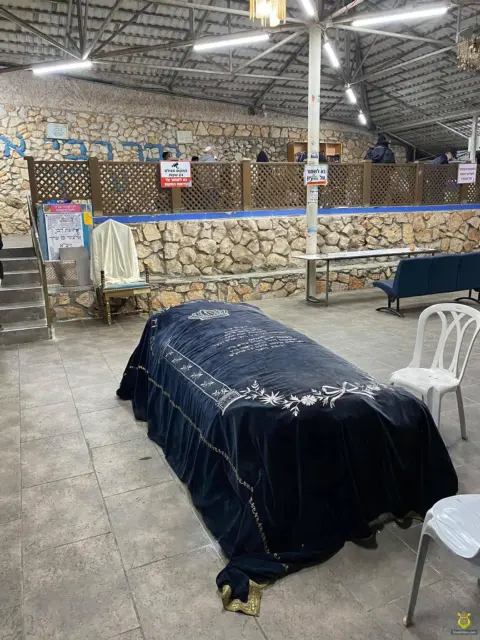
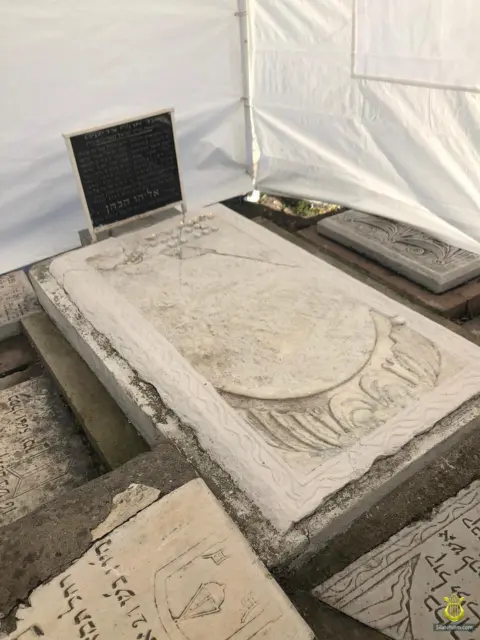
Grave
Elazar ben Arach
Tanna
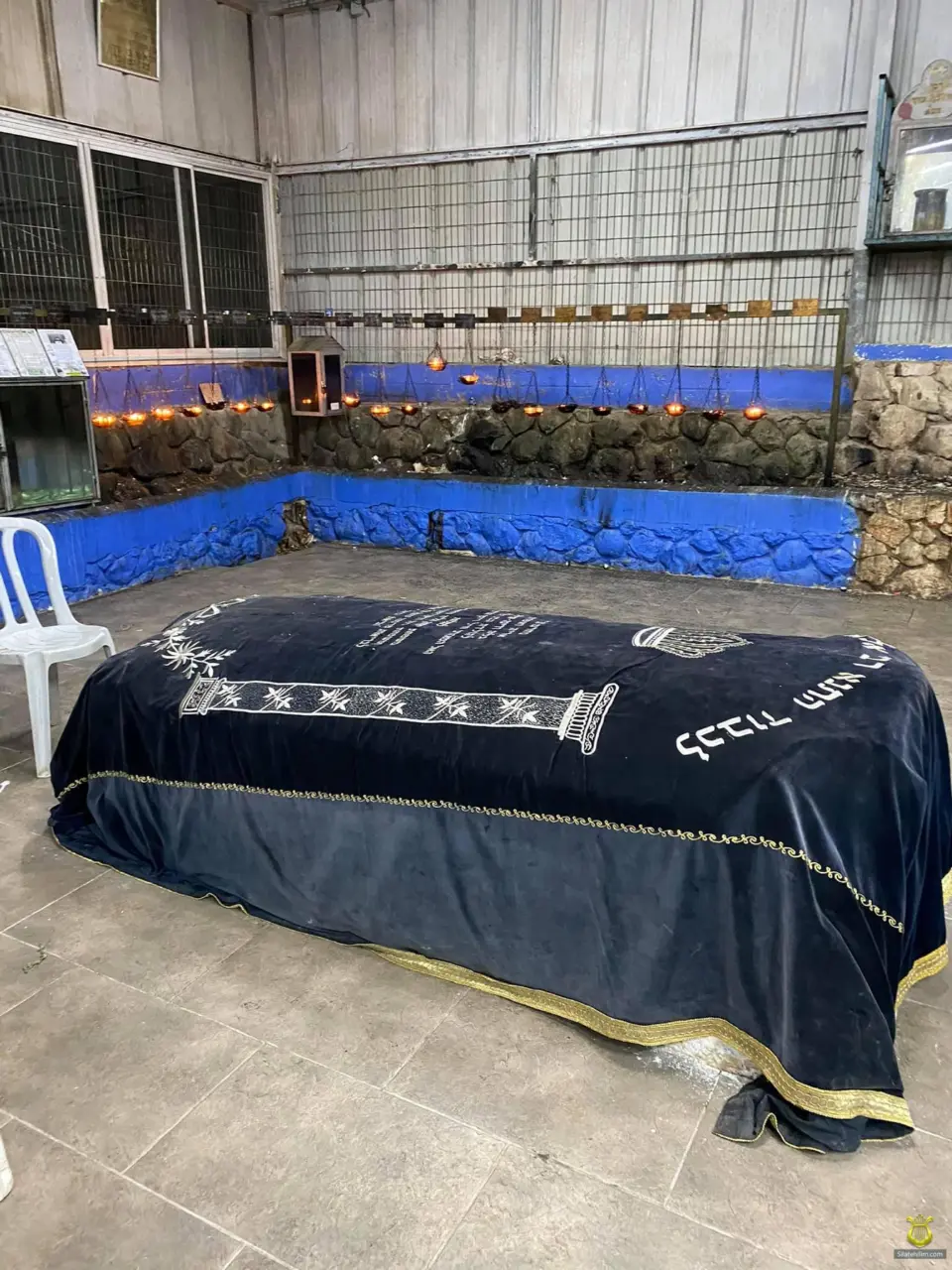
Tanna Rabbi Elazar ben Arach
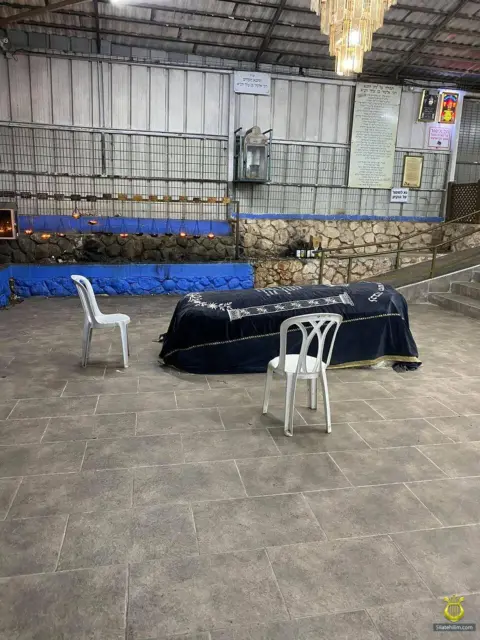
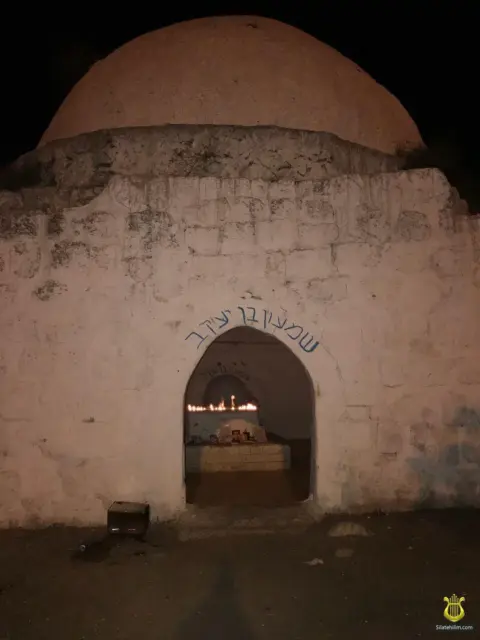
Resting place - Alma, Reichaniya;
Yahrzeit - 15 Iyar.
Rabban Yochanan ben Zakkai said:
"If all the sages of Israel were on one side of a scale, and Eliezer ben Hyrcanus on the other, he would outweigh them all.
But Abba Shaul transmits this saying differently: if all the sages of Israel were on one side of a scale [with Eliezer ben Hyrcanus among them], and on the other side were Elazar ben Arach, he would outweigh them all."
His Wife and the Price of Solitude
"As long as Rabban Yochanan ben Zakkai was alive, his students remained near him, but when he passed away, they went to Yavneh, while Rabbi Elazar ben Arach went to Emmaus, a place with abundant good water and great beauty. He expected them to come to him, but they did not come. Since they did not come, he decided to go to them, but his wife would not allow it.
She said to him: Who needs whom?
He answered: They need me.
She said to him: A sack and mice - which is the usual way, does the sack go to the mice, or do the mice go to the sack?
He listened to her. And so he remained until he forgot all his learning.
After some time, they came to him and asked: Wheat bread or barley bread, when eating reclining, and is it dipped...?
And he did not know how to answer. He had forgotten his learning".
The fact is that the distant northern Emmaus, also known as Hamat Gader, was a prosperous and well-fed city, famous for its healing hot springs.
Rabbi Elazar's wife offered him something like a parable about a sack of flour and mice desiring the flour.
The witty woman compares the students to mice and achieves a sophisticated play on words in her joke. Emmaus, a city of never-ending springs, is called in Hebrew Hamat (Gader), and this name (hamat) is consonant with the sack from the mouse parable. Thus the city where the sage resides is transformed into a source of sustenance and an object of desire for the students: one need only wait a little and they will come.
The wife's advice proved disastrous for the man. Waiting for the students to come turned out to be ruinous for the sage - he forgot his learning. Finding himself far from his fellows, the sage ceased to participate in dialogues and intellectual duels and lost his scholarly memory.
Let us also remember that he is not a well in which water - the teachings of past generations - collects drop by drop. Finding himself in solitude, without debates and dialogues, his mind weakened.
After some time, the "mice" nevertheless came to the basket, but it turned out to be empty.
Rabbi Elazar ben Arach found himself there [that is, in Emmaus, also called Diomeset] and, while there, forgot his learning. And when he returned, he went up and read from the Torah scroll, and when he reached the verse: "This month shall be to you..." (Exodus 12:2), he read instead: "And their heart grew numb...". The sages prayed for him, and he remembered his learning. (Rav Reuven Kiperwasser)
Segula for Parnasa
Gaon Rav Yaniv Assuri - Rosh Yeshiva of "Yodei Bina" - teaches that the grave of Rabbi Elazar ben Arach is a segula for prayers for Parnasa (livelihood), since Rabbi Elazar ben Arach was poor, yet devoted all his strength to Torah.
Segula for Refuah Shleimah
Rabbi Mordechai Eliyahu (may his merit shield us) advised a Jew who came to him seeking help for an illness (a tumor on the head) to travel to the grave of Rabbi Elazar ben Arach, gather sand "chol" from the 4 corners (pinot) of his Tzion (it can be in a small bag) and place it on the afflicted spot on the head, and this definitely brings healing (merapeh).
He explained that Rabbi Elazar was very poor, and when he studied Torah, he did not even have a crumb of bread and ate sand out of hunger. And then a Heavenly Voice proclaimed: you eat sand - this sand will be a remedy for people.
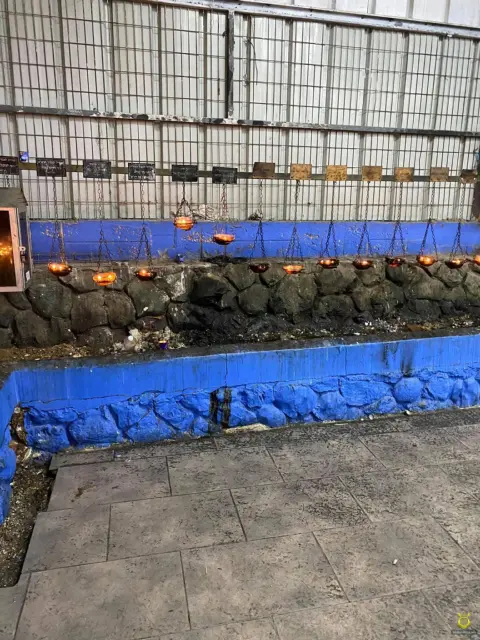
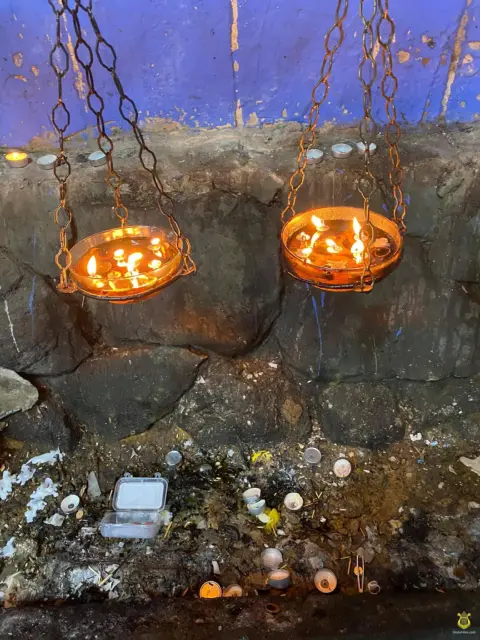
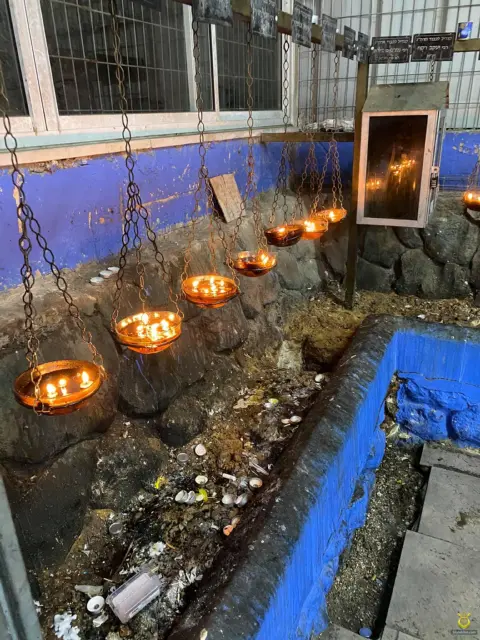
A remarkable place in its spirituality, and perhaps one of the few where it is customary to light candles for the living in large vats of olive oil, praying for Yeshuot and Brachot.
May the merit of this great tzadik protect Am Yisrael!
Gallery