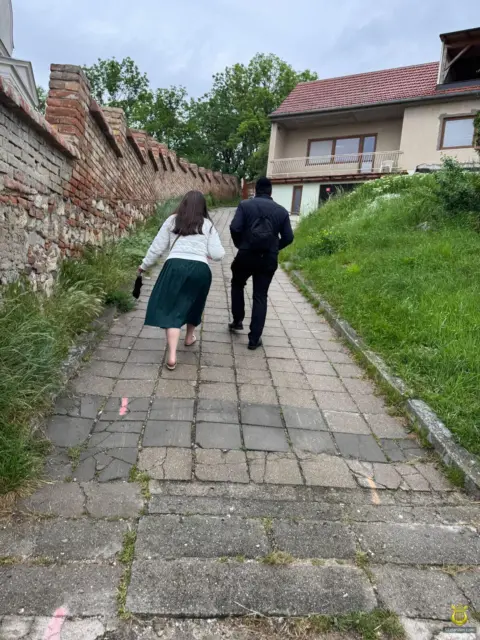
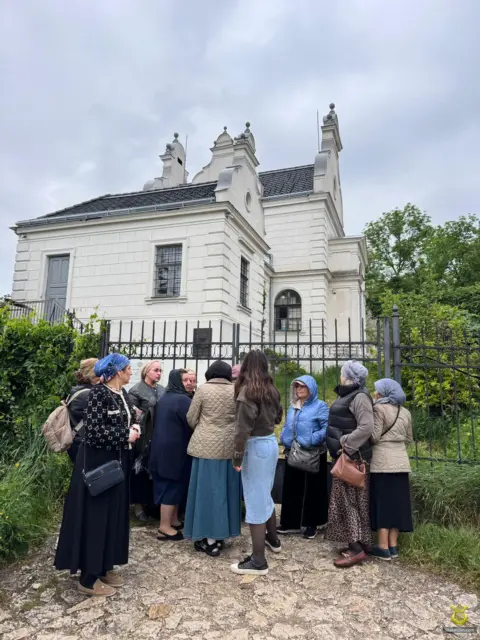
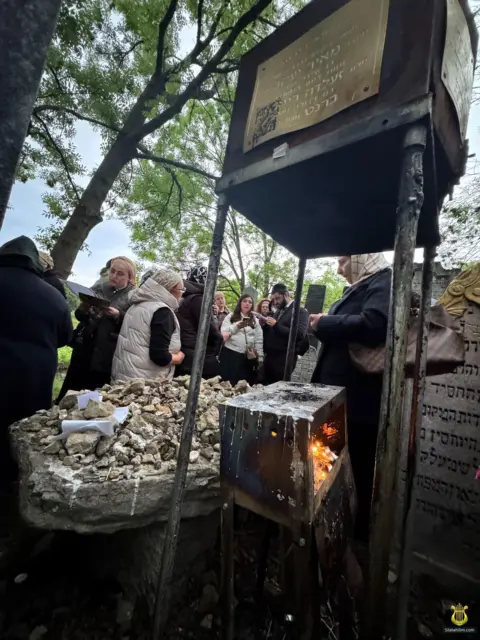
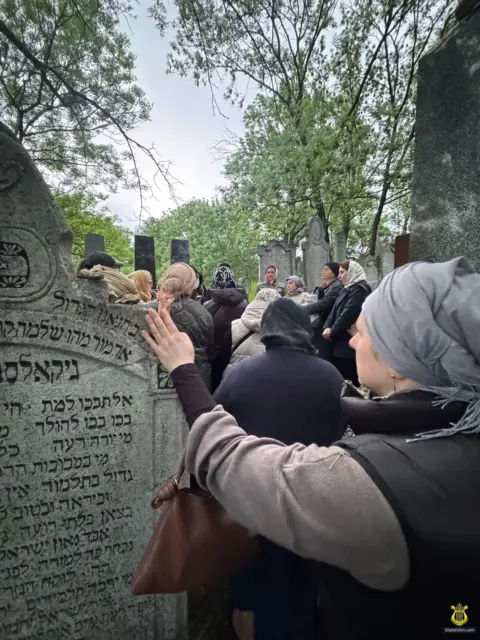
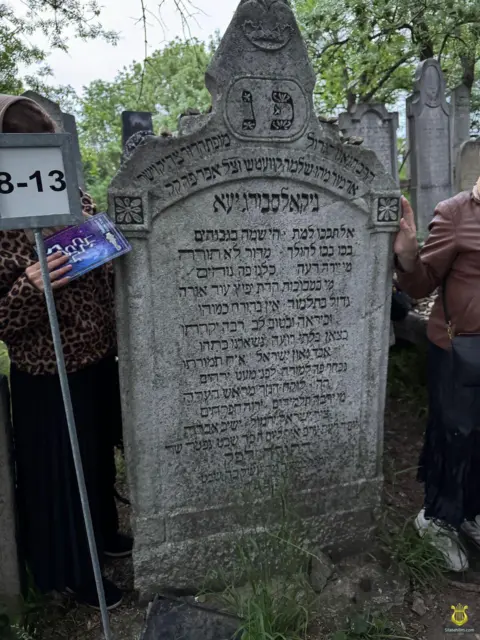
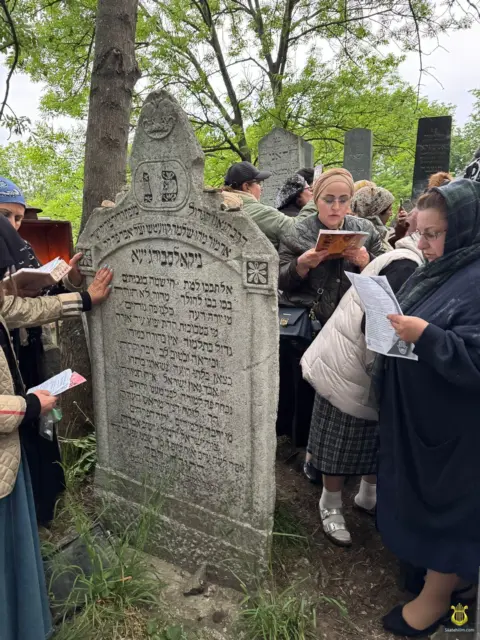
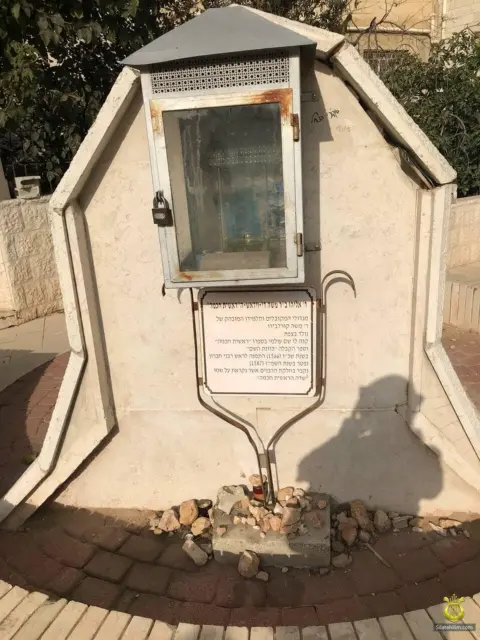
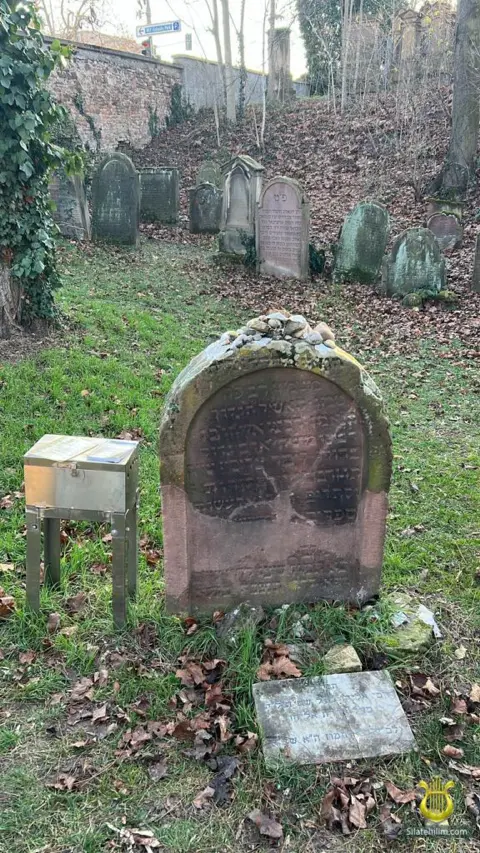
Grave
Shmelke of Nikolsburg
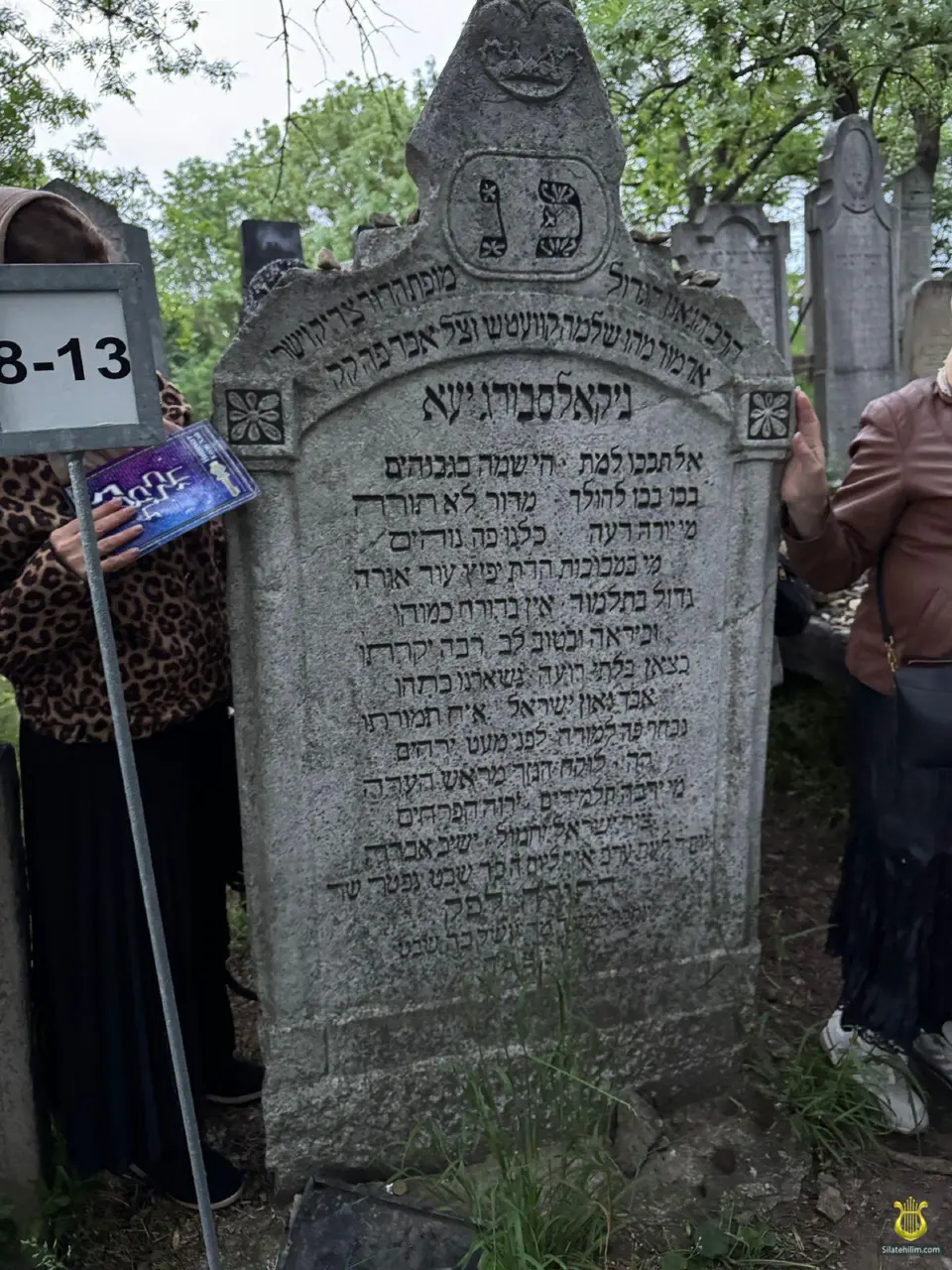
Rabbi Shmelke Shmuel ben Tzvi Hirsh Horowitz of Nikolsburg (1726, Chortkov, Galicia – 1778, Nikolsburg, Moravia) was one of the great early Chassidic Rebbes.
Yahrzeit – 1 Iyar (according to another version, 2 Iyar)
Resting place – Nikolsburg - Mikulov, Czech Republic
A Levite, he traced his lineage back to the prophet Shmuel, who was also a Levite.
His father was the renowned Rav Tzvi Hirsh Horowitz of Chortkov – the one who blessed the Rothschild clan – detailed here:
How to Become a Rothschild
https://silatehilim.com/ночь-проверки-хамеца-или-как-стать-рот/
The Boston Rebbe of Boro Park – a descendant (eighth generation in a direct line from Rabbi Shmelke) – used to say that after the passing of the Maggid of Mezeritch, all the Chassidim initially went to Rabbi Shmelke as the next Rebbe, since he was at that time the strongest leader and Rebbe for the overwhelming majority of the Jews of Galicia and Poland.
The Maggid said of him: "I found a chest of unlit candles; I lit one, and from that candle all the others were lit, giving off a bright light." Although Rav Shmelke and his brother Rabbi Pinchas Horowitz – the "Baal HaFla'ah" – did not come from a Chassidic background and were even initially skeptical, their father Rav Tzvi Hirsh of Chortkov (the very same Rav Tzvi Hirsh Chortkover who blessed Rav Moshe Amshel Rothschild with wealth) had good relations with the Baal Shem Tov, who praised him greatly, and he was a widely recognized tzadik.
He had a large family, including five distinguished sons, the most famous of whom were Reb Shmuel Shmelke (the second son) and Rav Pinchas (the third son) – the "Baal HaFla'ah."
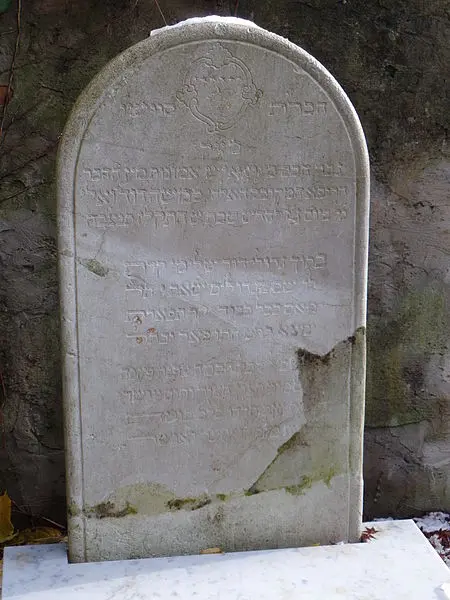
Interestingly, their fourth son, Rav Yehoshua Heschel, passed away on 7 Nisan 5491/1731 as a healthy young man of 15. His gravestone in Chortkov states that he saw he was needed in the "mesivta d'rakia" to serve in the Heavenly academy, so he prepared himself and peacefully returned his soul to its Creator.
Their mother, Rebbetzin Malka, once said of her sons Shmelke and Pinchas: "I have two sons – one who never says Birkat HaMazon, and the other who never says Kriat Shema al HaMitah" (meaning one never eats, and the other never sleeps). Indeed, Rav Shmelke avoided worldly pleasures and was known for barely eating any food, while his brother Rav Pinchas was known for eating a great deal – as a result of which Rav Pinchas remarked: "Two brothers: one eats his fill like an animal, and the other is comparable to an angel." To which Shmelke replied: "That is not so! Rather, two brothers: one is a Kohen Gadol, who through his eating can purify any food as upon the Holy Altar, while the other, through his many sins, is a simple man of flesh and blood."
Rav Shmelke came from a noble family, one of at least three families able to trace their lineage all the way back to Adam HaRishon (Shapiro and Margolis being the other two well-known families). He was a descendant of many great luminaries, such as the Shlah HaKadosh and Shmuel HaNavi – about whom Rabbi Shmelke said on his deathbed: "The time of my passing has come. Know that within me is a spark of Shmuel HaNavi – I bear his name, I am his descendant, and I lived 52 years, as he did, but he was called 'Shmuel,' while I remain 'Shmelke'" (and as such, he was, of course, also a descendant of Korach, as was his disciple, Rabbi Yaakov Yitzchak HaLevi Horowitz, the Chozeh of Lublin, who was known to call his famous predecessor "Zeide Korach").
Some also said that the fourth Lubavitcher Rebbe – Rabbi Shmuel, the Rebbe Maharash – whose birthday (2 Iyar 1834) follows the yahrzeit of Rabbi Shmelke (1 Iyar 1778) – may have been named in connection with Rabbi Shmelke, who was known to say that he too carried a spark of the soul of Shmuel HaNavi.
Rabbi Shmelke and Rabbi Pinchas were extremely close. They established a yeshiva where Rav Shmelke served as Rav in Ryczywół, Poland – among the students were Rav Yisrael (the Maggid) of Kozhnitz, Rav Yuzpa (known as "Yuzpa the Righteous"), and Rav Levi Yitzchak of Berditchev. But around 1762-1765 they finally decided to make a journey to meet the Maggid – and largely thanks to the efforts of Rav Zusha of Anipoli and Rav Avraham of Kalisk, they became close followers of the Maggid of Mezeritch.
They both entered the Maggid's inner circle of disciples, after which Rav Shmelke became a leading Chassidic figure and disseminator of Chassidism in Poland; among his students were the Maggid of Kozhnitz, the Chozeh of Lublin, Rav Moshe Leib of Sasov, and Rav Menachem Mendel of Rimanov. Like Rav Menachem Mendel of Vitebsk, who led Chassidism in Belarus and Lithuania (in the north), Rav Shmelke carried the torch of Chassidism westward – and interestingly, both of them share a yahrzeit of 1 Iyar, though ten years apart.
After some time, Rav Shmelke became Rav in Shinova, and then in 1769 the communities of Nikolsburg (former home to such distinguished figures as the Tosfot Yom Tov and Rabbi Yonatan Eibeschutz) and Frankfurt were seeking rabbis and sent requests to Rabbi Shmelke and Rabbi Pinchas. Ultimately, Rav Pinchas went to Frankfurt, and Rav Shmelke went to Nikolsburg, while Rabbi Elimelech of Lizhensk succeeded Rabbi Shmelke as Rav in Shinova.
Interestingly, both Rav Shmelke and his brother Rav Pinchas ultimately left the regions where Chassidism was flourishing and moved to areas where the Haskalah was stronger and the ways of Chassidism less accepted: Frankfurt in Germany and Nikolsburg, near Prague in Moravia (today Mikulov).
Rav Shmelke struggled greatly against his opponents throughout his life, especially in Nikolsburg; at one point he cried out: "Master of the Universe! What have I done to deserve such persecution, when other rabbis can serve You in peace?" And from that day, Eliyahu HaNavi ceased visiting him, after which he fasted 40 days for his complaint, and afterward Eliyahu visited him again and said: "Believe me, my son, when you begin to pray, all the angels and seraphim cannot come near you – but so it has been decreed in Heaven, and we cannot question the ways of the Almighty."
In 1775, his opponents, according to some sources led by Moses Mendelssohn, complained to the government in Vienna that Rav Shmelke was uneducated and led his community in an extremely unenlightened manner. Rav Shmelke traveled to Vienna, where he met with the queen and government ministers and demonstrated remarkable knowledge of the German language and its dialects, as well as of the sciences, and it is said that his German handwriting was so beautiful that it remains in a local museum. It so happened that he stared at the ground rather than at the queen, who demanded to know why he refused to look at her, to which he replied: "I stare at the ground because it is from the ground that I was taken." The queen and officials were so impressed by his knowledge and wisdom that they granted him full authority as Rabbi over all of Moravia, and as such asked him whether his enemies should be executed. But Rav Shmelke asked that they not be executed, but instead expelled from his community – so they were sent to Berlin. The Rebbe of Sochatchov later lamented this, complaining that had Rav Shmelke allowed them to be killed, Klal Yisrael would have been spared the damage these reformers later caused.
Three years later, on Tuesday, 1 Iyar 1778, he passed away in Nikolsburg. On his first day in office as Rabbi of Nikolsburg, Avraham Trebitsch, a native of Nikolsburg, reports that Rabbi Shmelke performed a miracle, bringing rain. It is told that his strong attachment to the Chassidim outraged many members of the community, leading to bitter quarrels that were quelled only through the personal intervention of Rabbi Elimelech of Lizhensk. Rabbi Shmelke founded a large yeshiva that attracted many outstanding students. Among them were such luminaries as Rabbi Yaakov Yitzchak of Lublin, Menachem Mendel of Rimanov, Yisrael Hopstein, Mordechai Benet, and Moshe Leib of Sasov. He did much to spread the spirit of Chassidism in Poland and Galicia. Because of this, his final appointment met with fierce resistance, but Empress Maria Theresa confirmed him in the position. Many stories and miraculous events were told about him.
He was the author of "Divrei Shmuel," published in 1862, and "Nezir HaShem," published in 1869.
Sipurei Tzadikim
David's Harp
When Rav Shmelke and his brother Rav Pinchas were in Mezeritch, they rented a small room in the attic so that no one would disturb them during their studies. Once, at the close of Shabbat, as they sat late into the night over their books, the brothers heard a strange weeping in which they could clearly make out a man's and a woman's voice. They looked out the window and saw, sitting on a bench and weeping, the manservant and maidservant of the house where they were staying. The couple told the brothers that they had worked in that house for many years, waiting for permission to marry, but the master of the house would not give his consent. The brothers said that all that was needed was to set up a chuppah for the wedding ceremony; then everything else, including the master's permission, would follow on its own. They sent for a singer, who immediately gathered ten men, opened the House of Prayer, and set up a chuppah. The wedding was celebrated properly. Rav Shmelke tapped pieces of wood together, and Rav Pinchas tapped two candlesticks, producing a beautiful sound. Then the Maggid came to the wedding ceremony. At the "feast of King David" he sat with them motionless, in that state of soul that often overtook him. Suddenly he jumped up and ran to the House of Prayer. "Don't you hear David's harp?" he exclaimed.
New Melodies
Rav Moshe Teitelbaum, a disciple of the Chozeh of Lublin, said: "When Rav Shmelke prayed on Shabbat and holidays, and especially on Yom Kippur, he served as a Kohen Gadol; the mystery became manifest in the musical sound of the words he uttered, and thus new melodies arose, the most wondrous of wonders, which neither he nor any other person had ever heard before. At those moments Rav Shmelke did not even know what he was singing or to what melody he sang, for he was entirely attached to the higher world."
The Commandment of Love
A certain student once asked Rav Shmelke: "We are commanded to love our neighbor as ourselves. But how can I love him if he treats me badly?" Rav Shmelke answered: "You must understand these words correctly: love your neighbor as something that is yourself. For all souls are one soul. Every soul is a spark that flew off from a single primordial soul, which is wholly present in all souls, just as your soul is wholly present in every part of your body. Your soul can make a mistake, and then your hand makes a mistake too, causing you suffering. But would you beat and whip your hand for that, thinking it failed to understand what was required of it, thereby increasing your already considerable pain? The same is true of your fellow, who is one soul with you and who treats you badly, not understanding you well enough. If you punish him for this, you cause pain to yourself." The student asked again: "But if I see a sinner, guilty before G-d, how can I love him?" "But don't you know," answered Rav Shmelke, "that the primordial soul came from the essence of G-d, so that every human soul is therefore a part of G-d? Won't pity awaken in you when you see that one of the holy divine sparks has become so entangled in sins and has nearly perished?"
The Ring
A certain beggar came to Rav Shmelke. There was no money in the house at the time, so he gave the beggar a ring. When Rav Shmelke's wife found out about this, she began to reproach him for giving a random passerby such a valuable item with such a large and precious stone. Rav Shmelke then called the beggar back and said to him: "I have just learned that the ring I gave you is very valuable. So be careful not to sell it too cheaply." Messengers A certain man came to Rav Shmelke and complained that he was unable to earn his own livelihood and was therefore forced to go around asking good people for help. He kept repeating the words of the prayer: "May we not need the gift of flesh and blood." Rav Shmelke remarked to him: "You should say not 'gift' but 'gifts,' for G-d is one, but His messengers are many. This is what these words mean. When we say 'may we not need gifts,' we mean only the gifts of men. But when we do accept such gifts, we should regard those who give them as G-d's messengers."
The Rich Man and the Poor Man
Rav Shmelke said: "The poor man gives the rich man more than the rich man gives the poor man. So the rich man needs the poor man far more than the poor man needs the rich man."
Be Holy
A certain man once asked Rav Shmelke: "It is written: 'You shall be holy, for I, the L-rd your G-d, am holy. Every man shall revere his mother and his father.' But how can a man, this lump of clay, this dwelling place of the vilest desires, attain a quality that belongs to G-d Himself? And what is the connection between the call to the superhuman and the commandment to honor one's father and mother, which is a human law for mortal men?" The Rav answered: "According to the teaching of our Sages, three partners take part in the creation of a child: G-d, the father, and the mother. G-d's part is entirely holy. The other parts of a person can also be sanctified as far as possible. This is exactly what the commandment implies. You are holy, and you shall be holy. Thus, you should avoid within yourself that inheritance from father and mother which opposes holiness. You must not yield to it, but you should restrain it and make it submissive to holiness."
Preparation
One of Rav Shmelke's students asked him to teach him how to prepare his soul for the service of G-d. The tzadik told him to go to Rav Avraham Chaim, who at the time ran an inn. The student carried out his teacher's instruction and lived at Avraham's inn for several weeks, but he could not see even a hint of holiness in the owner, since from the morning prayer until late at night he was occupied only with household chores. Finally, the student asked Avraham what took up his whole day. "My main concern," answered Rav Avraham, "is to wash and clean everything, so that no crumb of bread remains on the tables and the pots and pans shine." When the student returned home and told his teacher everything, Rav Shmelke said: "Now you know the answer to your question."
The Test
Rav Shmelke was asked: "Why is the binding of Yitzchak so greatly exalted? After all, by that time the patriarch Avraham had already reached a high level of holiness, so it is not surprising that he immediately did what G-d commanded him." Rav Shmelke answered: "At the hour of testing, a person is stripped of all levels and all holiness. Naked of everything he has attained, he stands before the One who tests him." I Would Not Die Rav Shmelke once said: "If I had a choice, I would not die. For in the World to Come there are no Days of Awe. And how can the human soul manage without those Days of Judgment?"
Our Generation
Rav Shmelke was once asked: "Some find it hard to believe that Mashiach could suddenly appear in this generation on an ordinary day. How can our generation merit what the Tannaim and Amoraim, the 'generations of knowledge' and the generations right after them, could not merit?" The tzadik answered: "For many years the king's army besieged a well-fortified city. Many different regiments under capable generals stormed its towers again and again with all the strength they had, until at last they were able to take the city. Then a whole army of ordinary laborers was called into the city and commanded to clear away the rubble and ruins and build a new palace there for the victorious king. Such is our generation."
The Fate of Thieves
Regarding Rashi's words, "Whoever's ear heard the words 'Do not steal' spoken at Mount Sinai, and who then goes and steals, that person's ear shall be pierced," Rav Shmelke said: "Before G-d spoke this commandment from Mount Sinai, every person looked after his own property and made sure it would not be stolen. And since thieves knew this, they did not attempt to steal. But after the L-rd said, 'Do not steal,' and people felt that G-d Himself was guarding their property for them, thievery began to flourish."
Brothers
Rav Shmelke of Nikolsburg once invited his brother Rav Pinchas of Frankfurt to visit him. Rav Shmelke always ate very modestly, and in his old age he began to eat very little food, washing it down with a small amount of water. When Rav Pinchas, who had not seen his brother in many years, noticed this, he said: "Here father and mother have two sons. One eats and gulps like a wild animal, and the other is like an angel of G-d: he needs neither food nor drink, but is content with the radiance of divine glory alone." Rav Shmelke replied: "Here father and mother have two sons. One is like a Kohen Gadol, and the other is like a simple father of a household. The Kohen Gadol eats, and his food is part of the offering that the simple father of the household brings to G-d."
The Journey on the Danube
Plans for persecuting the Jews were being hatched in the imperial palace. So Rav Shmelke and his student Moshe Leib of Sasov set out for Vienna to thwart these schemes. It was freezing, and ice floes drifted on the Danube. The tzadikim sailed in a flimsy little boat that could hold no more than two people. Rav Shmelke began to sing the song that Moshe sang after the crossing of the Red Sea, and Moshe Leib joined in, echoing it in his deep bass voice. So they sailed on in the cramped boat, and the ice floes did not touch them. In Vienna, people crowded on the shore, marveling at the travelers, and news of them soon reached the imperial palace. That very day Rav Shmelke was received by the empress, who granted all his requests.
Amen
When Rav Shmelke sensed that he would soon die, he said to his Chassidim: "Until now I did not want to tell you this, but now I will, for the time has come. You know that I have always prayed diligently and recited the blessing before meals only where there was someone who could say 'Amen.' For every blessing gives birth to an angel, and that angel remains incomplete until someone says 'Amen.' But once, while traveling, I recited a blessing in a secluded place where there was no one to say 'Amen.' I had already begun to feel great distress over this, when suddenly two figures appeared beside me. As I recited the words of the blessing, I marveled at the stature and bearing of these strangers, and when I finished, they said 'Amen' with indescribable sweetness. When I tried to look at them more closely, a cloud enveloped them and they vanished."
The Soul of Shmuel HaNavi
On the second day of the month of Iyar in the year 5538, Rav Shmelke gathered his students. He sat solemnly in his large chair, his face shining, and his eyes, as always, clear and pure. Rav Shmelke said: "You should know that today is the day of my passing." The students began to weep, but the Rav told them to stop, and continued: "You should also know that the soul of the prophet Shmuel dwells within me. There are three signs of this: my name is Shmuel; I am a Levite, and he too was a Levite; my life lasted 52 years, as did his. But people called him Shmuel, and me Shmelke, and so I shall remain in their memory as Shmelke." Then he told his weeping students to leave him alone. When they went out, Rav Shmelke leaned back in his chair and passed away. May the merit of the tzadik protect Am Yisrael!
A Powerful Prayer Against the Evil Eye from Rabbi Shmelke of Nikolsburg
https://silatehilim.com/мощная-молитва-заклинание-от-аин-ара-р/
(https://dailyzohar.com/tzadikim/352-Rabbi-Shmuel-Shmelke-HaLevi-Horowitz-of-Nikolsburg; http://asimplejew.blogspot.com/2007/04/guest-posting-from-chabakuk-elisha.html#links)
Gallery