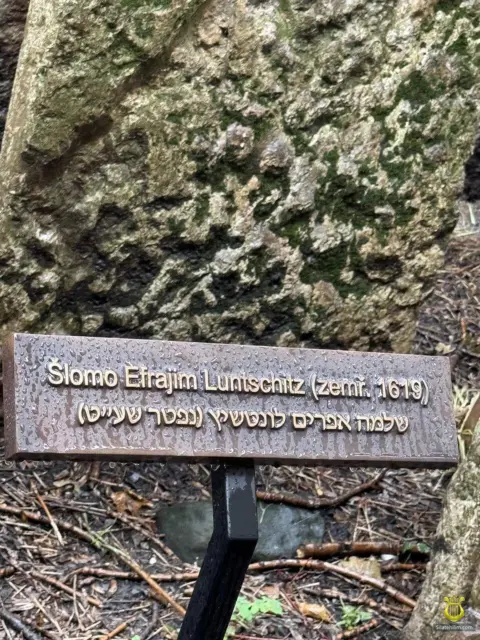
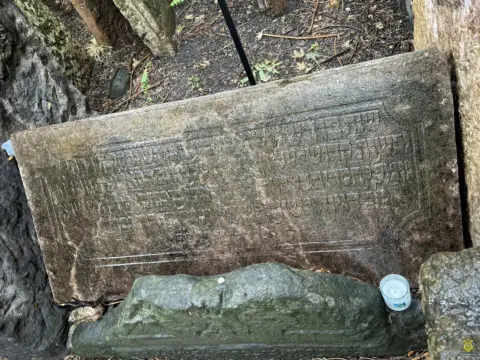
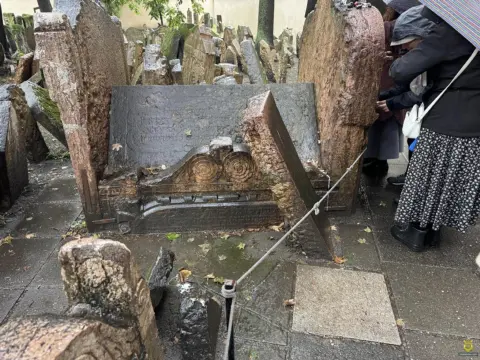
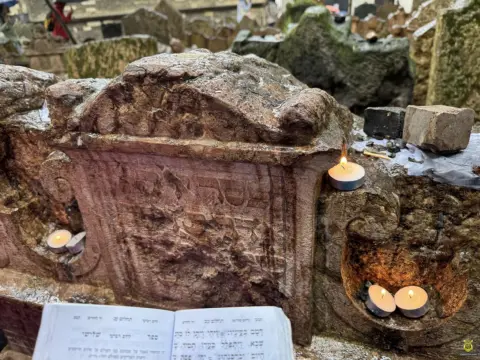
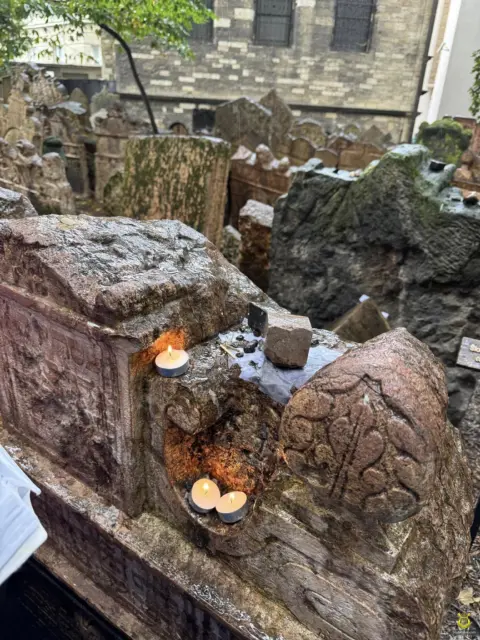
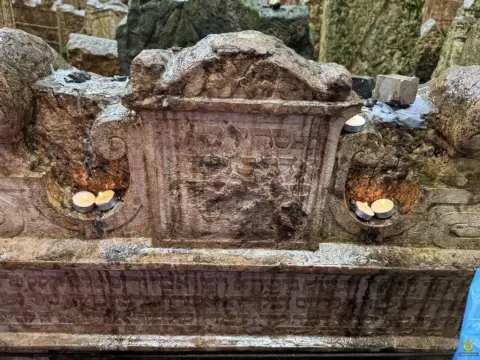
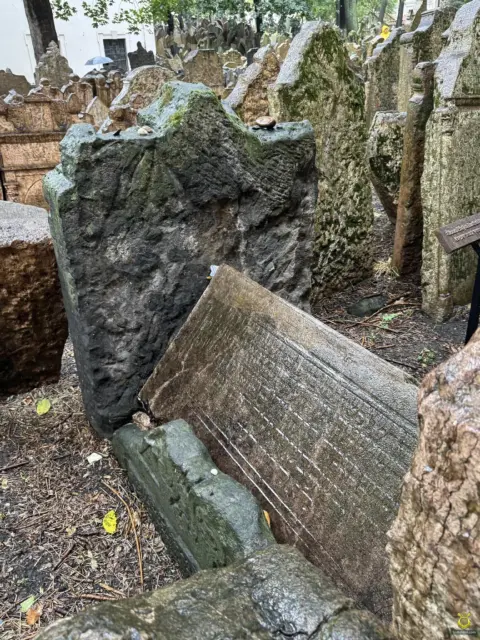
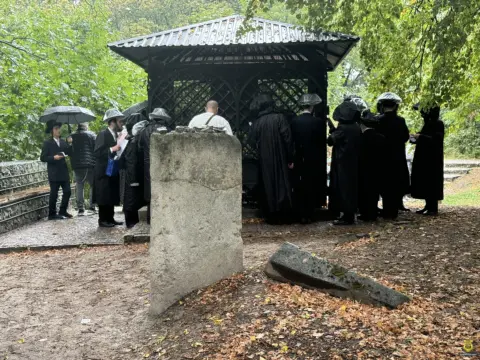
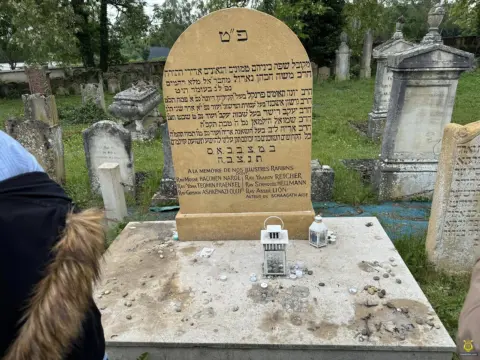
Grave
Shlomo Ephraim Luntschitz
"Kli Yakar"
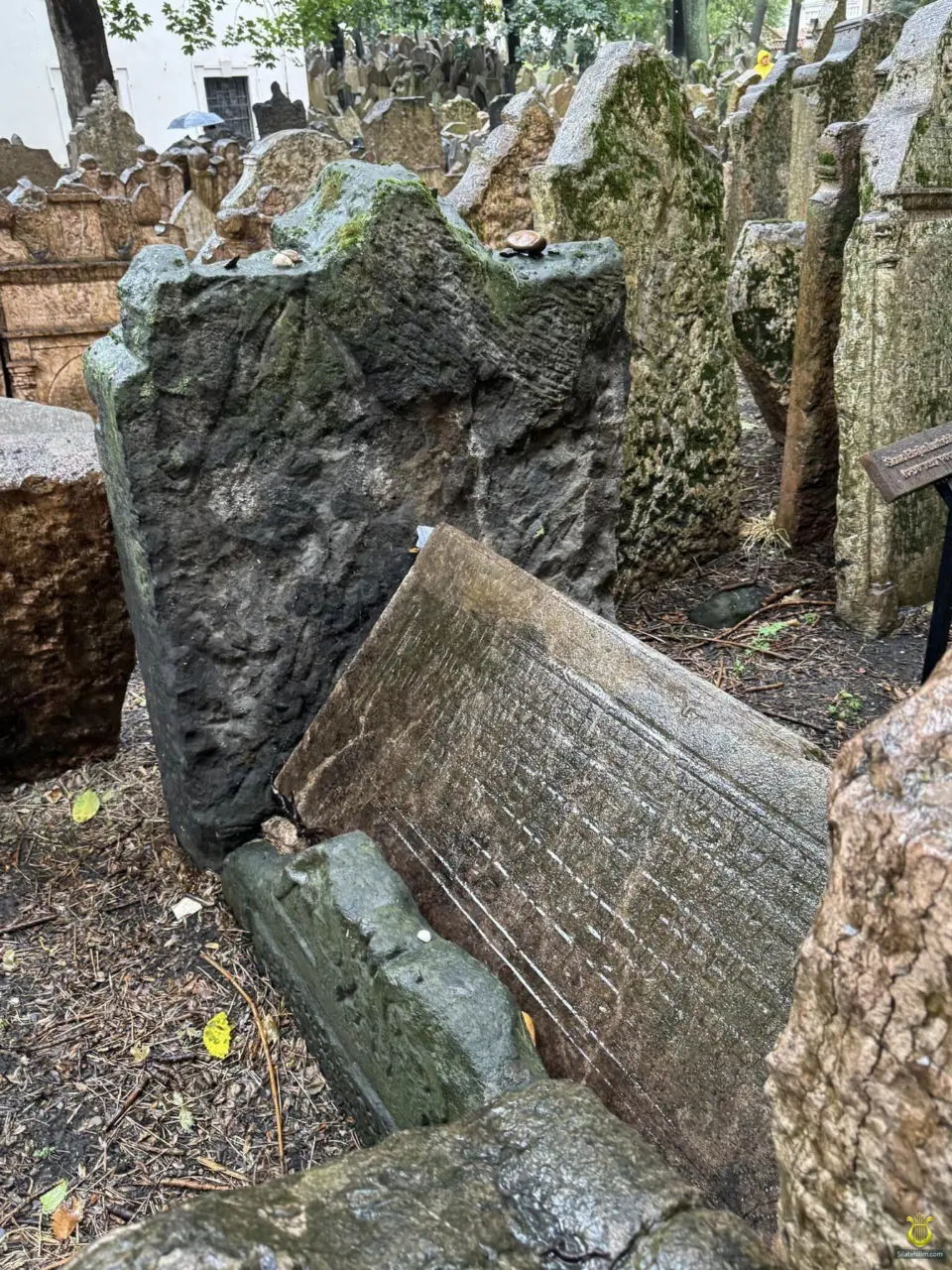
Yahrzeit (Hillula)
- 7 Iyar — Rabbi Shlomo Ephraim Luntchitz - the "Kli Yakar"
Rabbi Shlomo Ephraim ben Aharon Luntschitz (1550 – 1619) was a rabbi and Torah commentator – the author of the "Kli Yakar."
Yahrzeit – 7 Iyar
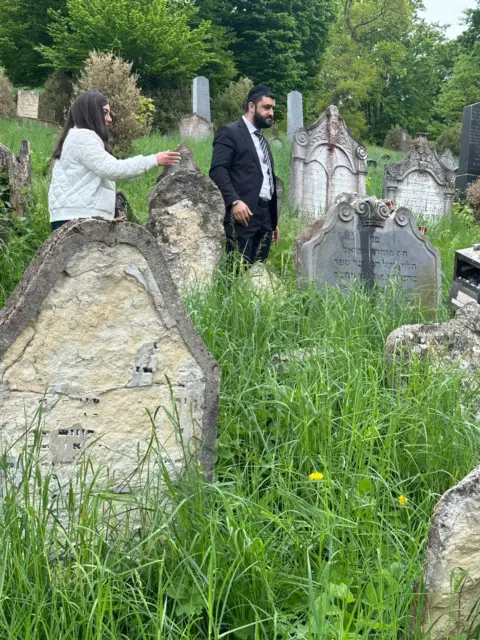
Resting place – Jewish cemetery Prague-Josefov
He was born in Lenczyca (also known as Luntschitz) and studied under Solomon Luria in Lublin, later serving as Rosh Yeshiva in Lvov (Lemberg).
In 1604 he was appointed rabbi of Prague and held this position until his death, from 1604 to 1619.
In the introduction to his "Kli Yakar," he relates that the name Shlomo was added to his name during a life-threatening illness, a common practice in Judaism.
Luntschitz is remembered above all for his homiletical work, chiefly "Kli Yakar" ("precious vessel," an allusion to Proverbs 20:15) on the Torah, which first appeared in Lublin in 1602, is still printed in many editions of the Chumash to this day, and continues to be very popular. He composed two penitential prayers in memory of the pogroms of 1611 that struck Prague on the 2nd of Adar according to the Jewish calendar. In addition, he wrote "Ir Giborim" ("city of mighty men," cf. Proverbs 21:22), consisting of Petichot u-She'arim ("openings and gates") and two works of Torah homilies. It was first published in Basel in 1580.
"Olelot Ephraim" ("Gleanings of Ephraim," an allusion to Judges 8:2), four volumes of sermons published in Lublin in 1590. "Amudei Shesh" ("pillars of marble," Esther 1:6), sermons (Prague, 1617).
He was known for his criticism of pilpul, although the same work also employs pilpul.
"Siftei Da'at" ("words of wisdom," also Proverbs 20:15), a continuation of Kli Yekar in style and scope, Prague, 1610. "Orach le-Chayim" ("path to life," Proverbs 10:17), sermons for Shabbat Shuva and Shabbat HaGadol, Lublin, 1595. "Rivot Ephraim" ("myriads of Ephraim," Devarim 33:17), not preserved, but mentioned in the introduction to Orach le-Chayim.
Limud
Teshuva and Geula
The Kli Yakar states: "As soon as teshuva occurs in your heart, even if it is not yet reinforced by corresponding deeds, the Almighty will surely send redemption – geula."
That is, the entire process may take no longer than a flash of lightning in the darkness. A single moment of teshuva — and already the "great shofar" sounds and the exiles return to their ancestral homeland.
The fact that someone is mired in sins cannot serve as an obstacle to geula. For it is said: "And He will redeem Israel from all its iniquities." (Tehillim 130:8)
In other words, the teshuva that precedes geula need not be complete, correcting absolutely every sin committed. It is enough that there be a moment when the awakening begins, when a yearning for the Creator is born and the first signs of spiritual elevation appear. The final purification will then take place after the coming of Mashiach, who will guide the people of Israel onto the right path.
May the merit of the tzadik Rabbi Shlomo Ephraim Luntschitz protect Am Yisrael!
(https://dailyzohar.com/tzadikim/209-Rabbi-Shlomoh-Efraim-of-Luntchitz)
Gallery