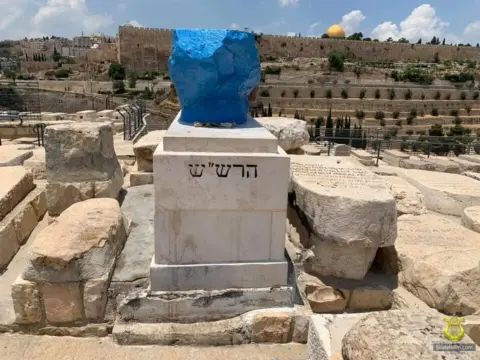
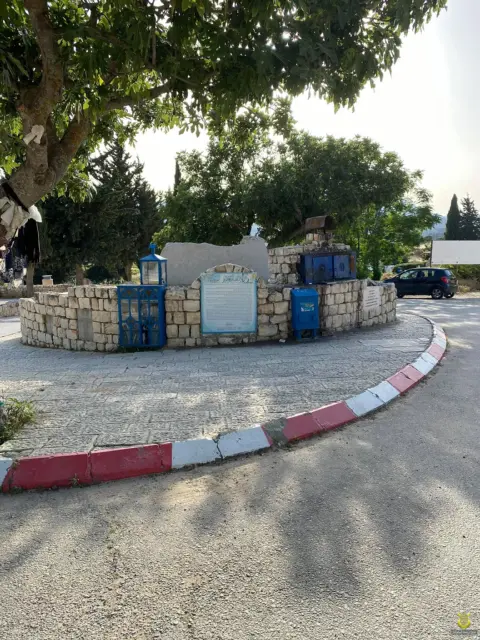
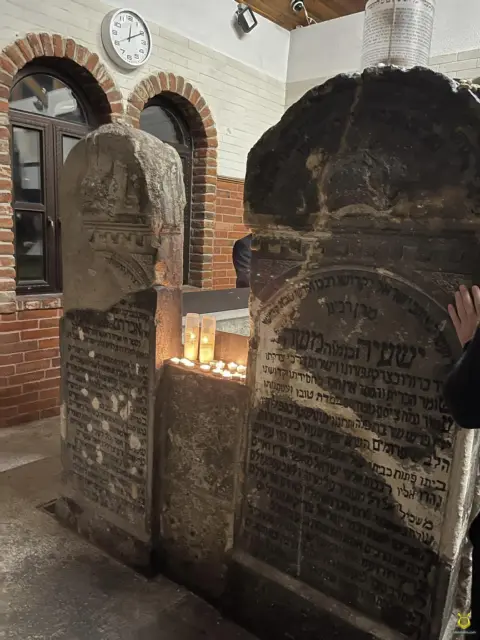
Grave
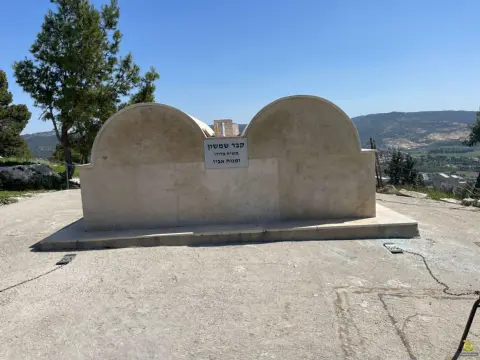
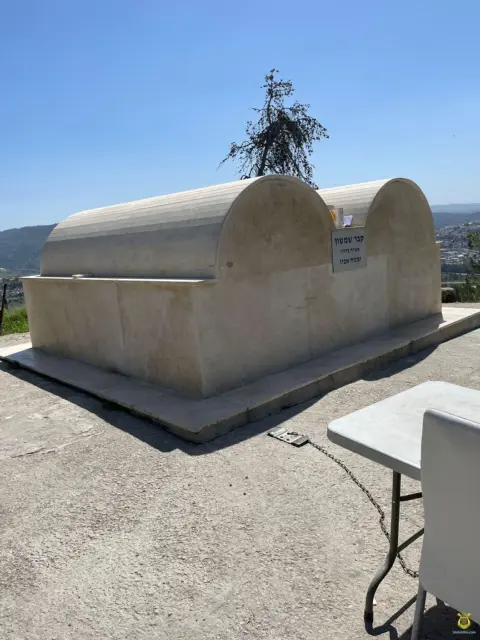
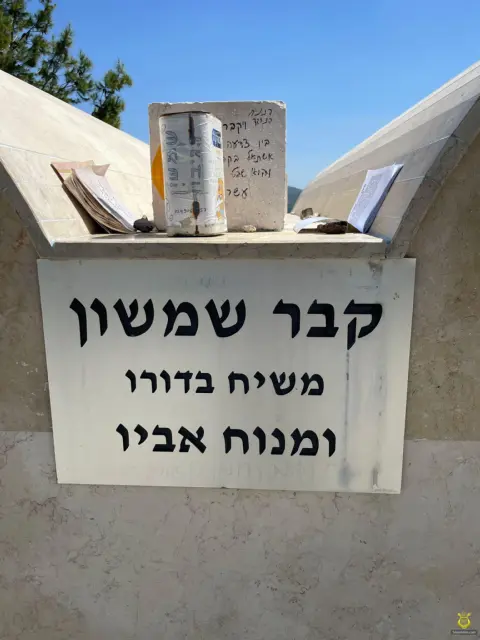
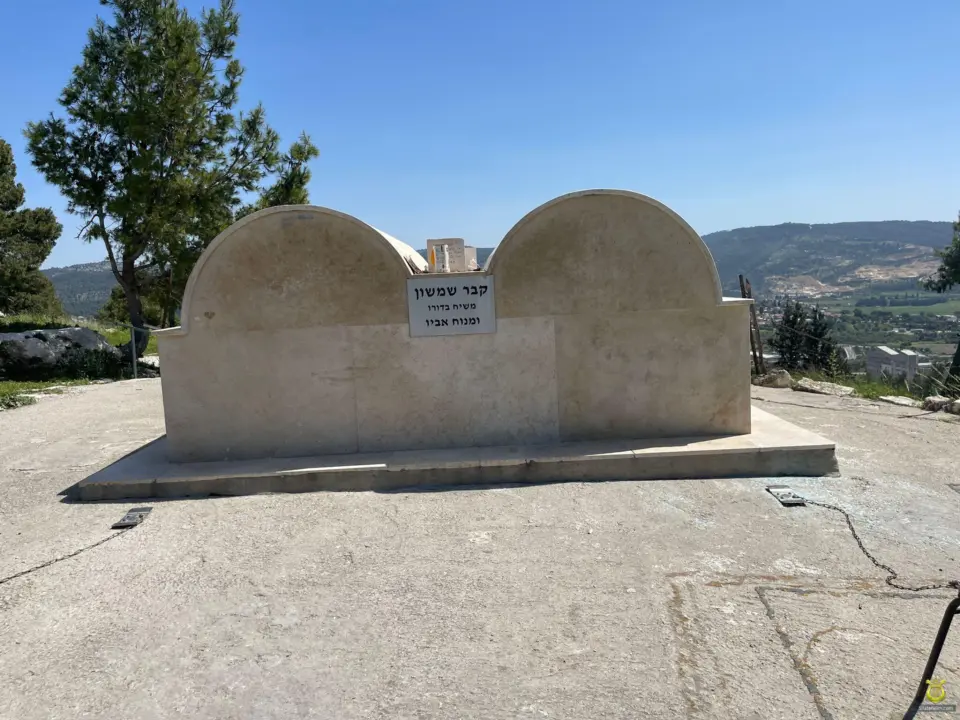
Shimshon HaGibor and Manoach
Yahrzeit (Hillula)
- 24 Tammuz — Shimshon HaGibor
Shimshon ben Manoach HaGibor – a hero, a nazir, the savior of Israel in his generation, Shimshon was the 12th and last judge described in the Book of Judges. He was from the tribe of Dan.
Yahrzeit – 24 Tammuz
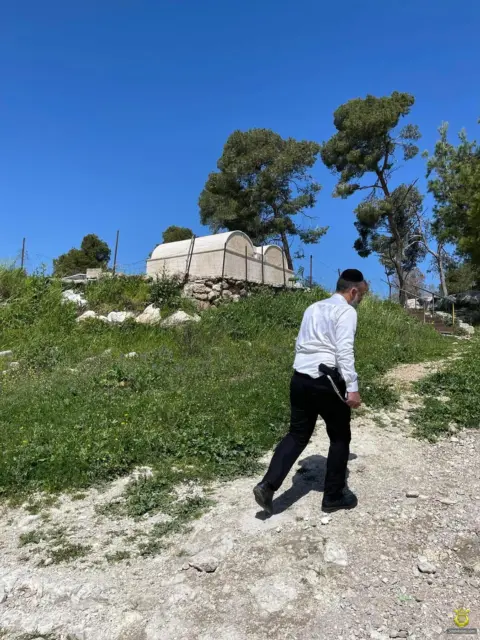
Burial place – near Shveden Park, Beit Shemesh
During his time as judge, the south of the land was under the control of the Philistines. Shimshon grew up as a recluse, and as long as his asceticism was preserved, G-d blessed him with supernatural strength with which he defeated the Philistines.
The story of Shimshon HaGibor is described in the Book of Judges (13–16).
Shimshon's father, Manoach, came from the city of Tzora of the tribe of Dan (near Beit Shemesh). Shimshon's mother, as stated in the Talmud, was named Tzelelponit (Bava Batra 91a), and she was from the tribe of Yehuda (the village of Zorah near Beit Shemesh is named in her honor).
An angel of G-d appeared to Shimshon's barren father and mother and announced to them that they were about to have a son who would grow up to be a nazir of G-d, forbidden to cut his hair or drink wine or strong drink, and who would save the people of Israel from the hands of the Philistines. The angel commanded the parents to observe the practice of the nazirite even before his birth:
"And the angel of G-d appeared to the woman and said to her: Behold now, you are barren and have borne no children, but you shall conceive and bear a son. Now therefore beware, please, and drink no wine or strong drink, and eat nothing unclean, for you shall conceive and bear a son, and no razor shall come upon his head, for the child shall be a nazir of G-d from the womb, and he shall begin to save Israel from the hand of the Philistines." (Judges 13:3–5)
And when Shimshon grew up: "The spirit of Ha-Shem began to move him at times in Machaneh Dan, between Zorah and Eshtaol." (Judges 13:25)
Shimshon's 3 fateful women
Once, on his way, Shimshon encountered lions in the wilderness, "and they fled like young goats." (Judges 10:6) Later, a swarm of bees settled in the lion's carcass, from which Shimshon took honey. This story became the subject of a riddle that Shimshon posed to thirty Philistines at a wedding feast: "Out of the eater came forth food, and out of the strong came forth sweetness." (Judges 14:14) The Philistines, unable to solve the riddle, threatened Shimshon's wife that they would burn down her father's house if she did not tell them the answer. The woman nagged Shimshon until she got the answer from him, and revealed it to her people. To avenge the betrayal, Shimshon went to the city of Ashkelon, killed thirty Philistines, and took their belongings. After this act, Shimshon, angry at his wife, returned to his father's house.
Some time later, Shimshon wanted to return to his wife and learned that her father had given her to another man. To take revenge, he caught 300 foxes, tied torches to their tails, and set them loose in the Philistines' fields, burning their entire harvest. In response, the Philistines burned the woman and her father, whereupon Shimshon struck them hip and thigh — that is, utterly defeated them. (Judges 15:8)
The Philistines took revenge and marched out with a great army to the place where Shimshon was. To avoid war, three thousand men of Yehuda went to bring Shimshon to the Philistines. After they promised him that they would not harm him but only hand him over to the Philistines, Shimshon allowed them to bind him. When he was in the hands of the Philistines, the ropes easily came loose, and he found the jawbone of a donkey and struck down a thousand Philistines with it.
Shimshon's second woman was a Philistine harlot from Gaza. When the Philistines learned that Shimshon was with her in her house, they came to seize him, but Shimshon fled her house in the middle of the night and broke out of the locked city, tearing off the gates of the city of Gaza and carrying them to the top of a hill on the outskirts of Hebron.
The third woman was a Philistine girl from the Valley of Sorek, named Delilah. The Philistines, fearing Shimshon's great strength and his actions against them, begged Delilah to seduce Shimshon so that he would reveal the secret of his power. Shimshon managed to evade her questioning several times, until finally he revealed to her that his strength lay in the hair on his head, which had never been cut. That night, Delilah cut off part of his hair, and the weakened Shimshon fell into the hands of the Philistines, who then gouged out both his eyes and imprisoned him in a small dungeon. Delilah the traitor was mocked by the sages, who insisted that her name be disparaged: "And it came to pass afterward that he loved a woman in the valley of Sorek, whose name was Delilah." (Judges 16:4) The sages say that her name was not really Delilah, but she was called that because she "weakened (dildelah) his strength." (Yalkut Shimoni, Shoftim, Remez 3; Sotah 9:12)
The name Shimshon – שמשון
The mekubalim reveal that the name Shimshon contains 2 words: Shum (garlic) and Shen (tooth).
Garlic indeed has cloves — we even say "a clove (tooth) of garlic."
Tooth, as the sages explain, refers to having an appetite, being ready to grind — but the tooth is one of the four "avot nezikin" (primary categories of damage), and they are inwardly lustful.
So Shimshon is one who is drawn to garlic — he has a "tooth" (craving) for garlic.
The sages say he had a sister.
The Torah states that his mother was barren, so the sister was probably born after him. She was named Nashyan, as it is written in the Gemara. Her name also contains the word "shen" (tooth) — her name begins with "shen" (the first two letters in reverse order) — but her name also contains the letters of the word "yayin" (wine).
That is, she had a "tooth" (craving) for wine — she loved wine, while he loved garlic. This was apparently a compensation for the fact that wine was forbidden to him — he had a sister who drank wine.
The Arizal's segula at the grave of Manoach
The Arizal (may his merit shield us) teaches that when a person eats bread, he performs a tikkun (rectification) of the neshamot (souls); these souls are rectified through kavanot — 5 kavanot "be'achilat lechem" (in the eating of bread).
These are 5 Names of the Holy One, Blessed be He, and one must direct kavanot toward these Names according to their gematria.
The mekubalim have these 5 Names in mind when they eat bread, in order to rectify the neshamot.
Manoach, Shimshon HaGibor's father, knew only 2 kavanot: מ-ו "Mo", נ-ח "Noach", and was therefore called an "am ha'aretz" (an unlearned, ignorant person). But this was in generations that were themselves strong in Torah.
The Baal Shem Tov says that in the latter generations (ours), every small mitzvah — tefillin, prayers, whatever a person can do for G-d — is counted as if it were done by a Tanna in our generation; and Rabbi Chaim Vital, in the name of the Arizal, said that in our generation every small mitzvah is counted for a person as thousands above.
Rabbi Israel Yakobov conducted a beautiful segula at the grave of Shimshon HaGibor and his father Manoach.
The Arizal, through Kabbalah, reveals that we can perform a "tikkun," rectifying souls, through the kavanot we make while eating bread:
Manoach – מונח
מ-ו "Mo" – (mem-vav) – 46
נ-ח "Noach" – (nun-chet) – 58
ל-ח-מ "Lechem" – (lamed-chet-mem) – 78
פ-ד "Pad" – (pe-dalet) – 84
ד-ק "Dak" – (dalet-kuf) – 104
There are 5 of them – "Mo," "Noach," "Lechem," "Pad," "Dak."
These are 5 Names of Ha-Shem; one must direct kavanot toward them when eating bread: מ-ו "mem-vav", נ-ח "nun-chet", ל-ח-מ "lechem", פ-ד "pad", ד-ק "dak", in order to rectify the neshamot.
But Manoach, being an "am ha'aretz," made only 2 kavanot (and they are contained within his name): מ-ו "mem-vav", נ-ח "nun-chet."
The mekubalim make these kavanot when they eat bread.
The name of Shimshon HaGibor's mother
https://silatehilim.com/теилим-144-для-матерей-имена-матерей-шим/
(From lessons and a trip to the Graves of the Tzadikim with Rabbi Israel Yakobov)
Gallery