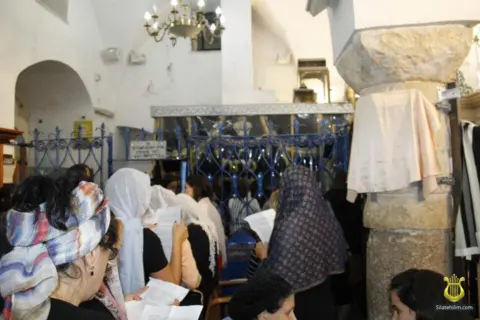
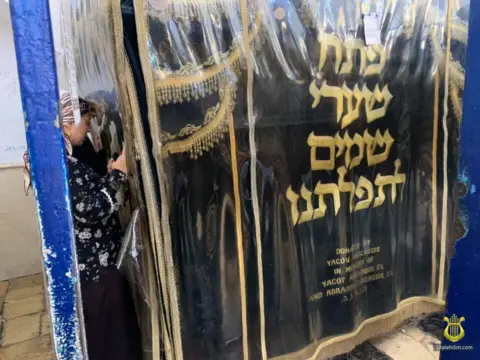
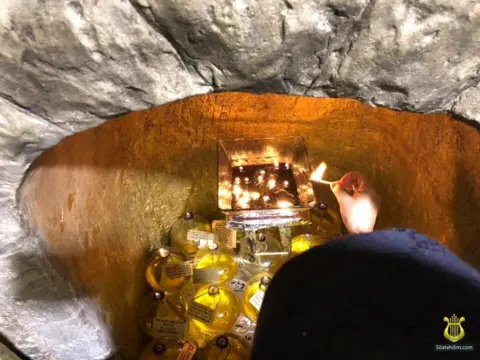
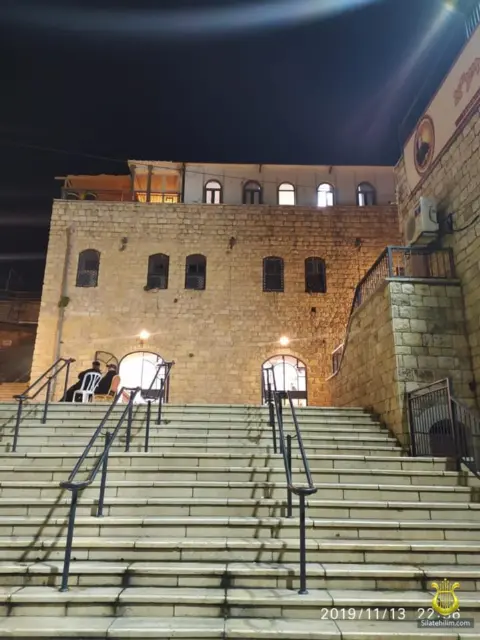
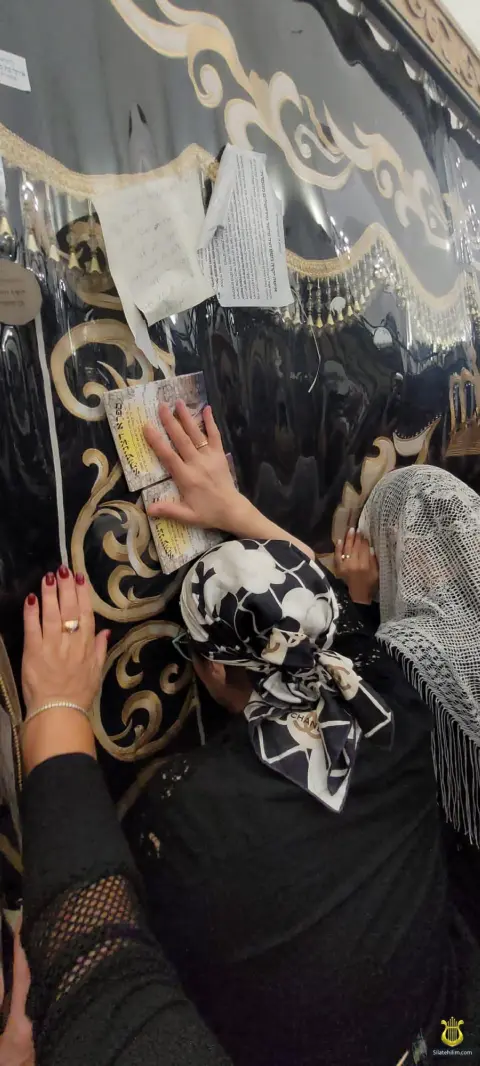
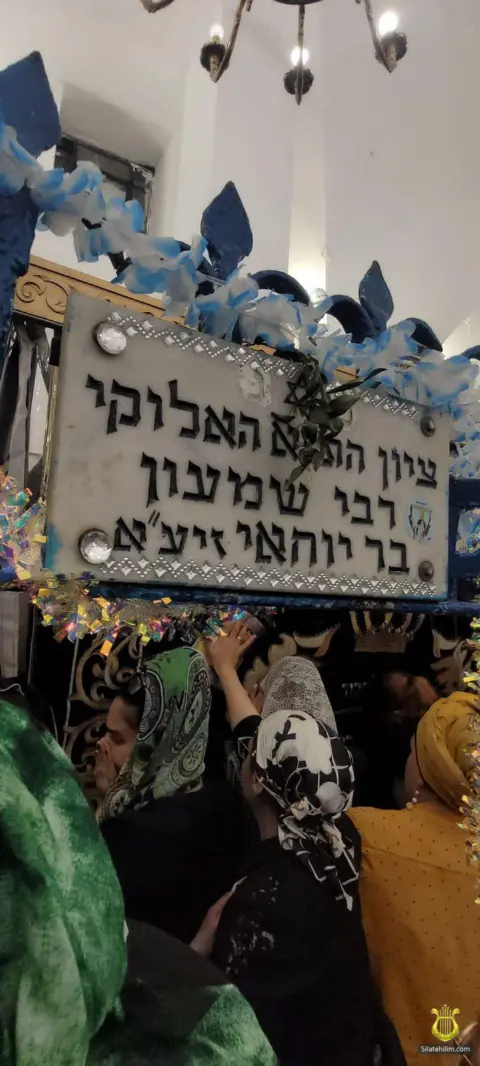
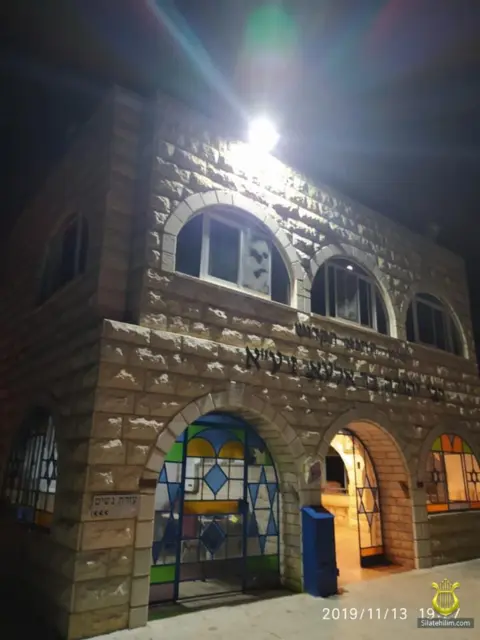
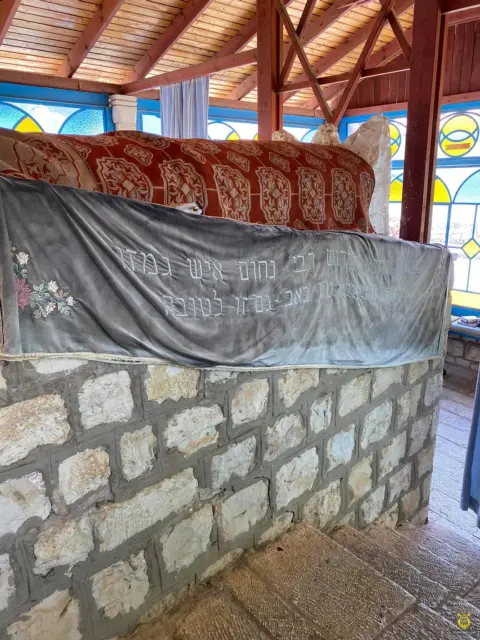
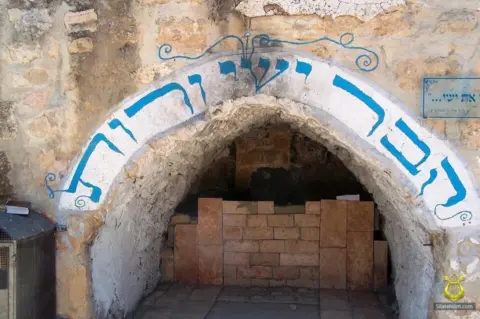
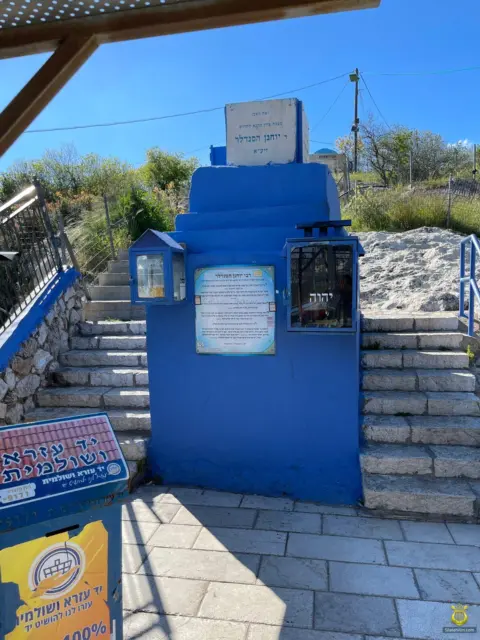
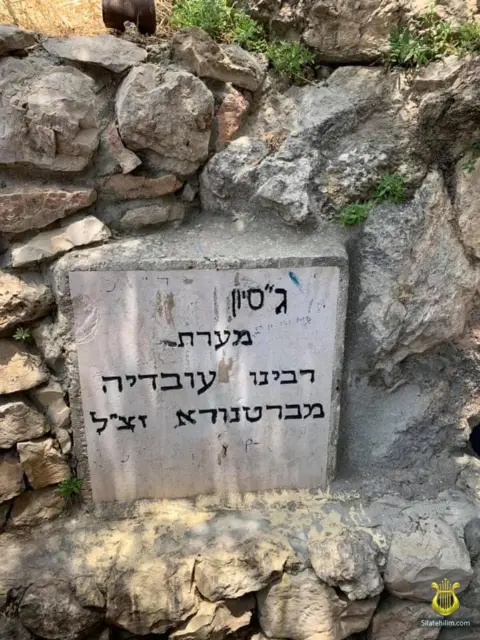
Grave
Shimon bar Yochai
Rashbi - Tanna
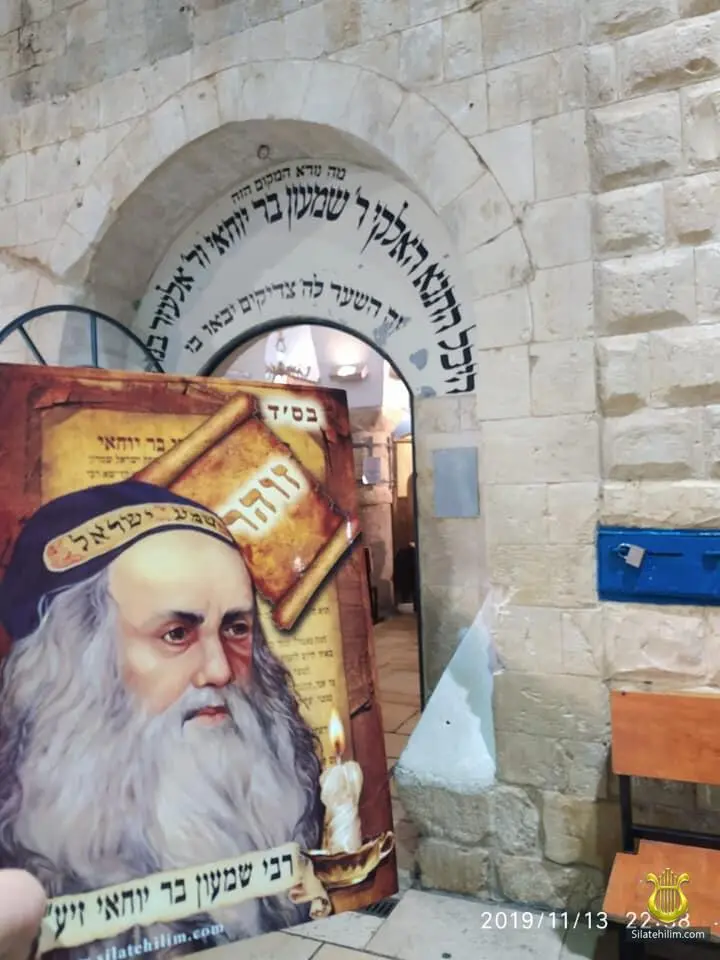
Yahrzeit (Hillula)
- 18 Iyar — Yahrzeit of Rabbi Shimon Bar Yochai - the Tanna HaKadosh Rashbi
Amar Rashbi
Rabbi Yochanan said in the name of Rashbi:
"When words of Torah are said in the name of a sage, his lips move in the grave, uttering them."
Rabbi Yirmiyah said in the name of Rashbi:
"I can exempt the whole world from judgment, from the day I was born until today. I have seen elevated people, and they are few.
If there are a thousand of them, my son Elazar and I are among them.
If there are a hundred of them, my son Elazar and I are among them.
And if there are only two, it is my son Elazar and I."
Rashbi went to Tiberias, and on the way met the prophet Eliyahu: "Peace to you, my master," said Eliyahu.
"What is Ha-Shem doing now in the Heavenly Yeshiva?"
Eliyahu told him that Ha-Shem was occupied with the hidden meaning of the sacrifices, and studying what he (Rashbi) had revealed.
"Therefore you are fortunate, and therefore I greeted you first."
When our Sages entered the vineyards of Yavneh, they said: "In the future the Torah will be forgotten among the people of Israel."
Rashbi said: "Heaven forbid that the Torah should be forgotten among the people of Israel, as it is said: 'It shall not be forgotten from the mouth of his descendants.'"
Rashbi said: "Anyone in whom there is coarseness is as one who worships idols."
Rashbi said: "Whoever welcomes guests warmly is as one who welcomes the Shechinah."
Rashbi said: "It is better for a person to throw himself into a fiery furnace than to shame his fellow in public."
Rashbi said: "Honoring one's parents is so important that the Almighty places it above His own Glory."
Rashbi said: "Great is labor, for it brings honor to its master."
Rashbi said: "The Almighty said to the people of Israel: 'Honor My commandments, for they are My messengers, and a person's messenger is like himself. If you honor them, it is as if you honor Me, and if you disregard them, it is as if you disregarded My Glory.'"
Rashbi said: "Just as the mountains contain the depths so that they do not spread and fill the whole world, so tzedakah rises above the attribute of Judgment, so that lawlessness does not fill the earth."
Rashbi said: "Great is peace with all its blessings, as it is said: 'Ha-Shem will give strength to His people, Ha-Shem will bless His people with peace.'"
Rashbi said: "If the Jewish people would keep two Shabbatot fully, the Redemption would come immediately."
Rashbi said: "What is written? 'And as for me, my prayer to You, Ha-Shem, is at a favorable time.' What is a favorable time? The time of public prayer."
Rashbi said: "If you see people despairing and straying from the Torah, strengthen yourself in it, and you will receive the reward of them all."
An account of Rashbi's final moments.
Rabbi Aba, the senior of Rashbi's students who was present (as recorded in the book of the Zohar), relates: "That entire Lag BaOmer, the house was burning. And no one could approach him because of the intense light and heat. When the fire went out, I saw Rashbi, already dead, wrapped, lying on his right side, with a smile on his face.
Rabbi Elazar, his son, stood up, took his hands and kissed them. And I sprinkled ashes on my head from beneath his feet.
His students wanted to mourn him but could not utter a word. His son Rabbi Elazar fell prostrate three times, but could not even open his mouth.
Fragrance poured from the house. They laid him on a bier. When the bier was carried out of the house, it rose into the air, and a pillar of fire went before it. Everyone heard a voice: "Come, gather for the wedding of Rabbi Shimon!"
And when he entered the cave, a voice said: "This man shakes the earth, kingdoms tremble before him. How many accusers have been silenced now because of you."
This is Rabbi Shimon bar Yochai, of whom Ha-Shem is so proud every day. Great is his portion in this world and in the World to Come. How many great treasures of the World to Come are destined for him! And of him it is said: "But you shall rest and be laid to rest. And you shall arise at the end of days to your portion."
A Personal Prayer for Lag BaOmer in the Merit of Rashbi
Rabbi Shimon bar Yochai, dear light, holy light!
You promised Israel that the Torah would not be forgotten from the people thanks to you, even in the Concealment of Concealment, in these days, in such a long exile and prolonged oppression. You promised that, no matter what, the Torah would not be forgotten among our descendants. Rabbi, Rabbi, arise, awaken, together with all the true tzadikim, so that you may see all the bitterness of our troubles. And forgive, and have mercy, and atone for all our sins and transgressions, and for all the evil in Your eyes that I have committed from the days of my youth until this day. For all this forgive me, have mercy on me, and atone for me, Merciful One, and give me the strength to overcome my evil inclination. Master of the World! Place it in the heart of this great tzadik Rabbi Shimon bar Yochai and in the hearts of all true tzadikim, that they should not turn away from me but be good advocates for me, that they should find good qualities in me and plead for me, so that I may draw near to You through Your Mercy. And give me a new heart and a new soul, so that I may awaken and return to You with all my heart. Arise, great tzadik Rabbi Shimon bar Yochai, and plead for me before Ha-Shem, that He have mercy on me. Arise, great tzadik Rabbi Shimon bar Yochai, and plead for mercy for all the people of Israel. And for the sake of Abraham, Isaac and Yaakov, and Moshe, Aharon and Yosef, David, Shlomo and Pinchas, and all the righteous tzadikim, may the Almighty, Blessed is He, have mercy on us and grant us a long life, full of peace, blessing and prosperity. A rich, worthy and healthy life. A life full of love of Torah and fear of Heaven. May the Almighty fulfill all the wishes of our hearts for good and for blessing. Amen, may this be His Will!
Tu BiShvat and Rashbi
Once people came to Yosef Abu Musa in the village of Peki'in, where he lived, and said to him:
"Do you know, have you heard, what is the meaning of the custom of the children of Israel eating carob fruit on Tu BiShvat?"
He answered: "I heard from my father a tradition passed down from our ancestors. For 12 years Rabbi Shimon bar Yochai and his son Rabbi Elazar hid from persecution. They hid in a cave nearby. And especially for them the Almighty created there a spring and a carob tree, so that they could eat of its fruit. And so they sat and studied Torah day and night, until they heard a Heavenly Voice proclaiming:
– My beloved children, come out of the cave and go teach Torah to the people of Israel, for they are scattered among the nations and are forgetting their Torah there.
Rabbi Shimon stood up and said:
– Master of the World, You know that it was not for my own sake nor for my father's sake that I rose up against the wicked imperial power, but for Your sake. I swear that Your Torah will not be forgotten among Your people, for You Yourself promised that we and our descendants would remember the Torah forever. But I fear something else: I fear that the Jews will forget the Land of Israel, for they eat foreign food and breathe foreign air.
At once the Heavenly Voice sounded again:
– And you, my son, establish a custom that year after year on Tu BiShvat the Jews shall eat the fruit of the carob tree.
(In Hebrew, the words "charuvin" (carobs), "cherev" (sword), and "churban" (destruction) share the same root.)
And when they eat, they will ask:
"These carobs that we eat today, what do they mean?"
And they will be reminded, and they will remember that our Temple is destroyed and the Land of Israel lies desolate."
And they wrote down everything they had heard to Rabbi Chanina, who established the corresponding custom.
In Peki'in, deep within a grove, there is a cave where Rabbi Shimon bar Yochai and his son hid from the Romans for 13 years, living on carob fruit and water from a spring, and attained all 125 levels of spiritual elevation.
Rabbi Shimon emerged from the cave with the book of the Zohar.
In front of the site of the "Idra Rabba" (the great gathering), where Rabbi Shimon taught his students, two carob trees – "charuv" – still grow to this day, and once every 300 years they change gender.
Since Rabbi Shimon bar Yochai is connected with the holiday of Lag BaOmer, carob is included in the festive meal on Lag BaOmer.
Among the fruits eaten on Tu BiShvat, carob holds a special place, although the Torah does not count it among the important fruits (it is not among the Seven Species for which Israel is praised). Tradition says that the Queen of Sheba, setting out to meet King Shlomo, took with her seeds of the carob tree, and since then this tree has taken root in the Land of Israel.
The Torah does not specify from which tree Adam and Chava ate. The Sages suggested that it was a fig tree (since its leaf is mentioned (Bereishit 3:7)), or grapes (since overindulgence in it leads to loss of reason (Bereishit 9:20)), or an etrog (since the word apparently derives from "ragag" – "to desire passionately"), or wheat (since the word "chita," meaning wheat, is linked to the word "chet" (sin)), or the carob tree (in Hebrew – "charuv," which resembles the word for destruction).
https://silatehilim.com/%d1%80%d0%be%d0%b6%d0%ba%d0%be%d0%b2%d0%be%d0%b5-%d0%b4%d0%b5%d1%80%d0%b5%d0%b2%d0%be-%d0%b8%d0%bb%d0%b8-%d0%ba%d0%b0%d1%80%d0%b0%d1%82%d1%8b-%d1%80%d0%b0%d0%b1%d0%b8-%d1%85%d0%b0%d0%bd%d0%b8%d0%bd/
Rashbi in Tehillim
Tehillim 63
- "Tzame'ah lecha nafshi kamah lecha vesari"... - (My soul thirsts for You, my flesh longs for You).
Rabbi Aharon of Karlin says that the highest level in the entire Book of Psalms of David is the verse (Tehillim 63:2): "My soul thirsts for You, my flesh longs for You" – when even the body, the flesh, is transformed into soul. When even the body no longer feels any materiality, any desires. The body, the flesh, burns in the flame of tremendous love for the Creator. And this level, "My flesh longs for You," can be attained through the merit of Rashbi, through the flame of Rashbi, the flame that burns around him day and night. For the name Rashbi רשב"י - has the same letters as the word "my flesh" - בשרי. Tehillim 68
- "Alita lamarom shavita shevi lakachta matanot ba'adam, ve'af sorerim lishkon Yah Elohim" – (You ascended on high, took captives, received gifts among men). The author of the Zohar, Rabbi Shimon bar Yochai, was a disciple of Rabbi Akiva. It is said of him that his soul is part of the soul of Moshe, as is hinted at in the verse of the psalm: "You ascended on high, took captives, received gifts among men" (Tehillim 68:19). The word "captives" (שבי — shvi) is an acronym for the name Shimon bar Yochai - שבי.
Shabbat Chatan Rashbi
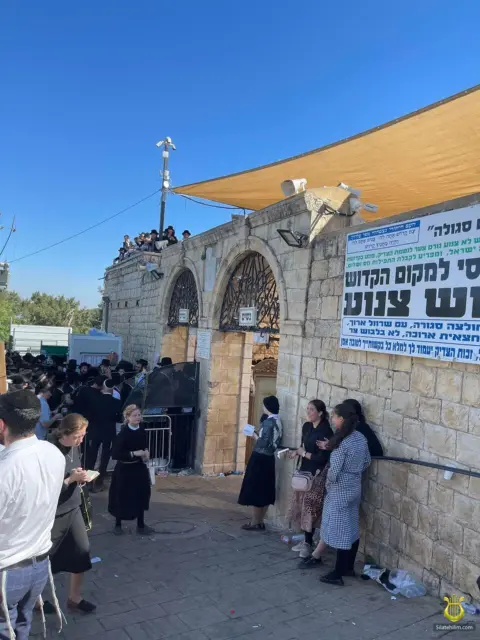
On the Friday before Shabbat Chatan Rashbi an obvious miracle occurred – into a fully closed Meron, where only residents of Meron were allowed – 3 cars made it through all the police checkpoints – our Rav has already been there without leaving for about 10 days.
I remember my trips to Meron on Lag BaOmer in past years, when it was impossible to push through, and then you walk in an endless line, as if running a gauntlet, and girl soldiers with automatic rifles hurry you along... After one such trip, I could barely restrain myself from writing an angry post – in Israel, Jews are under the barrels of automatic rifles....
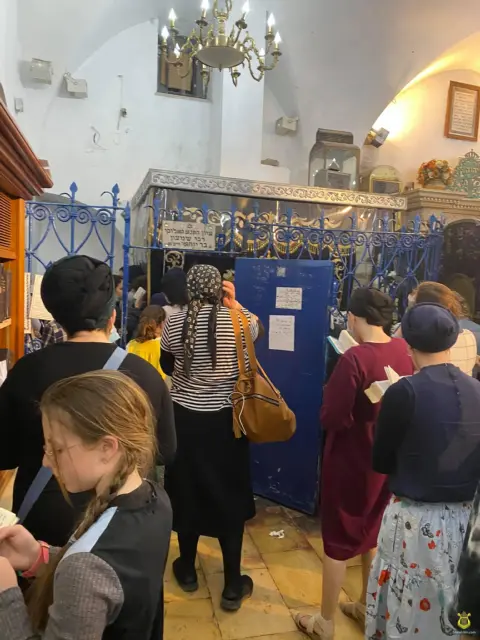
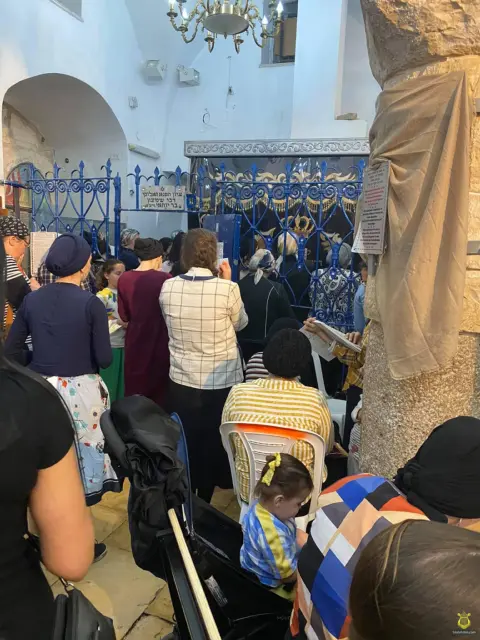
On the way up it's beautiful – people rejoicing, children playing with bows and arrows, someone getting their first haircut, and then, once you're in that line right at the Kever Tzadik itself – the scariest part begins – you're rushed along, not allowed to stop, and those who don't listen and stop to pray – get hurried along with rifle butts…
Is this what Rashbi wanted on the day of his hillula? A frightening picture. I imagined then how it must have been there, during the Shoah...
On the Shabbat after Lag BaOmer, which the Mekubalim call Shabbat Chatan Rashbi – no less important a day than the hillula (wedding) of Rashbi – there are usually many people as well.
So the silence and calm that greeted us in Meron this time were actually a pleasant surprise.
Finally you could see the whole beauty from the height of the Kever (below it was closed) – the picturesque forest all around, silence: just you and the Tzadik.
Although we often visit Meron with the Yeshiva, this time the view and the absence of bustle at the Kever made the visit so special.
A minyan gathered with 2 great Geonim-Mekubalim. It turned out that in the evening the police had removed a great Admor from Meron, so we didn't go to meet him.
We met a young man who also got in by a miracle, and when we asked how, he explained that Rabbi Shimon bar Yochai had helped him – he had simply finished studying the Zohar HaKadosh in a month – studying 15 hours a day. And he told us a couple more stories with miracles…
I don't know what this silence is before... (I don't want to build up tension), but everyone says that nothing like this has ever happened before. One thing is comforting – that "Shimon ben Yochai" in gematria equals "techiyat hameitim" (resurrection of the dead).
May this silence already become a sign of that...
Gallery