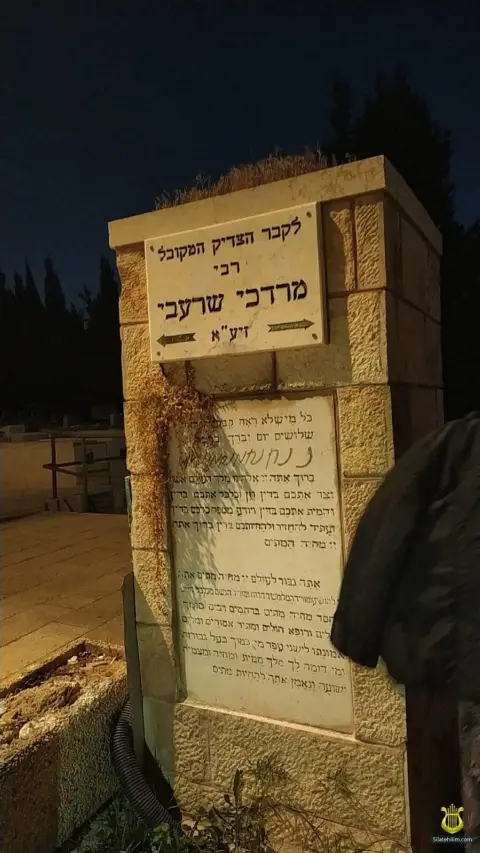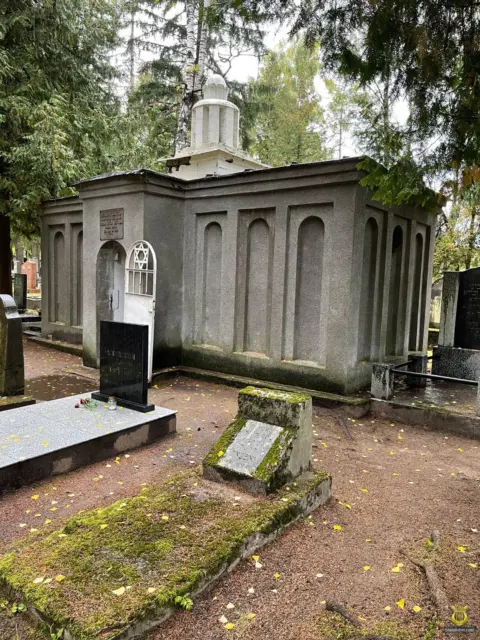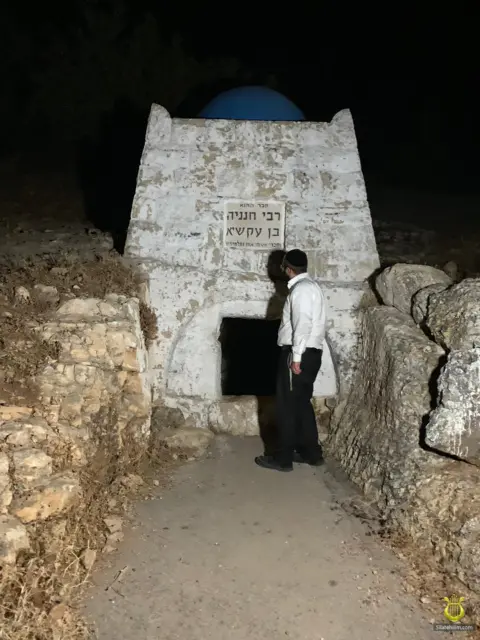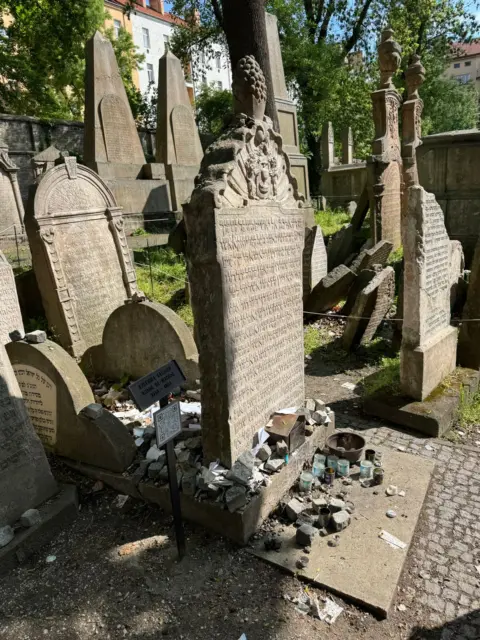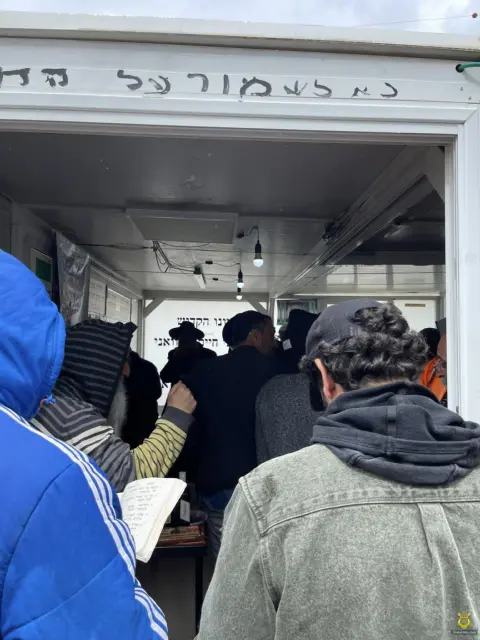

Grave
The Chozeh of Lublin
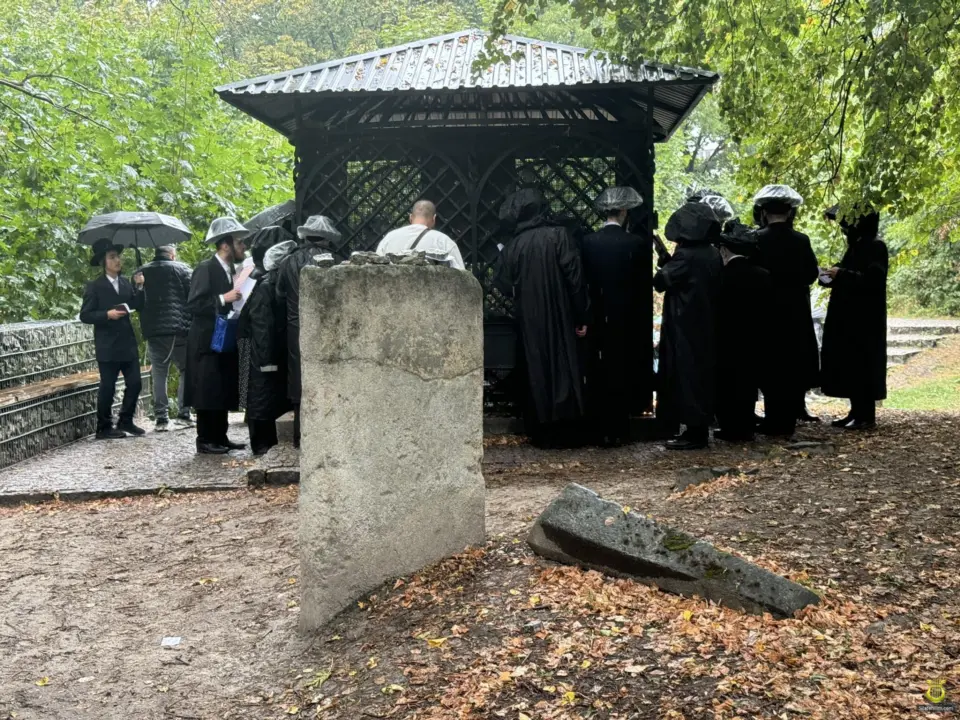
Yahrzeit (Hillula)
- 9 Av — Chozeh of Lublin
Rabbi Yaakov Yitzchak bar Avraham Eliezer Horowitz – the Chozeh of Lublin – the Seer of Lublin
Yahrzeit – 9 Av
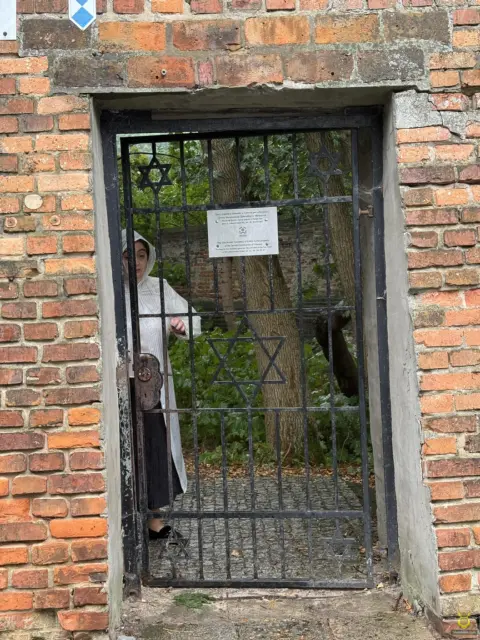
Burial place – Poland, Lublin (the Old Jewish Cemetery).
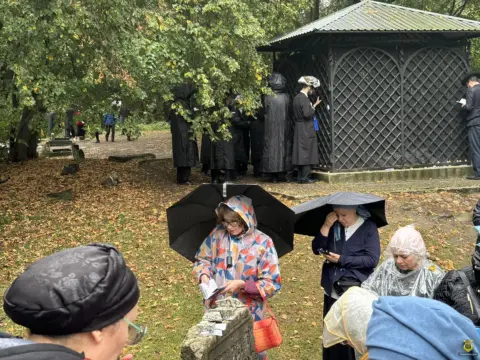
The 9th of Av is a time for visiting graves, but since it is a fast day and falls on the yahrzeit of the Chozeh of Lublin, there is not the same mass pilgrimage as takes place in Poland before the 21st of Adar — the yahrzeit of Rabbi Elimelech of Lizhensk — when tens of thousands of Jews from all over the world, be'zchut tzadik, travel the roads of Poland.
And here Rabbi Chozeh of Lublin stands apart. While most Israeli yeshivas travel to Poland through Ukraine (devoting a few days to a pilgrimage to the graves of tzadikim in Ukraine), and then enter Poland from southern Ukraine along the route: Rymanów, Dynów, Łańcut, Rzeszów (the meeting point for visiting Leżajsk) — those who fly into Warsaw for the yahrzeit of the "Noam Elimelech," as we did from Moscow (and many from America and Europe), travel via the north, right through Lublin.
And, of course, it is impossible to skip the resting place of the tzadik — the Chozeh of Lublin. Rabbi Yaakov Yitzchak, better known as the "Seer of Lublin," was a Chassidic Rebbe in Poland. He was a student of the Maggid of Mezritch, and later continued his studies under Rabbi Shmelke of Nikolsburg and Rabbi Elimelech of Lizhensk.
For a time he lived in Łańcut, and later moved to Lublin. After Yaakov Yitzchak settled in Lublin, thousands of Chassidim flocked there to learn from him. Among his students were such luminaries of Chassidism as the Yid HaKadosh ("the Holy Jew"), Rabbi Simcha Bunim of Peshischa, Rabbi Meir of Apta, Rabbi David of Lelov, the Yismach Moshe, Rabbi Tzvi Elimelech of Dinov, Rabbi Naftali Tzvi of Ropshitz, the Ma'or VaShemesh, and the Sar Shalom of Belz. The Chozeh of Lublin also gained a reputation as a miracle worker. His students said that he could immediately discern a person's essence, the genealogy of their soul, and its tikkun at every stage of reincarnation.
The disciples of the Chozeh of Lublin wrote that their teacher also foresaw the future, though he was only given the name "the Seer" after his death. During his time in Lublin, Yaakov Yitzchak was opposed by a well-known Talmudist, Rabbi Azriel Horowitz, known by the nickname "Der Eiserner Kop" (the Iron Head, in Yiddish).
The Chozeh of Lublin was a direct descendant of the Shelah HaKadosh, and his maternal grandfather, Rabbi Yaakov Koppel Likover, was also a well-known rabbi and a contemporary of the Baal Shem Tov. On the day he died, July 15, 1815 (9 Av 5575), he predicted that 100 years from that day (according to the Hebrew calendar) the Russians would lose their power over Poland.
And indeed, by July 20, 1915 (9 Av 5675 in the Hebrew calendar), the Austrians had conquered Lublin, and the Chozeh's prophecy was noted in the Polish newspapers. The Seer of Lublin regarded Napoleon's campaign against Russia (1812), which had stirred messianic hopes in Poland and Galicia, as the beginning of the war of Gog and Magog, and he wanted the tzadikim to join their efforts to bring about the coming of Mashiach. He was injured falling from a window on Simchat Torah, and nearly a year later died on Tisha B'Av from injuries related to that fall. The Chozeh of Lublin is buried in the Old Jewish Cemetery in Lublin.
How to Make the Angels Laugh. Once, two Chassidim of the Seer of Lublin decided to visit their teacher. They only had enough money for half the journey, but they decided to rely on the will of the Almighty — somehow they would get there... In any case, the coachman took them exactly as far as they had paid for, and then suggested they walk the rest of the way. Then one of the Chassidim said to his companion: — Listen, you have a distinguished look about you, and your kapote (the outer garment worn by Chassidim) is new. Let's go to the nearest village, find a Jewish innkeeper there, and I'll introduce you to him as a wonder-working rav. I'll call myself your shammes (attendant). You'll give him some blessings, and in return he'll feed us and give us money for the road to Lublin. So that's what they did. They reached the nearest village and asked where the Jewish inn was. The plainer-looking Chassid ran ahead, while the "important rebbe" followed him. Apparently the innkeeper saw them from the window, because he suddenly burst out the door to meet them, showering the pair of Chassidim with terrible curses.
— My dear fellow, why are you cursing at us? — the Chassid playing the role of attendant asked in surprise. — We're seeing you for the first time, and it seems you've never met us either — what has gotten you so angry? The innkeeper calmed down a bit and continued the "conversation" in a calmer tone: — I've been married for 10 years now — and Ha-Shem still hasn't blessed us with a child! I've gone to all sorts of wonder-working rabbis, paid them a great deal of money — and not one of them has been able to help me! I can see you're just more of these swindlers?! — What are you saying! — answered the "attendant." — You won't find a rav like mine anywhere else in the whole world! If he can't help — then truly no one in the world can! — Really? — the innkeeper mused. — But I've already even gone to the Seer of Lublin — nothing helps... All right, I'll try one last time! Come in — I'll feed you, and give you money for the road! Just make sure it works! The dignified-looking Chassid playing the wonder-worker asked for a piece of parchment, a quill, and ink, and wrote out what he called an "amulet." After that, the friends spent the night under the roof of the anxious innkeeper, and the next morning set off for Lublin. The trip went as usual — conversations with the Rebbe, Chassidic gatherings, inspired talk of divine matters over a glass of vodka. The following year, the friends had saved up more money and reached Lublin without any trouble. On arrival, they immediately got in line for the Rebbe's blessing. Imagine their horror when, in the man standing just a few meters ahead of them, they recognized the innkeeper for whom they had written the "amulet"! To make matters worse, there was a crowd all around, and the line moved in only one direction — forward, past the Rebbe!
When the innkeeper reached the Rebbe, he greeted him and said: — Dear Rebbe, a great miracle-worker has appeared in our region! For years I asked various kabbalists to cure my wife's infertility — nothing helped! But a year ago, an unknown rabbi with his attendant came to me, wrote an amulet — and now my wife is nursing a baby! It's truly a miracle! Moved by some impulse, the innkeeper turned around and saw the "rav" with his "attendant"! — There they are! — he shouted. The Seer of Lublin smiled and beckoned the Chassidim over with his finger. They approached, the Rebbe let the innkeeper go, and quietly said to the Chassidim: — This man had an "iron roof" — a decree from Heaven that all the blessings intended for him would never reach Ha-Shem. And for years, the blessings of great rabbis and Kabbalah experts had piled up "under the roof"... But when you wrote your "amulet," the angels in Heaven laughed so hard that the "roof" shook and broke — and all the blessings reached the Almighty! Chassidic tradition holds that the letters written in the "amulet" were "samech-kuf-mem-dalet." In Russian, this spells out "an old cow gives milk" (apparently, the Chassidim knew Russian).
It is told that when the Rabbi served as sandak, he would wear special clothing, different from his everyday attire. Once, his students saw that their Rav, the Chozeh of Lublin, put on the sandak's clothing in the middle of the day and went with his students to have a se'udah. His students began to ask why the honored Rav had put on the sandak's clothing when there was no brit taking place.
Then the Chozeh of Lublin told them this story.
Once a Jew traveled to a city for a court case and stopped at an inn. When he was told the price, he said it was too expensive and asked if there was anything cheaper nearby. He was advised to go to the town's Rav, where lodging and food were free. So he went to this Rav, stayed the night, ate with them, and happened to attend a Torah class as well.
In the morning, the Rav blessed him, and he went off to his court case. The Jew won the case, his affairs improved, and he lived many long years this way. When his soul departed this world and ascended to Heaven, Avraham Avinu came and said: "I cannot let you into Gan Eden — you were not circumcised properly." The Jew was astonished: "How was I supposed to know that? I was just a baby." Avraham Avinu then asked: "Did you, in your entire life, attend even a single Torah class? Let the Rav who taught that class testify on your behalf." And the Jew remembered that just once in his life, while traveling to a court case, he had stayed with a Rav, eaten and slept there, and also listened to a class.
And the Chozeh of Lublin said to his students: "While you were eating, I was serving as sandak for that Jew — he is the same Jew who stayed with me long ago before his court case, that is why I put on the sandak's clothing today, in the middle of the day, in order to help him."
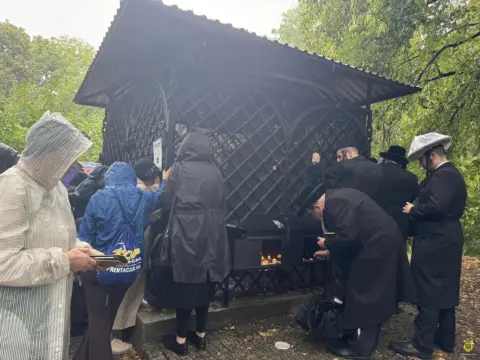
Prayer on 9 Av Be'zchut the Tzadik, the Chozeh of Lublin
On the day of Tisha B'Av, the pure soul of the Chozeh of Lublin ascended.
The Chozeh was Rabbi Yaakov Yitzchak HaLevi Horowitz, and he was called by this name because he was known for signs and wonders, as well as for possessing spiritual vision, which earned him the nickname "the Chozeh."
It is known that in the early 19th century he went for a long time with a cloth covering his eyes, to protect himself from forbidden sights, and afterward he gained spiritual sight.
He spread Chassidism throughout Poland, and it was said of him that he could perceive the subtleties of a person's soul and thoughts, as well as the world from beginning to end.
1. להדליק נר לטובת נשמת הצדיק ולומר: הריני מדליק/ה נר לזכות נשמת רבי יעקב יצחק בן רבי אברהם אליעזר, זכותו תגן עלינו.
2. לתת פרוטה לצדקה (אפשרי בקופת צדקה בבית ובכל מקום) ולומר: הריני נותנ/ת צדקה לזכות נשמת רבי יעקב יצחק בן רבי אברהם אליעזר, זכותו תגן עלינו.
3. לומר פסוקי תהילים, מזמור קי"ט לפי האותיות רבי יעקב יצחק נשמה ולפתוח אותם במילים : הריני אומר/ת פסוקי תהילים לזכות נשמת רבי יעקב יצחק בן רבי אברהם אליעזר, זכותו תגן עלינו
1. Light a candle for the benefit of the tzadik's soul and say: "Hareini madlik/a ner lezechut nishmat Rabbi Yaakov Yitzchak ben Rabbi Avraham Eliezer, zechuto taggen aleinu" — (I am lighting a candle in the merit of the soul of Rabbi Yaakov Yitzchak ben Rabbi Avraham Eliezer; may his merit protect us).
2. Give a small coin to tzedakah (you may place it in a tzedakah box at home or anywhere else) and say: "Hareini noten/et tzedakah lezechut nishmat Rabbi Yaakov Yitzchak ben Rabbi Avraham Eliezer, zechuto taggen aleinu" — (I am giving tzedakah in the merit of Rabbi Yaakov Yitzchak ben Rabbi Avraham Eliezer; may his merit protect us).
2. Recite verses of Tehillim: Psalm 119, according to the letters of the name Rabbi Yaakov Yitzchak and the word Neshamah (soul), prefacing the reading with the words: "Hareini noten/et tzedakah lezechut nishmat Rabbi Yaakov Yitzchak ben Rabbi Avraham Eliezer, zechuto taggen aleinu" — (I am reciting verses of Tehillim in the merit of the soul of Rabbi Yaakov Yitzchak ben Rabbi Avraham Eliezer; may his merit protect us).
May the merit of the tzadik Rabbi Yaakov Yitzchak Horowitz protect us all!
Sandak
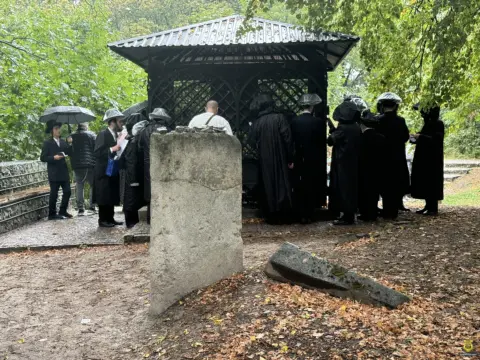
The Tzadik's Resting Place
If you go to the cemetery in Lublin, you will see that the Chozeh is buried next to Reb Shachne of Lublin. Here is how that came about.
As soon as the Chozeh passed away, his devoted talmid, Reb Naftali of Ropshitz, went to the cemetery to choose a suitable plot for his Rebbe. The town's Rav, a misnagid who disliked the Chozeh, ordered the gravediggers not to give him any choice. Reb Naftali went to the cemetery at night with the gravediggers and managed to trick them into thinking they were digging a grave in an ordinary plot. In the morning, they realized they had dug the plot right next to the famous Reb Shalom Shachne of Lublin, who had been the town's Rav many years earlier. They went to the Rav and asked him what to do. He told them that once the grave was dug, it was too late, and they had no choice but to bury the Chozeh there. During his lifetime, the Chozeh had often told people to go pray for their yeshuot at the resting place of Reb Shachne.
He was injured falling from a window on Simchat Torah, and nearly a year later died on Tisha B'Av from injuries related to that fall.
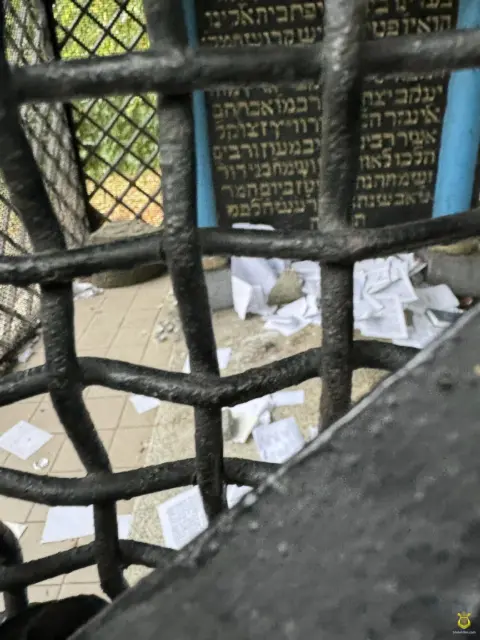
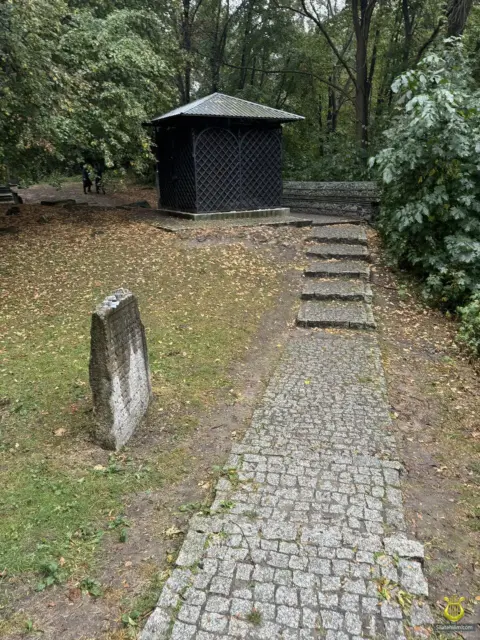
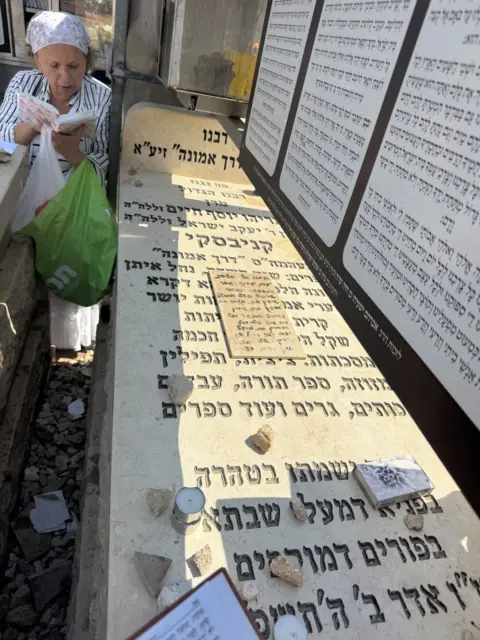
The Chozeh of Lublin is buried in the Old Jewish Cemetery in Lublin.
(https://dailyzohar.com/tzadikim/773-Rabbi-Yaakov-Yitzchak-of-Lublin, http://zchusavos.blogspot.com/2007/07/chozeh-of-lublin.html; Based on a lesson by Rabbanit Chava Kuperman)
Gallery