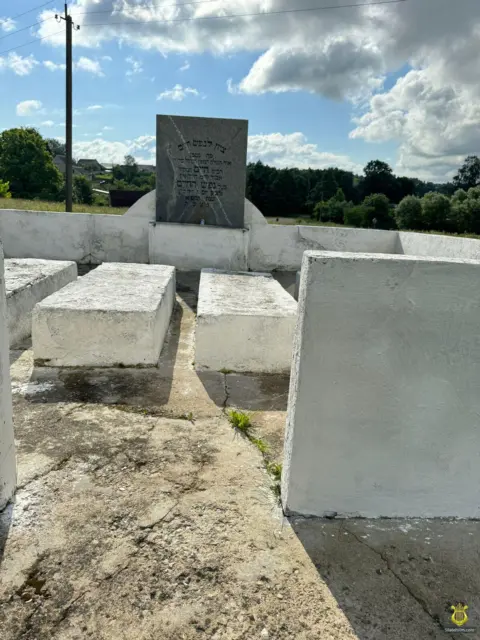
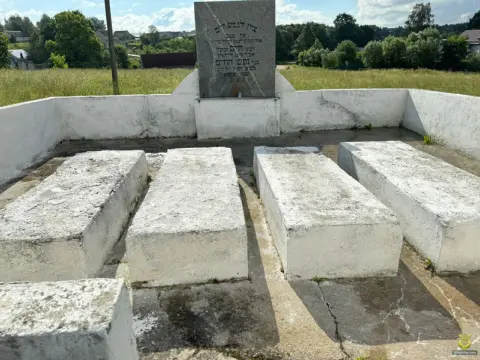
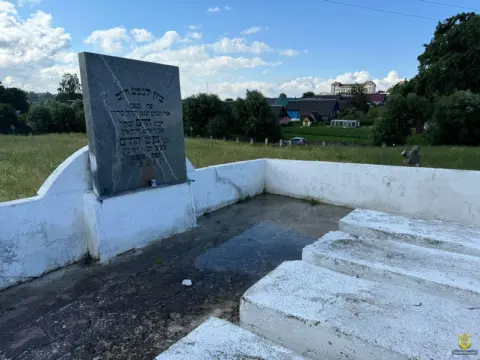
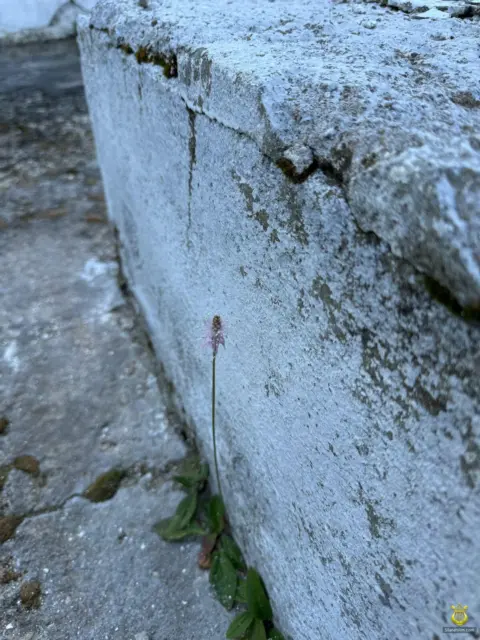
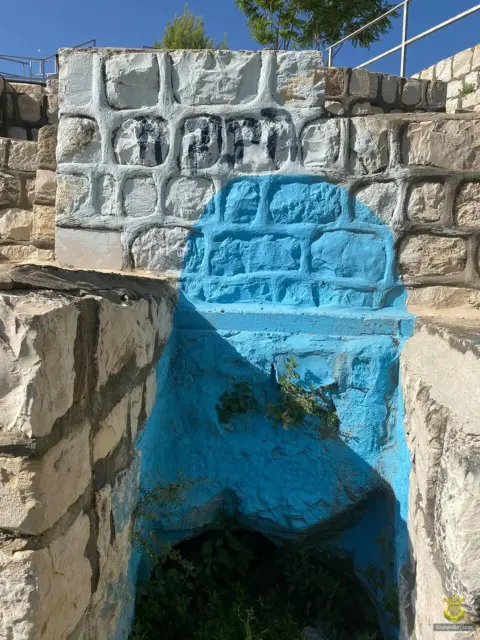
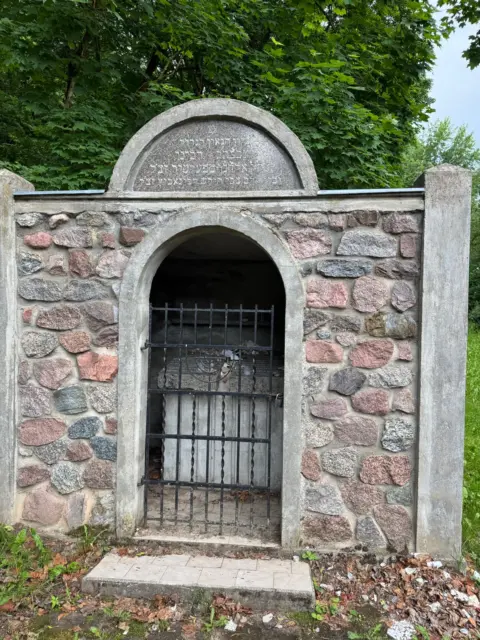
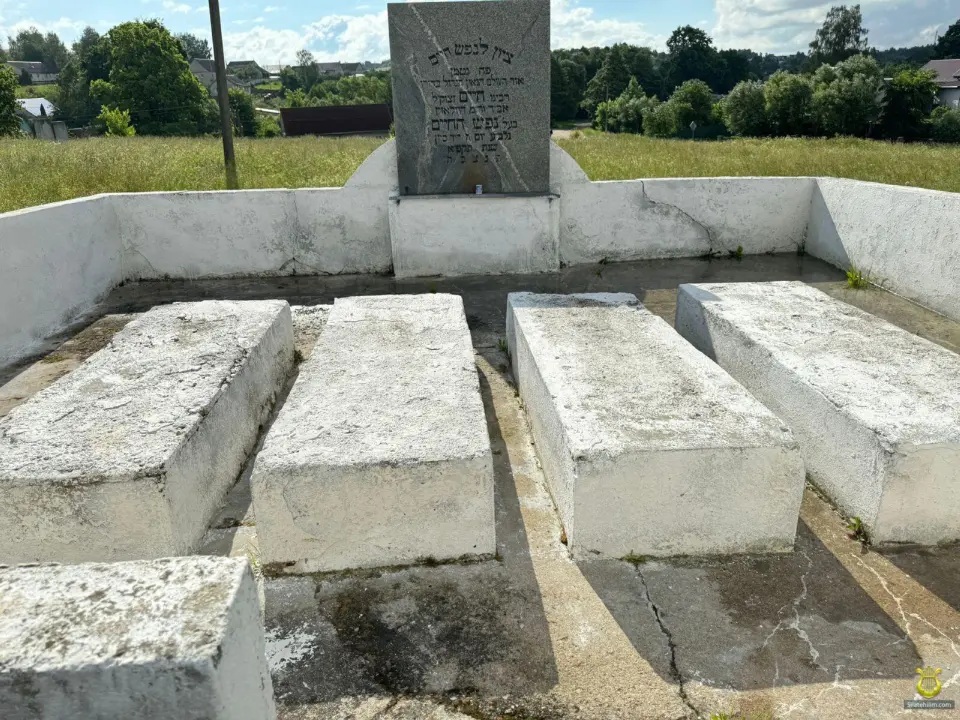
Grave
Chaim of Volozhin
Rabbi Chaim ben Yitzchak of Volozhin
Rabbi Chaim ben Rabbi Yitzchak of Volozhin (1749-
Yahrzeit – 14 Sivan
Resting place – Volozhin, Belarus
Rabbi Chaim of Volozhin was an outstanding tzadik, a Lithuanian rabbi, and the foremost authority of his generation. He was the closest disciple and colleague of the Vilna Gaon. He was born in 1749 in the town of Volozhin, in the Vilna Governorate. He became renowned as the founder and head of the great Volozhin Yeshiva (1803), the “mother” of all subsequent Ashkenazic yeshivot, including those of today. He served as chief rabbi first in Vilkomir, and later in Volozhin.
He was regarded as the recognized authority on all matters concerning Russian Jewry. Every rabbi of the generation sought his counsel, and people turned to him for help from other countries as well; even the Tsarist administration acknowledged the importance of his role as an unquestioned leader. The people loved him.
Many came to Volozhin to “see two wonders” — the yeshiva and its rabbi. Rabbi Chaim’s influence on the Jewish people was remarkable, especially among Lithuanian Jews. In the dispute between the Chassidim and their opponents, he took an anti-Chassidic stance, but even there he managed to display the gentleness of his wonderful soul, never overstepping the bounds of the debate.
Children from Chassidic families studied in his yeshiva and returned home without their childhood convictions having changed at all. Rabbi Chaim taught them Torah, rather than “re-educating them into a different path.”
It is told that he traveled especially to Minsk to meet with one of the Chassidic leaders, Rabbi Schneur Zalman. There, the two great teachers acknowledged that in the past, each side had not always treated its opponents fairly. The fact that today both movements — the Lithuanian and the Chassidic — coexist peacefully is largely to the credit of Rabbi Chaim of Volozhin.
Torah Study
In Nefesh HaChaim, Rabbi Chaim brings a midrash that illustrates, through imagery, how the human soul is structured. A person has five levels of soul: Nefesh – Ruach – Neshama – Chaya – Yechida. But only the first three are addressed in the context of this midrash. Picture a glassblower who breathes air through a long tube, blowing it into the glass and shaping it. The midrash says that man was created in the very same way.
Neshama – from the word “neshima” (breath) – from “linshom” – as it were, G-d “breathes” (as the glassblower draws in air).
Ruach – that which he passes through the tube.
Nefesh – this is the part of the soul that enters the glass and, according to how it is blown in, takes on the corresponding shape — the shape of a person. It is this soul that determines a person’s form.
The Maharal of Prague says that “panim – lashon p’nim” (the face reflects a person’s inner essence). Nefesh comes from the word “vayinafash” (he rested) — a place of rest. The Nefesh, within us, regulates all our bodily functions: blood circulation, digestion, our ability to hear and see. Speech belongs to the domain of Ruach. The Neshama, however, is not within us — it remains with the Creator (only Adam HaRishon had all levels of the soul within him). The Neshama can be closer to or farther from a person, depending on his merits. When the Jewish people received the Torah, their faces shone — this was the Neshama resting upon them. After the sin of the Golden Calf, they lost this closeness. Every soul is connected to the Ten Sefirot. Karet — the “cutting off” of the soul — is the severing of the Ruach from the Nefesh. But Hashem, in His mercy, does not fully sever the lowest sefirah (Malchut) of the Ruach from the highest one (Keter) of the Nefesh — they remain joined by a thin thread. This is what saves a person, and through this thread a person can do teshuvah. All transgressions connected with the body warrant karet and affect the Nefesh. There are transgressions not connected with the body (though no less severe) that are not punished with karet — for example, lashon hara — and here the damage is done to the Ruach. (From a lesson by Rav Bentzion Melamed on the “Tomer Devorah”)
Everything Is Based on Torah
In his youth he studied under the great “Shaagat Aryeh”, who was at that time the rabbi of the town, and later moved to Vilna, where he placed himself in the shadow of the Vilna Gaon, for whom he held immense reverence and from whom he learned the greater part of his Torah. After the Gaon’s passing, Rabbi Chaim founded the Volozhin Yeshiva, “Etz Chaim,” where hundreds of students studied with extraordinary diligence, forming the foundation for the flourishing of Torah and the rabbinate for generations to come. Love of Torah burned like fire in his bones and kindled everyone around him. Rabbi Chaim instilled in his students the principle of “truth without the slightest doubt,” to such a degree that he taught, “if the entire world, from one end to the other, were left without our study of Torah for even a single moment, all the worlds would immediately be destroyed and revert to chaos”! He added that the way “Creation is guided, and the extent to which the Divine influence penetrates it day after day, all depends on the study of Torah. Depending on the Torah study, the abundance of the entire world will increase or diminish.” This is why, throughout all the years of the yeshiva’s existence, there were “guardians” among the students who studied Torah continuously, at every hour of the day and night, every day of the week. They made sure that the voice of Torah was never interrupted for even a moment. Rabbi Chaim himself would walk among those who were studying and watch over them even during the night hours. At the end of Yom Kippur, when everyone was eating and drinking, Rabbi Chaim himself would study Torah, fearing that no one would remain to sustain the world at that time.
Stories of the Tzadikim
The Source of Strength
This happened during the war of 1812. The commander of a French detachment asked Rabbi Chaim of Volozhin what the outcome of the campaign would be. He answered with a parable, alluding to the mixed, multinational makeup of Napoleon’s army. “A wealthy nobleman was once riding in a luxurious carriage drawn by six thoroughbred horses purchased from different countries. The carriage got stuck in a swamp, and no matter how hard the driver whipped the horses, they could not move it. Then a peasant came along in a cart drawn by a pair of horses, and passed easily through that very swamp. The nobleman was astonished and asked the peasant, ‘What is the secret of your horses’ strength?’ The peasant replied, ‘Your horses, though each is strong on its own, are all of different breeds, and there is no bond between them. Each one considers itself finer than the others and pulls its own way — whip one, and the other is only glad. But my horses are simple, of one kind — a mare and her foal. The moment you threaten one with the whip, the other strains with all its might to help the one beside it. That is why we made it through the swamp, while you got stuck.’”
The Will
Once, a wealthy landowner of the region left his three sons a curious will. The horses he bequeathed to them were to be divided as follows: the first son would receive half, the second a third, and the last a ninth — on condition that no horse be split in two. Great confusion arose, for the father had left seventeen horses, and no one knew how to divide them while honoring these conditions. The brothers worked out the calculations and concluded that there was no solution, and that the problem should be brought to Rabbi Yitzchak, the leader of the Volozhin community, known for his sharp mind. They chose one of their number to go and ask for his counsel. Rabbi Chaim was, at that time, a small child, and seeing that no one had a solution, he offered to help. “If you give me a horse from your own property,” he said to the man, “I will solve the problem.” Once the horse was in the boy’s possession, he added it to the seventeen inherited horses and began to divide them. Half of eighteen — that is, nine — was the first share. A third of the total — that is, six — was the second. And a ninth — two horses — was the third, making seventeen in all, exactly the number the father had left them. He returned the extra horse to its owner. “This is what your father meant,” the child declared triumphantly.
At the Gates of Gan Eden
One night, as the Rosh Yeshiva, Rav Chaim, was walking through the halls of the yeshiva, something extraordinary occurred that carries within it a very profound lesson. One of the yeshiva students fell ill. Since he needed medical treatment, he packed his belongings and set out to return to his parents. One of his friends from the yeshiva accompanied him on the journey. By evening they arrived in a village, where they decided to spend the night at a local inn. In the morning, the innkeeper told them how much they owed. The sick boy counted his money and found he was a few coins short. The innkeeper said he trusted him and would accept the small remaining sum later. From there they continued on toward the home of the sick boy’s parents. There the friend parted from him, wishing him a swift and full recovery. Before they parted, the sick boy remembered the debt and gave his friend seven coins, asking him not to forget to pay the innkeeper on his way back to the yeshiva. The friend promised, and they parted ways. Meanwhile, the illness worsened, and the boy passed away. When the sad news reached the yeshiva, they delivered his eulogy and mourned him. A few days after the funeral, the Rosh Yeshiva, Rav Chaim, was walking among the students who were learning around midnight in the yeshiva hall, encouraging them, when he suddenly saw the deceased boy walking toward him. He was not frightened, but at once turned to him and asked, “What happened with the Heavenly judgment?” The deceased opened his mouth and told him that when he stood before the Heavenly Tribunal, they began to weigh his merits and shortcomings. It turned out that he was clear of all sin, because the suffering he had endured during his illness had purified his soul, so that he was to return to Gan Eden. But when he approached the gates of Gan Eden, the Satan rose up to block his entry. He claimed that the young man had committed theft! — “You left the world owing the innkeeper seven coins.” And even though this was not his fault, since he had given the entire sum to his friend to pay off the debt, the innkeeper had still never received the money. This accusation drew the interest of the Heavenly Court, and after lengthy deliberation it was decided that, on the one hand, the deceased was not at all guilty, since he had done everything he could to repay the debt, but nevertheless the innkeeper had not received what was owed him. So the young man was granted an exception and allowed to return to this world to appear before the Rosh Yeshiva and ask him to resolve the matter of the debt. The Rosh Yeshiva listened to every detail of the story and promised the boy he would see to it that the debt was paid, whereupon the boy vanished. Rabbi Chaim immediately summoned the deceased’s friend, who confirmed that he had indeed received seven coins to pay off the debt, but, to his great regret, had completely forgotten. The next day, the boy went to the innkeeper to pay the debt that had kept his friend from entering Gan Eden.
Segula Ein Od Milvado
https://silatehilim.com/эйн-од-милвадо-или-сгула-нефила-раби-х/
May the merit of this great tzadik protect Am Yisrael!
(https://dailyzohar.com/tzadikim/25-Rabbi-Chaim-of-Volozhin, https://hevratpinto.org/tsadikim_n/rabbi_haim_de_volojine.html)
Gallery