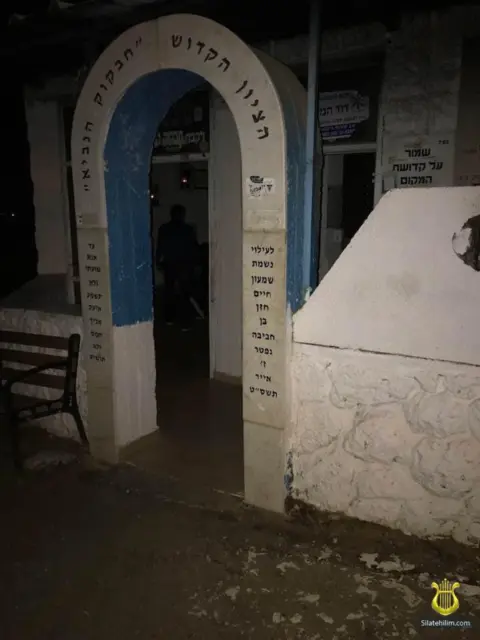
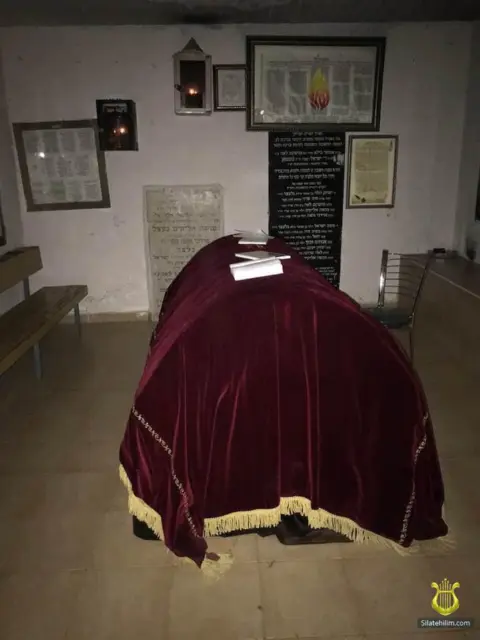
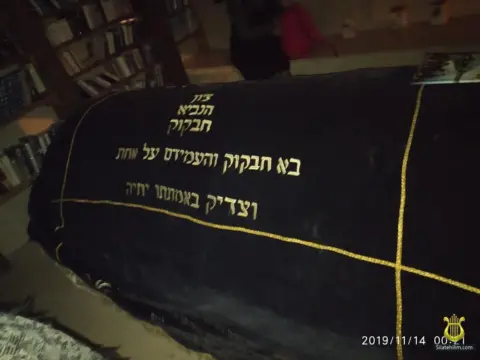
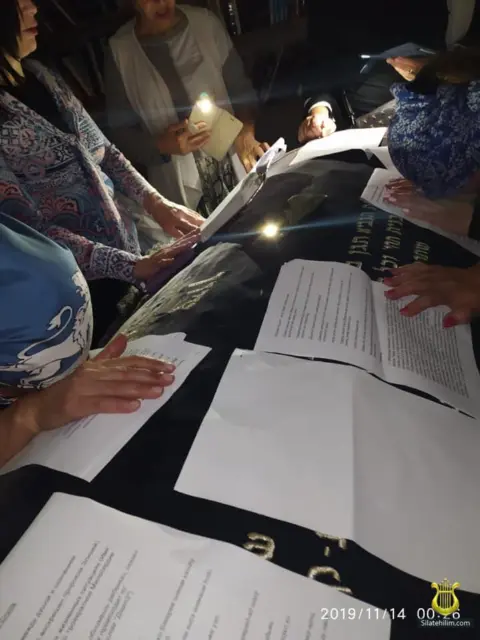
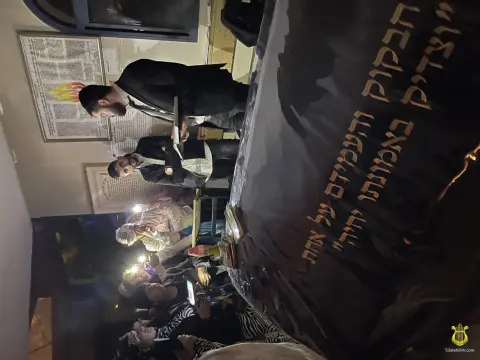
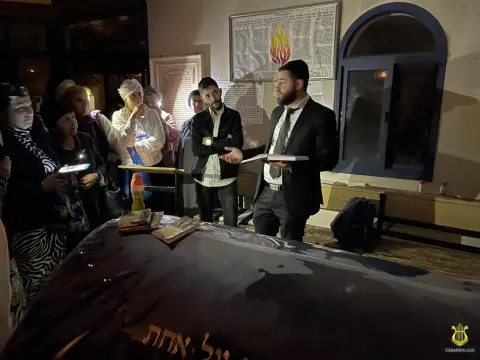
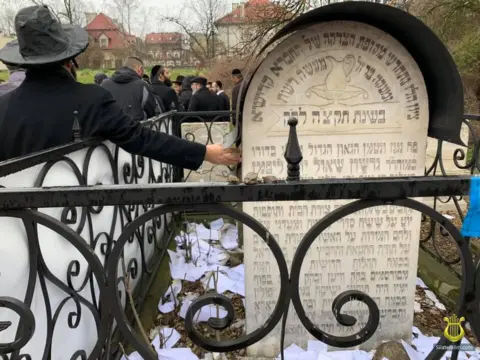
Grave
Habakkuk the Prophet
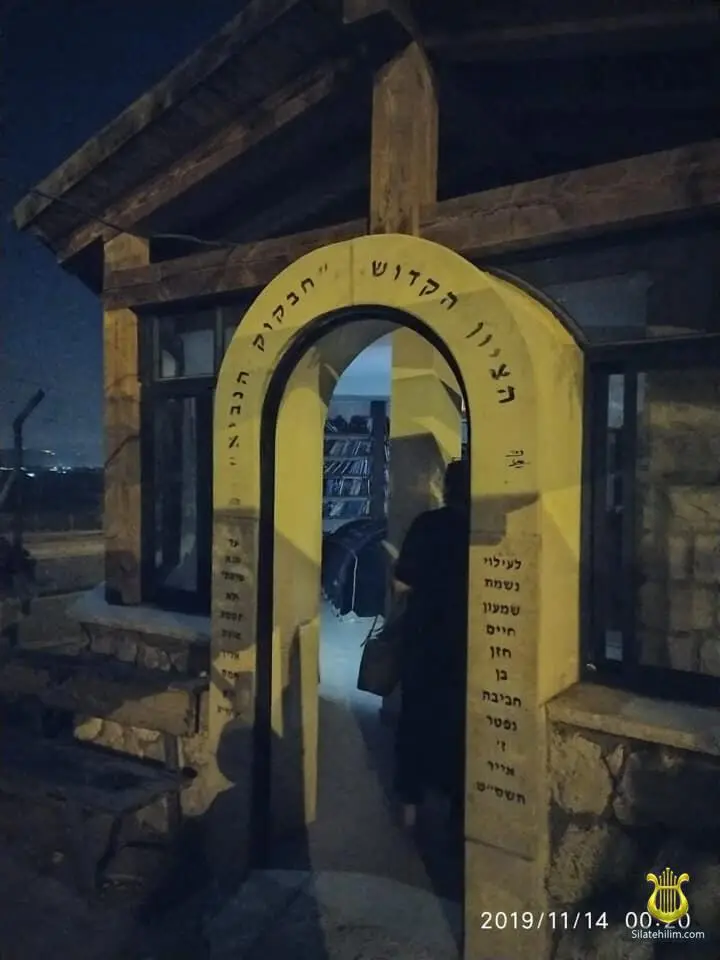
Yahrzeit (Hillula)
- 24 Elul — Habakkuk HaNavi
Habakkuk the Prophet
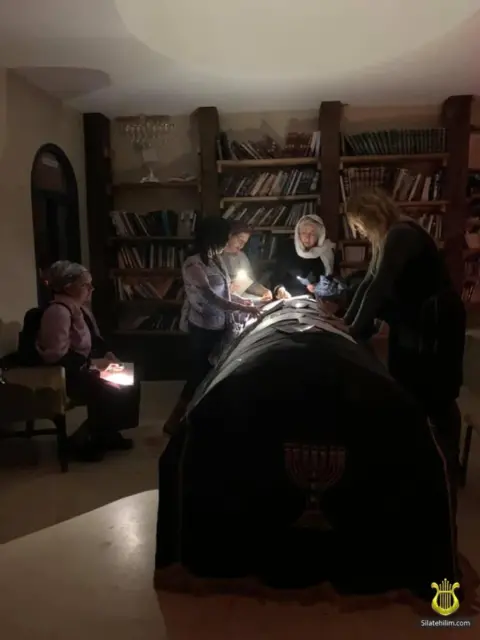
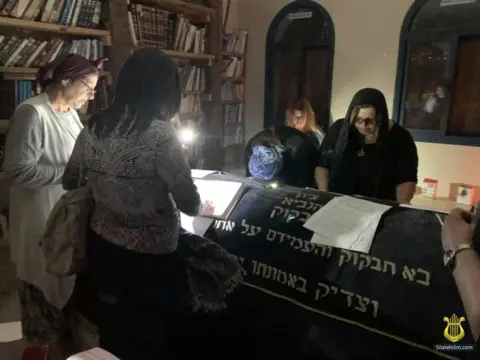
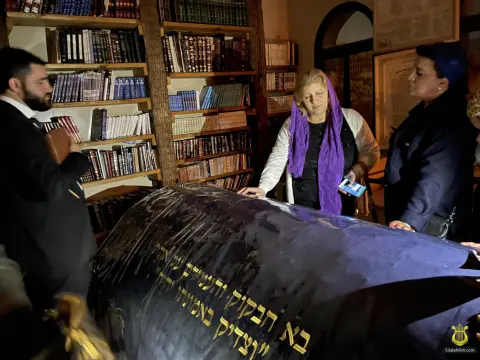
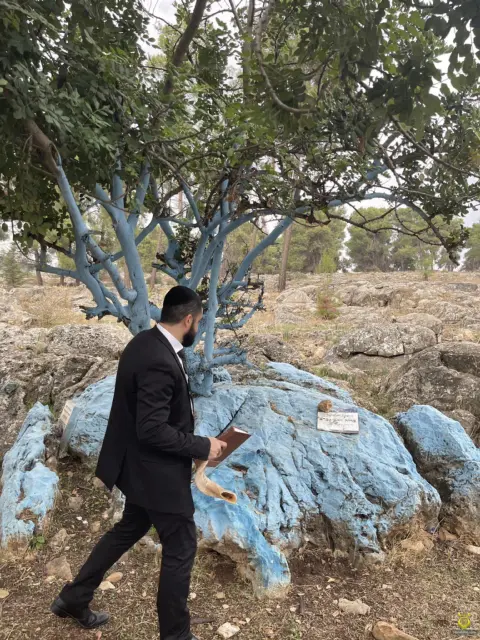
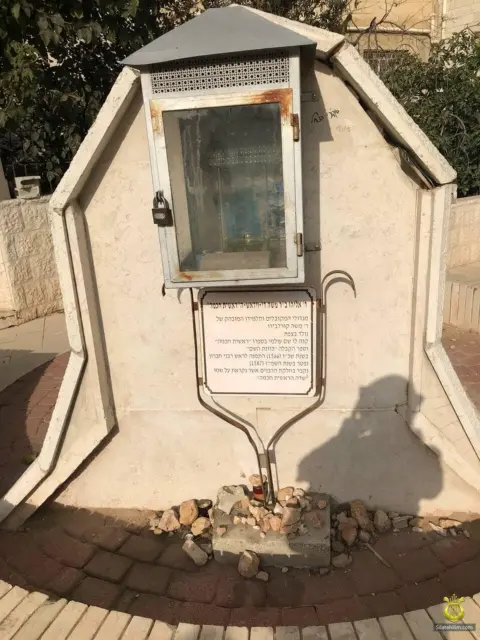
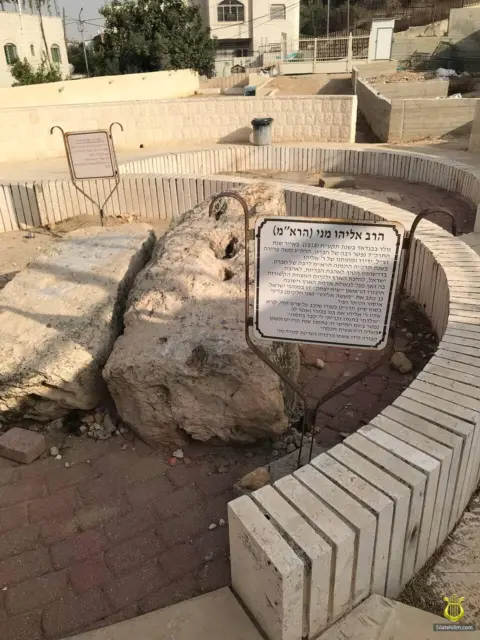
Resting place - on the ascent to Meron-Tzfat, Route 65 (Kadarim settlement);
Yahrzeit - 24 Elul.
The Prophet Habakkuk (revival from the dead)
King Shlomo said: "A living dog is better than a dead lion" (Kohelet 9:4).
This may allude to the episode with Gechazi, who was sent by the prophet Elisha to revive the son of the Shunammite woman.
Elisha told him: "Take my staff in your hand and lay it on the boy's face" [II Kings 4:29].
In doing so, the prophet asked Gechazi not to speak with anyone along the way and not to be distracted by anything. But on the way, he laid the staff on a dead dog and revived it.
When he reached the place and laid the staff on the boy's face, the boy was not revived. [Rabbi Shmuel Laniado, Kli Yakar, II Kings]
It is known that the son of the Shunammite woman was the prophet Habakkuk [Zohar II, 44b], whose name has the same gematria as the word אריה (lion), as well as the word בחור (young man).
From this it follows that Habakkuk's death was the cause of the dead dog's revival.
This is the meaning of the expression "a living dog is better," because the "dead lion" is Habakkuk (whose gematria is "lion").
(Rabbi Yehuda Petaya, "Minchat Yehuda," ch. 109, Kohelet)
The students of the Arizal transmit the following story. Once Rabbi Yitzchak Luria was late for a wedding. He explained his lateness by saying that on the way he had encountered a dog that was barking at him. The Arizal asked it who it was - to which the dog answered that it was the gilgul (reincarnation) of Gechazi.
When the prophet Elisha commanded that the Shunammite woman's son be revived with the staff, Gechazi did not believe in the miracle that was supposed to occur. Along the way he saw a dead dog cast by the roadside and decided to test the power of the prophet's staff on it. The dog did indeed come back to life, but the staff no longer had any effect on the young man to whom the prophet had sent it. Therefore Gechazi's punishment was to be reincarnated as a dog.
The Prayer of the Prophet Habakkuk
Habakkuk - Son of the Shunammite Woman
The prophet Habakkuk was the son of the Shunammite, the very woman from Shunem who used to host the prophet Elisha in her home. She had long been childless, and her husband was old. And so, as a reward for her good deeds, the prophet promised her a son: "At this season next year, you will be embracing a son." The name Habakkuk (Chavakuk) comes from the word meaning "to embrace." As a child he suffered a serious "clinical" death and was revived by Elisha.
The Zohar HaKadosh says that Habakkuk was revived through the Name of Ha-Shem composed of 72 words - at the splitting of the Yam Suf there are 3 verses - the Name of 72 words contains 216 letters. The gematria of Chavakuk = 216.
The name Chavakuk has a gematria of 72x3. It is as though the gematria of the very highest Name of the Al-mighty, composed of 72 words, is repeated three times.
72 is a symbol of the highest mercy. It turns out that in the name Chavakuk this highest mercy is tripled.
72 appears in many places in Tanach. For example, the world was created over the course of 72 hours (Rabbeinu Bachya explains this: there were 6 days of creation; the Al-mighty created the world only during the daylight hours; therefore, 6 multiplied by 12 = 72). The 12 tribes of Israel are a multiple of 72;
The Kohen Gadol's breastplate held 12 stones, each engraved with 6 letters.
Habakkuk lived in an extremely difficult period, when people had become corrupt and mired in sin. All his life he sought an answer to the question of why the Al-mighty does not reward good and does not punish evil. And, in general, why there is evil in the world at all.
We have a tradition that Moshe Rabbeinu gave us 613 commandments;
David HaMelech grouped and condensed them to 11;
The prophet Micha to three;
Habakkuk - to one: "Behold, his soul is puffed up, it is not upright in him; but the righteous shall live by his faith" (2:4).
(Rebbetzin Chava Kuperman)
The Prayer of the Prophet Habakkuk
"Tefilah le-Chavakuk ha-Navi al shigyonot;
Ad-nai shamati shim'acha yareti, Ad-nai pa'alcha bekerev shanim chayeihu, bekerev shanim todia, berogez rachem tizkor;
Elo-ah mi-Teiman yavo, vekadosh me-Har Paran, selah; kisah shamayim hodo, u-tehilato mal'ah ha'aretz;
Venogah ka'or tihyeh, karnayim miyado lo, vesham chevyon uzo;
Lefanav yelech dever, veyeitzei reshef leraglav;
Amad vayemoded eretz, ra'ah vayater goyim, vayitpotzetzu hararei ad, shachu giv'ot olam, halichot olam lo;
Tachat aven ra'iti ohalei Chushan, yirgezun yeriot eretz Midyan.
Havincharim charah Ad-nai, im bincharim apecha, im bayam evratecha, ki tirkav al susecha markevotecha yeshu'ah;
Eryah te'or kashtecha, shevuot matot omer, selah; neharot tevaka aretz;
Ra'ucha yachilu harim, zerem mayim avar, natan tehom kolo, rom yadeihu nasa;
Shemesh yareach amad zevulah, le'or chitzecha yehaleichu, lenogah berak chanitecha;
Bza'am tits'ad aretz, be'af tadush goyim;
Yatzata leyesha amecha, leyesha et meshichecha, machatzta rosh mibeit rasha, arot yesod ad tzavar, selah;
Nakavta vematav rosh perazav, yis'aru lehafitzeni, alitzutam kemo le'echol ani bamistar;
Darachta vayam susecha, chomer mayim rabim;
Shamati vatirgaz bitni, lekol tzalelu sfatai, yavo rakav ba'atzamai, vetachtai ergaz;
Asher anuach leyom tzarah, la'alot le'am yegudenu; ki te'enah lo –
tifrach ve'ein yevul bagfanim, kichesh ma'aseh zayit, ushdemot lo asah ochel, gazar mimichlah tzon
ve'ein bakar barfatim.
Va'ani b-Ad-nai e'eloza, agilah b-Elohei yish'i, Elohim Ad-nai
cheili, vayasem raglai ka'ayalot, ve'al bamotai yadricheini, lamnatzeach binginotai."
Translation
(1) A prayer of Habakkuk the prophet, upon Shigyonot. (2) O L-rd, I have heard the report of You, and I am afraid; O L-rd, revive Your work in the midst of the years, in the midst of the years make it known; in wrath remember mercy! G-d comes from Teiman, and the Holy One from Mount Paran. Selah! (3) His glory covered the heavens, and the earth was full of His praise. (4) And His brightness was like the light; rays streamed from His hand, and there was the hiding of His power. (5) Before Him went the pestilence, and burning coals went forth at His feet. (6) He stood and measured the earth; He looked and made the nations tremble, and the ancient mountains crumbled, the eternal hills bowed low; His ways are eternal. (7) I saw the tents of Cushan in distress, the tent-curtains of the land of Midyan trembled. ( Was the L-rd angry with the rivers, was Your wrath against the rivers, was Your fury against the sea, that You rode upon Your horses, upon Your chariots of salvation? (9) Your bow was made bare, sworn were the tribes by Your word, Selah! You cleaved the earth with rivers. (10) The mountains saw You and trembled, the torrent of waters swept by, the deep uttered its voice, it lifted up its hands on high. (11) The sun and moon stood still in their habitation, at the light of Your arrows as they went, at the shining of Your glittering spear. (12) In indignation You marched through the earth, in anger You threshed the nations. (13) You went forth for the salvation of Your people, for the salvation of Your anointed; You crushed the head of the house of the wicked, laying it bare from foundation to neck. Selah! (14) You pierced with his own spears the head of his warriors; they stormed out to scatter me, their rejoicing was as of those who devour the poor in secret. (15) You walked through the sea with Your horses, through the heap of great waters. (16) I heard, and my belly trembled, my lips quivered at the sound, rottenness entered into my bones, and I trembled in my place, that I might rest in the day of trouble, when he who invades comes up against the people to attack them. (17) For though the fig tree does not blossom, and there is no fruit on the vines, the labor of the olive fails, and the fields yield no food, the flock is cut off from the fold, and there is no herd in the stalls. (18) Yet I will rejoice in the L-rd, I will be joyful in the G-d of my salvation. (19) G-d, the L-rd, is my strength, and He has made my feet like hinds' feet, and He will make me walk upon my high places. For the leader, on my stringed instruments.
Was the L-rd angry with the rivers, was Your wrath against the rivers, was Your fury against the sea, that You rode upon Your horses, upon Your chariots of salvation? (9) Your bow was made bare, sworn were the tribes by Your word, Selah! You cleaved the earth with rivers. (10) The mountains saw You and trembled, the torrent of waters swept by, the deep uttered its voice, it lifted up its hands on high. (11) The sun and moon stood still in their habitation, at the light of Your arrows as they went, at the shining of Your glittering spear. (12) In indignation You marched through the earth, in anger You threshed the nations. (13) You went forth for the salvation of Your people, for the salvation of Your anointed; You crushed the head of the house of the wicked, laying it bare from foundation to neck. Selah! (14) You pierced with his own spears the head of his warriors; they stormed out to scatter me, their rejoicing was as of those who devour the poor in secret. (15) You walked through the sea with Your horses, through the heap of great waters. (16) I heard, and my belly trembled, my lips quivered at the sound, rottenness entered into my bones, and I trembled in my place, that I might rest in the day of trouble, when he who invades comes up against the people to attack them. (17) For though the fig tree does not blossom, and there is no fruit on the vines, the labor of the olive fails, and the fields yield no food, the flock is cut off from the fold, and there is no herd in the stalls. (18) Yet I will rejoice in the L-rd, I will be joyful in the G-d of my salvation. (19) G-d, the L-rd, is my strength, and He has made my feet like hinds' feet, and He will make me walk upon my high places. For the leader, on my stringed instruments.Segulot Associated with the Prayer of the Prophet Habakkuk:
- against depression;
- for finding balance between soul and mind;
- for serious illnesses (he was revived by the prophet Elisha);
- for extremely difficult and seemingly hopeless life situations (the name Chavakuk has a gematria of 72 x 3 - a threefold Mercy of Ha-Shem);
- for the birth of sons - "At this season next year, you will be embracing a son," said the prophet Elisha to Habakkuk's mother - the name Chavakuk comes from the word meaning "to embrace";
- for one whose mind is confused - recite this prayer continually.
Gallery