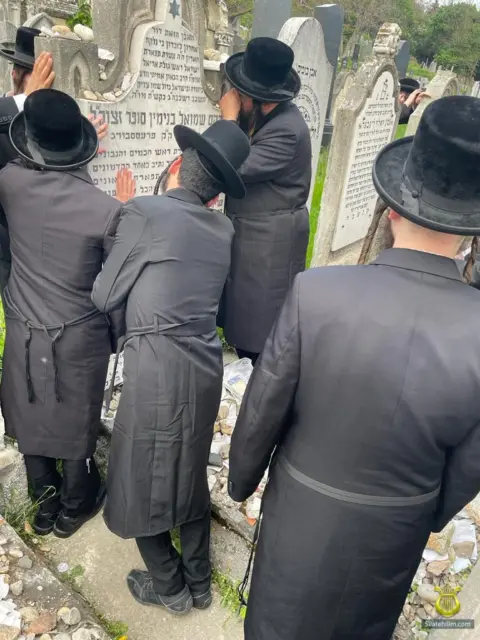
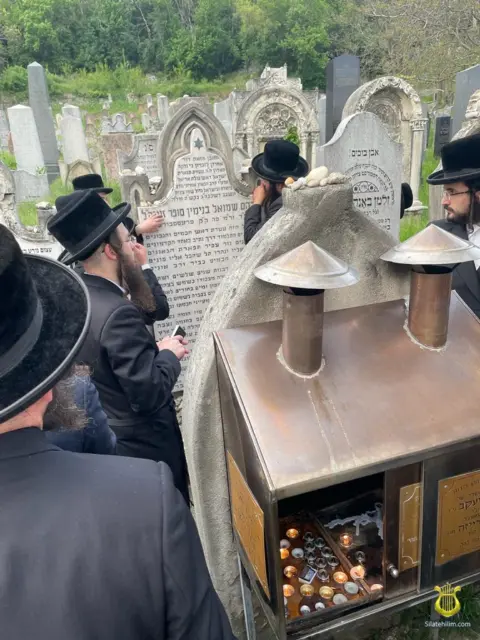
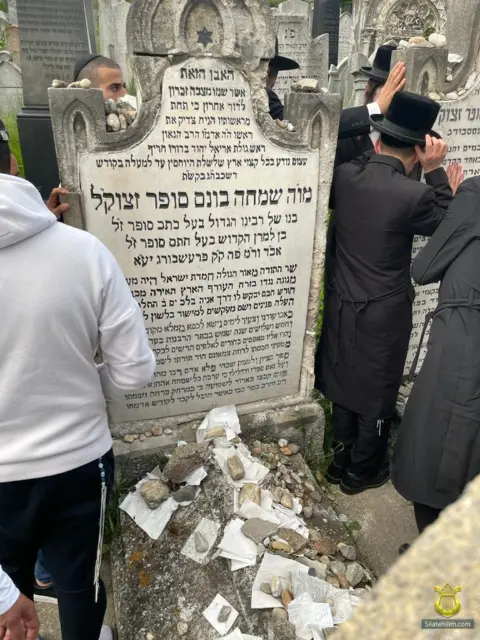
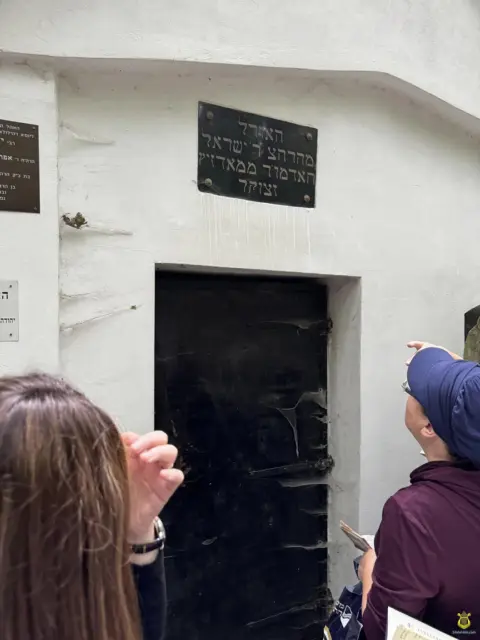
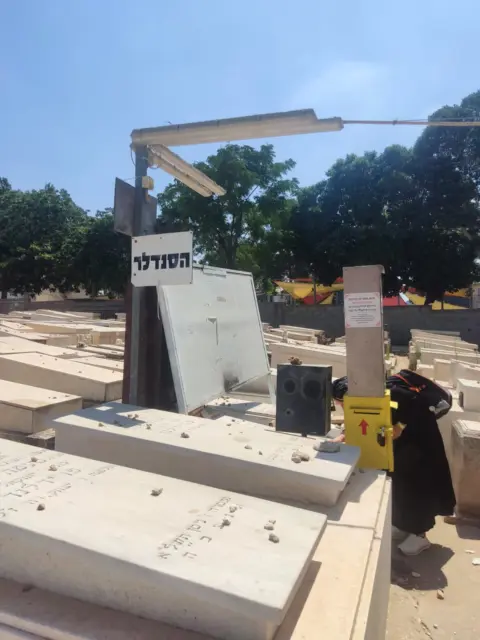
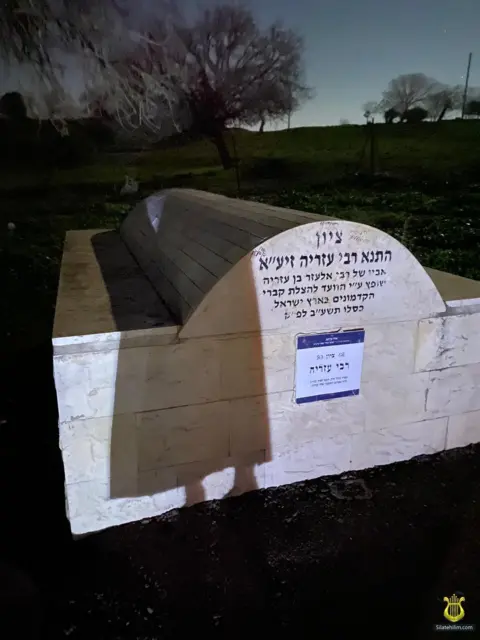
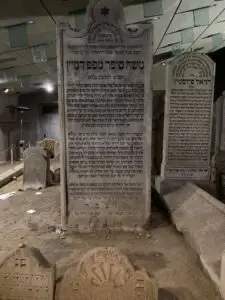
Grave
Simcha Bunim of Peshischa
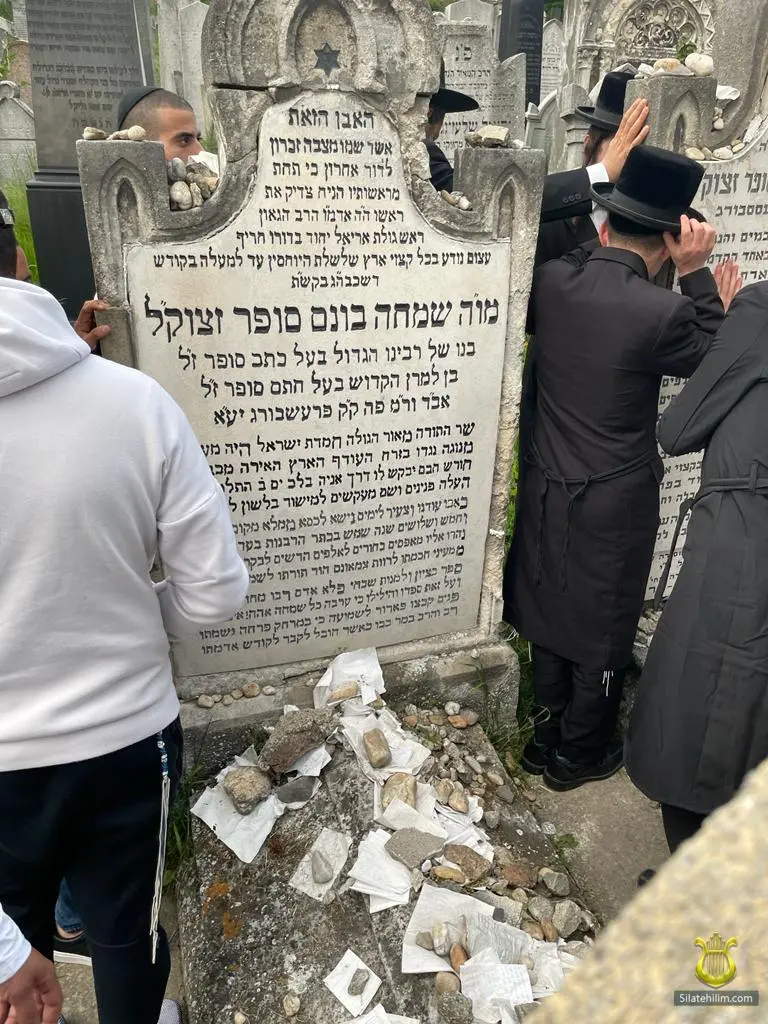
Yahrzeit (Hillula)
- 12 Elul — Yahrzeit/Hillula of Rabbi Simcha Bunim of Peshischa
Rabbi Simcha Bunim studied in the yeshivot of Mattersdorf and Nikolsburg, where his teacher was Rabbi Mordechai Banet.
Yahrzeit - 12 Elul;
Burial place - Przysucha, Poland.
Rabbi Simcha Bunim was introduced to Chassidus through his father-in-law and became a follower of the Maggid of Kozhnitz.
After working as a manager of a lumber business and later a pharmacy, he met, came under the influence of, and became a close friend of Rabbi Chozeh of Lublin. When Rabbi Yaakov Yitzchak, the "Yid HaKadosh" (the Holy Jew) left the Chozeh's circle to establish his own court in Peshischa, Rabbi Bunim followed him there and became his follower, continuing his work after the passing of the "Yid HaKadosh."
The main principle of this teaching was self-knowledge and self-observation.
This path was continued by the Kotzker Rebbe, the Vorker Rebbe, and the Chiddushei HaRim of Ger (may his merit protect us).
His teachings were compiled in the books - "Kol Simcha," "Ramataim Tzofim," "Chedvat Simcha."
Once Rabbi Simcha Bunim said: "I learned the meaning of the word 'love' when I overheard a conversation between Polish peasants in a tavern. One says to the other: 'Do you love me?' The other answers: 'Of course.' The first one persists: 'Then tell me, what hurts me?'"
"I don't know" - the second one answered.
"Then how can you say you love me. To love, to be a friend - is to know where it hurts."
All My Bones
When Rabbi Bunim's opponents asked him why he was late with his morning prayer every day, he answered: "A person has bones that continue to sleep even after he himself has awoken."
It is said in Tehillim (35:10): "All my bones shall say: G-d, who is like unto You?"
That is why a person should wait to pray until all his bones have awoken."
David and Us
Rabbi Bunim was once asked:
"We repent for our sins repeatedly on Yom Kippur. Why don't we find out whether our sins have been forgiven?"
After all, David had barely uttered: "I have sinned against the L-rd," when he was told: "The L-rd has removed your sin." "And David said to Nathan: I have sinned against the L-rd... And Nathan said to David: The L-rd has removed your sin - you shall not die."
Rabbi Bunim answered to this:
"For David said: 'I have sinned against the L-rd,' meaning: 'Deal with me according to Your will, and I shall accept it with love, for You, L-rd, are righteous.' But when we say: 'We have sinned,' we assume that it is G-d's nature to forgive us; and when right after that we add: 'We have betrayed You,' we assume that, having already forgiven us, He will continue to be favorable to us in the future."
Verses for the Chess Game
In his youth, when Rabbi Bunim was a timber merchant, he loved to play chess with rather dubious characters. He made every move with heartfelt passion, as if performing some sacred ritual, and from time to time accompanied his actions with playful verses, which he half-recited, half-sang. For example: "Move carefully - or you'll be left without your knight as well." The verses always spoke of what was happening on the chessboard, but the intonation with which Bunim recited them made everyone present listen with special attention. And each time, they became more and more aware that the verses were connected to their own lives. Not wanting to admit this even to themselves, they tried to resist, but in the end were forced to yield. And in their hearts they felt the stirrings of change.
The Wrong Move
Once Rabbi Bunim was playing chess with a man whom he very much wished to set upon the right path. The rabbi made an unfortunate move, and his opponent's response could put him in a hopeless position. Rabbi Bunim begged his opponent to let him take the move back, and the man agreed. But when the rabbi made another wrong move, the opponent refused to give him that opportunity again. "I gave in to you once," he said, "and that is enough."
"Woe to the person," the tzadik exclaimed, "who is so mired in sins that even prayer has no effect on him!" His opponent froze and fell silent, shaken to the depths of his soul.
Idle Talk
Rabbi Bunim would transport his goods along the Vistula to sell in Danzig, and along the way he would visit the holy Yehudi.
Once he came to the Yehudi straight from Danzig. "What news did you hear there?" the holy Yehudi asked him. Bunim began to tell him about all sorts of different things. Yerachmiel, the Yehudi's son, could not hide his irritation that his father's attention was being diverted by such idle talk. However, once the guest had left, the Yehudi said to his son: "Do you know that everything he told rises up from the depths to the foot of the Throne of Glory?"
The Walls of the House
Once, on his way to Leipzig, Rabbi Bunim stopped with several fellow merchants at a Jewish home to recite the afternoon prayer. But no sooner had he entered the house than he fell into confusion, because a persistent unpleasant odor filled the place. The rabbi signaled to his companions, and they left the house. However, after taking a few steps, the rabbi stopped: "We must go back!" he exclaimed. "The walls of the house cry out for justice, because I have disgraced them with my contemptuous attitude."
Do They Deny G-d?
When Rabbi Bunim was in Danzig, he would spend Shabbat conversing with the "Germans" - as Jews who had drifted away from the Law and observance of the Jewish way of life were called - and would discuss Torah with them. But the "Germans" only laughed at him, considering his behavior eccentric. His son, Rabbi Avraham-Moshe, could barely contain his frustration, begging his father not to discuss matters of faith with unbelievers who only mocked him.
"What can I do?" Rabbi Bunim would object. "They provoke me, and I cannot restrain myself. Well, all right - next Shabbat, when you see me getting drawn into these conversations again, kick me under the table so that I sit quietly." So his son did the following Shabbat, when they sat down at the table as usual.
But Rabbi Bunim said reproachfully: "Not at all! These people cannot be called unbelievers! I once heard one of them, suffering from a headache, cry out: 'Shema Yisrael!' Now Pharaoh - he was a true unbeliever, because even while suffering from the plagues sent by G-d, he still continued to declare that he did not recognize Him."
"And Pharaoh said: 'Who is G-d, that I should heed His voice and let Israel go? I do not know G-d, nor will I let Israel go.'"
The Playbill and the Play
At the time when Rabbi Bunim was still a timber merchant, the merchants of Danzig asked him why he, who knew Scripture so well, nevertheless regularly went to visit tzadikim. What could they possibly tell him beyond what he could already read in a book himself? Rabbi Bunim tried to explain it to them - but without success. That evening the merchants invited him to the theater, but he declined. When they returned from the performance, they began telling him how much pleasure they had gotten from what they saw. "I already know that," Rabbi Bunim replied, "I read the theater's playbill."
"But how can reading a playbill compare to seeing it with your own eyes!"
"That is exactly what I wanted to tell you - when it comes to books and tzadikim."
(Tzadikim.com, "Chassidic Tales. Later Masters" by Martin Buber)
Gallery