Grave
Rashash
Rabbi Shalom Mizrachi Dhiyya Sharabi
Yahrzeit (Hillula)
- 10 Shevat — Rabbi Shalom Sharabi - the Rashash
10 Shevat – Yahrzeit of Rabbi Shalom ben Yitzchak Sharabi – the Rashash.
He was born in the city of Sharab, in Yemen.
The untimely death of his father prevented the boy from continuing his studies in Talmud Torah, as the young orphan became the sole support of his family. Shalom became a traveling merchant, selling his goods from door to door. Only in the evenings was he able to study Torah. He would often remain in the Beit Midrash until morning — his desire to learn Torah was insatiable. Despite his considerable achievements in Torah, he felt that something was missing. It was then that he discovered the esoteric dimension of Torah — Kabbalah and its mysteries — as they had been developed by the sages of Yemen. He immersed himself in the study of the higher worlds and the secrets of Torah, and distinguished himself in this realm as well. Yet the young Rabbi Shalom continued diligently to earn his living as a merchant, as before.
One day, during a business journey, Shalom found himself in a dangerous situation, and he vowed that if G-d would save him, he would move to the Holy Land. Indeed, G-d came to his aid, and he left his family and friends and set out on a journey across the Middle East. Along the way he stopped in India, Baghdad, and Damascus, where he made a deep impression on the local rabbis.
Shalom's joy knew no bounds when he finally arrived at the Kabbalists' yeshiva "Beit El" in Jerusalem, headed by the renowned Kabbalist Rabbi Gedaliah Chiyun. His soul longed to join the other students of the inner dimensions of Torah, but not wishing to reveal himself, he presented himself as a simple Jew and took on the role of shamash (sexton) of the study hall. It was a perfect opportunity to learn while remaining unnoticed. He was constantly present in the Talmud Torah, and no one paid attention to Shalom as he kept his eyes and ears open to every word. In this way he gradually increased his knowledge until he surpassed all the others — yet his greatness remained a secret known only to himself.
The Scholarly Shamash
One day a question arose in the yeshiva that no one could answer. For several days the Kabbalists pored over weighty volumes but could not find a satisfactory explanation. Rabbi Gedaliah became almost obsessed with the problem and was deeply troubled by his inability to resolve it. Rabbi Shalom listened to their discussions and knew the answer, but not wishing to reveal himself, he remained silent. As the days passed, it seemed as though a dark cloud had settled over the study hall. One evening, Shalom approached Rabbi Gedaliah, who was weeping over an open volume, imploring G-d to enlighten his mind. Shalom wrote the answer on a small slip of paper and slipped it between the pages of Rabbi Gedaliah's book. The next morning, the Beit Midrash was astounded. The problem that had seemed so formidable had been resolved in a clear and logical manner. Everyone was curious as to the source of the brilliant explanation, but it remained a great mystery. This happened several times. Whenever a difficult question was raised in the evening, its answer was found in Rabbi Gedaliah's book the following morning. A thorough investigation was conducted, but the head of the yeshiva could not determine where the answers were coming from. The mystery was solved quite unexpectedly when Rabbi Gedaliah's young daughter, Chana, mentioned that she had noticed the Yemenite shamash leafing through one of her father's books — she had seen him do so on several occasions. The next time a difficult question arose in the hall and no one knew the solution, the rabbi pretended to go home but hid himself in a closet. To his amazement, he watched as the shamash leafed through the holy volumes and slipped a piece of paper between the pages of his prayer book. The following morning, the head of the yeshiva insisted that Rabbi Shalom Sharabi take his seat at his right hand and revealed the great secret to all. He later appointed him his successor and heir, despite his young age — he was only 27 years old — and Chana, the daughter of Rabbi Gedaliah Chiyun, became his wife. Thus the greatness of Rabbi Shalom Sharabi became known to all in Jerusalem, and many spoke of his wisdom.
For 30 years he served as Rosh Yeshiva of "Beit El," until his passing. His interpretation of the Kabbalah of the Arizal is considered one of the four major approaches (alongside those of the Ramchal, the Vilna Gaon, and the Baal Shem Tov).
During the 30 years that the Rashash led the community, he also succeeded in protecting the Jews of Jerusalem from their Muslim neighbors. Among Rabbi Shalom's students were the Chida, Rabbi Yom Tov Algazi, Rabbi Chaim De La Rosa, and Rabbi Gershon of Kitov (the brother-in-law of the Baal Shem Tov).
The Chida (Rabbi Chaim Yosef David Azulai) describes the Rashash as a holy man who knew all the books of Kabbalah by heart, and who employed all the kavanot written by the Ari. In his study of Kabbalah, the Rashash studied only the Zohar, the works of the Ari, and those of the Ari's disciple Rabbi Chaim Vital.
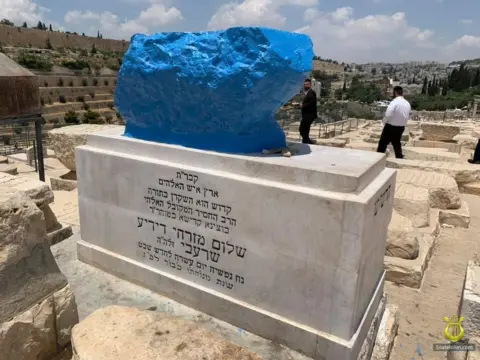
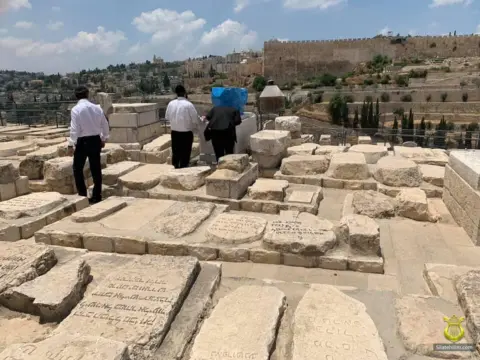
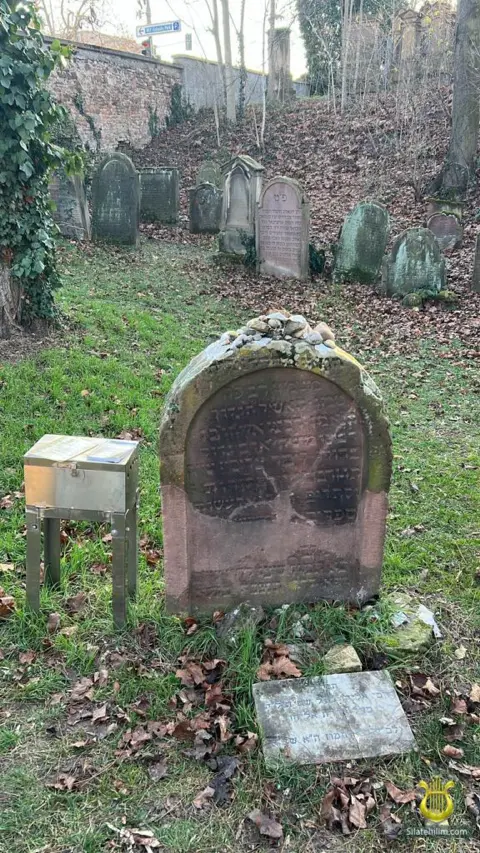
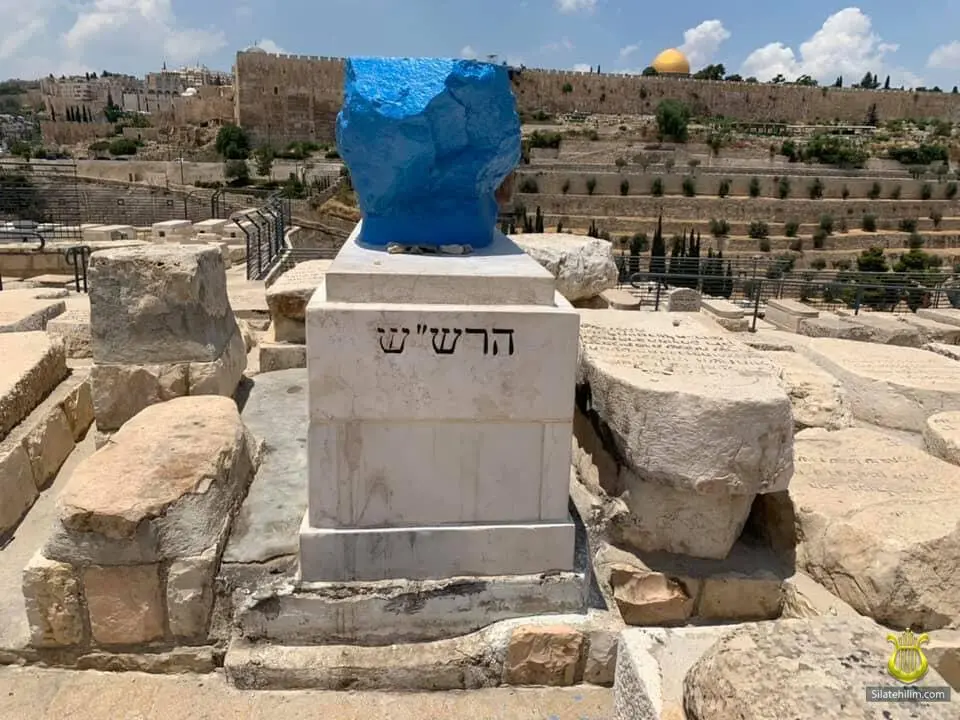
Rabbi Shalom Sharabi authored a siddur known as the "Siddur HaRashash," a Kabbalistic prayer book based on the teachings of the Ari HaKadosh. The introduction to this siddur is called "Rechovot HaNahar." This prayer book remains widely used in the Kabbalistic world to this day. The Rashash is buried on Har HaZeitim (the Mount of Olives). Before his passing, he promised that whoever visits his grave and prays there with a sincere heart will have his prayers answered.
How to recite Kaddish according to Kabbalah
It is well known that when Jews in synagogues recite aloud during Kaddish: "Yehei Shemei Rabba..." — decrees of seventy years and many harsh rulings are annulled in the Heavenly Court.
In the name of the Rashash it is transmitted that according to the esoteric teaching, from the words "Yehei Shemei Rabba" one should continue reciting until the words "be'alma" — in such a way as to produce exactly 28 words. This is only possible if one recites "min kol birchata" (as written in Sephardic siddurim) rather than "mikol birchata" (which yields only 27 words) — so that the total comes to 28 words.
Who is buried beside the Rashash
Before her passing, a woman who had worked for many years as a cleaner at the Yeshiva "Beit El" asked her relatives to bury her on Har HaZeitim, beside the Rashash. Her family was surprised: "You were nothing more than a cleaning woman in his yeshiva all these years — why are you asking for something impossible?"
The woman then revealed that for many years, the Rashash would carry two glasses of water up to the attic at night, where he would study Torah with Eliyahu HaNavi. At dawn, before the first minyan had gathered in the yeshiva, the woman was asked by the Rashash to remove the glasses so that no one would suspect his nightly learning sessions — and she had guarded this secret for many years. As her reward, the Rashash had promised her that she would be buried beside him. That is why she was insisting that her final wish be honored.
When the family objected again, saying she had merely been his servant, the woman replied: "So what? The Rashash himself was once a shamash."
(Adapted from the book "A Legacy of Leaders" by Yehuda Azulai)
Gallery