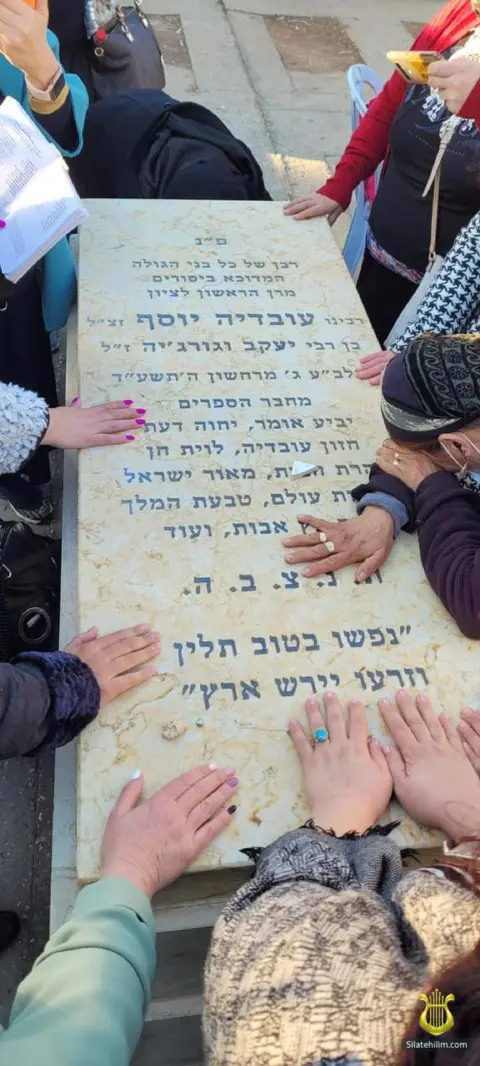
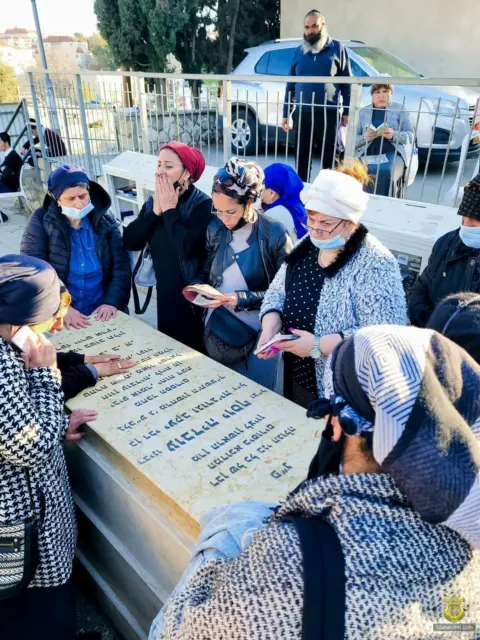
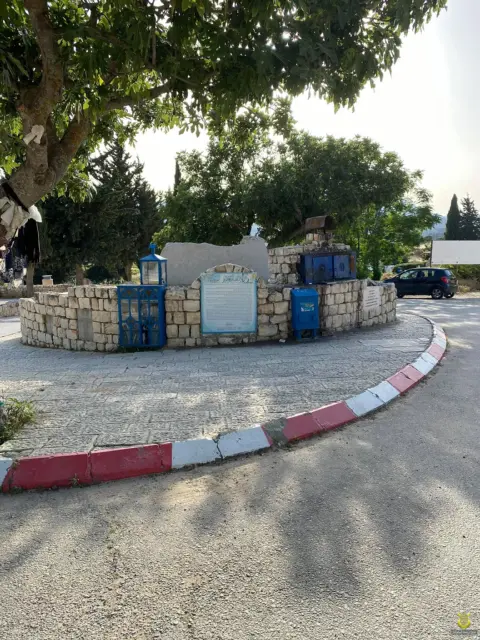
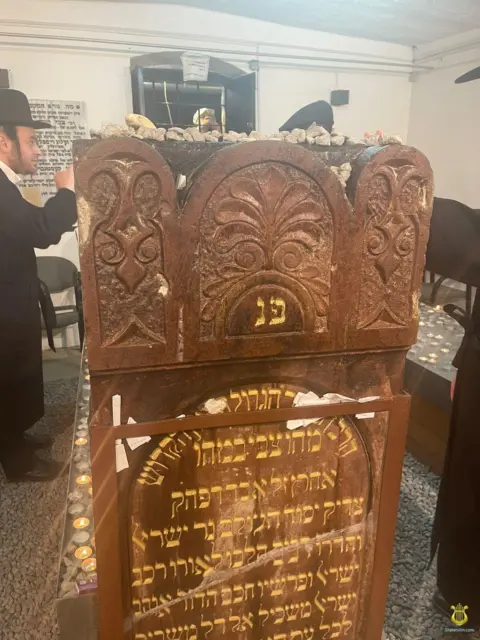
Grave
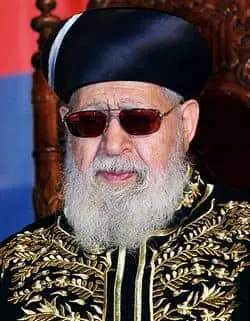
Ovadia Yosef
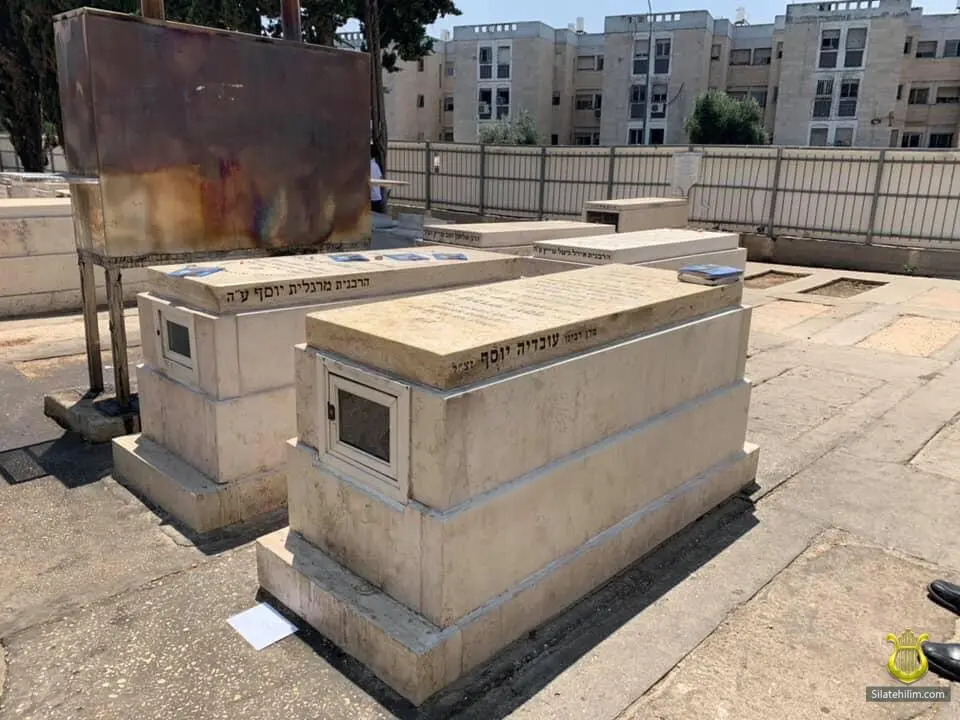
Yahrzeit (Hillula)
- 3 Cheshvan — Rabbi Ovadia Yosef - Rishon LeZion
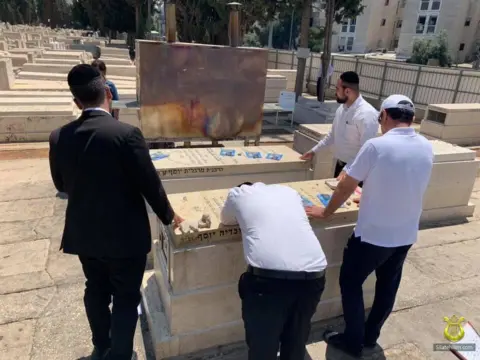
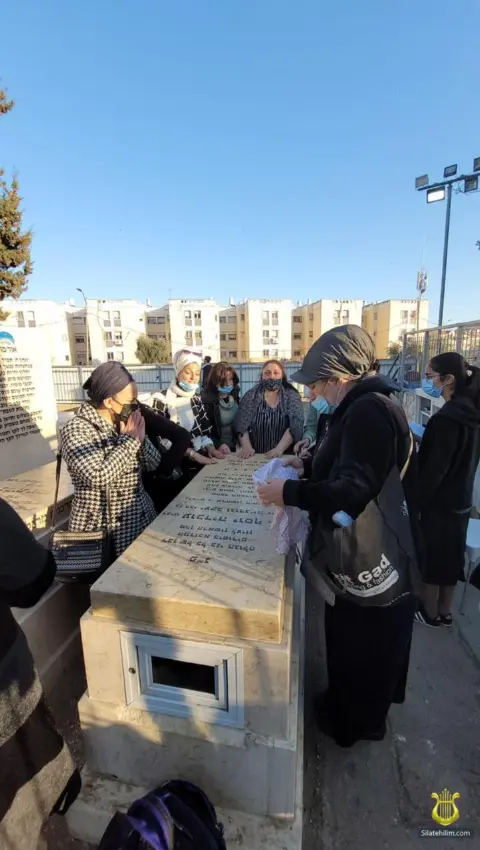
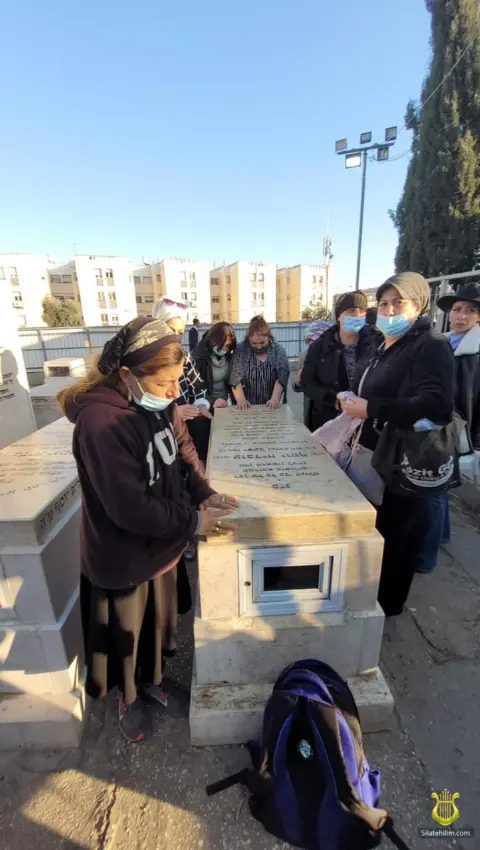
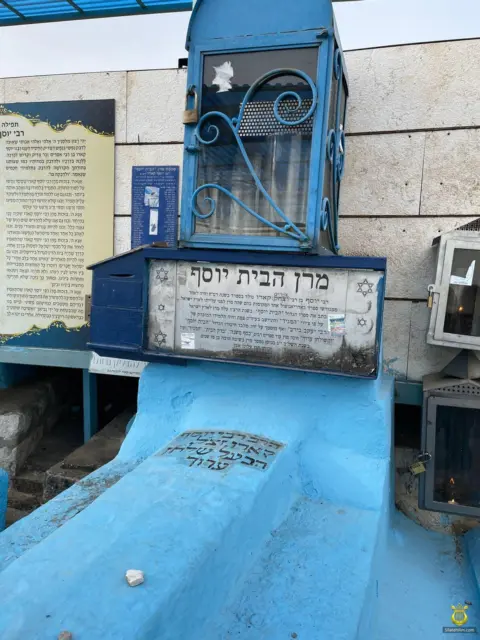
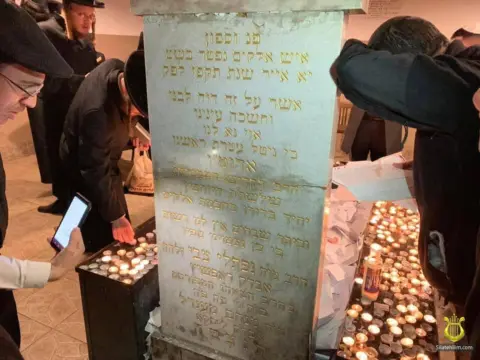
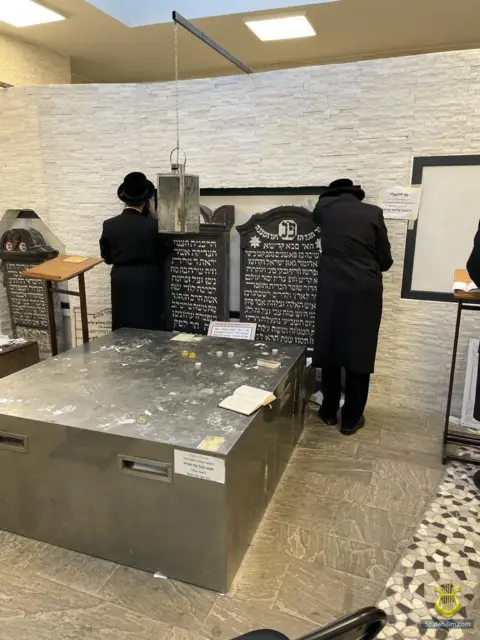
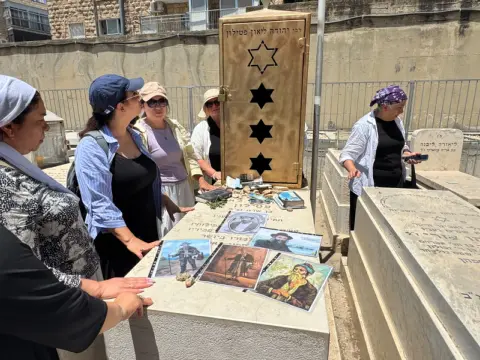
Grave of Maran - Rav Ovadia Yosef - Rishon LeZion
Yahrzeit - 3 Cheshvan;
Burial place - Jerusalem, Sanhedria;
GPS:
31.7960726,35.22030071
31°47’45.721″N 035°13’12.4
RABBI ELIYAHU ESSAS on RAV OVADIA YOSEF
Rav Ovadia Yosef was born in 1920 in Baghdad. Four years later his family made aliyah and settled in the Bucharim neighborhood of Jerusalem. After finishing the local cheder, the future rabbi entered the Sephardic yeshiva 'Porat Yosef' in the Old City of Jerusalem. There he immediately became an outstanding student, demonstrating not only ability but also great diligence and dedication. At the age of 17 he was already teaching Torah. At 20 he received rabbinic 'smicha' (rabbinic ordination issued by a rabbinical court).
Soon Rav Ovadia was invited to serve as rabbi of the Cairo Jewish community. Upon returning to Israel, Rav Ovadia became the rabbi of Tel Aviv-Jaffa. He later became the Chief Sephardic Rabbi of Israel.
Rav Ovadia Yosef effectively built the modern Israeli Sephardic community. However, he considered the main work of his life to be the study of Torah and the writing of works explaining it.
Rav Ovadia wrote about 50 books. Several hundred more were compiled from recordings and transcriptions of his lessons and talks.
Rav Ovadia Yosef left behind thousands of students, and tens of thousands more who were taught by his students.
14 years ago, when Rav Ovadia Yosef suffered a heart attack and was brought to Hadassah Hospital in Jerusalem, the doctors determined that the cause of his condition was blocked coronary arteries. An immediate procedure to widen them (a so-called 'catheterization') was required.
In a most critical condition, Rav Ovadia told the doctors that... he would not agree to the procedure, because he urgently needed to 'go home for 3 hours.'
The family members accompanying Rav Ovadia to the hospital reminded him in astonishment that, since this was a matter of mortal danger, he, like any Jew, was exempt from performing any commandments. Rav Ovadia then felt compelled to explain his action in detail: 'The attack happened,' said Rav Ovadia Yosef, 'while I was writing a response to a woman whose husband had gone missing, and she was asking whether she was permitted to remarry, since she is an 'agunah' (the status of a woman who is formally still married, whose husband has disappeared, and about whose death there is not sufficient information).'
'I must finish the letter,' Rav Ovadia explained, 'because a person who goes into the hospital does not know whether he will come out of it or not. Therefore I absolutely must go home and finish writing the answer to this unfortunate woman...'
There are many instances in which Rav Ovadia Yosef had to make the most complex halachic rulings, rescuing people who found themselves in extremely difficult situations.
The army, the Mossad, and other intelligence agencies operating abroad, behind enemy lines, turned to the rabbi more than once when no one else could take responsibility for deciding, for example, whether a woman — usually still very young — who had effectively lost her serviceman husband, could remarry. As is now known, Rav Ovadia Yosef helped approximately a thousand agunot to be released from the status of 'agunah' in accordance with Jewish Law and to remarry.
Returning to the story from 14 years ago that took place at Hadassah Hospital, one very much wants to ask today's 'exposers' and 'critics' of the late rabbi — would any of them be capable of rushing home from the hospital during a heart attack in order to help another person?
This single answer, it seems to us, puts everything (or rather, everyone, including the vulgar 'talkbackers' commenting on articles about the rabbi) in its proper place.
The historical and spiritual stature of Rabbi Ovadia's personality is already becoming clear now. Everything is understood in comparison.
Ask passersby on the street about people who, quite recently, were ministers and members of the Knesset, 'deciders of the nation's fate.' Who knows or remembers them? Even David Ben-Gurion today is known to many only by the name of an airport. No one reads either the books he wrote or the books containing his speeches anymore.
But the books written by Rav Ovadia — and this can already be said with certainty (!) — will, even in 50 or 100 years, still be sitting on the shelves in the homes of religious Jews. And not just sitting there, but being seriously studied.
Incidentally, the Sephardic 'siddur' (prayer book) revised by Rabbi Ovadia is already, today, the version of the siddur accepted in nearly all Sephardic synagogues.
We — including the authors of this article — due to our lack of knowledge of Torah and Judaism, are, alas, 'zeroes' when it comes to giving any adequate assessment of the contribution to Torah study made by the greatest rabbi of our generation, Rabbi Ovadia Yosef.
However, in light of the disgusting reaction to Rabbi Ovadia's death shown these days by a portion of the 'Russian street,' we are compelled to speak of a certain new phenomenon. A phenomenon that could be called not the 'phenomenon of zeroes,' but the phenomenon of intellectual and spiritual Jewish 'negatives.'
One can know practically nothing about Torah, about Jewish law, about Rav Ovadia and his tremendous work in the world of Torah (numerous rumors and distortions don't count). That is unfortunate, but not terrible.
But if you truly know nothing about all this, then, at the very least, you should remain modestly silent, without scolding or 'criticizing' anyone. Or, if staying silent is difficult, you could say something like: '...I don't know and don't understand. But apparently it wasn't for nothing that a million people came to the rabbi's funeral... He must have been a significant person...'
Even a complete 'zero' in Jewish knowledge could say that. But such a negative reaction to significant and tragic events in the world of Torah, in the life of Israel as a whole, shown by representatives of the 'Russian street' these days, is already a 'negative.' An offensive and very troubling one. For, as is well known, climbing out of a 'negative' is very, very difficult.
(evrey.com - Rabbi Eliyahu Essas)
Location
Sanhedriya Cemetery, Bar Ilan, Иерусалим, Israel
Gallery