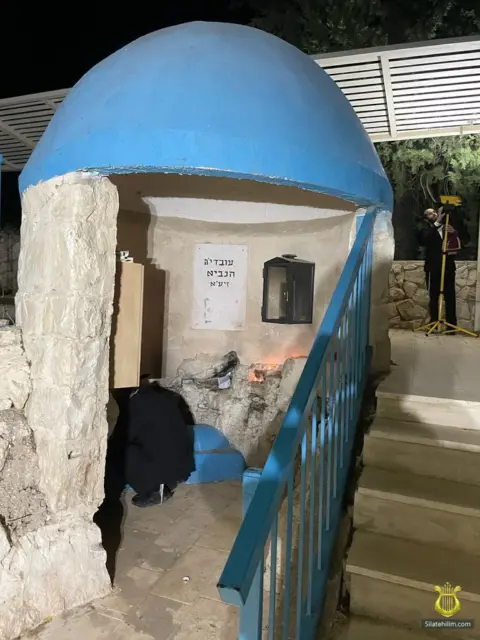
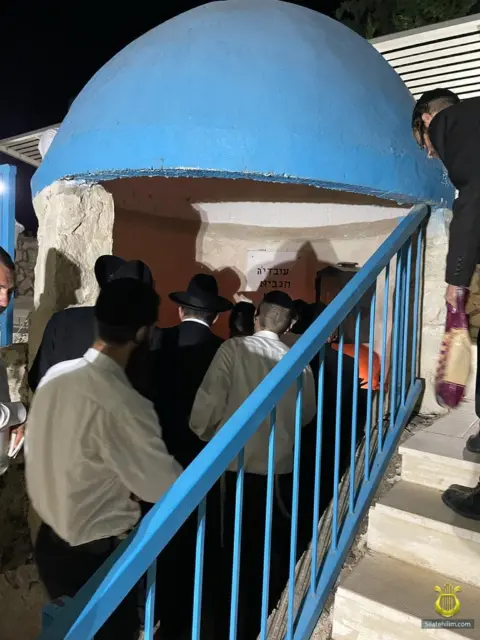
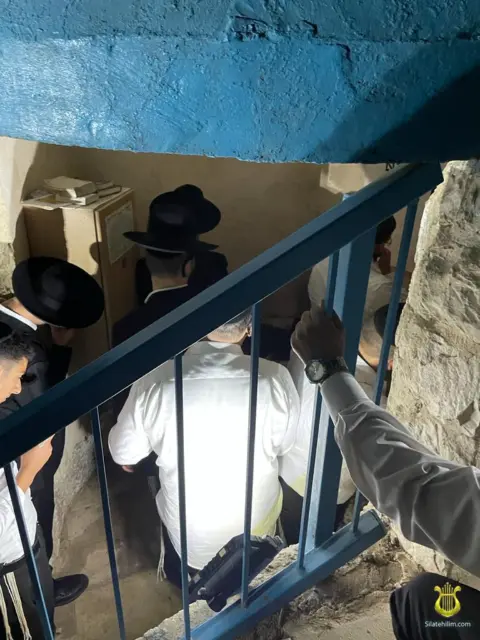
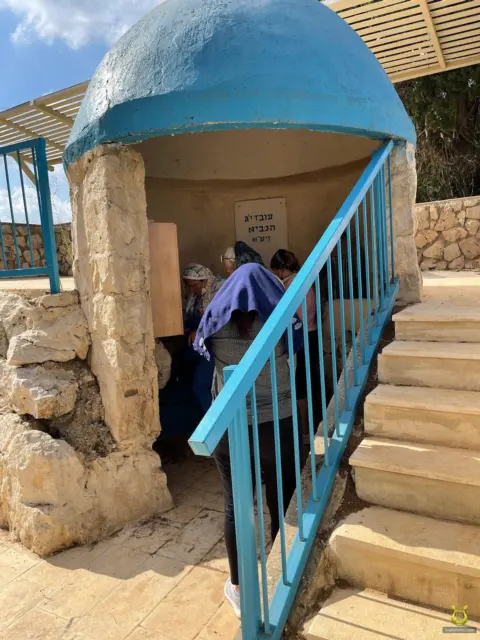
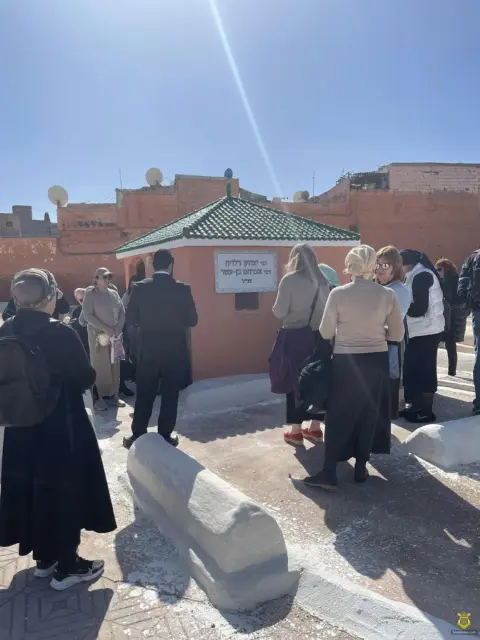
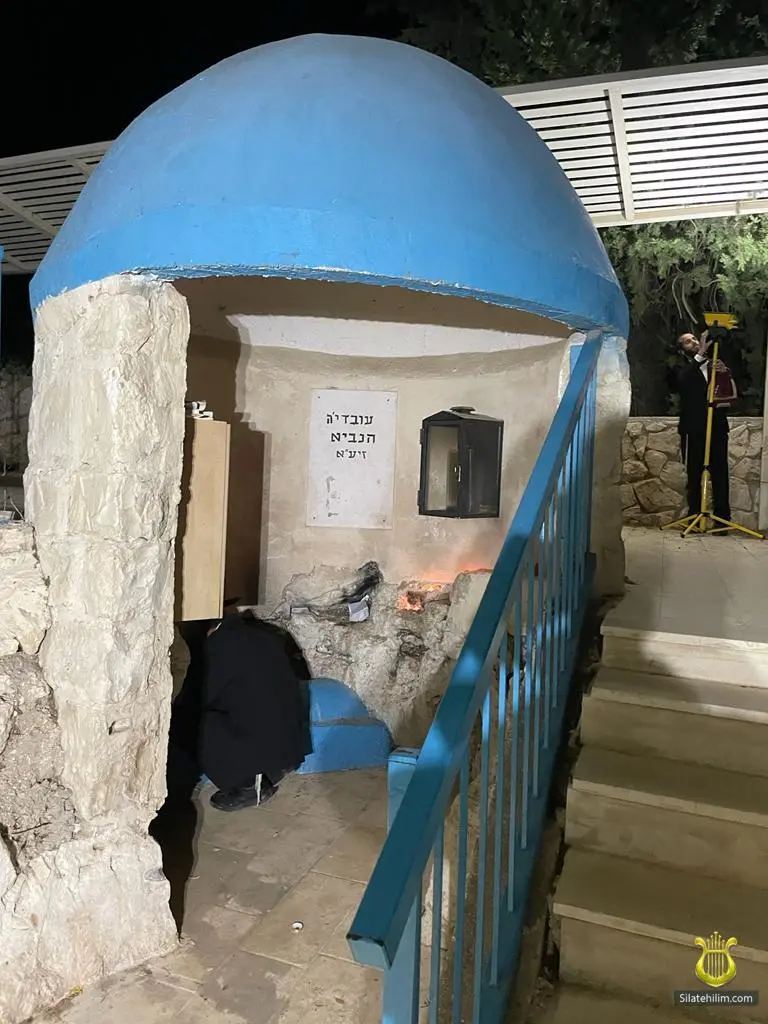
Grave
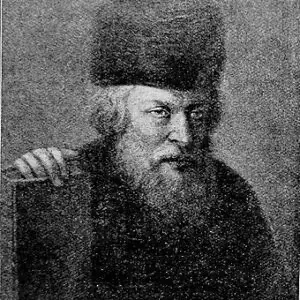
Ovadiah HaNavi
Ovadiah HaNavi is the only prophet who does not address the Jewish people directly — his prophecy is addressed to Edom, the southeastern neighbor that had been at odds with the Jewish people for many centuries.
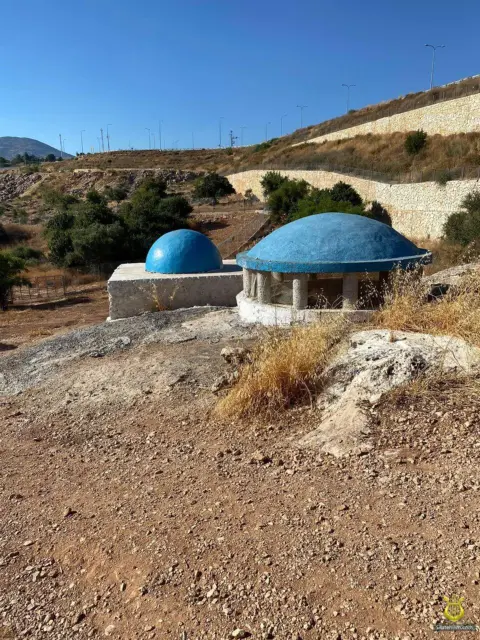
Yahrzeit – 25 Adar Resting place – Upper Galilee, near Bar'am, Moshav DovevWithin the Twelve Prophets, the Book of Ovadiah was placed between Amos and Yonah, likely because the end of the Book of Amos (9:12) contains a reference to Edom, while the Book of Yonah takes place among non-Jews.
The prophet Ovadiah helped 100 prophets go into hiding from King Ahab and his wife Jezebel.
At that time there was a severe famine, lasting 3 years (in the days of the prophet Eliyahu), and these prophets had to be fed somehow. Seeing that he could not manage this task alone, Ovadiah went to Yoram, son of Ahab, and asked to borrow money from him. Yoram agreed and said he could give as much as he liked, but on the condition that the money be repaid with interest. To this the prophet Ovadiah objected: "one who lends money to Jews with interest will not rise from the grave (at the resurrection of the dead)."
But Yoram did not care — he wanted to make a profit.
Ovadiah decided to take the money anyway, since the lives of the 100 prophets were in danger.
Time passed, Ovadiah died, and Ahab died. When Yoram heard of Ovadiah's death, he thought about how much he needed him now — war was underway, and there was no wise advisor — so he decided to turn to Ovadiah's sons, who should have resembled their father.
He went to Ovadiah's widow and saw his two sons. He spoke with them and found that they were just as wise as their father.
Then he proposed to Ovadiah's wife that she give the sons over to him to raise, promising that her children would eat from the king's table. And when they grew up, each of them would take up the position of minister or advisor.
And that their mother would live in honor and wealth.
To this their mother replied: "How can I give you my sons? They, like their father, are filled with fear of G-d, but with you they would be in the hands of a man who does not distinguish between Shabbat and weekdays, between kosher and non-kosher. I want to raise them according to the laws of the Torah," the widow answered.
And then Yoram remembered that Ovadiah had borrowed a large sum from him, and said: "Either you return the money to me, or I take the children." Hearing this, the widow rose and went to her husband's grave.
She was in tears, and the sun was already setting, and she could not find his grave. Suddenly she saw before her an angel guarding the Jewish cemetery. The sages explain — this was the very same angel that King David saw and, upon seeing him, fell ill, so that no clothing could warm him. King David saw the angel guarding the Jewish cemetery, raising its sword over the holy city of Jerusalem. It was this vision that deprived him of warmth. That is why Scripture says: "And King David was old, and they covered him with clothing, but it did not warm him." This does not mean that David was like a sick old man unable to walk — the sages explain that Scripture describes him this way because, upon seeing that angel, he lost his strength and warmth. And this despite the fact that he was very courageous and unafraid of death.
And Ovadiah's wife saw that very same angel, but did not shudder or become frightened.
The angel turned to the woman and asked:
- What are you doing here?
- I am looking for my husband Ovadiah, who was a righteous man, and I need to pray at his grave.
The angel showed her the grave of the prophet Ovadiah, and the widow immediately approached it and began to say:
- My husband! I want our children to remain righteous and kosher Jews. I do not want them to become ministers or wealthy men who forget about G-d — I want our children to study Torah.
The sages say that she recited 265 prayers (265 being the gematria of the word "tza'akah" (cry). 264 prayers go unanswered, and only the 265th is heard!
As it is said in the Book of the Zohar — "They said to Ovadiah: 'Your wife stands crying out and praying over the grave.'" Ovadiah went to the Forefathers of the Jewish people: "I have such a matter." "We have already heard her cries. Let her go to Elisha." But she continued to cry out, and Ovadiah said to her: "Go to Elisha."
The widow comes to the prophet Elisha, and he says to her: "What shall I do for you?"
The great Rav Abarbanel taught: "Creation of something from nothing occurred only during the 6 days of Creation," for every miracle is performed by the Almighty. After that "creation from nothing" ended — now a miracle requires some basis, some vessel.
The Zohar says this is why Elisha said: "What shall I do for you? Tell me, what do you have at home?"
That is, do you have something at home upon which the blessing of the Almighty can descend?" And this is why the sages teach that a person is forbidden to recite a blessing (referring to Birkat HaMazon) over an empty table. Why? Because a blessing from above descends upon a place that is not empty. For this reason a person must leave at least a piece of bread on the table while reciting Birkat HaMazon, because otherwise the blessing has nothing to descend upon.
The widow says that she has a little oil — and the prophet Elisha tells her: "Take empty vessels and pour the oil into all the vessels." The widow and her sons gather empty vessels, even borrowing from neighbors, close the doors — she pours the oil into the vessels — and the children bring them to her, and the oil did not stop flowing from that jug until all the vessels were filled. She asked the prophet what to do now, to which he answered: "Sell it — repay the debts, and live on what remains."
Gallery