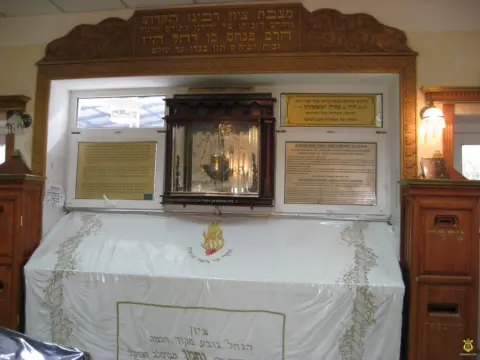
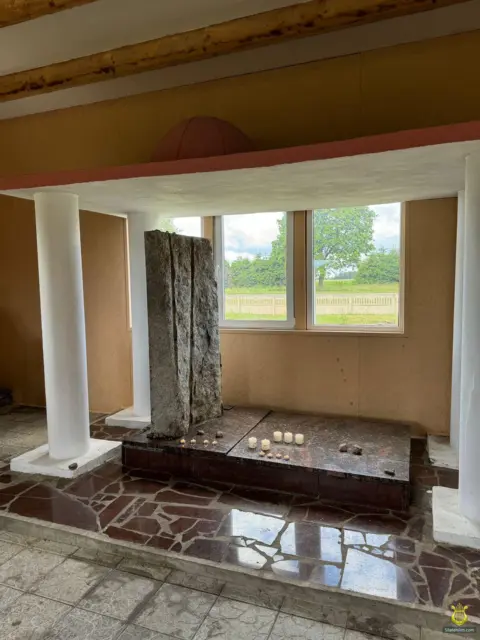
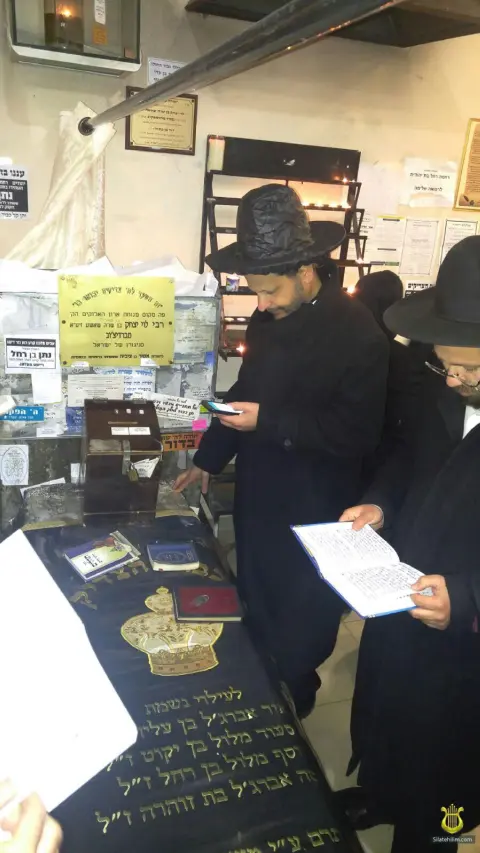
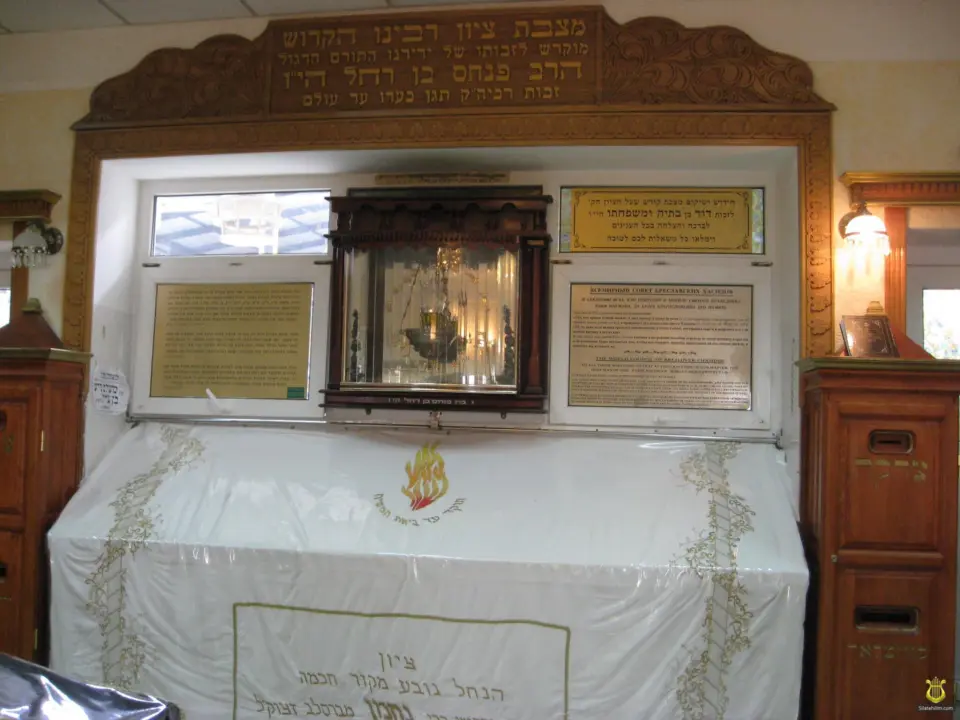
Grave
Nachman of Breslov
Yahrzeit (Hillula)
- 18 Tishrei — Rabbi Nachman of Breslov
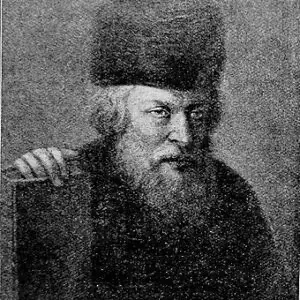
Rabbi Nachman bar Simcha of Breslov (1772–1810) — an outstanding tzadik, founder of the Breslov movement in Chassidus.
Yahrzeit - 18 Tishrei;
Place of burial - Uman.
He was born on 1 Nissan, 1772, in Medzhybizh, the birthplace of Chassidus.
His father, Rabbi Simcha, was the son of Nachman of Horodenka, the closest disciple of the Baal Shem Tov — the newborn was named in memory of this grandfather.
Rabbi Nachman's mother, Feiga, was the daughter of Adel, the only daughter of the Baal Shem Tov, and the great Rabbi Moshe Chaim Efraim of Sudilkov and Rabbi Baruch of Medzhybizh were his mother's own brothers.
Even as a child, Rabbi Nachman would run at night to the grave of the Baal Shem Tov in Medzhybizh and ask that his great-grandfather "help him draw closer to Ha-Shem." On his way back, he would secretly immerse in a mikveh in the middle of the night, even in bitter frosts.
He practiced dveikut, attachment to G-d joined with elevated joy.
Even in his youth he showed signs of greatness, tirelessly studying the Talmud. After marrying at the age of 13, he often withdrew into solitude, seeking communion with G-d through fervent prayer and fasting — a practice he continued throughout his life. He wandered through fields and forests, contemplating the wonders of G-d's creation.
After he settled in Medvedevka, his fame as a holy man spread quickly, and an unbroken stream of chassidim, inspired by his holy way of life, flocked to his modest dwelling.
In 1798 he set out for Eretz Yisrael. News of his impending arrival spread quickly, and many admirers, including renowned kabbalists, gathered to join the circle of his devoted followers. His brief stay ended when Napoleon invaded the country. Upon returning home, he settled in Breslov, which became the main center of his Chassidus. His rise to fame and his controversial inclination toward asceticism combined with intense ecstasy provoked strong opposition from those rebbes who claimed that his form of service lacked dignity. After a bitter dispute, and following a catastrophic fire that destroyed his home, he left Breslov in 1810 and settled in Uman. On Sukkot of the following year he died of tuberculosis at the age of 38, without appointing a successor.
Although the Breslover chassidim still have no living Rebbe to this day, their movement continues to flourish, running yeshivas and other institutions in America, Israel, and many other countries, continually drawing many new adherents and baalei teshuva (newly observant Jews) who are drawn to the warmth of his passionate fervor.
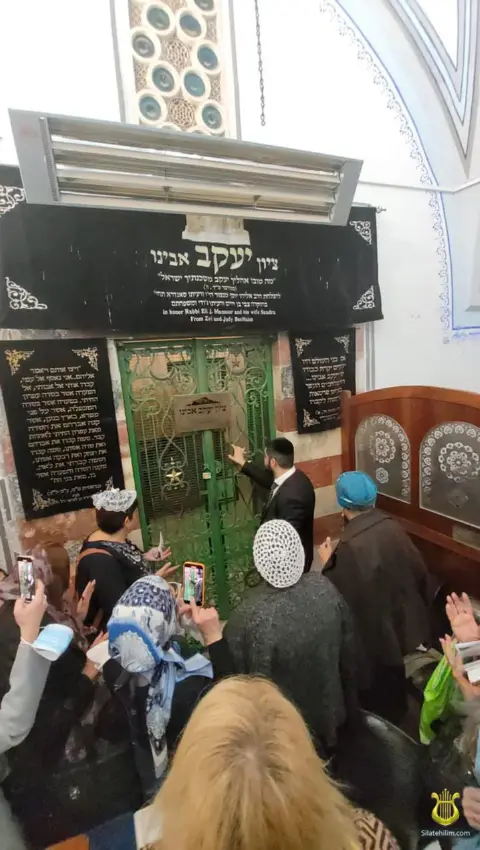
Every year, thousands of chassidim travel to Uman to visit the grave of Rabbi Nachman, who remains their Rebbe.
Before his death, Rabbi Nachman instructed his followers to destroy all his writings, but despite this warning, 52 of his books were published by his closest disciple, Rabbi Nathan. Among them is the Likutei Moharan.
He firmly opposed all philosophical speculation, advising his followers to serve G-d with simple, naive, childlike faith. Rabbi Nachman is known for his intricate tales of princes and paupers, horsemen and rabbis; these were parables with profound moral messages, which were collected by Rabbi Nathan in his "Sipurei Maasiyot."
Always Be Happy
When you are filled with joy all day, you can easily find an hour to pour out your heart before the Holy One, Blessed be He. When you are depressed, it is very difficult to seclude yourself and speak with G-d. Therefore, try, even force yourself, to always be happy, especially when you pray. It is impossible to attain a true state of happiness except by doing [what may seem like] foolish things [that is, removing all traces of self-importance and not caring what others think of you]. (Mekor HaSimcha)
Early Marriage
Very often, parents claim that they love their children and do not want to marry them off while they are still young. "Let them stay home for a few more years," they insist. These parents do not love their children; they love themselves! For at this young age, their children are consumed by sexual desire. Parents who love their children, therefore, marry them off young.
They often use the high cost of living and the enormous expenses of preparing a wedding as an excuse. This too is a mistaken idea. Where is it written that they must display their wealth by spending money on ostentatious weddings? Let them arrange a modest wedding, and if they save money, let them give it to the young couple. If they invited only the closest family members to the wedding, they could easily marry off all their children without incurring exorbitant expenses.
Sometimes the search for a match of equal status and distinguished lineage is the reason for postponing marriage plans for their children. In order to gain prestige, these parents delay their children's weddings for many years. Do they not understand that many young people go astray because they did not marry at a young age? Let parents have pity on their children and marry them off while they are young. Then they will derive great pleasure from them and from the children they will have. The parents will live to see the fulfillment of the verse: "Your children shall be like olive shoots around your table."
His "Tikkun HaKlali" is recited by the entire Jewish world regardless of affiliation; this can be observed in Israel at all the graves of tzadikim — the most recited prayers there are: "Tikkun HaKlali" and "Nishmat Kol Chai."
https://silatehilim.com/%d1%82%d0%b8%d0%ba%d1%83%d0%bd-%d0%b0%d0%ba%d0%bb%d0%b0%d0%bb%d0%b8-%d1%82%d1%80%d0%b0%d0%bd%d1%81%d0%bb%d0%b8%d1%82/
May the merit of the tzadik protect our people!
Gallery