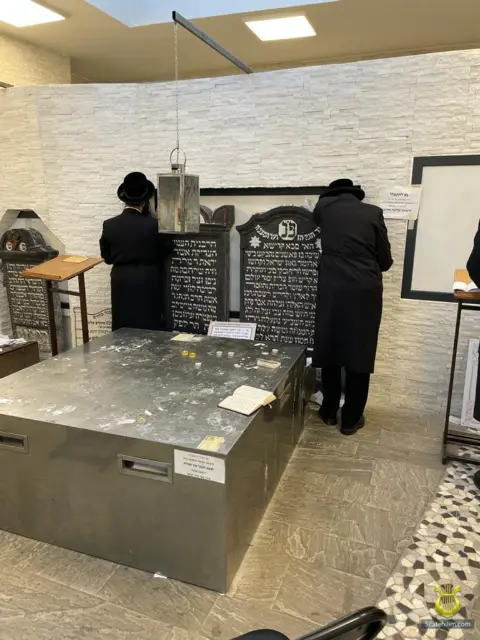
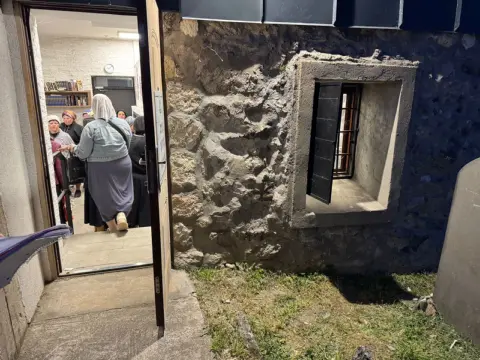
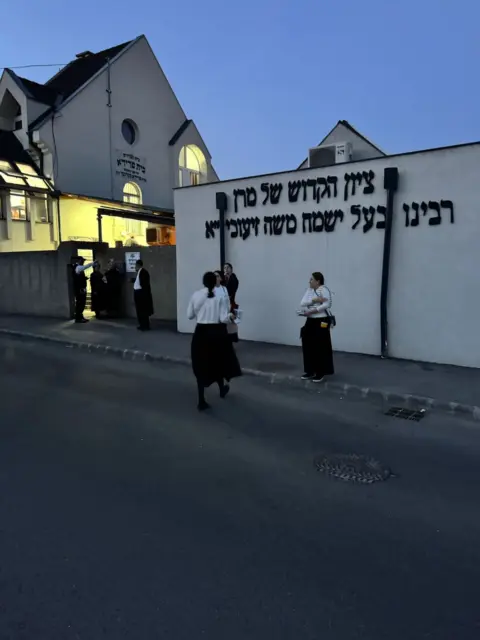
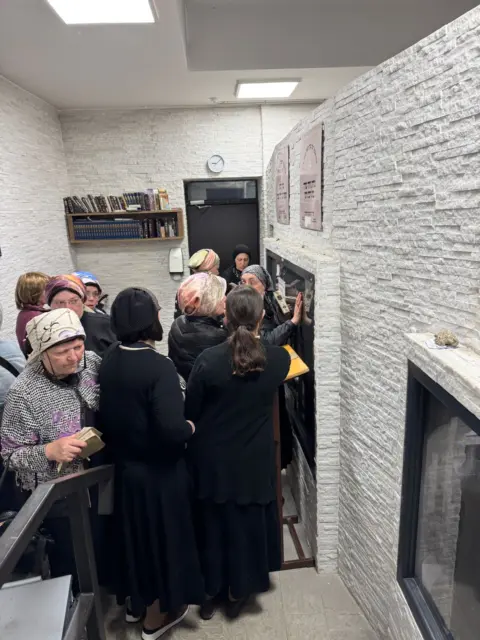
Grave
Moshe Teitelbaum - Yismach Moshe
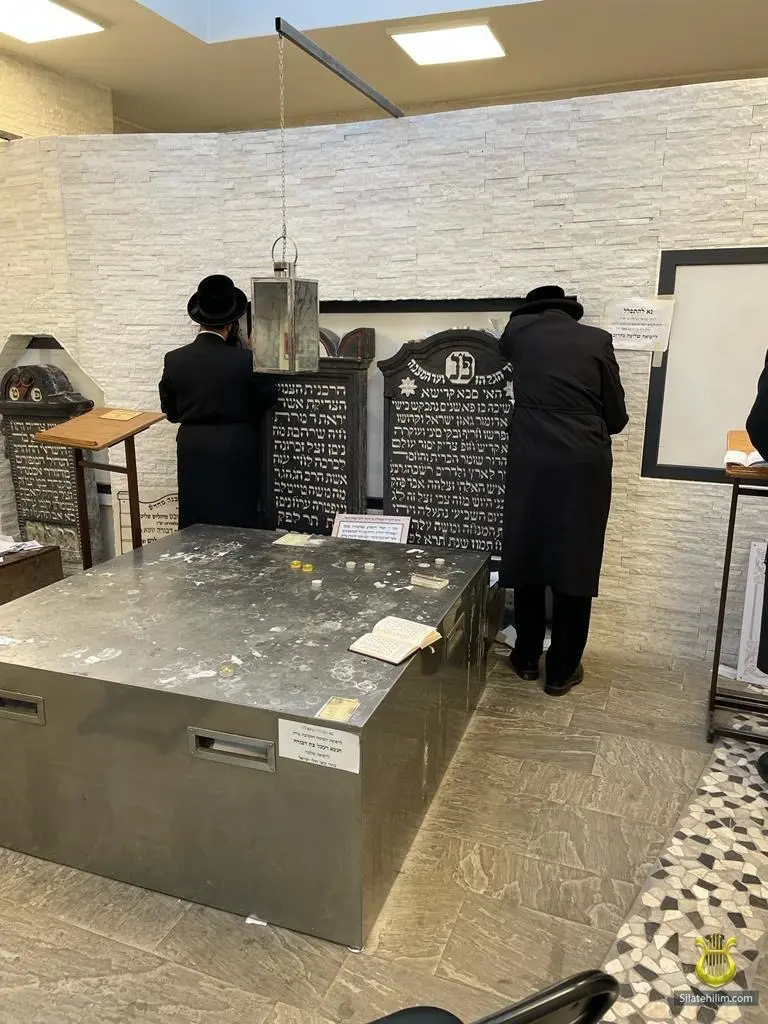
Yahrzeit (Hillula)
- 28 Tammuz — Rabbi Moshe Teitelbaum – the "Yismach Moshe"
Rabbi Moshe bar Tzvi-Hirsch Teitelbaum – “Yismach Moshe” (1759-1841) — founder of the Sighet-Satmar dynasty, spiritual leader of the Chassidim of Hungary.
Yahrzeit – 28 Tammuz
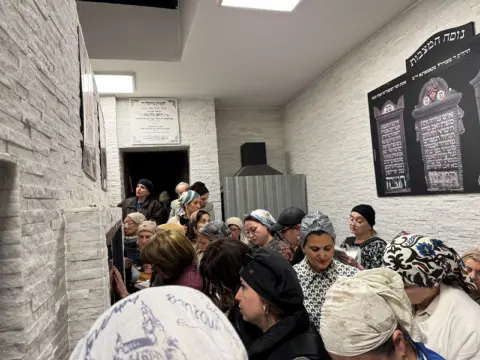
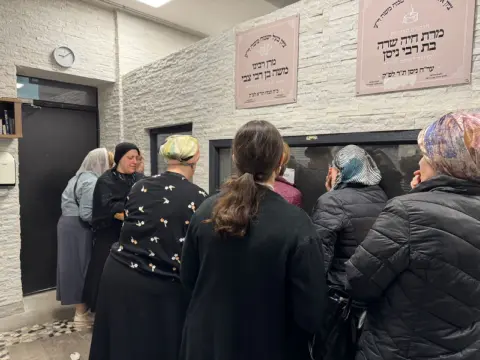
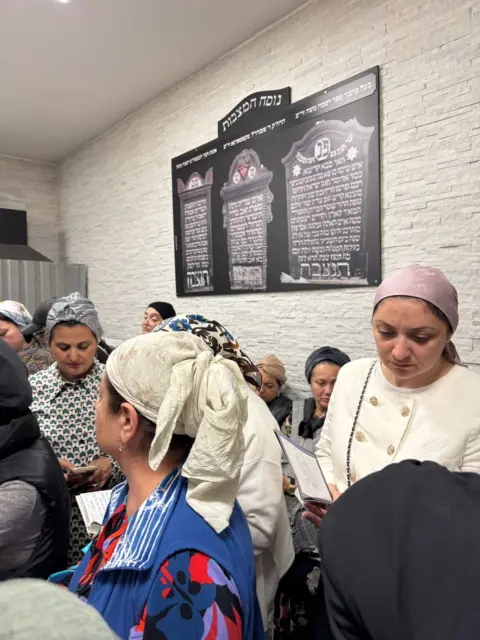
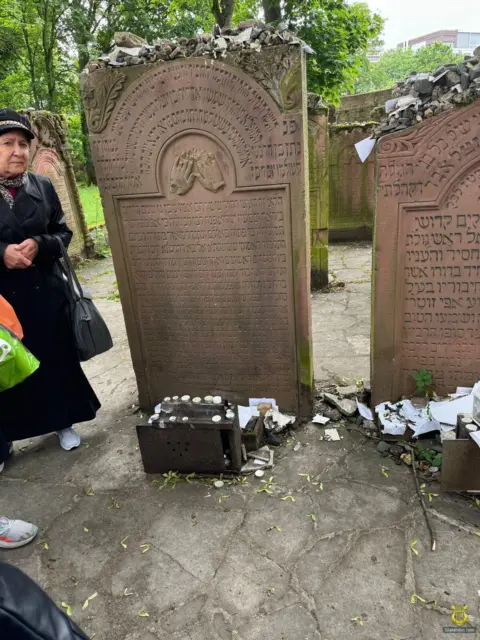
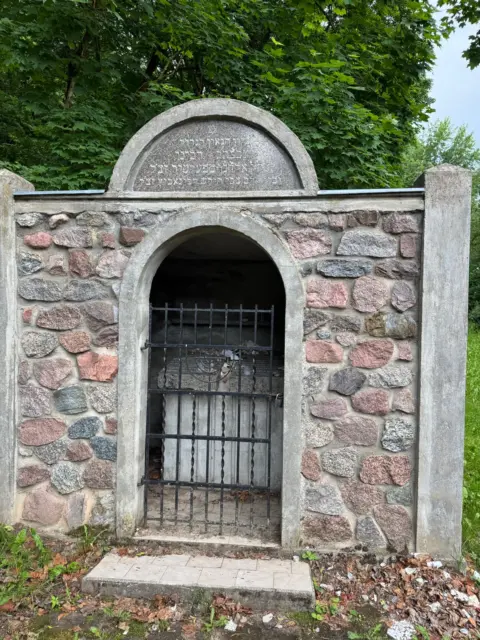
Burial place – Íhel - Hungary, Sátoraljaújhely (Sátoraljaújhely Jewish Cemetery);
Address – Sátoraljaújhely, Pataki u. 2, 3980 Hungary;
Rabbi Moshe was born in Galicia to Rabbi Tzvi Hirsch and Chana. He studied Torah under his uncle, Rabbi Yosef of Kolbasov, and Rabbi Aryeh Yehuda HaLevi of Strizov. At the age of 25, Rabbi Teitelbaum was appointed Rabbi of Shinve in Galicia, and later became Rabbi of Íhel in Hungary. Even in his mature years he continued to study under outstanding Chassidic sages such as the Maggid of Kozhnitz, the Chozeh of Lublin, and Rabbi Avraham Yehoshua of Apta.
Tradition tells that Rabbi Moshe joined the Chassidic movement because of his son-in-law, who had become a disciple of the Chozeh of Lublin. In response to Rabbi Moshe's reproaches, the son-in-law agreed to abandon the Chassidic way of service — but only on condition that Rabbi Moshe accompany him to visit the “court” of the Chozeh. “If, even after meeting the Chozeh, you remain of the same opinion, I will immediately do as you wish,” the son-in-law promised. However, upon visiting Lublin, Rabbi Moshe himself became a devoted disciple of the great tzadik (Gedolei Ha-dorot).
According to Leopold Löw, he signed his name as “Tamar,” which is the equivalent of Teitelbaum, meaning “palm tree” in Yiddish. A follower of the Polish Chassidic Rebbe, the Chozeh of Lublin, as well as of Rabbi Shalom Rokeach of Belz, Rabbi Teitelbaum played an important role in spreading Chassidic Judaism throughout Hungary.
The “Yismach Moshe” first served as rabbi in Przemyślany, and then in Íhel, where he was invited in 1808. In Íhel he established a Chassidic community that was independent of the Galician leaders. In 1822 he was suspected of supplying amulets to certain Jewish criminals imprisoned for slander in order to help them escape. When called upon to defend himself, he stated that the amulets in question served merely as a substitute for a mezuzah, and that their sole purpose was to protect their owners from demons. Teitelbaum enjoyed an enviable reputation, and even Rabbi Moshe Sofer paid him respect.
His descendants became leaders of the Sighet and Satmar communities, known as the Satmar Chassidim, and his name “Moshe” inspired the series of books “Vayoel Moshe,” written by his descendant, the Satmar Rebbe, Rabbi Yoel Teitelbaum.
It is said that he identified his three previous gilgulim (reincarnations), saying that in his first gilgul he was a sheep in the flock of Yaakov Avinu, in his second incarnation he lived in the time of Moshe Rabbeinu, and in his third incarnation he lived at the time of the destruction of the First Temple. Out of humility he did not reveal the nature of the third incarnation, but his followers asked another Rebbe, who identified it as the prophet Yirmiyahu. As for the first gilgul, he taught his followers a song that, he said, Yaakov sang while shepherding his sheep. This is the song “Yankel hut eine kleine Lamm.”
Once he was studying Parashat Korach with his grandson, the Yetev Lev (Rav Zalman Leib Teitelbaum of Sighet), and the Yetev Lev remarked that he did not understand Korach, who rebelled against Moshe. At that moment, the “Yismach Moshe” cautioned him, saying that we do not understand the greatness of Korach. In fact, the “Yismach Moshe” added, he himself had been a gilgul from the “Dor Ha-Midbar” (generation of the desert) and was not certain whom to follow among the two greatest men of that generation. His grandson then asked him, “If so, what did you do, and how did you save yourself?” The “Yismach Moshe” answered: “My child, you cannot imagine what an esteemed man Korach was. He was held in great regard by many important people and had many followers. And on the other side stood the holy leader, Moshe Rabbeinu! I decided that the best way to deal with such division was to remain apart. Throughout the entire dispute, until Moshe and his brother Aharon, the High Priest, were confirmed as leaders, I remained in my tent. I did not go out even once. And you, my dear grandson, must do the same. Learn this lesson for life: when there is division, stay away. Lock yourself in your house if necessary, so that you are not forced to join one side or the other!”
His followers taught about his previous gilgul as Yirmiyahu and how it affected his present life. In his final days he yearned so intensely for the coming of Mashiach and the rebuilding of the Temple that he wore his Shabbat clothes throughout the week, awaiting Mashiach's arrival.
Rabbi Moshe led the community of the Hungarian town of Íhel. He was the universally recognized spiritual leader of all the Chassidic communities of Hungary — thousands of Chassidim came to him for blessing and guidance.
His analytical notes on the Holy Scriptures and the aggadot (narratives) of the Talmud were collected in the book Yismach Moshe (“Moshe Will Rejoice”), which gained widespread popularity. This book contains the profound spiritual revelations he received in dreams. The book “Tefillah LeMoshe” (“Prayer of Moshe”) contains his commentary on Tehillim (Psalms of David). His numerous responsa and halachic rulings are collected in the volume Heishiv Moshe (“Moshe Answered”).
His great-great-grandson was one of the spiritual leaders of American Jewry, Rabbi Yoel Teitelbaum (the Satmar Rebbe).
Among his disciples were: his son Rabbi Elazar Nissan, Rabbi Yoel Ashkenazi, author of “Melo HaRoim,” Rabbi Menachem Mendel Panet of Dej, and Rabbi Tzvi Hirsch of Liska.
Rabbi Teitelbaum passed away on 28 Tammuz 5601 (1841) and is buried beside his wife.
Sipurei Tzadikim - Joy and Sorrow
When the Yismach Moshe was studying the ways of Chassidism, the Chassidic custom of always being happy left him puzzled. After all, in the Code of Jewish Law, Rabbi Moshe Teitelbaum's “Satmer 219” states plainly: “Every person who fears Heaven ought to grieve and be troubled in his heart over the destruction of the Holy Temple!”
Before one of his journeys to his mentor, the Chozeh of Lublin, the Yismach Moshe prayed to G-d: “You know my thoughts and the depths of my heart... Help me, so that when I come to the holy tzadik, he will answer my question.” When he entered the Chozeh's room, the Chozeh immediately said to him: “Why do you look so weak today? True, it is written in the Code of Jewish Law that ‘every person who fears Heaven ought to...’ But the sage (in ‘Duties of the Heart’ by Rabbeinu Bachya ibn Pakuda, 1050-1120) has already said: ‘Rejoicing is upon my face, and mourning is in my heart’…” about G-d Himself, as in the words of Jeremiah: “But if ye will not hear it, my soul shall weep in secret places (mistarim) for your pride; and mine eye shall weep sore, and run down with tears, because the L-rd's flock is carried away captive.” In the Talmud (Chagigah 5b) the Sages explain this verse as follows: “The Holy One, Blessed be He, has a place called mistarim (‘secret,’ as in the verse above) [and it is there that He weeps]. What is meant by ‘for your pride’? Rabbi Shmuel bar Yitzchak said: for the pride of Israel, which was taken from them and given to the nations. Rabbi Shmuel bar Nachman said it refers to the pride of the Kingdom of Heaven. And is there weeping before the Holy One, Blessed be He? Rabbi Pappa said, there is no sorrow before the Holy One, Blessed be He, as it is written: ‘Honor and majesty are before Him; strength and gladness are in His place!’ This is no contradiction: one place refers to His inner chambers, and the other to His outer chambers.”
In G-d's inner chambers, in the secret place called “mistarim,” He, so to speak, enters His inner self and weeps over the destruction of the Temple and the humbled state of His beloved children. But outwardly, where He reveals Himself to His creations, He shows a smiling face of “strength and exquisite joy.”
This corresponds to the description of a Chassid who has “rejoicing on his face and mourning in his heart.” Outwardly he fulfills the commandment: “Serve G-d with joy” (Psalms 100:2), and as a true “joyful Chassid” he never for a moment sinks into lethargy or laziness. But inside, his heart is broken. In the sanctuary of his soul he weeps bitterly over all his shortcomings and over the sorrow of the Shechinah. Instead of feeling the full depth of exile, he is overcome with mourning. (The Hebrew word for “exile” — “galut” — has the same numerical value as “avelut,” meaning “mourning.”) Such a Chassid is a fitting “vessel” for the revelation of the secrets of Torah. His “heart was troubled within him,” while “rejoicing was upon his face.”
Nevertheless, we might still think that there is some kind of “division of powers”: that the joy is only external, while in truth, in the very depths of the soul, the heart is irreparably broken, without a drop of joy. Is that the true face of the matter? Is all this joy nothing but an act? Is serving G-d with joy not true and sincere?
The Chozeh of Lublin continued: “Believe me, I recite the Midnight Lament (Tikkun Chatzot) with tears and sorrow. And yet, all of this is with joy. And this is exactly what our holy Rabbi, Rabbi Shmelke of Nikolsburg, taught us. There is a parable of a king who was taken captive and exiled to a distant land. The king rested after his long journey in the house of one of his loving subjects. When the subject saw the king in captivity, he wept uncontrollably. Nevertheless, he was happy that the king had remained with him. And the moral of this story is clear, for the Shechinah is with us…”
These words of the Seer completely calmed his disciple, who from then on clung to his holy rabbi. (Perhaps this is why he was called “Yismach Moshe,” meaning “Moshe will rejoice,” after he merited to learn the secret of joy.)
This secret is recorded in the holy Zohar: “On one side of the heart there is sorrow and worry, and on the other, cheerfulness and exquisite joy, happiness and rejoicing. Both exist in the heart at the same time.”
Phone – +36 308742293 (best to call ahead).
Segula of the Gaon Yanuka - Healing of the Eyes
When a Jew asked the Gaon Yanuka for a blessing for the healing of his eyes, the Rav blessed him, saying: “May it be the will of the Al-mighty that, in the merit of the holy Gaon “Yismach Moshe,” you merit healing of the eyes.” When asked about the connection between the eyes and the Yismach Moshe, the Rav explained that it is told of him that on the eve of Yom Kippur, one of his students came to the synagogue but could not pray from the siddur because his glasses had fallen and broken. Then Rabbi Moshe Teitelbaum passed his holy hands over the student's eyes, and they were miraculously healed, allowing him to read without glasses. May the merit of the tzadik protect our people! (From a trip to Kivrei Tzadikim with Yeshivat “Yodei Bina” to Hungary, Poland, and Slovenia; https://inner.org/rebbe-moshe-teitelbaum-of-satmer-happiness-and-sadness-simultaneously-in-the-heart/; https://dailyzohar.com/tzadikim/865-Rabbi-Moshe-Teitelbaum)Location
Шаторальяуйхей, Sátoraljaújhely Jewish Cemetery - Yismach Moshe Grave, Pataki Street, Венгрия
Gallery