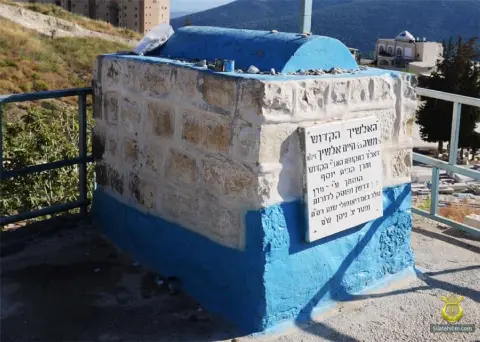
Grave
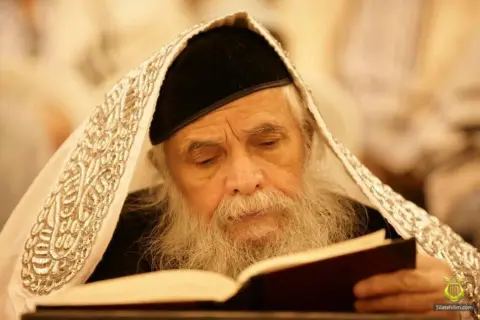
Moshe Ben Tov - “Tzadik ha-Mezuzot”
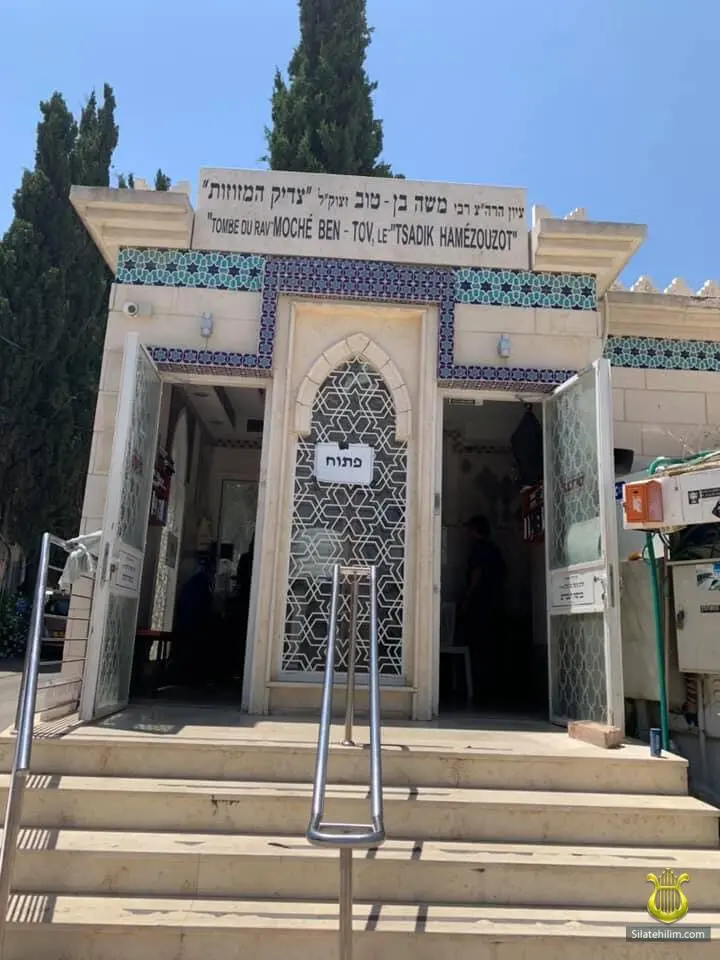
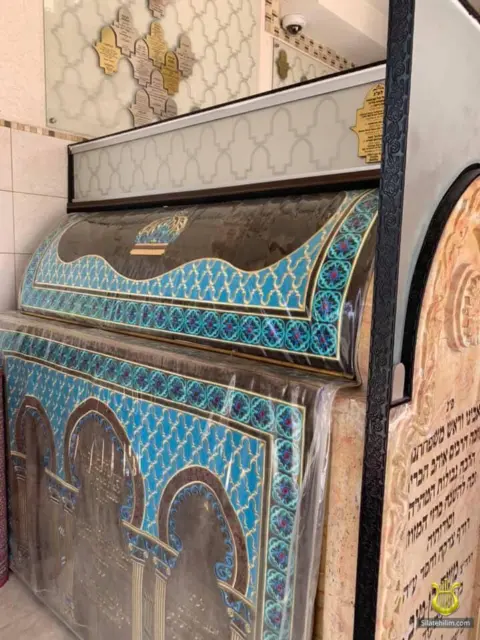
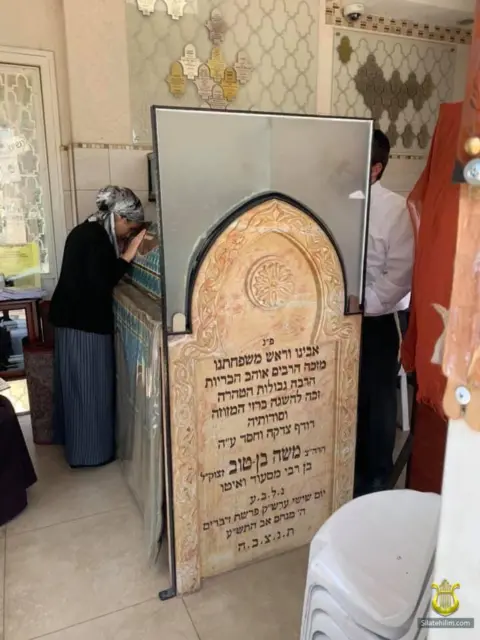
The Resting Place of Rabbi Moshe Ben Tov - “Tzadik ha-Mezuzot”
Burial place - Jerusalem, Har HaMenuchot.
Yahrzeit - 5 Av.
Rabbi Moshe Ben Tov was originally from Morocco.
Rabbi Moshe's uniqueness lay in his ability to intuitively perceive things simply by looking at a mezuzah that a person brought with them. He became known as the “Reader of Mezuzahs.”
One night, Rabbi Moshe Ben Tov woke up at midnight, as usual, to recite Tikkun Chatzot - the lament over the destruction of the Holy Temple.
That night Rabbi Moshe sensed that something troubling had happened, something he needed to examine on a deep, intuitive level. He concentrated for a moment and suddenly realized: thieves were robbing his jewelry store at that very moment. Rabbi Moshe owned a jewelry store in Netivot.
However, instead of calling the police, Rabbi Moshe felt he had to focus on his midnight prayer, just as on any other night. At dawn he hurried to his store, which by then had already been ransacked.
Rabbi Moshe was insured, as he saw it, by the best insurance company of all - Divine protection.
But when he thought about why this had happened to him, he immediately remembered the reason. Time and again, his holy mentor Baba Sali had urged Rabbi Moshe to begin helping people and receiving them. And time and again Rabbi Moshe had avoided it, feeling completely unworthy of taking on such a responsibility.
But now Rabbi Moshe ran to Baba Sali.
“You've won! I give up. I will do as you say!”
Baba Sali laughed and invited him to sit down:
“Don't worry; you will get back all your jewelry.”
Two hours later, they received a call from the police. Remarkably, the thieves had been caught. They were at the police station with all their loot. When Rabbi Moshe arrived at the station, he was asked to file a statement so the two thieves could be sent to prison. Rabbi Moshe looked at the thieves and said:
“I won't write anything against you, if you promise to put on tefillin and pray every day.”
The thieves promised and were released.
From that day on, many years ago, Rabbi Moshe began receiving people and helping them.
The Rabbi of the Mezuzahs
One day a young couple came to Rabbi Moshe Ben Tov and showed him their mezuzah. After a few seconds, Rabbi Moshe Ben Tov asked:
“Do you have a small child with an eye problem?”
“Yes, he has crossed eyes, and we have an operation scheduled.”
“You don't need to operate on him,” said Rabbi Moshe.
“I will perform the operation.” Rabbi Moshe picked up the scalpel he used in his work.
The mother and father were a little shocked. Rabbi Moshe pointed to the word “Einecha” in their mezuzah, meaning “your eyes.” “Do you see these two letters? They are stuck together. I will scratch a space between them with my scalpel. Then you can cancel the operation. Your child's eyes will not be crossed. They will soon be straightened out.”
And that is exactly what happened. The operation was cancelled.
David Gabay was fascinated, watching Rabbi Moshe's ability to look into people's lives and souls by looking at their mezuzahs.
One day he asked: “Rebbe, please tell me, even when a mezuzah is perfect, how can you see in that case what needs to be corrected in that person's life?” Rabbi Moshe pointed to a spot on the mezuzah's parchment:
“Do you see this shading in the texture? It speaks to me.”
Who can understand this? The life of a holy Rebbe is a constant mystery.
When people came to him with problems, Rabbi Moshe had a way of helping them. Besides telling them everything he saw in the mezuzah, he would also write on a piece of paper a special prescription - a “segula” - such as:
- Immerse in the mikveh several times;
- Light a candle every night in honor of a certain tzadik and connect with him in your heart;
- Repeat certain passages from Tehillim every day with intent;
- Observe certain laws prescribed in the Torah precisely;
- Give charity to a gentile.
- Feed meat to a hungry dog.
- Give 20 dollars in tzedakah to a kupat tzedakah, 10 cents at a time.
These unusual prescriptions left people bewildered: “What is the purpose of this? How could this help with my overwhelming situation? Is he joking?”
All these prescriptions were meant to test one's faith - just as many of the Torah's instructions are also given to us as a test of faith! An unrecognized fact is that the flow of Heavenly blessings depends on our choice: to accept this test of faith, simply to go along with it and see it through. This means reining in our pride and our rational, linear thinking, to make room for a deeper, humbler, intuitive knowledge of the soul - allowing that knowledge to take precedence and being ready to act on it. One must believe in the power of a holy person, connected to the Almighty, to inspire us and thereby open a gateway for blessings.
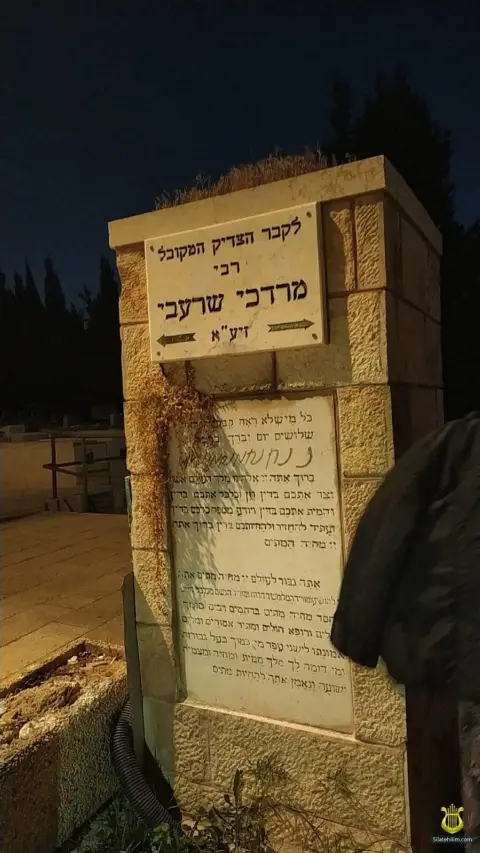
The resting place of the righteous Rabbi Moshe Ben Tov, known as the “Tzadik ha-Mezuzot,” is located near the entrance to Har HaMenuchot in Givat Shaul, Jerusalem. It is next to the grave of Rabbi Mordechai Eliyahu and to the right of the Holy Chida - it is well known that great sages are even more righteous in their death than in their life.
(Yeshiva “Yodei Bina”)
Gallery