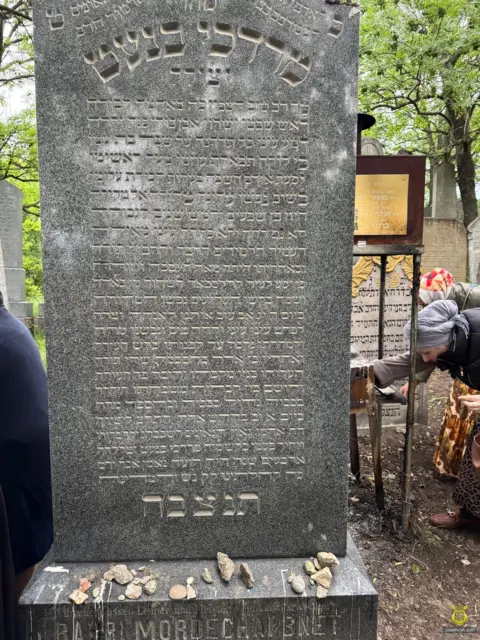
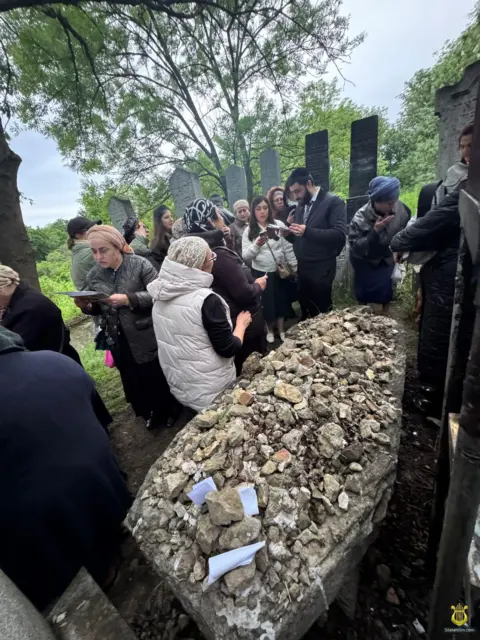
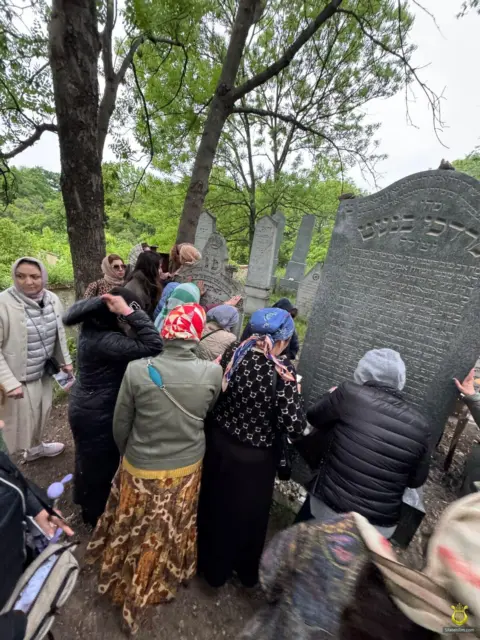
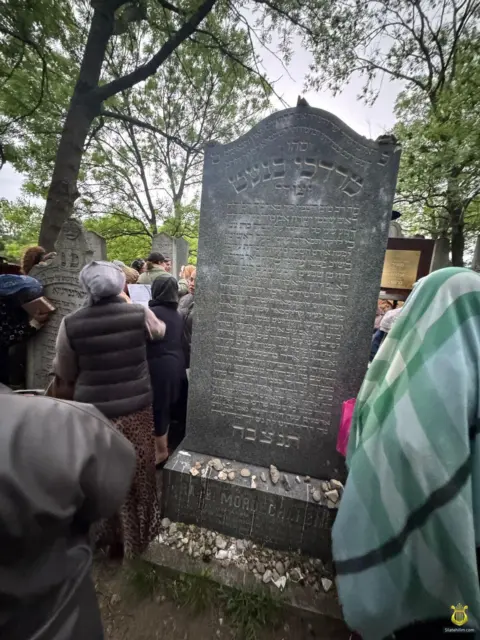
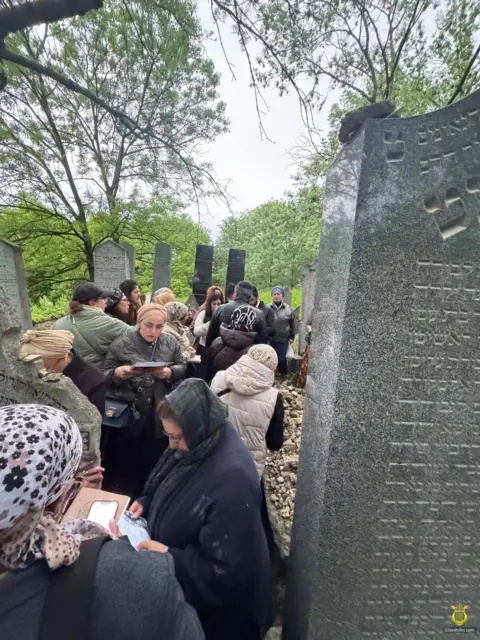
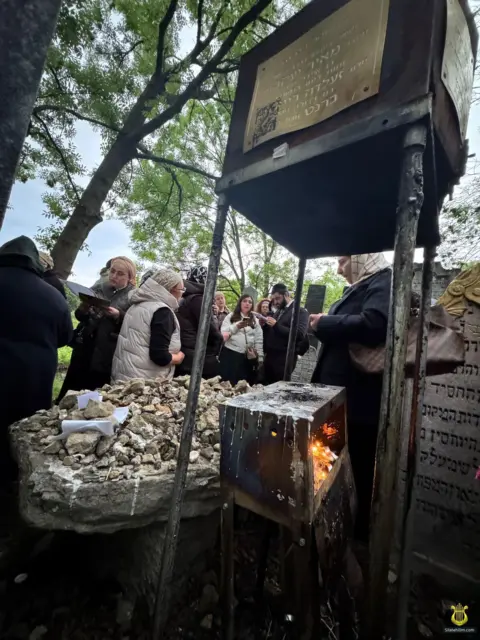
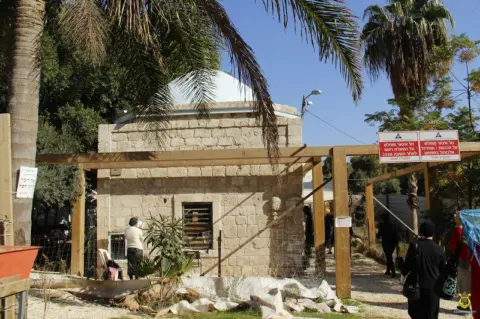
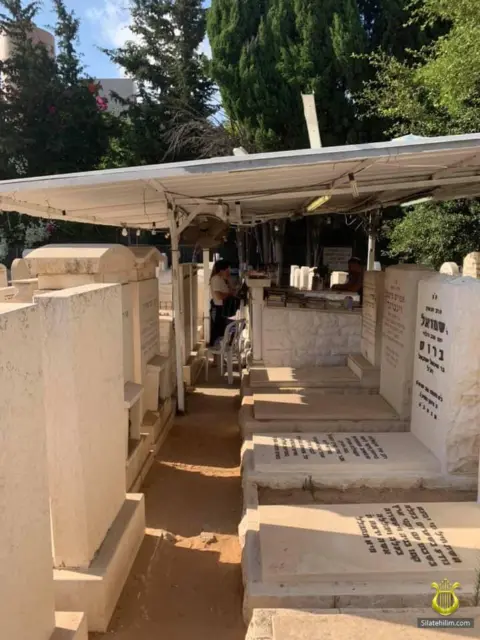
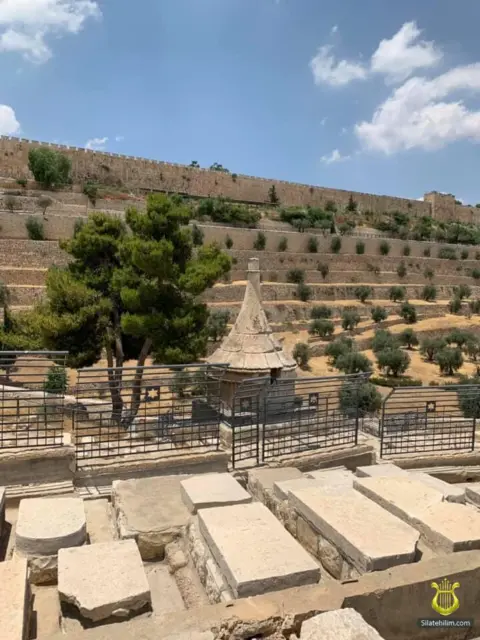
Grave
Mordechai Benet
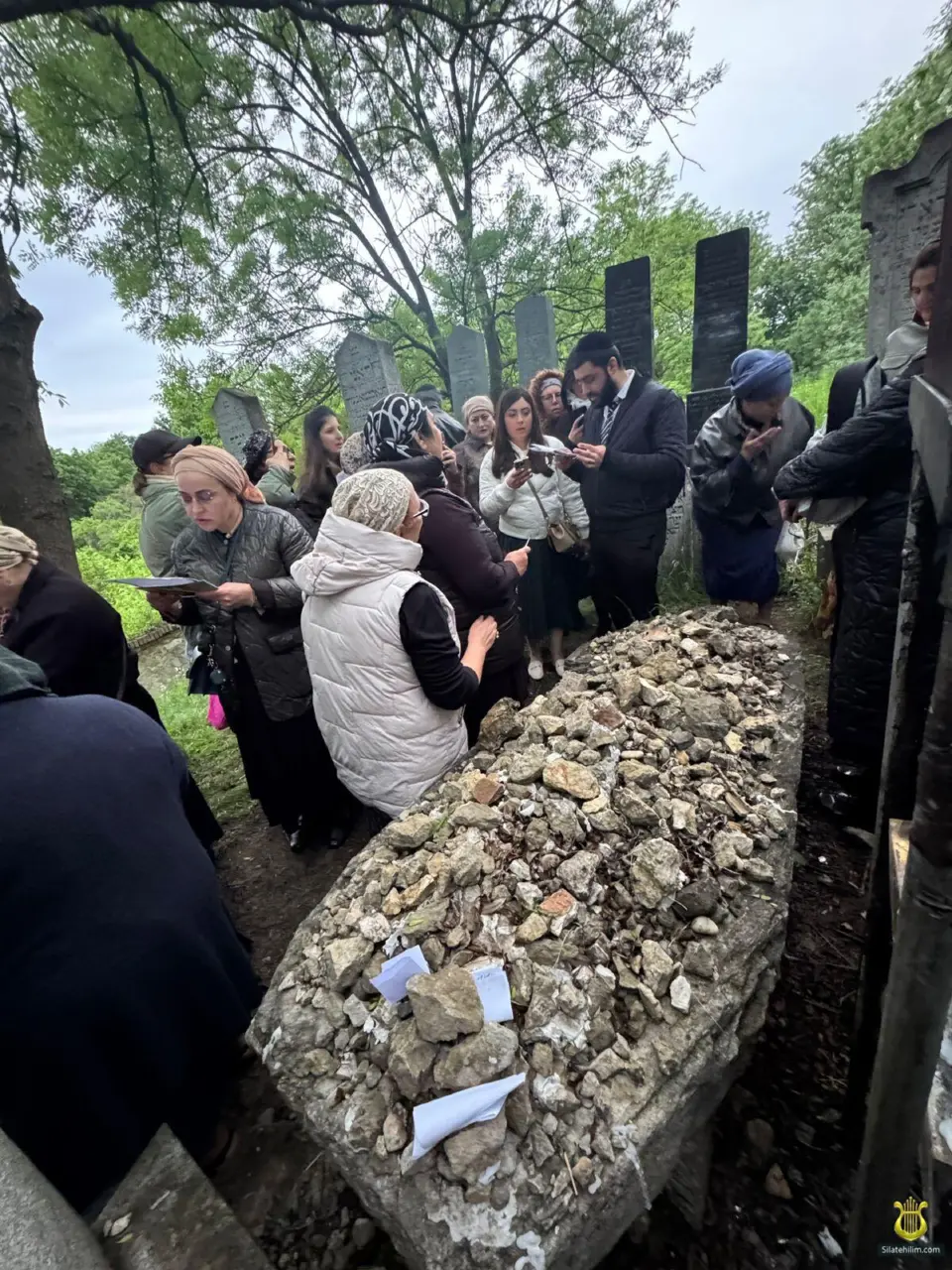
Yahrzeit (Hillula)
- 13 Av — Rabbi Mordechai Benet
Rabbi Mordechai ben Avraham Benet (1753–1829) was a Talmudist and the Chief Rabbi of Moravia.
Yahrzeit – 13 Av
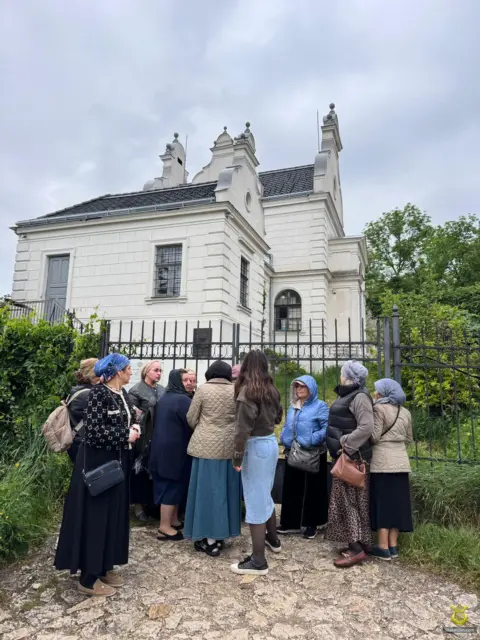
Resting place – Mikulov (Nikolsburg), Czech Republic
He was born in Sirgo, a small village in Stuhlweissenburg County, Hungary.
He was a direct descendant of Rav Tzvi Hirsch Ashkenazi, the "Chacham Tzvi" and Rav Naftali Katz of Frankfurt. From the age of five he was raised in the home of his maternal grandmother in Nikolsburg, and it is for this reason that he kept her family name – Benet. There, Gabriel Marcbreiter provided for the gifted child's education for six years, and then sent him to Ettingen, Alsace.
From the age of 11 he began studying there in the Yeshiva of Rabbi Yaakov Katzenellenbogen in Ettingen. The latter became Benet's teacher and took great delight in his remarkable student's progress.
At Benet's bar mitzvah celebration, his teacher showed the guests three of the boy's manuscripts — a commentary on the Chumash, a commentary on the Passover Haggadah, and novellae on the Talmud. From the ages of thirteen to fifteen, Benet devoted himself exclusively to the study of Scripture with the aid of the Jewish commentaries, and to Aggadah in the Talmud and Midrash; he completed his more strictly halachic studies later, at the Yeshiva of Rabbi Yosef Steinhardt in Fürth, where he remained for three years. He then went as a "chaver" to Prague, where Meir Karpeles set up a private "klaus" for him; although Yechezkel Landau (the Noda BiYehuda) headed a large yeshiva in the same city, a number of talented Talmudists came daily to hear Benet's discourses. After living in Prague for two years, he married Sarah Finkel, the daughter of a prominent and wealthy citizen of Nikolsburg. He settled there in 1773, and within a year was appointed Av Beit Din.
Thirteen years later he accepted the rabbinate of Lundenburg in Moravia, which he held for six months before resigning to become rabbi of Sasvár, Hungary. His stay in his native country was brief, and in 1789 he was appointed Rabbi of Nikolsburg and Chief Rabbi of Moravia. He later also received offers from Pressburg and Kraków, but yielding to the pleas of his community, he remained in Nikolsburg. Excessive devotion to study brought on a nervous illness in his youth that plagued him for the rest of his life and was the cause of his death, which occurred in Carlsbad on August 12, 1829, where he had gone to seek treatment.
His body was temporarily buried in Lichtenstadt, near Carlsbad, but seven months later was permanently reinterred in Nikolsburg in accordance with his will. The communities of Lichtenstadt and Nikolsburg contended for the honor of burying his remains, and the dispute that later arose over the exhumation of his body was fought with the weapons of scholarship and is recorded in the responsa literature of the time. Although Benet was independent in his views, his scholarship and noble character won him many devoted friends among both young and old.
Even the chasidim respected him, and Dov Ber Schneuri, the "Mitteler Rebbe" of Chabad, speaks highly of him in a letter.
He gave away all his money to the poor, raised orphans, and obtained a license from the monarchy to print sacred books. He opposed the study of secular wisdom, but by virtue of his position he soon became well-versed in astronomy, mathematics, and philosophy. The royal family and the government held him in high esteem, crowned him state rabbi, and decreed that all matters of religion and every rabbinic appointment required his approval.
He composed a prayer in honor of King Francis I, Emperor of Austria, after the suppression of the uprising in Italy in 1773.
He fought fiercely against the reformers and, together with the "Chatam Sofer," forbade the reconstruction of the Reform Temple in Hamburg. Despite his illness and the doctors' prohibitions, he continued to lead the yeshiva and study with his students. When his illness worsened, he promised that if they ever needed anything, they should bow at his grave, and while in the spa town of Carlsbad (Czech Republic) in 1829, he returned his soul to its Maker.
Before his burial in the nearby town of Lichtenstadt, pouches were found on his body which he had worn under his clothing during fasts. A delegation from the Nikolsburg community arrived to claim the coffin, but the Lichtenstadt community rejected their request. Since the sages of the generation could not reach a ruling on the matter, the Nikolsburg community turned to a court, which referred the decision to Rabbi Moshe Sofer (author of the "Chatam Sofer").
Rabbi Mordechai Benet appeared in a dream to Rabbi Moshe Sofer, who had asked that he be transferred to Nikolsburg, and revealed to him that it was decreed that he be buried for a short time in Lichtenstadt because he had once ruled to dissolve the marriage bond of the daughter of the rabbi of Lichtenstadt — and the proof of this is that that rabbi is buried beside him!
Seven months after his death he was transferred and buried on the 12th of Adar in the town where he had served, beside the graves of his ancestors.
Sipurei Tzadikim
Rav Mordechai Benet was once resting at the spa in Carlsbad, and there he met a man who introduced himself as a "Reform rabbi" from a small town in Germany. The man proudly told Rav Mordechai that he alone decided all religious matters in his community. A deeper conversation revealed that this man's knowledge of the laws of Torah was in a very sorry state. Rav Mordechai asked: "And what do you do when members of your community come with questions about what is permitted and forbidden — for example, about the kashrut of a chicken — when a clear and unambiguous answer is required?" The rabbi replied: "Just to be safe, I declare everything 'treif.'" Rav Mordechai smiled: "Allow me to tell you a story. In a certain village, quite far from the nearest city — Frankfurt — there lived a Jew. He had a large farming operation, mainly raising poultry for sale. He would bring chickens and geese to the local shochet, who would slaughter them, and then this Jew would process them and sell their meat and fat. Whenever any doubt arose about the kashrut of a slaughtered bird, he would hitch his horse to his wagon and drive the bird to Frankfurt to show the rabbi and get his ruling: 'kosher' or 'treif.' One day he happened to meet a frivolous fellow who decided to play a trick on the unlearned villager. He said: 'Why travel so far over some chicken? Take my advice. It is written in the Torah: \'Flesh torn in the field is treif — you shall not eat it, but cast it to the dogs.\' This means that treif meat belongs to the dog. So whenever there's a doubtful bird, just place it somewhere your dog can get to it. If he eats it — the meat is treif; if not — it's kosher!' Our Jew liked this idea — after all, it wasn't easy to jolt along in a wagon all day, especially in the cold. So he began placing the doubtful birds in front of his dog. And remarkably, the dog always ate them, innards and all! A month later, the villager decided to go to the city to see the rabbi again. Seeing him, the rabbi asked: 'You haven't come to me in a long time. Has something happened?' The villager answered: 'I really did have many questions about kashrut, but recently I started letting my dog decide them.' Astonished, the rabbi asked: 'So what made you come back to me now?' The naive Jew sighed: 'My dog is too strict in his rulings. He declares everything treif.'" Having finished the story, Rav Mordechai turned to his companion: "Are you perhaps using the same method to be stringent in halacha...?"
May the merit of the great tzadik protect Am Yisrael!
(https://dailyzohar.com/tzadikim/1079-Rabbi-Mordecai-ben-Abraham-Benet)
Gallery