
Grave
Tikkun Evarim (Organs) and the Mikveh of the Arizal
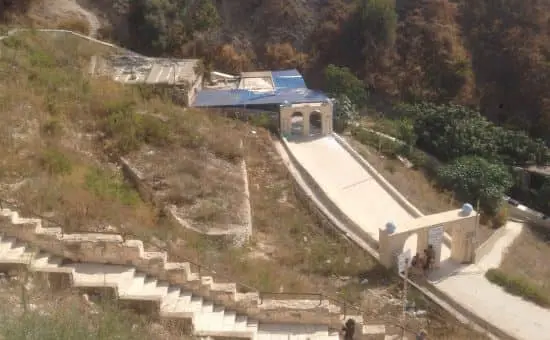
The Mikveh of the Arizal and Tikkun Evarim
Tehillim 51:12
– "Lev Tahor Bara Li Elokim" – (Create in me a pure heart, O G-d).
The mikveh is one of the most mysterious creations with which G-d has blessed us. Within it lies part of the mystery of birth. Just as a child is immersed in a womb filled with water before being born, so too a Jew immerses in a mikveh (a "womb" of water for an adult), emerging from it renewed to begin life anew. Water has always carried within it the property of purification.
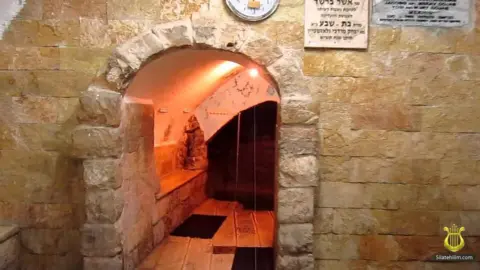
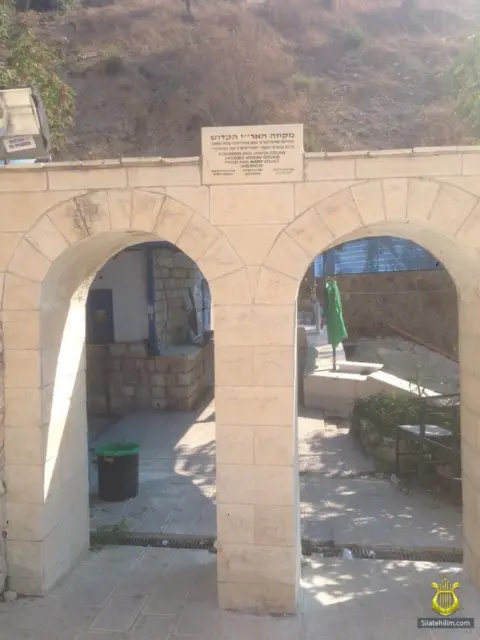
The Mikveh of the Arizal Hakadosh (may his merit protect us) is a small pool, 1.30 meters deep, filled with water from an underground spring. An outlet on the opposite side of the pool allows the water to flow out of the mikveh freely.
A tradition that the current caretaker of the mikveh, Dovid, delights in sharing is what draws tens of thousands of Jews from around the world to the Mikveh of the Arizal:
"Before his passing, the Arizal Hakadosh instructed his close students that after his death they should bring his body to the mikveh and place it in the water — and that he would take care of the rest himself.
After the Arizal passed away, his students followed his instructions, brought his body to the mikveh, and placed it in the water, which reached up to his head.
Then his closest student, Rabbi Chaim Vital, said to his teacher: "Everything you asked of us, we have done. Now you do what you must."
With these words, the Arizal lowered his head into the water to complete the full immersion of his body under the water. His students then continued with the burial a few meters from the site of the mikveh.
This story was recorded by Chaim Vital himself, and that is why his students named this mikveh the 'Mikveh of the Arizal,'" Dovid concludes.
Men who have visited the Mikveh of the Arizal report that in front of it one can read the verse from Tehillim: "Lev Tahor Bara Li Elokim."
Our Sages teach: "Do not read it as bara (ברא) — 'create' — but read it as ever (אבר) — 'organ,'" since everyone who immerses in a mikveh is, as it were, performing a "Tikkun Evarim" (rectification of the organs).
The gematria of the phrase lev tahor (לב טהור) — "a pure heart" — equals 252. We know from the Torah that men have 248 organs, while women have 252 (four more, all of them reproductive). This is precisely why a Jewish woman immerses in the mikveh — to conceive Jewish children in purity.
Thus we can read the verse as follows: "Lev Tahor (252) bara (organs) for me, Elokim (G-d) [rectify]."
Now we see that indeed, in the mikveh, a Jewish woman undergoes a "Tikkun Evarim" — (a rectification of her 252 organs). (Chiddush of "Sila Tehilim")
Gaon Rav Yaniv Assuri (shlita) explains that according to the Arizal Hakadosh, the letters of this verse reveal to us the secret of the mikveh.
The first letters of the first three words — לב טהור ברא — "Lev Tahor Bara" — are ("Lamed," "Tet," "Bet").
These three letters form two words that are fundamental to the purpose of the mikveh.
Immersion in a mikveh is called "tevilah," whose root is "taval" ("Tet," "Bet," "Lamed") — to immerse in a mikveh.
Rearranging the order of these letters, we get ("Bet," "Tet," "Lamed") — the word "batel," which means "nullification" (the nullification of all sins, mistakes, problems, and troubles).
Furthermore, if we take the last letters of the first three words of the verse — לב טהור ברא — we get the word "bara" — (create) — the Arizal Hakadosh explains that after immersing in the mikveh, a person is, as it were, created anew.
In a single verse of Tehillim, the Arizal reveals the secret of the mikveh — how, through immersion in it, one can undergo processes of purification, nullify everything negative, and then be recreated pure once again.
(Mekubal Gaon Yaniv Assuri, Rosh Yeshiva of "Yodea Bina," in a personal conversation)
Segulot:
A well-known segula is the tradition that all who immerse in this mikveh merit repentance before death.
The water from the Mikveh of the Arizal (its spring) has mystical properties. Many visitors drink from this water and fill bottles to take home with them.
There is a segula that involves seven immersions in the Mikveh of the Arizal, followed by performing certain rituals at the grave (kever) of the Arizal, in order to attain "Yishuv HaDaat" — clarity of mind.
(From a trip to the Kivrei Tzadikim with the Yeshiva "Yodei Bina")
Gallery