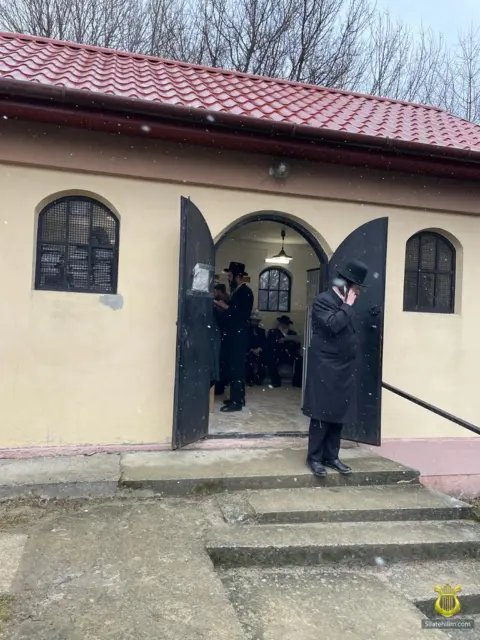
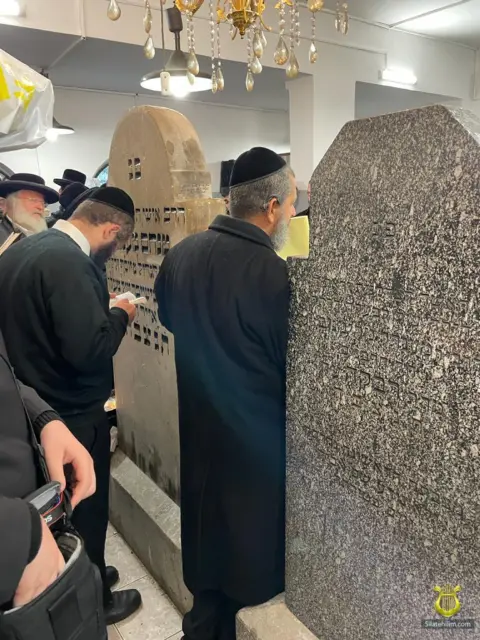
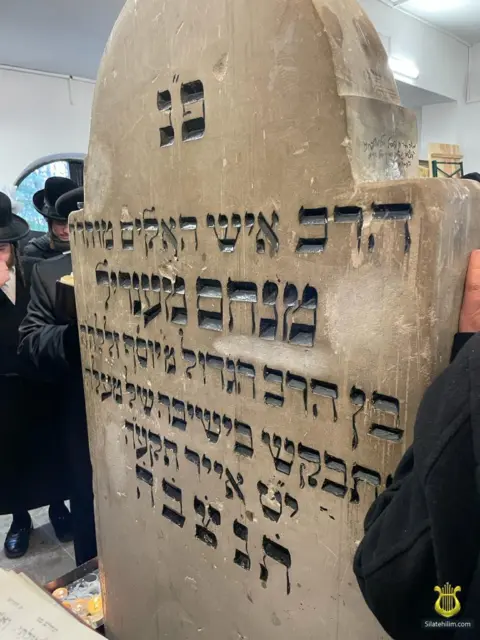
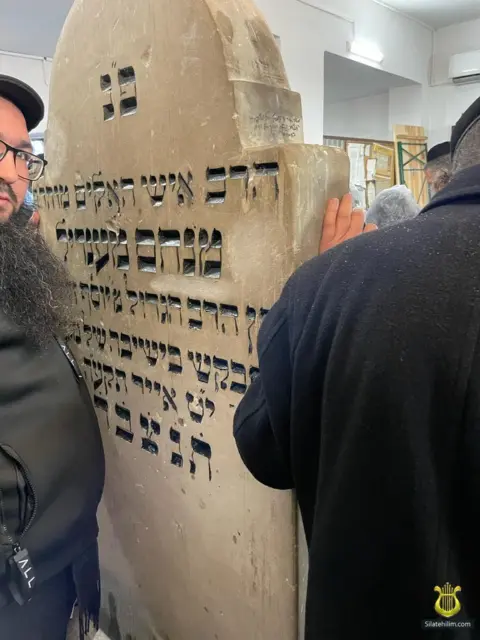
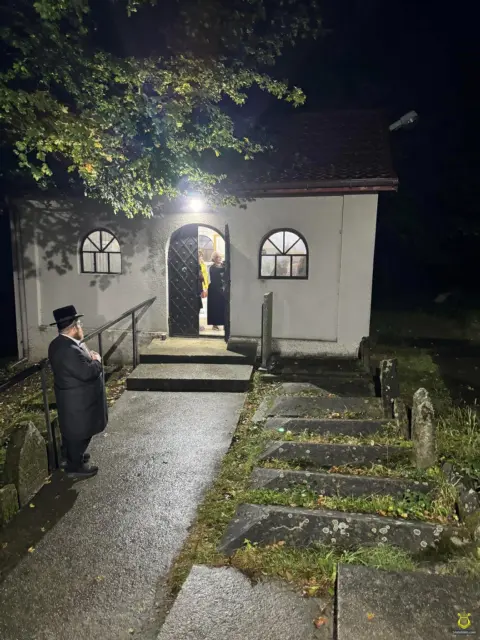
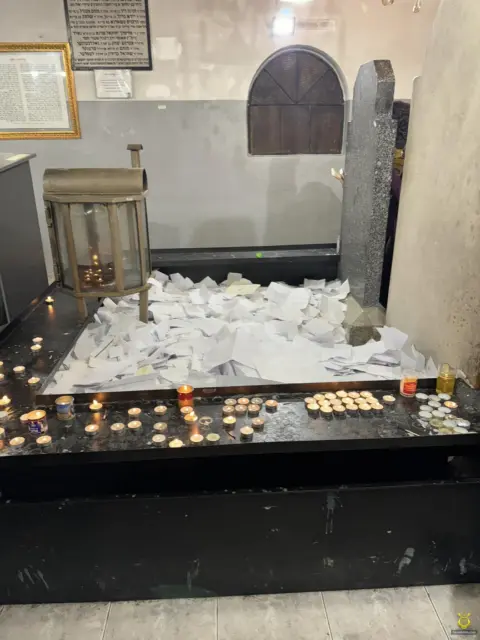
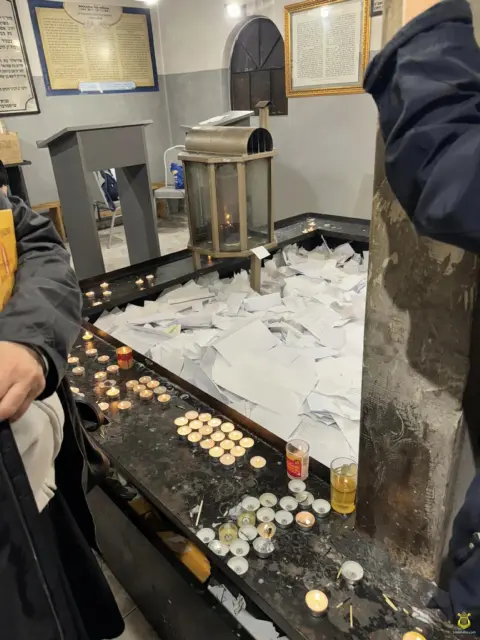
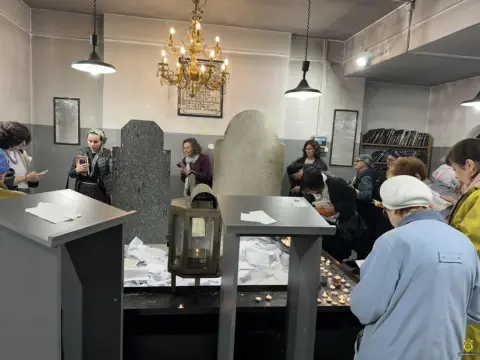
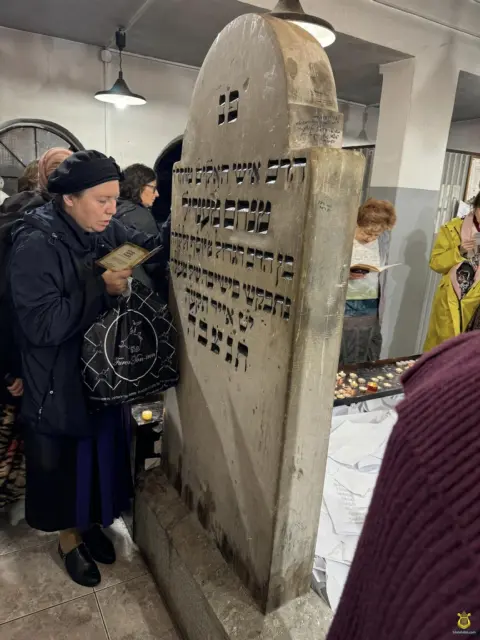
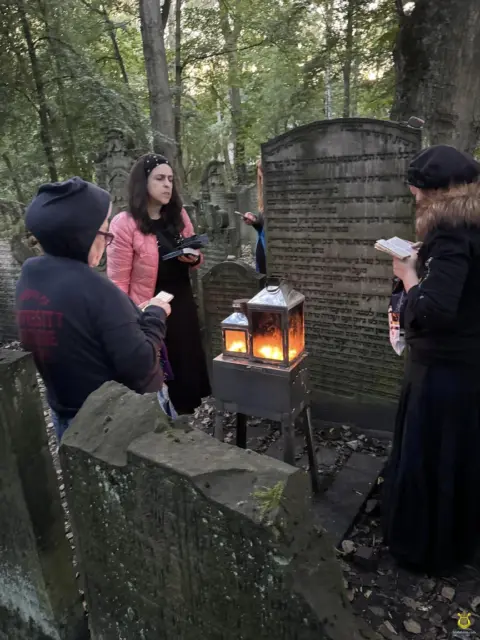
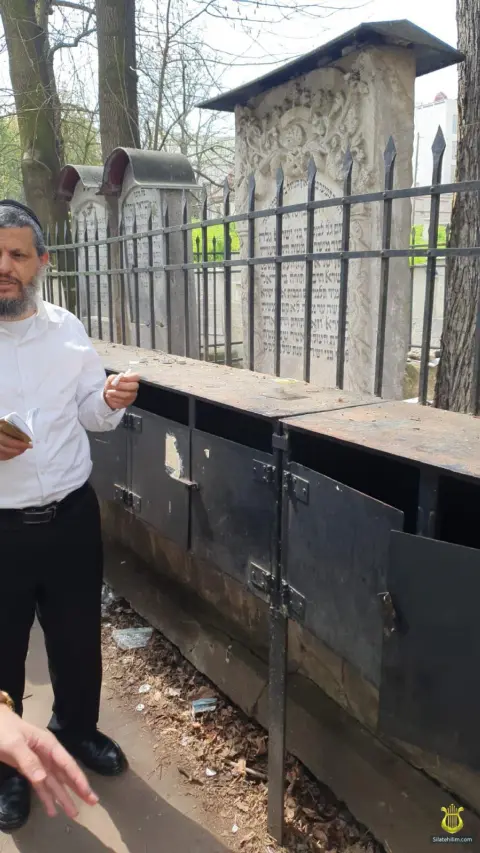
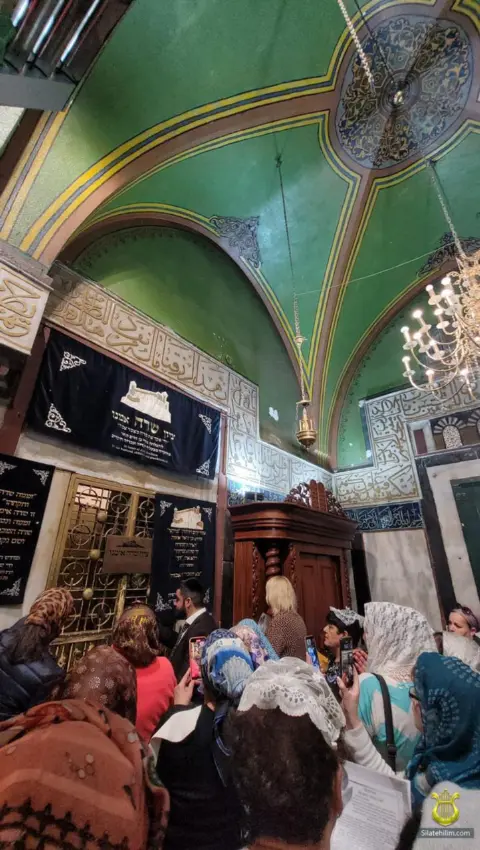
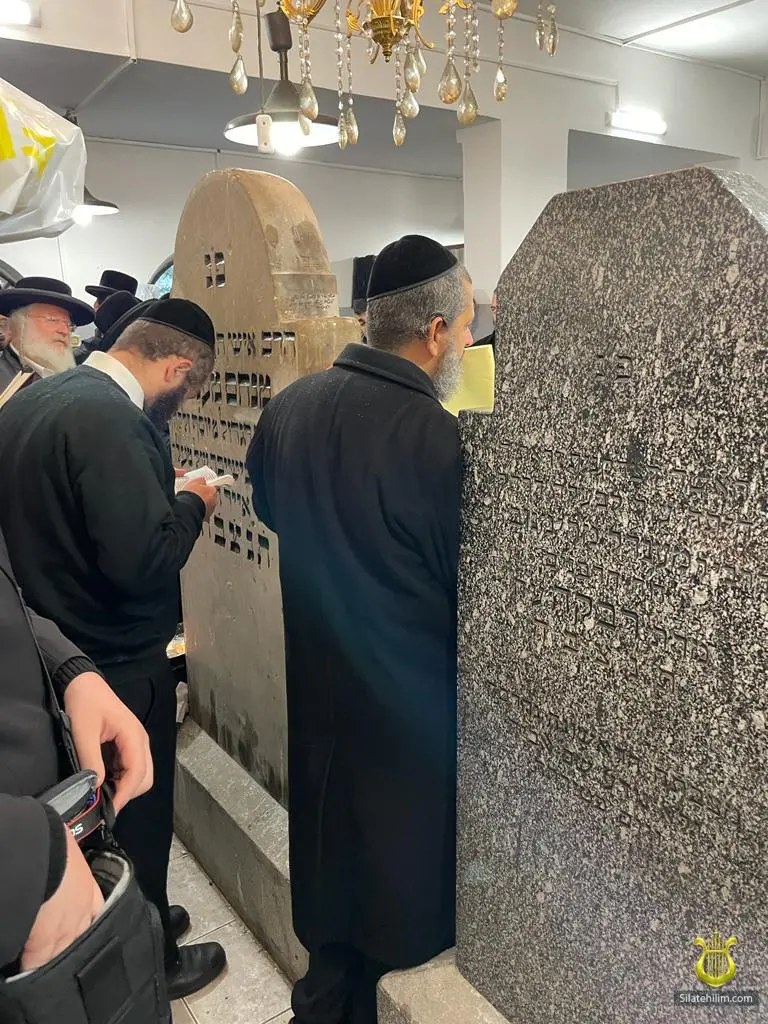
Grave
Menachem Mendel of Rymanov
Yahrzeit (Hillula)
- 19 Iyar — Rabbi Menachem Mendel Torem of Rymanov
- 4 Tammuz — Rabbi Menachem Mendel Futerfas
- 1 Iyar — Rabbi Menachem Mendel of Vitebsk
Rabbi Menachem Mendel ben Yosef Torem of Rymanov (1745–1815), a renowned Hasidic Rebbe, was one of the first four disseminators of the Hasidic movement in Poland and Galicia.
Yahrzeit - 19 Iyar
Resting place - Rymanov, Poland
Rabbi Menachem Mendel was born in 1745 in Nowe Miasto into an old Polish rabbinic family descended from the Baal HaTurim. He was a student of Rabbi Shmelke of Nikolsburg, together with two of his friends – the Chozeh of Lublin and the Maggid of Kozhnitz.
Before entering Rabbi Shmelke's beit midrash, he was already an accomplished Talmudist and halachic scholar, having acquired a vast body of knowledge in the Rif's code (Rabbi Yitzchak Alfasi, 1013-1103).
According to the mekubalim, the Rebbe of Rymanov was a gilgul of the Rif, who would also occasionally appear to Rabbi Menachem.
Once it happened that the Rebbe of Rymanov beseeched G-d to help him attain a higher spiritual level, and in a dream the Rif told him to travel to Lizhensk to Rabbi Elimelech, where he would earn his spiritual ascent.
After Rabbi Elimelech's passing, a great many of his chassidim became followers of the Rebbe of Rymanov, who settled in Pristik and later moved to Rymanov. His reputation as a kadosh and baal mofet – a holy miracle-worker – drew thousands of followers.
At the same time, he suffered greatly from the insults of the misnagdim (opponents of Hasidism).
Among his students were such outstanding Hasidic leaders as Rabbi Naftali of Ropshitz and Rabbi Tzvi Elimelech of Dinov.
In Napoleon's rise he saw a sign heralding the final redemption, and he prayed for his victory.
Parashat HaMan
For 22 years the Rebbe of Rymanov studied and discussed the secrets of the Manna (the heavenly bread in the desert), thereby drawing abundance into the entire world.
His teachings, sermons, and discourses were published under the titles "Divrei Menachem," "Menachem Tzion," and "Be'erot HaMayim."
Menachem Mendel passed away in the same year (5675) as the Chozeh of Lublin and the Maggid of Kozhnitz.
Sippurei Tzadikim
In the King's Service
Once it happened that the Apter, the Rymanover, and the Chozeh of Lublin were in Lancut, the Chozeh's residence before he moved to Lublin. Their opponents informed on them to the authorities, and the three Rebbes were arrested and imprisoned. Among themselves it was decided that their representative at the court hearing should be Rabbi Menachem Mendel, who was fluent in German.
The judge asked: "What is your occupation?"
"I serve the King," replied the Rymanover.
"Which king?"
"The King of Kings."
"And what brought you to Lancut to see two strangers?"
"We came to learn from this man [the Chozeh] how to serve the King more diligently."
"And why do you wear white garments?"
"This is the color of our professional attire."
The judge delivered his verdict: "We will have nothing to do with such people. Case closed!"
Song of Gratitude
Young Mendl could only get from his home to the town where Rabbi Elimelech lived in one way: by hiring himself out to help a coachman. When they stopped to rest, it was his job to watch over the wagon and horses. It was a freezing winter day. The coachman and his passengers were warming themselves in the inn, eating and drinking. And Rabbi Mendl, in his thin coat and worn-out shoes, hopped about near the wagon, rubbing his frozen hands. "Praise the Creator that I am cold," he began to sing softly. "Praise the Creator that I am hungry." And he began to dance, singing his song of gratitude to a dancing tune.
A man who came out of the inn heard him singing and asked in astonishment: "Young man, what is it you are singing?"
Mendl answered: "I thank G-d that I am in good health and that I am so hungry."
"But why don't you eat your fill?" the man asked.
Mendl answered the question quite seriously: "Because that requires money," he said.
Then the man called a servant to watch the wagon, brought Mendl into the inn, and ordered food and a warm drink for him. Afterward he provided Mendl with sturdy shoes and a sheepskin coat of the kind worn by all village Jews. Upon reaching Lizhensk, Mendl went straight to Rabbi Elimelech's house, and slipping past the attendants unnoticed, entered the room where the tzadik sat over a book, immersed in the depths of knowledge. Rabbi Elimelech's son, Eliezer, waved his hands, motioning for the ill-mannered stranger to leave the room and wait outside the door so as not to distract the tzadik from his studies. But Rabbi Elimelech, looking up from his book, took his son by the hand and – rather than speaking, almost sang, in the manner of a song of gratitude: "Lazar, Lazar, what do you want from this little Jew? Look, sparks of fire are swirling above his head."
The Exchange
Rabbi Mendl's wife's parents kept insisting that their daughter divorce her husband, who had turned out to be a man completely detached from worldly matters and whose unfitness for commerce was as obvious as his dislike for it. When she flatly refused, they evicted the young couple, who until then had lived with the wife's parents, as was the custom of the time. The young couple found themselves in dire poverty. Only occasionally, with the cook's connivance, could the young wife manage to obtain some food from her father's kitchen or a few bundles of firewood from her father's shed. But then her parents went away for a long time, and the merchants would no longer extend credit, so for three days she could bring Rabbi Mendl, who sat over his books in the study house, no food at all. On the third day she resolved to go to the baker and was refused. She left without a word. But the baker ran after her and offered her bread and other food, as much as she could carry, if in exchange she would promise him her share in the World to Come. She hesitated for no more than a second, then accepted his offer.
Entering the study house, she saw her husband sitting at the table. He was nearly unconscious, but held the book tightly with both hands. She spread the cloth, laid out the food, and watched him eat. He glanced at her, for never before, after bringing food, had she stayed with him. For a while they looked at each other, then he looked into her eyes, and she understood that he knew of her deal. And she also understood that in that very moment she had received her new share in the World to Come.
In His Youth
Once Rabbi Mendl proudly told his teacher, Rabbi Elimelech, that he had seen angels who in the evening dim the light, bringing darkness, and in the morning disperse the darkness, making way for light. "Yes," said Rabbi Elimelech, "in my youth I saw them too. But as you grow older, you no longer see such things."
The Spoon
Once Rabbi Mendl was a guest at Rabbi Elimelech's table, and the servant forgot to give him a spoon. Everyone began eating except Rabbi Mendl. The tzadik noticed this and asked: "Why aren't you eating?"
"I have no spoon," he said.
"You know," said Rabbi Elimelech, "it is time you learned to ask for a spoon for yourself – and a plate too, for that matter!"
Rabbi Mendl took his teacher's words quite seriously. And from that very day, his affairs began to improve.
The Testament
Before his death, Rabbi Elimelech laid his hands upon his four beloved students and divided among them all that he possessed. To the Seer of Lublin he gave the power of his gaze, to Avraham-Yehoshua the power of his mouth, to pronounce judgments, to Israel of Kozhnitz the power of his soul, to pray, and to Rabbi Mendl he gave his spiritual power, to lead the community.
Nothing to Offer
After Rabbi Elimelech's death, some of his young students decided to choose Rabbi Mendl as their teacher; at the time he was still living in Frystak. They came to his home on a Friday afternoon. On the table they saw two challahs made of rye flour and two small candles in crudely made clay candlesticks. The rabbi's wife told them he had not yet returned from the mikveh. Naftali, who later became the Rabbi of Ropshitz, went without delay into town and bought everything necessary: a white tablecloth, Shabbat challahs made of wheat flour, both large and small, and tall candles in beautiful candlesticks. Having set the table properly, they sat down and waited for the rabbi.
When Rabbi Mendl entered the room, they rose respectfully, to show that they recognized him as their spiritual father. He looked them over carefully, one by one.
Then he said: "You have brought with you what is needed, and with this you may come even to me, who has nothing to offer in return."
Bread for Guests
When food prices rose sharply, Rabbi Mendl noticed that poor people who stayed at his home were being given less bread than usual. He then ordered that they be given more bread than before, since at the table one must consider not the price, but how hungry a person is.
On Hospitality
A certain man came to Rabbi Mendl and complained that he was unable to fulfill the mitzvah of hospitality, because his wife disliked receiving guests and every time he brought someone into the house, she would start a quarrel, threatening the peace of the household.
The rabbi answered: "Our sages say: 'Hospitality is greater than receiving the countenance of the Shechinah.' This may sound like an exaggeration, but this saying should be understood properly. For it is said that when there is peace between a husband and wife, the Shechinah dwells among them. That is why the presence of guests in the home is considered more important than the Shechinah. Even if hospitality leads to a disruption of marital harmony, the mitzvah of hospitality is still considered more important."
Two Luminaries
Rabbi Mendl of Rymanov was asked: "Why can there not be two tzadikim in one town?"
He answered: "Tzadikim can be likened to the heavenly luminaries. When G-d created the two great lights, He placed both of them in the firmament of heaven, so that each would fulfill its own special purpose. Since that time they have lived in friendship. The great light does not boast of its greatness, and the small one is quite content with what has been allotted to it. So it was also in the days of our sages: the sky was filled with many stars, great and small, and all of them were like brothers. Not so the tzadikim of our own day! No one wants to be the small light and acknowledge the authority of one greater than himself. Therefore it is better for each light to have its own firmament."
Receiving the Torah
On the morning of the first day of Shavuot, before the Torah reading, Rabbi Mendl left the prayer room and went to his own quarters. After some time he returned to the prayer room and said: "When Mount Sinai rose over your heads like a giant bell, you submitted and accepted the Torah. Today I release you from that obligation and that responsibility. You are free again, and entitled to make your own choice."
And then everyone exclaimed: "We accept the Torah even now!"
A student of the Rabbi of Lublin, who happened to be present because he had been unable to travel, as he usually did, to his teacher for the holiday, adds, whenever he tells this story: "And all their sins melted away, just as they did then, at Mount Sinai."
In a Time of Favor
Rabbi Mendl was asked: "On Shabbat, when we recite the afternoon prayer, why do we say the words from the psalm: 'But as for me, my prayer is to You, O L-rd, in a time of favor'?"
He answered: "Because the Almighty's intention to create this world for the good of all G-d's creatures already existed on Shabbat afternoon, before the first day of creation. Every Shabbat, at that very same time, this intention manifests itself anew, and we pray that this time too, at this hour, as Shabbat draws to its close, the Almighty's intention will remain unchanged."
The Heart
Rabbi Mendl of Rymanov used to say that when he recited the Shemoneh Esrei, all the people who had ever asked him to pray to G-d on their behalf would pass before his mind's eye.
Once he was asked how this was possible – surely there wasn't enough time for that? Rabbi Mendl answered: "The needs and troubles of each person leave a mark upon my heart. And at the hour of prayer I open my heart with the words: 'Master of the Universe, read what is written here!'"
Segulot of Rabbi Menachem Mendel of Rymanov
- Parashat HaMan
Gallery