Grave
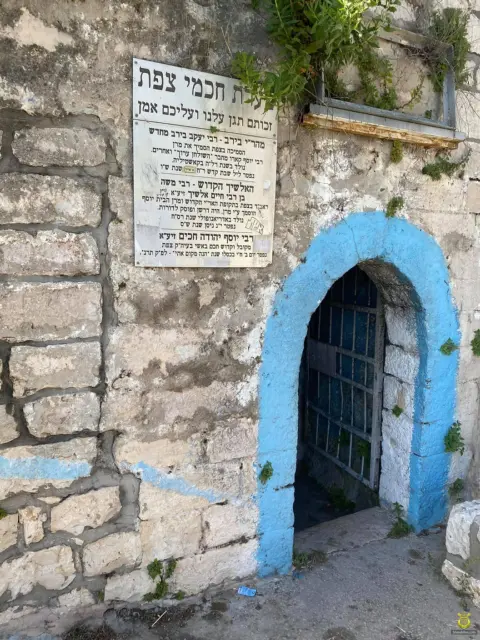
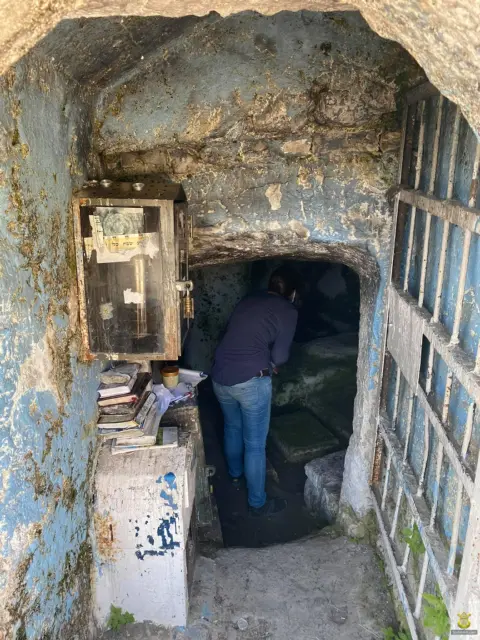
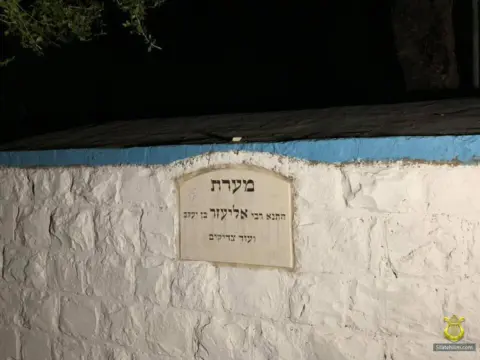
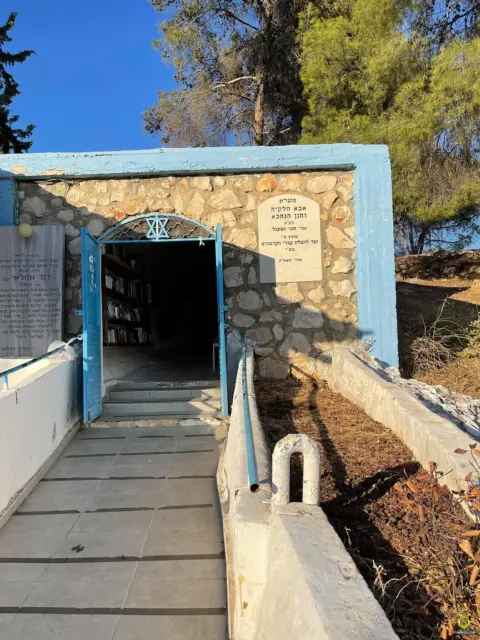
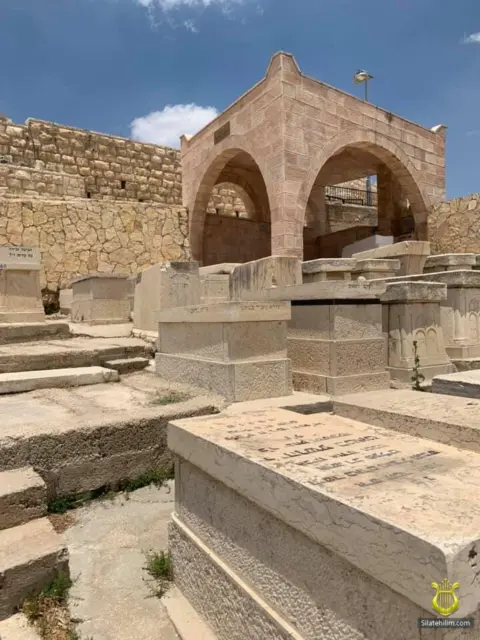
Cave of the Sages of Tzfat
Cave of the Sages of Tzfat
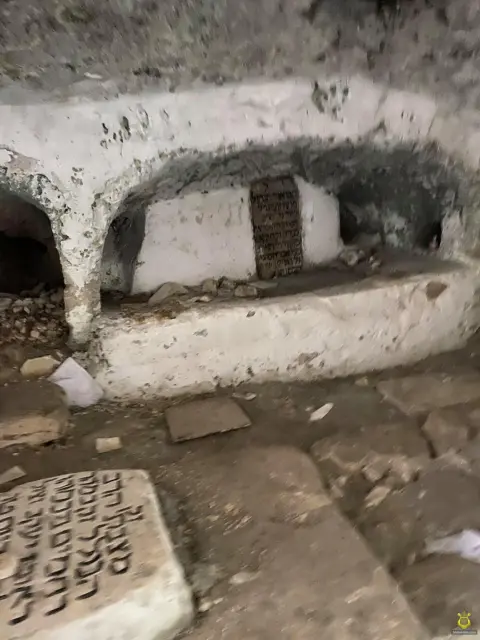
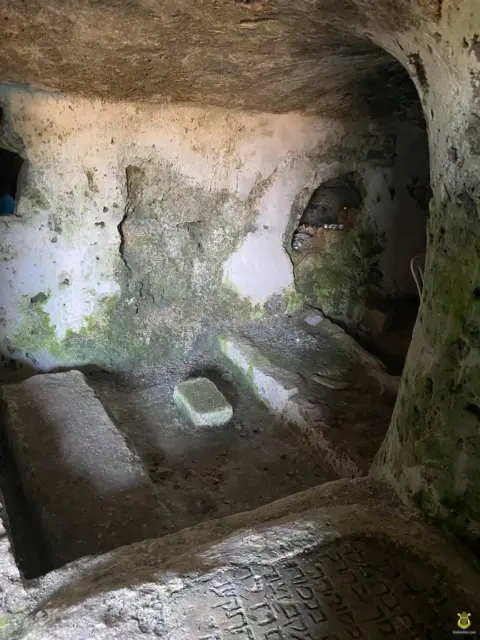
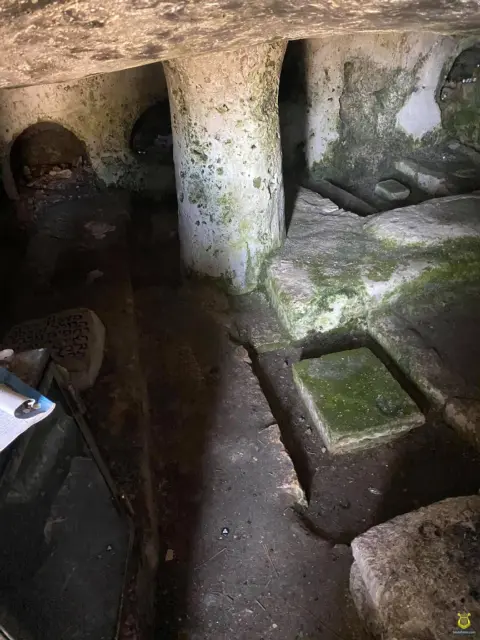
Buried here are:
1. Rabbi Yaakov Beirav, teacher of Rabbi Yosef Karo
Yahrzeit - 1 Iyar;
Rabbi Yaakov bar Moshe Beirav (Mahari Beirav) - rabbi of the city of Tzfat, one of the spiritual leaders of the Jews of the Land of Israel, Egypt, and Syria.
He was born in Toledo, Spain. He studied Torah under the head of the Toledo Yeshiva, Rabbi Yitzchak Abuhav.
When the Jews were expelled from Spain, R. Yaakov Beirav fled to Portugal, and then to Morocco — at the age of 18 he became the rabbi of the city of Fez, an ancient center of Torah. He later moved to Cairo, the capital of Egypt, and joined the city's rabbinical court. In 1524, R. Beirav settled in the Land of Israel, in the city of Tzfat, located in the mountains of Northern Galilee.
In 5298 /1538/, R. Beirav proposed reviving the transmission of semicha (rabbinic ordination), which had been interrupted more than a thousand years earlier.
Semicha was passed down from teacher to student, beginning with Moshe Rabbeinu, who received the Torah on Mount Sinai. Shortly after the Romans suppressed the Bar Kochba revolt and executed Rabbi Akiva, the chain of ordination was forcibly broken. However, the great halachic authority the Rambam held that "if the sages of the Land of Israel, uniting together, ordain a number of judges and grant them semicha, these judges will be able ... to pass semicha onward" (Laws of the Sanhedrin 4:11) — and the chain would resume. And so R. Beirav took up this idea, seeking to help the Marranos — Jews forcibly converted to Christianity. Many of them, having fled Spain and Portugal, sought to return to their Jewish roots.
His idea was supported by two outstanding halachic authorities of Tzfat — R. Yosef Karo, author of the Shulchan Aruch, and R. Moshe Trani (the Mabit). Gathering together, all the sages of Tzfat ordained their leader R. Beirav and granted him the first semicha, so that a new chain could extend from him.
They then sent messengers to the rabbi of Jerusalem, R. Levi Ibn Habib (the Ralbach; see), asking him to support the new initiative and accept semicha from R. Beirav. However, the Ralbach took an uncompromising stance, denying the legitimacy of such ordination; he was supported by the chief rabbi of Egypt, R. David Ibn Zimra (the Radbaz; see), and the implementation of R. Beirav's idea was halted.
Grieving deeply over the failure of his endeavor, the Mahari Beirav wrote: "It grieves me greatly that I was not privileged to fulfill this commandment — to appoint worthy judges who could breathe new life into the people of Israel and return them to the Holy Land. And the good L-rd knows that all my intentions were solely for the sake of Heaven, and not for my own glory."
Meanwhile, based on a false denunciation, the Turkish authorities sentenced R. Beirav to expulsion from the Holy Land. Since, according to Torah law, semicha can only be transmitted in the Land of Israel, he ordained four of his closest associates: R. Yosef Karo, R. Moshe Trani, R. Moshe Galante, and R. Moshe Cordovero (the Ramak). Later, R. Karo passed semicha to R. Moshe Alshich, who in turn passed it to his student, R. Chaim Vital. R. Beirav was exiled to Damascus, but later returned to Tzfat. He died in Tzfat, on Shabbat night, the first day of the month of Iyar, 5306 /1546/.
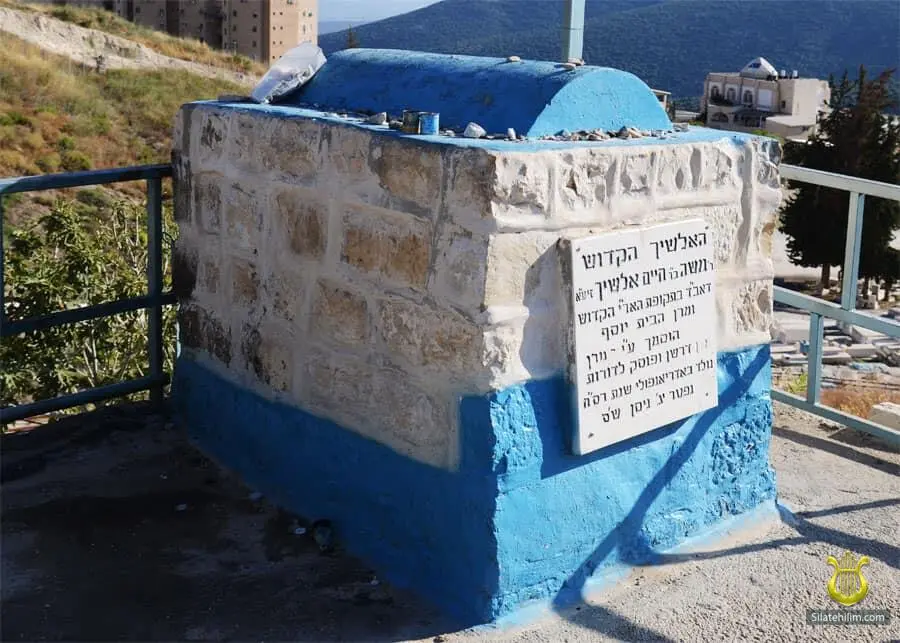
2. Alshich HaKadosh - Rabbi Moshe Alshich, head of the city of Tzfat in the time of the Ari. Yahrzeit - 13 Nisan;
Alshich HaKadosh - was born in Adrianople (Edirne) in 1508. He studied at the Yeshiva in Salonika under Rabbi Yosef Taitatzak. He later moved to the city of Tzfat. He studied under Yosef Karo, author of the "Shulchan Aruch," and received semicha (rabbinic status) from him. He became famous as an orator, delivering sermons in the synagogue on Shabbat. He traveled among the Jewish communities of the Middle East to raise funds for the yeshivas of Tzfat. He wrote a number of books — commentaries on the Tanach. He headed a yeshiva in Tzfat. Among his most famous students were Rabbi Chaim Vital and Rabbi Yom-Tov Tzahalon.
R. Alshich was the first of four sages who, for centuries, merited a similar title: HaKadosh (the holy). This honorific title is traditionally also added to the names of the great kabbalists of the Land of Israel — R. Yitzchak Luria (the Ari HaKadosh; see), R. Yeshaya Horowitz (the Shla HaKadosh; see), and R. Chaim Ibn Attar (the Or HaChaim HaKadosh; see).
In 5347 /1587/, at the age of 80, fleeing an epidemic that had broken out in Tzfat, R. Moshe Alshich moved to the city of Damascus. Beginning in 5350 /1590/, for three years he traveled through the communities of Syria, Turkey, and Persia, collecting donations for the Jews of Tzfat.
In addition to his commentaries on the Five Books of Moses, R. Moshe Alshich composed commentaries on all the books of the Prophets (except Yechezkel), as well as on Tehillim (Psalms), Mishlei (Proverbs of Shlomo), Shir HaShirim (Song of Songs), and on the books of Daniel, Iyov, and Ruth. In 5352 /1592/, while staying in Istanbul, he published several of his works for the first time at the Hebrew printing house of the Mendes family. He sent most of his manuscripts to Venice for publication, where his commentaries on Shir HaShirim (in 5351 /1591/) and on Mishlei (in 5352 /1592/) appeared during his lifetime.
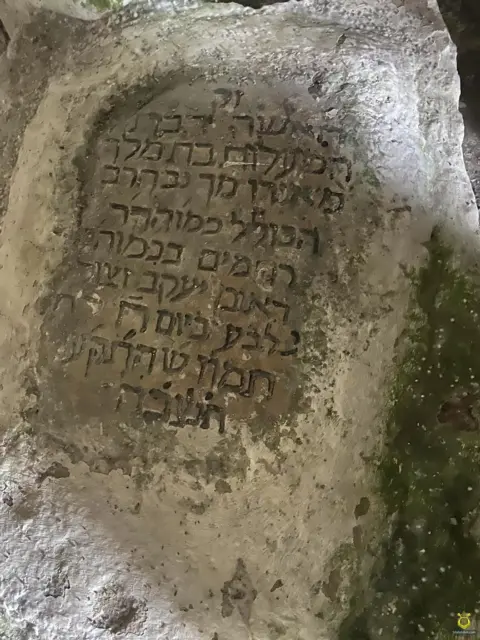
He died in Tzfat in 1593. There is a separate tombstone for the Alshich on top of the cave.
3. Rabbi Yosef Yehuda Chakim - rabbi of Tzfat.
(Toldot.ru, Zissil.com)
Gallery