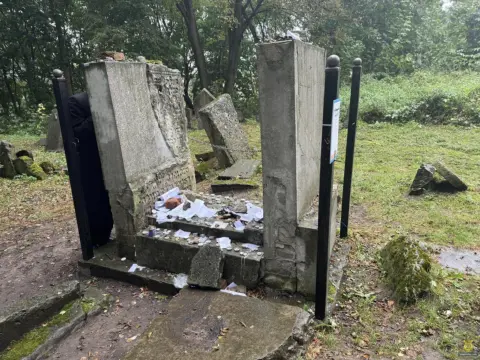
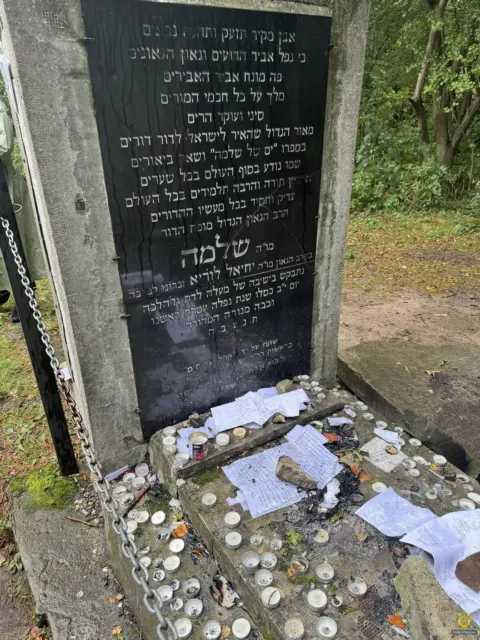
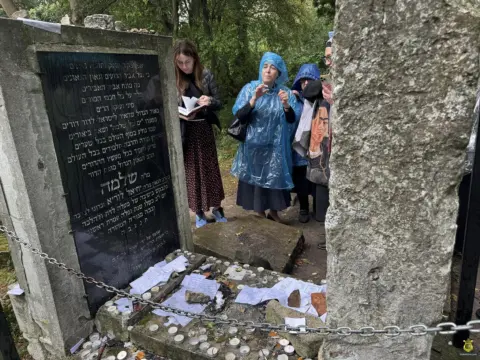
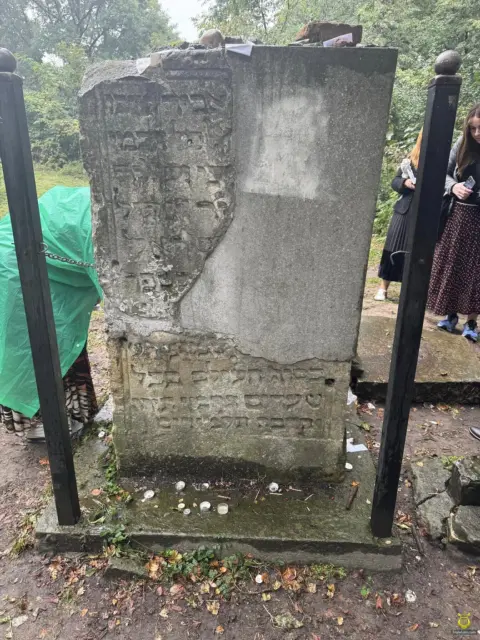
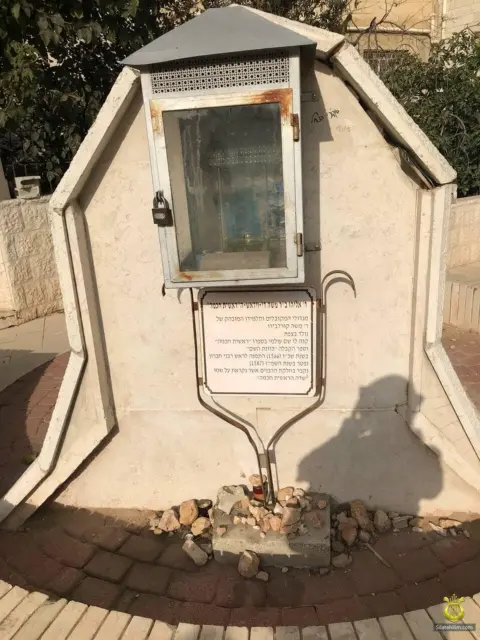
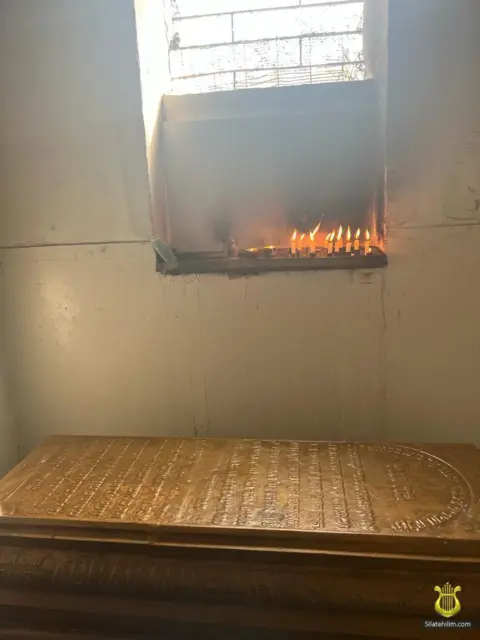
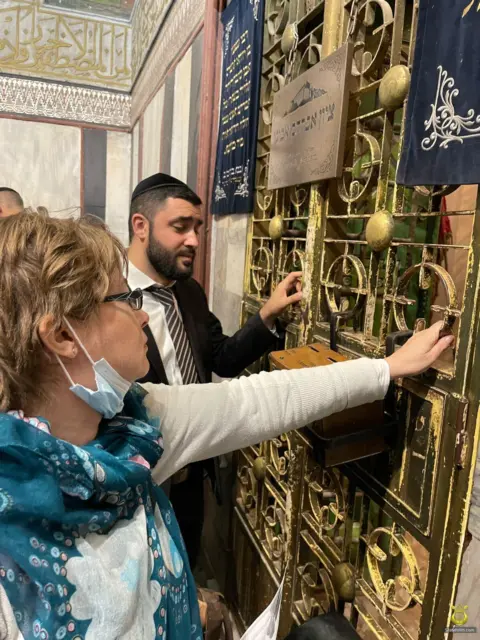
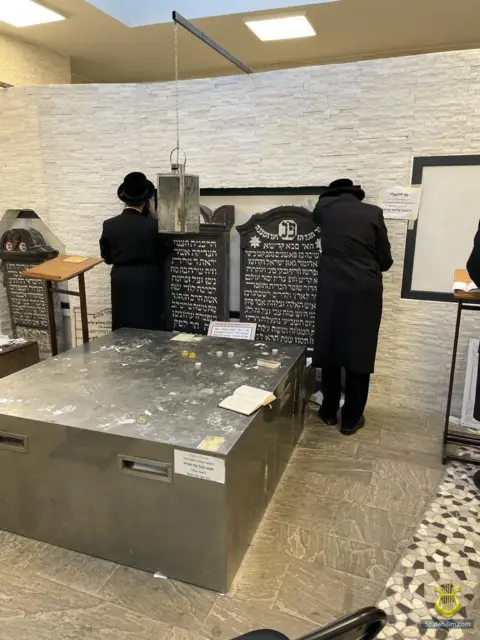
Grave
Maharshal
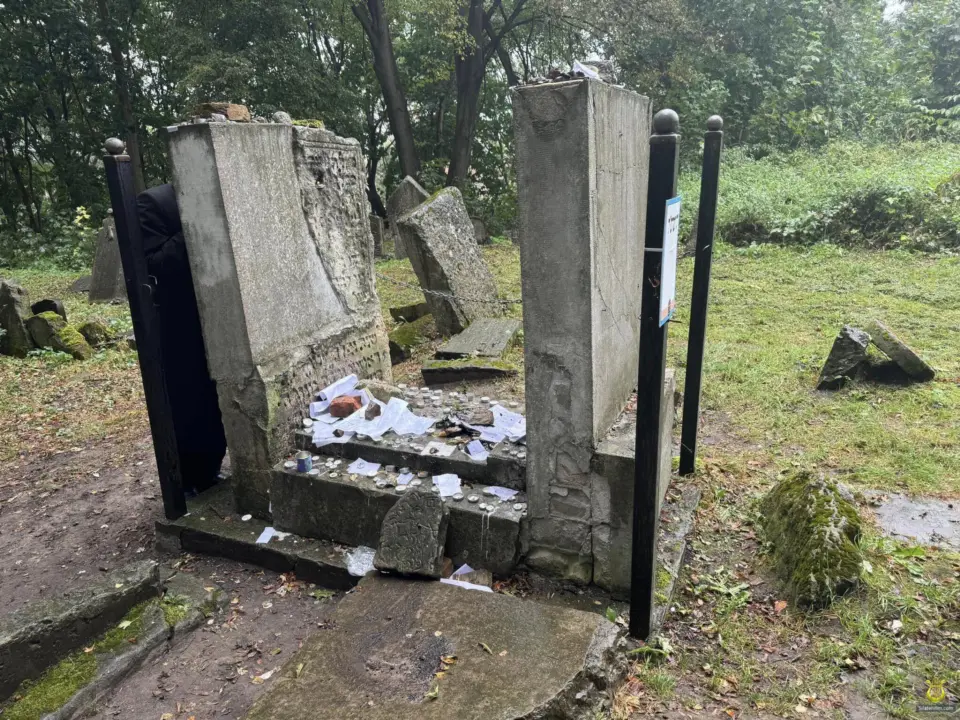
Yahrzeit (Hillula)
- 12 Kislev — Rabbi Shlomo Luria - the Maharshal
The Maharshal – Rabbi Shlomo Luria (Moreinu ve-Rabeinu Shlomo Luria) came from a well-known rabbinic family that traces its lineage to Rashi, and was connected to many outstanding rabbis of his era, including Rabbi Moshe Isserles and Rabbi Meir Katzenellenbogen.
Yahrzeit – 12 Kislev
Burial place – Lublin, Poland
He was one of the great Ashkenazi poskim (halachic authorities) and teachers of his time. He served as rabbi in various communities in Poland and Lithuania. His major halachic work, "Yam Shel Shlomo," covers 16 tractates of the Talmud. However, it has survived for only 7 tractates. He emphasized the importance of the Talmud as the primary source. In his introduction, the Maharshal hints at the fact that he was able to study when there was insufficient light, as though he were being guided from Above.
His "Chochmat Shlomo," glosses on the text of the Talmud and commentary, are printed in standard editions of the Talmud. There are a number of responsa to Rabbi Moshe Isserles, whom he deeply respected but with whom he sharply disagreed on certain matters. He was especially critical of the Rema's attachment to philosophy, which he strongly opposed. The Rema's controversial view was that in many areas Kabbalah and philosophy address the same problems, but use different terminology. The Maharshal's cryptic view on using the Zohar as a source for halacha illustrates his independence of thought and uncompromising devotion to the truth as he saw it.
The Maharshal was a devoted follower of Kabbalah and placed the Zohar on the same level as other midrashic literature. Nevertheless, when he was asked to rule on the question of whether to wrap tefillin on the arm while sitting, in accordance with the Zohar, the Maharshal categorically refused to accept that opinion, citing the example of the sages of previous generations who did not change their custom in accordance with the Zohar on this matter.
Almost all the greatest rabbis of that time were students of the Maharshal.
Techiyat Ha-Meitim
"This is a story that must be told," said Rabbi Meir Shapiro to his students. "This is a story that has never before been published, which I discovered in the records of the Lublin Jewish community, and it deserves to be made known, since it concerns the greatness of tzadikim and what they are capable of."
Rabbi Shlomo Luria had a student whose wife died in the prime of her life, leaving no children behind. The man mourned her for seven days, but when he later persisted in his gloomy despondency and deep depression, people took notice. The Maharshal called the man to him and asked what was troubling him. "Shortly before her death, my wife made me promise her that I would never marry again," he wept. "But I am still young and have never been blessed with children."
The rabbi assured the man that he could marry, which he soon did. However, shortly after the marriage, the man suddenly and inexplicably died. All of Lublin was abuzz with the news. As soon as he heard of the death, the Maharshal summoned the Chevra Kadisha. "Prepare him for burial as usual," he instructed, "and lay him in the grave. But do nothing more. Just notify me, and I will come." His instructions were followed exactly. When the body was lowered into the grave, the Chevra Kadisha sent for the Maharshal. He came to the cemetery, wrote a note, and placed it in the hand of the deceased: "Shalom! Peace unto you, heavenly hosts! How can this be? Does not a positive commandment of the Torah override a negative one? I decree in the name of the Torah that you return this man to me!"
The Maharshal signed the letter, then instructed the people to leave the grave open and leave the cemetery. After about an hour had passed, the whole town knew that something extraordinary had happened. The young man, who had just been buried, was suddenly seen walking through the streets of the town in his shroud, as if nothing had happened. People could talk of nothing else. This was a clear case of techiyat ha-meitim.
The Hidden Tzadik
Rain had fallen over Lublin during the night. The chief rabbi of the city, Shlomo Luria, known to the entire Jewish world by the name Maharshal, rose from his table and threw open the narrow window. A strong breath of fresh, rain-washed air filled the room, driving out the smells of old books, melted candle wax, and dust. It was the dead of night. Lublin slept, wrapped in silence as if in a warm blanket. Only occasionally, over the rain-slicked cobblestones gleaming in the moonlight, did the knock of the night watchman's rattle carry through the air. He strolled unhurriedly through the Jewish quarter, his cracked voice echoing through the dark gorges of the narrow streets. The Maharshal returned to his table and gently ran his hand over the page of an open tractate. He loved studying at night, when the noise of the day's emotions subsides and the spiritual atmosphere grows clear. Having taken a deep breath of the fresh air filling the room, he was about to immerse himself once more in his learning when suddenly he heard a voice. Someone on the ground floor was reciting aloud one of the most difficult topics in the Talmud. First the voice stated the main rule of the Mishnah, then ran through the discussion of the Gemara and launched into a subtle analysis of the matter. He asked questions himself and answered them himself. The Maharshal, teacher of many teachers, was astonished. He was able to quickly discern the true worth of any so-called "expert's" scholarship, and no one could deceive him. The voice belonged to a great scholar; the Talmud, with all its commentators, early and late, lay in this man's palm like a crust of bread. But who was this unknown sage?
On the ground floor were a shop and the tiny apartment of Avraham, a simple Jew who earned his living selling buckwheat. Porridge was made from it, and so the seller had been nicknamed Kashka. Running his thick finger along the page of his prayer book, he could barely mumble out the words, and when reading Psalms he managed to make mistakes that would have shamed a cheder pupil. So either the voice was coming from the house across the way, or an extraordinary guest had taken up residence with Avraham Kashka! Unable to contain his excitement, the Maharshal went to the window again and, leaning out, looked below. Directly beneath him, on the pavement, fell reflections of light—right where the windows of Avraham Kashka's little room were. And the voice—he recognized it now—the voice belonged to the illiterate buckwheat seller. Illiterate! The Maharshal nearly jumped where he stood. There was not a rabbi in all of Lublin possessed of such knowledge! There was no doubt: Reb Avraham was a hidden tzadik! The next day he invited him over. The guest entered, his eyes modestly lowered, with an expression of the deepest reverence on his face. This was exactly how a buckwheat seller ought to look upon being honored with a visit to the city's chief rabbi.
"Reb Avraham," the Maharshal began, paying no attention to his guest's protesting gestures.
"I've run into some difficulty working through a complicated passage in the rabbinic responsa. Would you be able to help me understand it?"
"The rabbi is mocking me!" Avraham Kashka cried out.
"How would I, a simple buckwheat seller, know anything about responsa? I don't even understand what's written there!"
"Don't try to lead me by the nose, Reb Avraham," the Maharshal smiled.
"Last night I happened to discover your secret. You thought everyone was long asleep, and you opened your window to breathe the air after the rain. I did the same, and I heard you studying."
"That was someone else," the hidden tzadik insisted.
"The rabbi is mistaken. I leaned out over the windowsill, which is not so easy at my age," the Maharshal continued, still smiling, "and I saw the light in your window and recognized your voice."
"Very well," Reb Avraham spread his hands. "Show me the passage."
The Maharshal handed his guest the book. The man quickly ran his eyes over the page and began to speak. Clearly, precisely, unambiguously. The problem over which the chief rabbi of Lublin had been struggling suddenly appeared before him in an entirely different light.
"But wait!" the Maharshal exclaimed, when Reb Avraham had finished his explanation.
"What do you say to Rabbeinu Tam's commentary? He spoke on this subject long before…"
"You overlooked the last two phrases of Rabbeinu Tam," Reb Avraham stopped him. "And they completely change the picture." And he quoted the entire passage by heart.
"Well, well, well," the Maharshal muttered, astonished at his interlocutor's erudition.
"But the Raavad! How do you reconcile this with the Raavad's opinion?"
The two sages spent several hours in conversation, and by the time of Mincha the problem had been resolved. As he took his leave, Reb Avraham made the chief rabbi promise that his secret would remain between them. "How can such a diamond be hidden from people's eyes?" the Maharshal thought regretfully, but he agreed.
Several years passed. From time to time the rabbi would invite the sage over, and behind tightly closed doors they would discuss complex halachic problems. The years rolled by, winters came and went, followed by returning springs, then summer, then autumn. And it seemed it would always be so. Falling gravely ill, the Maharshal left a will and asked that it be opened only after his death.
The community of Lublin fell into deep mourning. The late chief rabbi had not only enjoyed enormous authority, but—most importantly—had been beloved by all. Who would succeed him? Who could sit in the Maharshal's chair and become a worthy successor? Had the rabbi named someone in his will, and why had he not named him during his lifetime? Returning from the funeral, the head of the Lublin Jewish community opened the will in the presence of the council members. Quickly scanning the page, he froze, as if struck by lightning.
"Uh… um…," he mumbled, waving the paper in the air. "This cannot be…" One of those present carefully pulled the will from the chairman's trembling fingers and read out the rabbi's last wishes. Now the rest of the council members were dumbstruck. The Maharshal, clearly, plainly, and in the most decisive terms, had willed that Reb Avraham Kashka be appointed as his successor.
"We have obeyed our rabbi for many years," the head of the council broke the silence. "And in all those long years he was never once wrong. I am certain that his last decision, strange as it seems to us, is also correct. Let us carry out his will, and everything else will become clear."
"Me?" Avraham Kashka gasped in astonishment. "Chief rabbi of Lublin? Have you all lost your minds? How can such an important post be entrusted to an uneducated man?!" But the council members would not give up. They were determined to fulfill the Maharshal's last wish, and in the end Reb Avraham relented.
"But only on three conditions," he said, and the council members instinctively pricked up their ears, eager to hear what the new chief rabbi would demand of the community.
"First. I want to earn my living by my own labor. In the literal sense of the word. So I will continue trading in my shop, and the funds from the communal treasury that used to support the rabbi will be divided by the community among the city's poor.
"Second. My place in the synagogue will not change; I will not move to the eastern wall, but will remain where I have sat all these years—in the last row by the western wall.
"Third. Neither to my face, nor behind my back, nor in any documents, am I to be called teacher of teachers, mentor, shepherd, or our master. Simply teacher, only teacher, and nothing more."
Several months passed. By virtue of his office, Reb Avraham had to take part in the work of the rabbinical court, the beit din, and issue rulings. The seasoned sages of Lublin were astonished by his erudition and sharpness of mind. "What did I tell you," the head of the community council never tired of repeating. "The Maharshal was never wrong!" Reb Avraham's three conditions were strictly observed. But Jewish minds easily found ways around them. Every morning, one of the townsfolk would go to the rabbi's shop and, with money given to him by the head of the council, buy up the entire day's stock of buckwheat. Reb Avraham stayed behind the counter for no more than ten minutes and then went straight to the rabbinate building. All the important men changed their places in the synagogue, moving to the back row, next to the rabbi. Thus, the very notion of the honor associated with the eastern wall lost its meaning for many years to come. As for the honorific title, by tacit agreement, all the rabbis of the city came to be called "chaver," that is, colleague, while the word "teacher" was used only in reference to Reb Avraham. Before his death, he forbade that he be buried in the front row of the cemetery, near the graves of the previous chief rabbis of Lublin, and that an ohel—a canopy for prayer—be built over his monument. He was buried in the section for the poor, next to his father. There has never again been such an extraordinary rabbi in Lublin.
May the merit of the tzadik protect Am Yisrael!
(https://dailyzohar.com/tzadikim/236-Rabbi-Shlomo-Luria; "A Voice in the Silence" by Yakov Shechter)
Gallery