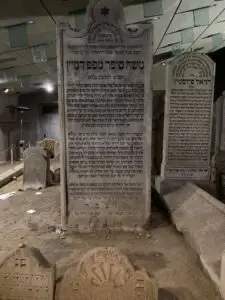
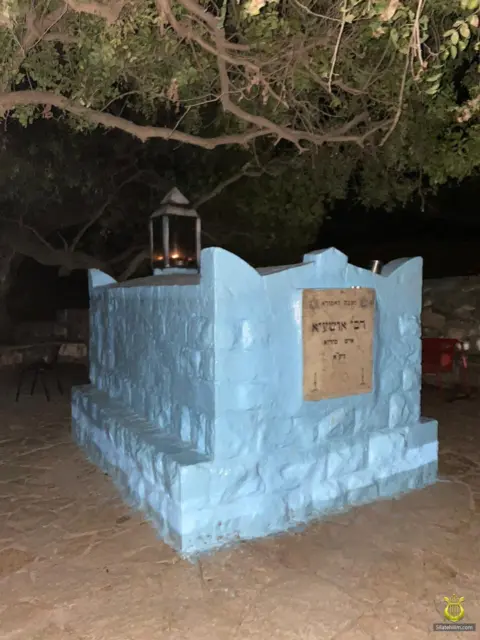
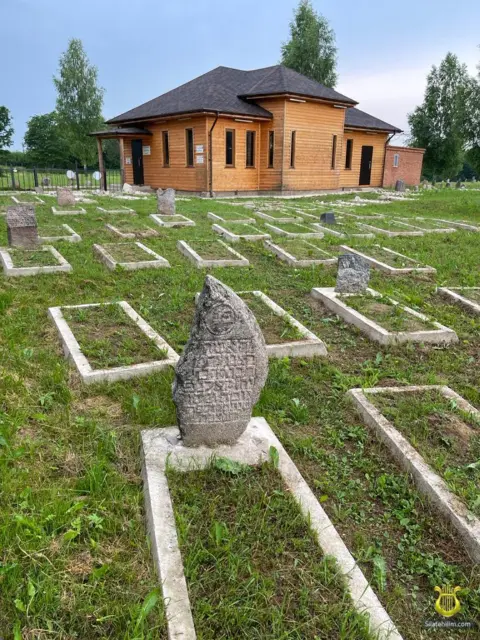
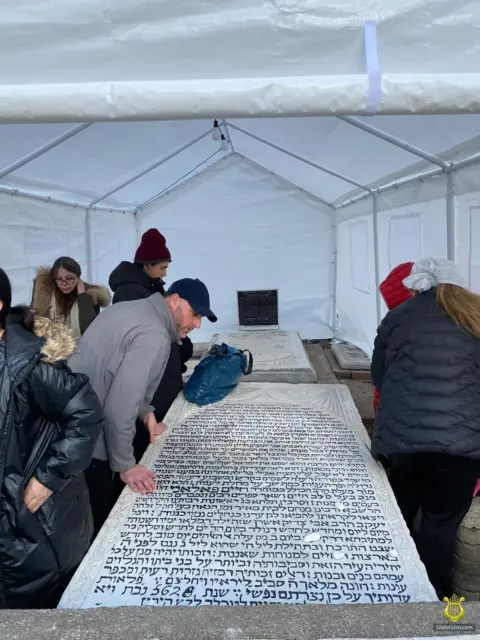
Grave
Maharam of Lublin
Rabbi Meir ben Gedaliah - Maharam of Lublin (1558–1616)
Yahrzeit -
Burial place - Lublin, Poland
Rabbi Meir ben Gedaliah of Lublin was a major figure in the Golden Age of Torah study in Poland in the second half of the 16th century. He was born in Lublin and was a student of Rabbi Shalom Shachna; he also studied under Yitzchak HaKohen Shapiro of Krakow, whose daughter he married. In 1582 he founded a yeshiva in Lublin, and five years later became rabbi and head of the yeshiva in Krakow. In 1595 he moved to Lvov, where he served as a dayan (rabbinical judge) and head of the yeshiva.
Widowed in 1604, Rabbi Meir married the daughter of Pinchas HaKohen of Fulda. In 1611, a legal dispute broke out in Lvov between the Maharam and Rabbi Yehoshua HaKohen (Falk) over the so-called "Vienna divorce." As a result, the Maharam returned to Lublin, where he served as rabbi. He was fluent in Polish and, according to some sources, was engaged in moneylending.
"Maharam of Lublin" is also the title of the first of his seven books (collectively called "Seven Candles"), "Manhir Einei Chachamim" (1618). It contains 140 responsa reflecting the social and economic life of Polish Jews. Jews from places as far away as Russia, Italy, and Turkey also sought his advice. He opposed excessive reliance on the Shulchan Aruch and called for every halachic ruling to be clarified based on its source in the Talmud.
The Maharam's second book, "Meir Einei Chachamim," was published in Venice in 1619. It contains innovative rulings and interpretations of the halachic sections of the Talmud, as well as commentaries on Rashi and Tosafot.
Considered highly important, "Meir Einei Chachamim" was subsequently included in most printed editions of the Talmud, appearing at the end of each tractate alongside the commentaries of his contemporaries Shmuel Eidels (Maharsha) and Shlomo Luria (Maharshal).
In his lessons for his students, the Maharam explained the Talmudic texts using a common-sense approach. In his writings, however, he kept his interpretations concise, so that students could grasp the depth and full meaning of the peshat (literal meaning) without pilpul (dialectical reasoning).
(https://encyclopedia.yivo.org/article/1206)