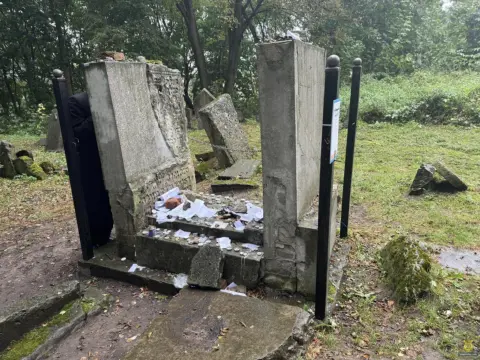
Grave
The Maharal of Tzintz
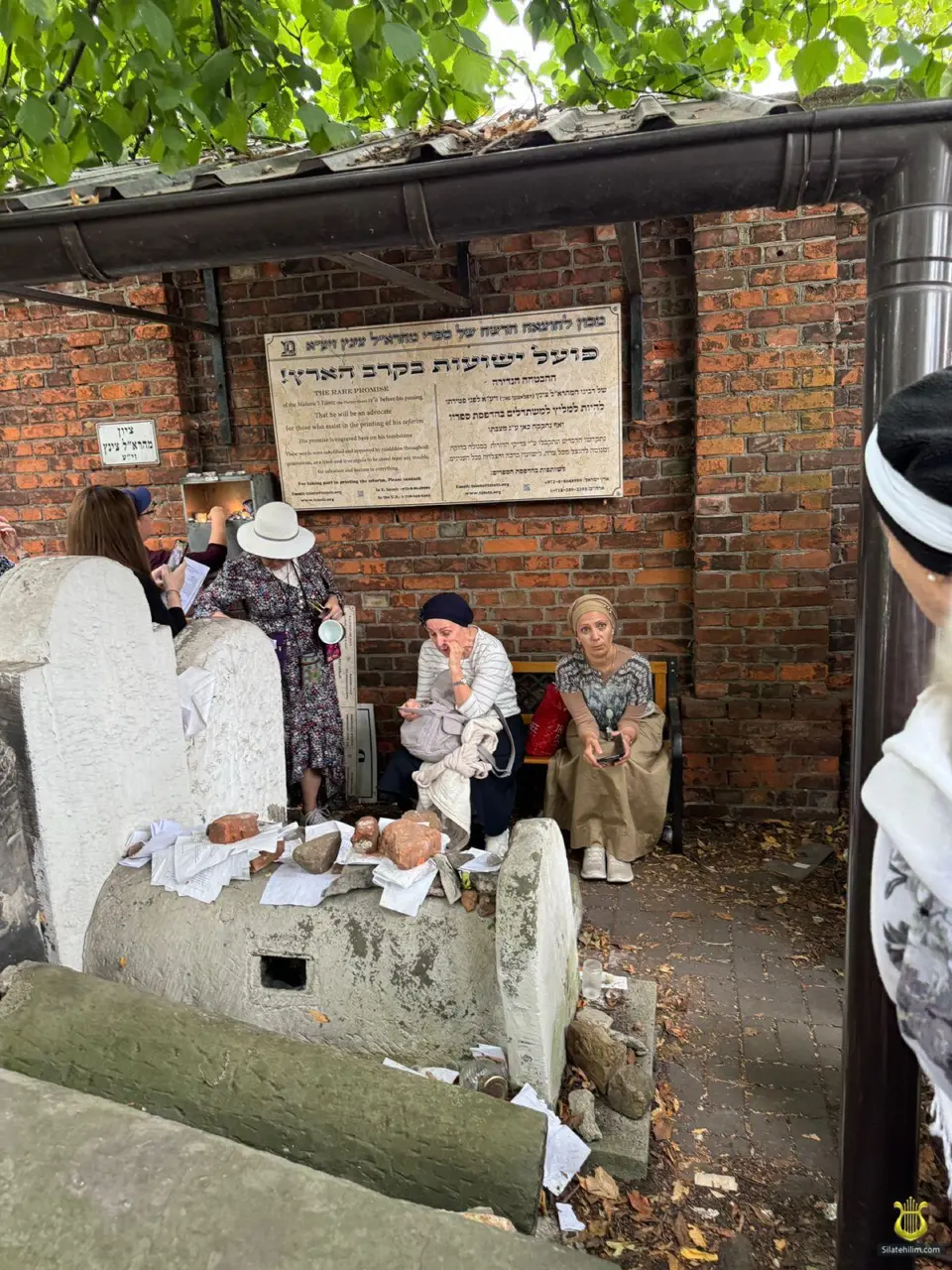
Rabbi Aryeh Leib ben Moshe Tzintz (1768-1833), known as the Maharal of Tzintz or the Gaon of Plotzk. He was a rabbi, dayan, posek, Rosh Yeshiva, and author of many Torah works. He was one of the greatest rabbis of Poland and Eastern Europe in the 19th century.
Yahrzeit - 3 Iyar
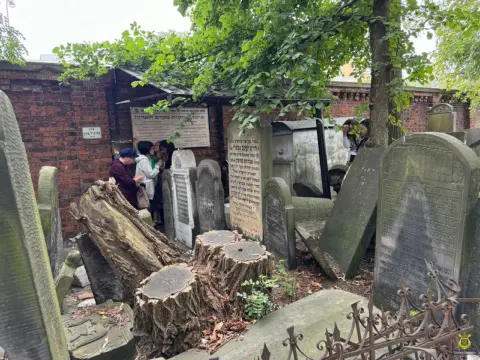
Burial place - Cmentarz żydowski, Warsaw
The Maharal of Tzintz was born in the city of Pinczow, Poland, to Rabbi Moshe Eibeshitz, who grew up in Prague, where he became friends with one of the greatest rabbis of his generation. Rabbi Yechezkel Landau of Prague, author of the "Noda BiYehuda," wrote to him and gave his approbation to his book "Yechelet Chen."
Several years later, Rabbi Aryeh left Prague for Pressburg, where he spent the years 1793-1797. After that he returned to his homeland, and in the year 5787 he was called to Plotzk to serve as rabbi and head of the rabbinical court, after which he became known as "Der Platzker Gaon" (the Gaon of Plotzk). He served as rabbi and Av Beit Din in other towns as well: Ciechanow, Makow, Nasielsk, and Pultusk. It is not known exactly how many years he served in each community or when he moved from place to place. He later moved to Warsaw, where he declined to serve in an official government position and refused to serve as chief judge of Warsaw.
He was the author of the following works:
"Yechelet Chen" (Zolkiev, 1802), homilies on various parshiyot;
"Get Mekushar" (Warsaw, 1812), a compendium on the section of the Rambam's Yad HaChazakah dealing with divorce;
"Magen HaElef," also called Shem Chadash (ibid., 1817), on the laws of the ritual code relating to the Passover holiday (this work includes notes on the Machatzit HaShekel of Samuel HaLevi Kolin);
"She'elot U'Teshuvot Gur Aryeh Yehuda" (Zolkiev, 1827), a compendium on the four sections of the ritual codes.
A Testament-Segula
These were the final moments of the holy Gaon Rabbi Aryeh Leib Tzintz, also known as "the Maharal Tzintz" or the "Gaon of Plotzk."
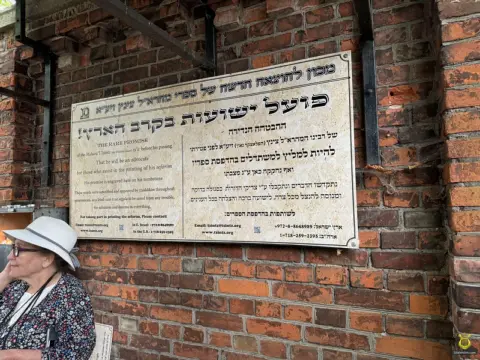
Around his bed stood his greatest students, among them the Chiddushei HaRim of Ger, the Rebbe of Ciechanow, and Rabbi Yaakov Gezuntheit. Fear and awe filled the room, trembling and tension could be felt; soon the great soul would leave the pure body and ascend to dwell in a holy and pure abode. The atmosphere of Yom Kippur pervaded the room, like the prayers of Ne'ilah. The students looked upon their Rebbe, the one who had taught Torah to thousands and brought salvation to all who knocked on his door. The tzadik's lips murmured ceaselessly. Some of the students leaned their ears toward him and heard: "What difference does it make whether I study Torah here or there, in the Upper World?" Suddenly, with renewed strength, he awoke. His eyes opened wide, and the tzadik pointed with his holy hand to a wooden board in the corner of the room and asked that it be brought to him. With his last strength he engraved on it the text he wished to have written on his gravestone. His students watched his every move and were astonished to see him write:
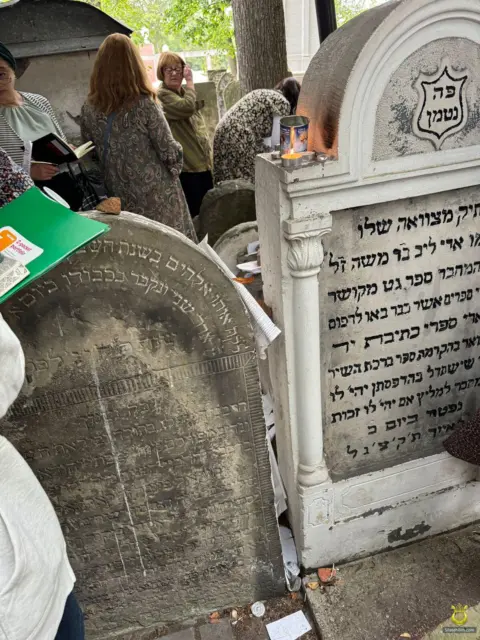
"Whoever helps publish my books, the author will be his advocate!"
His close disciple, Rabbi Menachem Mendel of Radzyn, expressed astonishment at this enormous promise, which has no equal in the history of the greatest and most righteous. The Maharal Tzintz then continued to say:
"No man hangs a sign on his shop if he has nothing to sell."
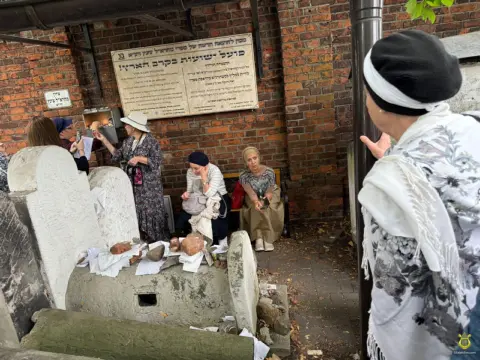
The text of this extraordinary promise, unparalleled among the giants of Torah, is engraved on his gravestone to this day at the ancient cemetery of Warsaw, which for hundreds of years has survived even the worst of times, and is read by thousands of people who flock there in search of salvation.
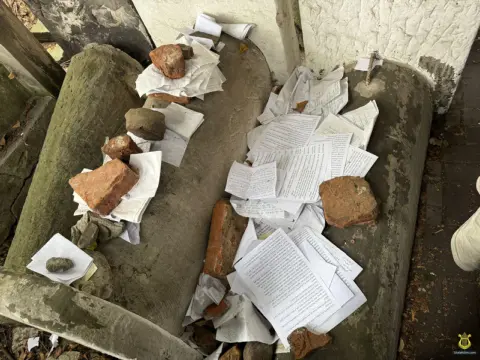
From the time of his passing to this very day, through the printing of his books, thousands of people have witnessed miracles and been saved from many afflictions. The sick have been healed, the lonely have found their spouses, while others have found salvation in their livelihoods and success in all areas.
Gallery