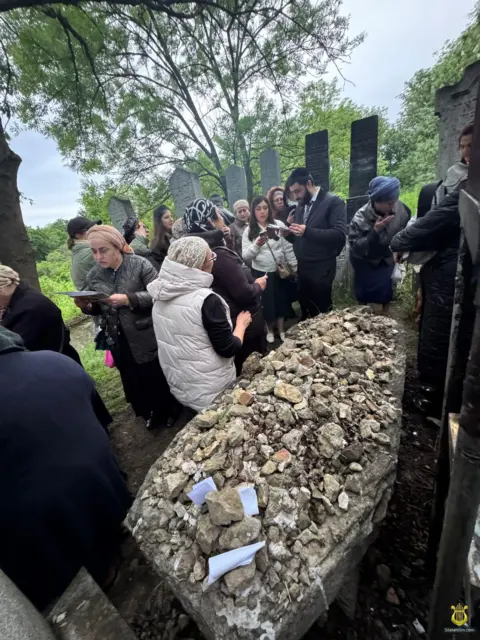
Grave
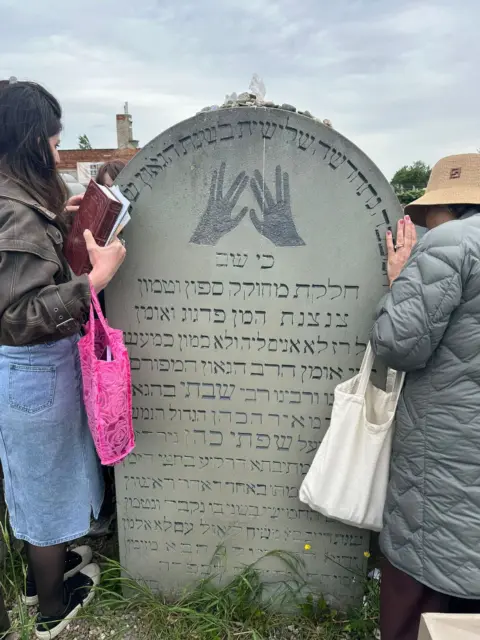
Shabtai HaKohen
The Shach - Siftei Kohen
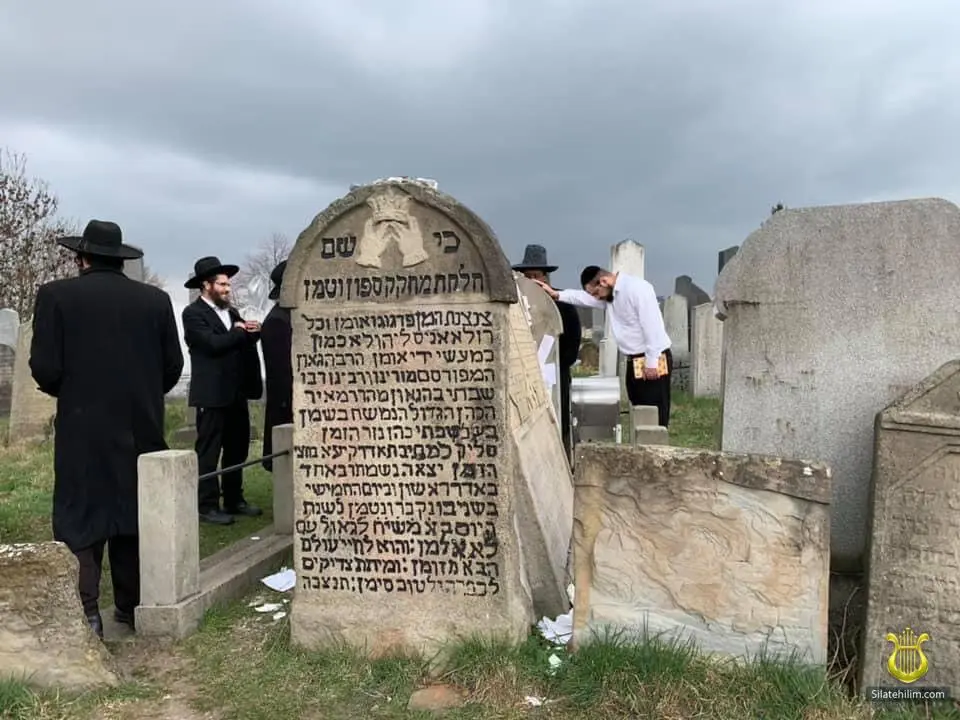
Yahrzeit (Hillula)
- 1 Adar — Rabbi Shabtai HaKohen - Shach - "Siftei Kohen"
The Daughter of the "Siftei Kohen"
For the Jewish communities of Europe this was a terrible time. Internecine wars raged everywhere, and the leader of the rebels — Bogdan Khmelnitsky — and his comrades, venting their fury upon the Jews, spared neither women nor children. Entire communities perished in the pogroms carried out at the will of the wicked Khmelnitsky in 1648-1649 (5408-5409 according to the Jewish calendar).
In this terrible time, Rav Shabtai Kohen, known to us as the Shach (an acronym derived from the title of his book "Siftei Kohen"), sat at the bedside of his gravely ill five-year-old daughter. Shortly before, his beloved wife — the girl's mother — had passed away, and now his only daughter was struggling desperately against death. He sat by the girl's bed and studied Torah. Rav Shabtai was so absorbed in the text that he neither heard nor noticed anything around him. Suddenly, beneath the window of his house, a heart-rending cry rang out: "The bandits are coming! Save yourselves, whoever can!"
Without a moment's hesitation, Rav Shabtai snatched up his sick daughter, wrapped her in a blanket, and rushed out of the house. Behind him rang the cries of people being beaten and the smell of a fire beginning to spread.
Where is my daughter?
The fear of being caught was so great that the poor father ran with all his strength, without looking back and without allowing himself to catch his breath. His only wish was to save himself and his little daughter from the pogromists. The girl was too weak to endure this running; from the jolting she lost consciousness, and her breathing grew more and more labored with every minute. Rav Shabtai heard the clatter of hooves behind him and understood that he would not be able to escape. Without stopping, he began to look around for a hiding place for himself and the child. But the girl slipped from his shoulder. He no longer had the strength or the time to flee — the riders were too close. The poor father laid the girl on the ground, covered her with branches, hid himself a little way off, and began to pray that neither he nor the child would be noticed.
When the riders had galloped away and the danger had passed, he came out of his hiding place to retrieve the child. But the girl was nowhere to be found! The poor father was terrified. He began digging through the snow, hoping to find his treasure, but it was all in vain... In utter helplessness he fell to the ground and wept.
In the Royal Palace
At that very same time, while Rabbi Shabtai was fleeing with all his might from his pursuers, a royal hunt was taking place in the forest. Hearing the clatter of hooves drawing near behind him, Rabbi Shabtai concluded that Khmelnitsky's band had caught up with him, and hid. In fact, the riders were none other than the Polish King and his retinue. Seeing a little girl wrapped in a blanket lying on the snow, the King thought she was dead. He ordered that this be verified, and when one of the soldiers lifted the blanket, it turned out that the child was still breathing. Among the King's retinue was the court physician. He attended to the girl, revived her, and the King ordered that the child be taken to the palace.
Once in the palace under the doctors' care, the girl fought long for her life, but in the end the illness receded, and the child recovered.
The royal couple were surprised to learn that the little girl refused to eat food from their table, and that her only nourishment consisted of vegetables, fruit, and bread. The King wished to settle the fate of the unfortunate orphan and began looking for adoptive parents for her, but the princess, the king's only daughter, persuaded her father to let the girl stay at the palace. The princess declared that she needed a friend, and that the little girl was perfectly suited for this role.
After thinking it over, the King agreed. Deep down, he hoped that in time the girl would forget her roots, and then she could be baptized and formally adopted.
The king's daughter and the daughter of the author of "Siftei Kohen" grew up side by side, like two sisters. They were very similar both in character and in their interests; the only thing that distinguished them from one another was their culinary preferences.
Rumors about a Jewish girl living in the palace of the King of Poland who refused to eat non-kosher food reached the local Jewish community as well.
One day the girls went out to stroll in the palace garden. Tired, they sat down on the grass. Suddenly, the Shach's daughter pulled her friend and patroness's hand with such force that the princess cried out and jumped up. A moment later it became clear that the girl had saved the princess from a terrible fate: right where the king's daughter had been about to sit was a poisonous snake.
This incident bound the princess even more closely to her friend.
Time passed, and the girls grew up into beautiful young women. The Shach's daughter captivated everyone with her beauty, intelligence, and charm.
I will not abandon my faith!
Gradually, the priests at court began to try to persuade the Jewish young woman to abandon her faith, but the rabbi's daughter held firm: despite all the kindness of the royal family and all the years spent in the palace, she had not forgotten her roots and would never, for anything in the world, betray her people and the memory of her parents. The priests would not leave her alone, and it became clear that she had only one way out: to flee the palace.
As soon as this decision was made, the young woman was presented with a perfect opportunity to carry out her plan: a fire broke out in the palace. The very wing where her room was located burned down. In the general commotion, no one noticed that the king's ward had slipped out of the burning part of the building and rushed to the fence around the royal garden. Despite the general panic and danger, the young woman did not forget to lock the door of her room, so as to create the illusion for the royal family that she had burned alive. If Their Majesties and the princess believed she was dead, then no one would search for her, and she could finally live as befits a Jewish girl.
Over these years Rav Shabtai had changed many communities and cities, but wherever he went, he never lost hope of finding his lost child. Once, during his wanderings, he found himself in Poland, in a town not far from the royal residence. The local Jews told him about a Jewish girl being raised in the king's palace. Hearing a description of her appearance and her age, Rabbi Shabtai was filled with hope: it seemed to him that he had finally found his daughter. But his joy suddenly turned to grief: news reached the town of a fire in the palace and that the king's ward had burned to death. Rabbi Shabtai understood that this time the hope of a reunion was lost forever.
The Rescue of Polish Jewry
The brave Jewish girl's lot brought her severe trials. First, after fleeing the palace, she fell into the hands of bandits, who decided not to let such a tasty morsel slip by and approached the local Jewish community with an offer to ransom the girl. The Jewish community doubted whether they would be able to raise the ransom — so great was the sum demanded. But one of the wealthy Jewish townsmen agreed to pay the entire amount on the condition that she come to live in his house and, when she came of age, become his wife.
And so it happened. Many years passed. The Shach's daughter learned that the prince who had married her crowned childhood friend, having inherited the throne of the Kingdom of Poland, had issued decrees imposing heavy taxes on the Jews of the kingdom and demanded of them an enormous sum to be paid into the treasury. And if the Jews did not pay, exile awaited them.
When it became clear to our heroine that there was no other way, she went to the castle and requested an audience with the princess — now the queen — her friend and protector from her youth. The young woman told her how she had left the castle and what had happened to her since, and asked the queen to intervene and rescind the terrible decree directed against all the Jews of Poland. The queen, who remembered well her friend and rescuer, persuaded her husband to rescind the decree. She also sent rich gifts to her compassionate and courageous friend from her youth.
The Long-Awaited Reunion
A few years later, Rav Shabtai came to the town where his daughter lived. Members of the community asked him to speak words of Torah in the synagogue, and when the Jews heard Rav Shabtai's discourse, they understood that a great sage stood before them. The Shach's daughter, hearing of the important guest, persuaded her husband, who was respected throughout the community, to invite the rabbi to dine with them. The meal was magnificent, but neither the hostess nor the guest recognized in one another their own flesh and blood. During the feast, the master of the house asked the guest to speak words of Torah. He began chanting lines from the Gemara in the traditional melody, and to everyone's astonishment, the hostess fainted. When she was revived, the guest related that long ago he had had a little daughter, but she had been lost. And when he had already despaired of finding her, it turned out that she had been living all this time in the royal palace, but he had never managed to meet her, because there had been a fire in the palace, and the girl had died. Hearing her guest's story, the mistress of the house understood why the rabbi's chanting had affected her so: before her sat her own father! And the very words with which he had begun his learned discourse were the same passage he had once studied, many years before, beside the bed of his sick five-year-old daughter. It is impossible to describe the joy with which the young woman cried out: "Father! I am your daughter! I was the one lost in the forest that day!"
The husband, the father, and the guests were overcome with astonishment and gave thanks to the Al-mighty for His kindness. And people said: "It is no wonder such miracles happened to her — for in her whole life, even as a very small girl, she never once ate forbidden food!"
From that day on, Rabbi Shabtai ceased his wanderings and settled near his daughter, his son-in-law, and his grandchildren. Rabbi Shabtai bar Meir HaKohen published many books, which were printed with funds provided by his daughter and son-in-law.
May the merit of this tzadik protect our people! (With gratitude to Ha-Shem for the trip to the graves of the tzadikim in Poland and the Czech Republic with the Gaon — Rosh Yeshiva of "Yodei Bina," Rav Yaniv Assuri)Gallery