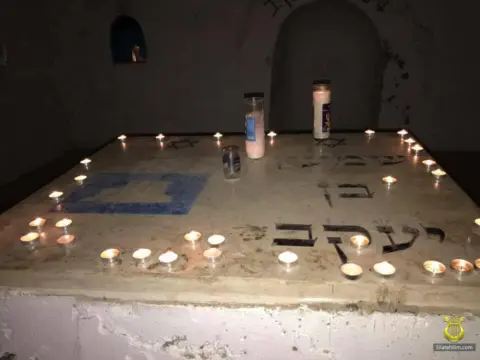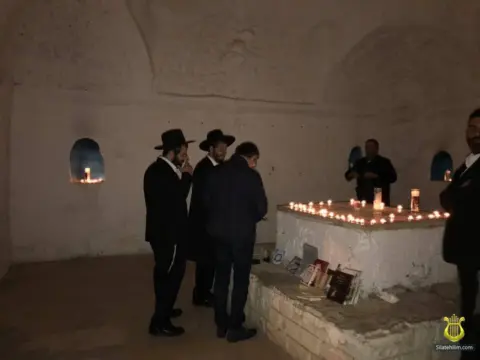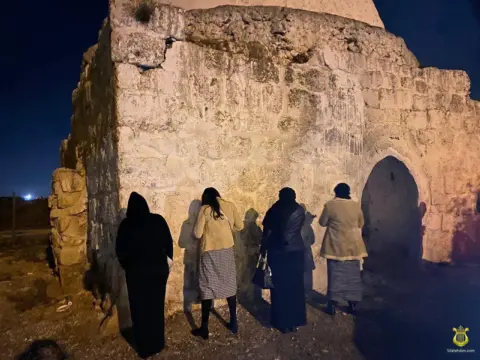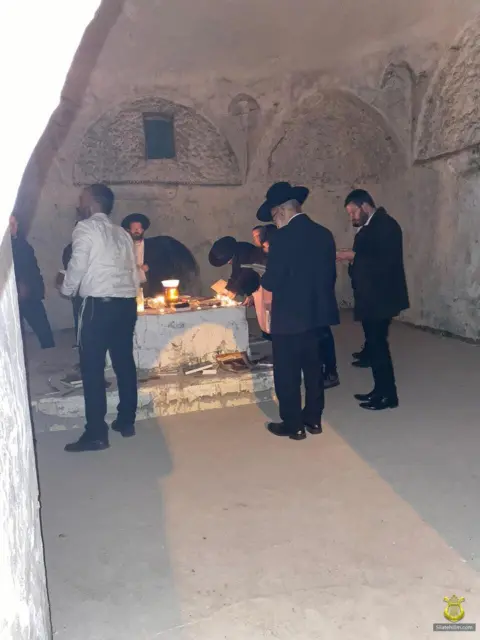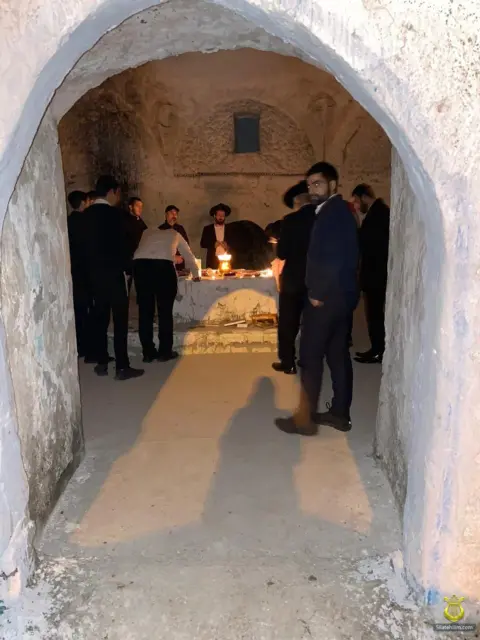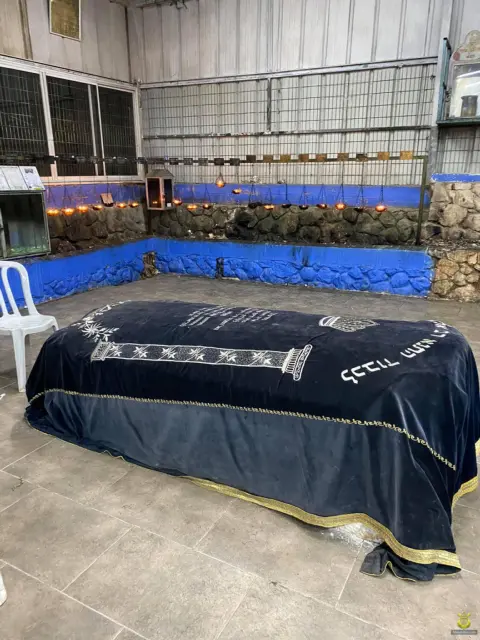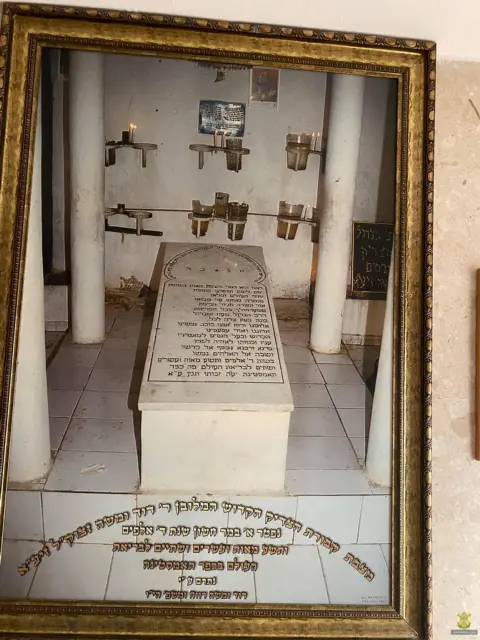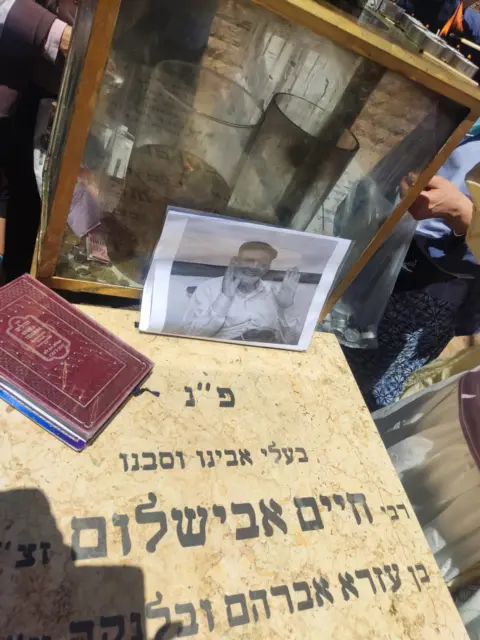

Grave
Shimon ben Yaakov Avinu
12 Tribes
Yahrzeit (Hillula)
- 24 Kislev — Yahrzeit/Hillula of Shimon ben Yaakov Avinu - 12 Tribes
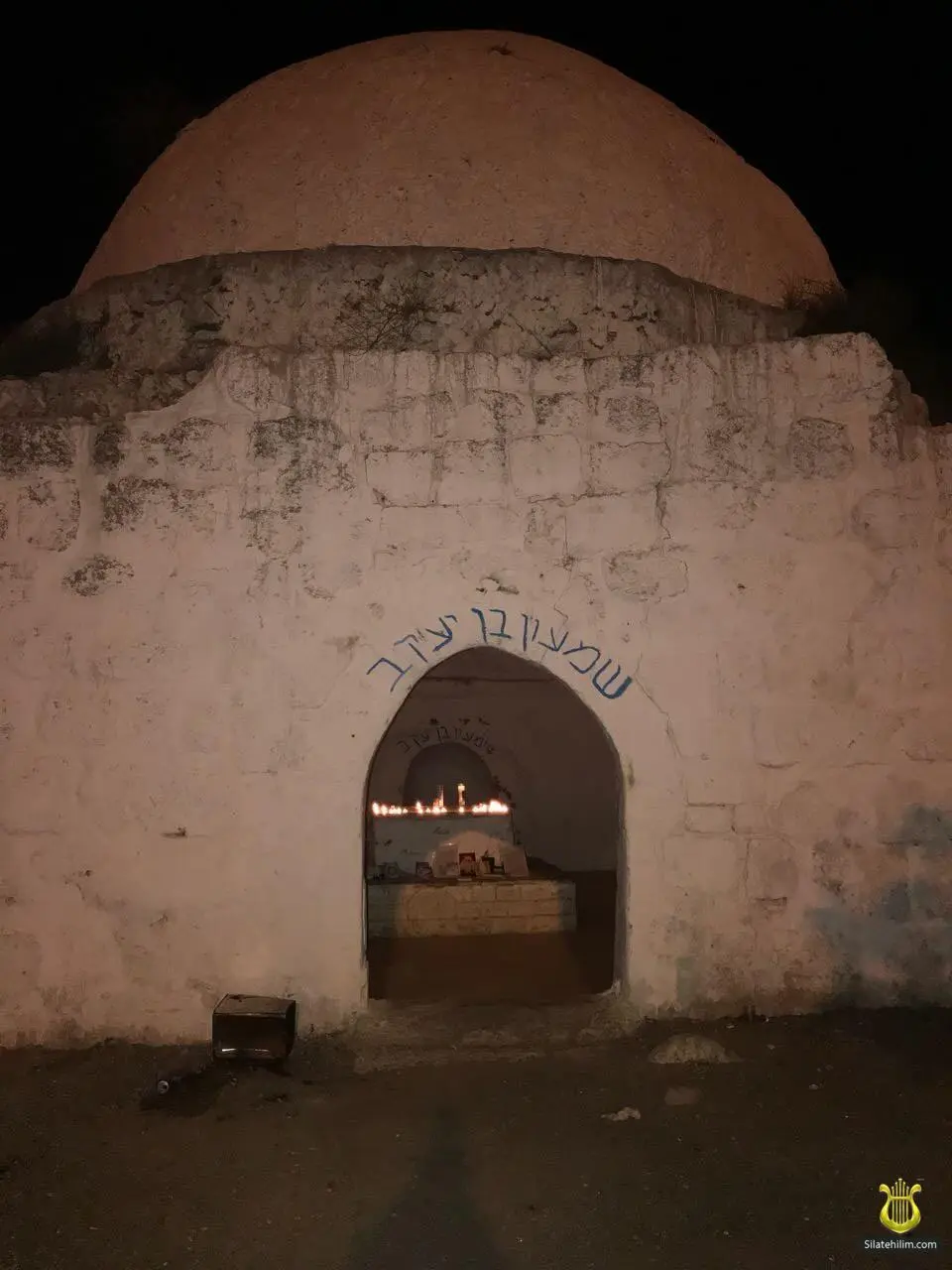
Burial place - near Kfar Saba
Yahrzeit - 24 Kislev
Shimon was the son of the patriarch Yaakov and the matriarch Leah.
He was born in Haran on the 28th of Tevet, in the year 2193. (Bereishit 29:33; Yalkut Shimoni, Shemot 162; Seder HaDorot HaKatzar)
According to the Torah, the name given to him was connected to the words his mother Leah spoke after his birth: "G-d has heard (שָׁמַע — shama), and He has given me this son." (Bereishit 29:33)
Later the family moved from Haran to the land of Canaan and encamped near the city of Shechem.
Shimon died at the age of 120 (Yalkut Shimoni, Shemot 162). Shimon and Levi were buried in Metzada. The city itself was given as an inheritance to the children of Shimon, while the open land around it was given to the children of Levi. (Sefer HaYashar, end of Yehoshua)
At the end of the year 2206, tragedy struck: the son of the king of Shechem abducted the seven-year-old Dinah, daughter of Yaakov, who had gone with her mother into the city for a women's festival. After violating the girl, he came with his father to Yaakov's camp to ask for Dinah as a wife. Following Shimon's counsel, the brothers answered cunningly: "We cannot give our sister to an uncircumcised man — it would be a disgrace to us! Only if all your men are circumcised will we be entitled to give you our daughters — then we will settle among you and become one people." (Bereishit 34:1—17; Sefer HaYashar, Vayishlach; Seder HaDorot)
On the third day after all the men of Shechem had been circumcised by order of their king, the thirteen-year-old Shimon and his younger brother Levi carried out their plan, leaving not a single man alive. (Bereishit 34:25—29; Bereishit Rabbah 80:10)
When Yaakov, who believed that only the king's son who had committed the violation should have been killed, bitterly rebuked his two sons: "You have brought trouble on me, making me odious among the inhabitants of the land…" — Shimon and Levi answered uncompromisingly: "No one is allowed to treat our sister like a harlot! Let people not talk about how uncircumcised idolaters defiled the daughter of Yaakov — let them talk instead about how uncircumcised idolaters were slain for the sake of the daughter of Yaakov!" (Bereishit 34:30-31; Targum Yonatan, Bereishit 34:31; Sefer HaYashar, Vayishlach; Ramban, Bereishit 34:13)
When Shimon came to the palace of the Shechemite heir to retrieve his sister, she was in despair, fearing that no one would want to marry a woman who had been dishonored. Then Shimon, showing great compassion, swore to marry her himself, and afterward he could not go back on his oath. (Bereishit Rabbah 80:11, Etz Yosef)
His second wife was the young Buna, who was among the women and girls taken captive in Shechem. (Sefer HaYashar, Vayishlach)
In time, Shimon had five sons from Dinah: Yemuel, Yamin, Ohad, Yachin, and Tzochar, as well as a son from Buna — Shaul. (Bereishit 46:10; Sefer HaYashar, Vayeshev; Seder HaDorot)
Some say that Shaul was also a son of Dinah. (Bereishit Rabbah 80:11; Rashi, Bereishit 46:10)
Shimon also played a highly significant role in the trial of Yosef, whom the brothers suspected of seeking to unlawfully seize power over the whole family of Yaakov. This trial took place near Shechem in the year 2216, and it was Shimon who demanded the death penalty for Yosef. (Bereishit 37:19—20, Targum Yonatan; Sefer HaYashar, Vayeshev; Rashi, Bereishit 42:24)
And when the brothers decided not to kill Yosef with their own hands but to throw him into a deep pit, it was Shimon who pushed him down. (Bereishit 37:24; Bereishit Rabbah 84:16, 91:6; Rashi, Bereishit 42:24)
Commentators emphasize that Shimon and the other brothers acted purely for the sake of Heaven, fearing that Yosef's "reports" would exclude them from their father's spiritual inheritance, preventing them from becoming the forefathers of the people of Israel. (Michtav MeEliyahu 5, p. 136)
Furthermore, the brothers kept a prophetic tradition that in the future the Jewish people would be united around kings from the line of Yehuda, not from the line of Yosef. Therefore they judged him as a rebel rising up against the rightful king of Israel. (Shelah, Tzon Yosef; Mima'amakim, Bereishit 32)
And when passing Midianite merchants pulled Yosef out of the pit, it was Shimon who stopped them and demanded the captive be returned so that the death sentence could be carried out. But the merchants persuaded the brothers to sell Yosef to them, and at the insistence of Yehuda, supported by the other brothers, the deal went through against Shimon's will: thus was fulfilled the plan of G-d, who did not want the sons of Yaakov to kill their brother. (Bereishit 37:28; Sefer HaYashar, Vayeshev; Anaf Yosef, Bereishit Rabbah 91:6).
In the year 2236 /1524 BCE/ a famine broke out in the land of Canaan due to drought and crop failure, and Shimon set out for Egypt together with nine brothers, where grain was rumored to be available. (Bereishit 42:1—3; Seder HaDorot) In the Egyptian capital they were suddenly seized by guards and brought before the ruler of the country, who accused them of being spies sent from Canaan. Under interrogation they were forced to reveal that they had left behind in Canaan an elderly father and a younger brother, Binyamin — and then the ruler, taking Shimon hostage, ordered the rest to return home and bring back their younger brother to confirm their story. (Bereishit 42:6—24; Sefer HaYashar, Miketz; Tanchuma, Miketz 8)
The ruler of Egypt (who was in fact Yosef) took specifically Shimon into custody, because it was Shimon who had thrown him into the pit. At the same time, Yosef sought to separate Shimon from Levi, since these two brothers, who together had wiped out the men of Shechem, represented too great a combined force. (Bereishit Rabbah 84:16, 91:6; Tanchuma, Vayigash 4; Rashi, Bereishit 42:24)
On learning that the ruler's choice had fallen on him, Shimon rebuked his brothers: "Just as you once sold Yosef, now you are abandoning me too!" But they answered: "What can we do? Otherwise our families will die of hunger!" "Do as you see fit," Shimon said bitterly. And when they tried to seize him, Shimon put up such resistance that the Egyptian guards recoiled, and only the ruler's son, named Menashe, who possessed superhuman strength, was able to subdue him. (Tanchuma, Vayigash 4; Bereishit Rabbah 91:6; Sefer HaYashar, Miketz)
Before the eyes of his brothers, Shimon was bound in chains and led off to prison (Bereishit 42:24; Sefer HaYashar, Miketz; Tanchuma, Vayigash 4). But as soon as the brothers left the city, Shimon was released, and he lived in the ruler's house as an honored guest rather than a prisoner. (Sefer HaYashar, Miketz; Bereishit Rabbah 91:8; Tanchuma, Miketz 8)
And when, two months later, the brothers returned together with Binyamin, the ruler released Shimon to go with them as well. But then the Egyptian guards seized Binyamin, accusing him of theft. At first the ruler of Egypt ordered that the captured "thief" remain as a slave while the rest of the brothers be released. But after they refused to leave without their youngest brother, the ruler suddenly drove all the Egyptians out of his throne room and, unable to hold back his tears, said: "I am Yosef, your brother, whom you sold into Egypt." (Bereishit 43:15—45:4)
Shimon, together with his father's entire household, moved to Egypt. (Bereishit 46:6; Seder Olam Zuta 4:7)
In the year 2255 /1505 BCE/, when Yaakov blessed his sons before his death, he again reproached Shimon for the sin of his youth — the slaughter of the people of Shechem: "Shimon and Levi are brothers, weapons of violence are their trade. Let my soul not enter their council, let my honor not join their assembly, for in their anger they slew men!… Cursed be their anger, for it is fierce, and their wrath, for it is cruel. I will divide them in Yaakov and scatter them in Israel." (Bereishit 49:5—7, Onkelos)
And then Yaakov blessed Shimon together with all the other brothers. (Bamidbar Rabbah 13:8)
Carrying out their father's final wish, Shimon and his brothers transported Yaakov's body to the land of Canaan and buried him in the family tomb — the Cave of Machpelah.
And then all the brothers returned to Egypt. (Bereishit 50:13—14; Sefer HaYashar, Vayechi; Seder HaDorot)
Shimon died in Egypt at the age of 120 (Yalkut Shimoni, Shemot 162; Sefer HaYashar, Shemot; Seder HaDorot). Later his body was likewise brought out of Egypt and buried in the city of Megada, located within the territory of his tribe. (Sefer HaYashar, Yehoshua; Seder HaDorot)
Shimon's descendants formed one of the 12 tribes of Israel, and together with the tribes of Reuven and Levi, they did not serve idols in Egypt. (Bamidbar Rabbah 13:8)
In the Sinai desert, in the second year after the Exodus from Egypt, the tribe of Shimon numbered 59,300 men aged twenty and above, and was one of the largest tribes (Bamidbar 1:23). Together with the tribes of Reuven and Gad, it belonged to the camp of Reuven, which was stationed to the south of the Tent of Meeting. The banner of the tribe of Shimon was green, bearing the image of the wall of the city of Shechem. (R. Bachya, Bamidbar 2:2)
About 24,000 men from the tribe of Shimon died in the plague that broke out because of the sin of Zimri ben Salu, one of the tribe's leaders. (Bamidbar 25:6—14, Rashi; Bereishit Rabbah 99:7) And before entering the Land of Israel, this tribe turned out to be the smallest — only 22,200. (Bamidbar 26:7)
When the Land of Israel was divided, Shimon's descendants received "an inheritance within the inheritance of the sons of Yehuda" (Yehoshua 19:1). Their towns were scattered throughout the territory of the tribe of Yehuda and were far apart from one another — in accordance with the patriarch Yaakov's deathbed prediction: "I will scatter them in Israel." (Ramban, Bereishit 49:5—7)
Among Shimon's descendants there were especially many teachers of Torah and Torah scribes (sofrim). (Rashi, Bereishit 49:7) According to one tradition, Rabbi Shimon bar Yochai (the Rashbi), who wrote the foundational work of Kabbalah, the Zohar, descended from the tribe of Shimon. (Shivtei Nachalatecha p.53—54)
The Gilgul of Shimon and Dinah
Our Sages teach that during the period from Pesach to Shavuot, 24,000 students of Rabbi Akiva died in an epidemic (some say specifically from Pesach to Lag BaOmer).
In the Book of Bereishit we learn of the terrible story of the abduction and violation of Yaakov Avinu's daughter Dinah by the prince Shechem ben Chamor.
Shimon and Levi, upon learning of her abduction, came to Shechem and, in exchange for Shechem's wish to keep their sister as his wife, proposed a condition — that all the men of Shechem be circumcised. On the third day after the men of Shechem had been circumcised, Shimon and Levi entered the city and killed 24,000 men of Shechem. Shimon rescued Dinah and married her, and from their union Shaul ben HaCana'anit was born.
Midrash Tanchuma on Pinchas says: "Zimri had three names: Zimri ben Salu, Shaul ben HaCana'anit, and Shlumiel ben Tzurishaddai."
Shaul ben HaCana'anit, the son of Shimon and Dinah, is Zimri — the gilgul of Shechem ben Chamor.
Shechem returned in the gilgul of the son of Dinah and Shimon. Later he was reincarnated again and returned as Zimri, the leader of the tribe of Shimon.
Dinah is reincarnated as the princess Cozbi bat Tzur, daughter of Balak, king of Moab.
Balak understood that Bilaam could not curse Israel, so Bilaam advised Balak to induce Israel to sin with the women of Moab, knowing that Ha-Shem hates immorality and punishes it without delay, before other sins.
Balak even offered his own daughter to seduce Moshe Rabbeinu or Elazar the Kohen. They sent young, attractive Moabite and Midianite women to sell the Israelites linen garments and wine.
After 40 years of living on manna and water, the desire for wine was strong, and the Jews were drawn in. At the entrance of the tent an older woman greeted them as a seller — the young woman stood inside. The older woman offered the merchandise and named a price. The young woman, gracious and attentive (as she had been trained), lowered the price and coaxed the buyer with flattering words.
It goes on to say: "And Israel dwelt in Shittim, and the people began to commit harlotry with the daughters of Moab. And they invited the people to the sacrifices of their gods, and the people ate and bowed down to their gods. And Israel joined itself to Baal-Peor."
The outcome was tragic: "…and the anger of the L-rd was kindled against Israel…"
G-d sent a plague upon the Jews, which killed 24,000 people, all from the tribe of Shimon. The survivors from the tribe of Shimon came to their leader, Zimri (the reincarnation of Shechem), and asked him to do something.
What did he do? He took the princess Cozbi, daughter of King Balak. She told him: "I am a princess, and I deserve only one king — Moshe Rabbeinu."
To which he replied: "I outrank him — he descends from Levi, the third tribe, while I descend from Shimon, the second tribe."
Zimri put a provocative question to Moshe Rabbeinu — whether the daughters of Midian were permitted to Jews — to which Moshe Rabbeinu answered: "No — they serve idols."
Then Zimri asked: "Who gave you permission to take the daughter of Yitro from Midian?"
At that moment HaKadosh Baruch Hu silenced Moshe Rabbeinu, and he was unable to answer Zimri.
Why did Ha-Shem do this?
If Moshe Rabbeinu had killed Zimri, Rabbi Akiva would never have been born. Zimri was later reincarnated as Rabbi Akiva.
Whatever Moshe Rabbeinu did became eternal and imperishable.
This is one of the reasons why Moshe Rabbeinu did not enter Eretz Yisrael — had he built the Beit HaMikdash, it would have stood forever. And then Ha-Shem would have been forced to destroy the Jewish people (chas v'shalom) rather than the Beit HaMikdash.
Pinchas saw Zimri and Cozbi sinning; he took a spear, entered the chamber, and pierced them both.
The 24,000 people who died in the plague were the reincarnations of the 24,000 men of Shechem who had circumcised themselves. Even though they had circumcised themselves not for the sake of Heaven, they had nevertheless done it, and this earned them merit, so they were reincarnated again.
There were seven Clouds of Glory that protected Israel. Israel was shielded within these seven clouds, while outside the seven clouds of protection were the Erev Rav.
Since there were no more men left in the tribe of Shimon, the women of the tribe of Shimon married men from the Erev Rav. And the sons born of this union sinned in Canaan and died.
Zimri, the reincarnation of Shechem, had to correct his past mistakes with Cozbi, who was the reincarnation of Dinah. Zimri was 250 years old, and he was one of the 70 people who went down to Egypt with Yaakov Avinu.
At the age of 250, a man has no desire, but he did this to rebuke Moshe Rabbeinu. He felt an enormous connection to Cozbi, and a great mystery is contained in this.
The Zohar HaKadosh explains that all these events are a precursor to the birth of Melech HaMashiach. The Yetzer Hara, which is also the Angel of Death, is very afraid of Mashiach, because when Mashiach comes, its power will be nullified.
This is why Ha-Shem brings Mashiach in secret, out of sin and out of situations that this angel could never even imagine.
Mashiach ben David
The union of Yehuda and Tamar produces Peretz, and from Peretz will come Mashiach. From Moab, from the union of Ruth with Boaz, Oved was born. From Oved comes Yishai, and from Yishai — David HaMelech. From David HaMelech will come Mashiach ben David.
Mashiach ben Yosef
Osnat descends from the union of Shechem ben Chamor and Dinah bat Yaakov; she marries Yosef HaTzadik and from their union Ephraim is born. From this union comes Mashiach ben Yosef.
Pinchas, who is Eliyahu HaNavi, kills Zimri and Cozbi, but they had not yet completed their tikkun. Zimri is reincarnated as Rabbi Akiva, and Cozbi bat Tzur is reincarnated as the wife of Turnus Rufus. The wicked Turnus Rufus hated Rabbi Akiva, and when his beautiful wife asked him what was troubling him, he answered: "Rabbi Akiva!"
Who killed Zimri? Pinchas.
She told her husband that she would take care of it, because Ha-Shem hates lust, and her plan was to seduce Rabbi Akiva, just as Cozbi bat Tzur had done with Zimri. She dressed in seductive clothing and went to Rabbi Akiva. When Rabbi Akiva saw her, he spat, laughed, and wept. She asked him to explain why he had done this, and he told her that he had spat because she had come from a foul-smelling drop of semen, that he had wept because such beauty would one day lie beneath the ground, but he did not tell her why he had laughed.
Through his prophetic vision, he knew that he would marry her. She insisted that he explain why he had laughed, and when he revealed it to her, she married him and gave him all her wealth.
Rabbi Akiva and the wife of Turnus Rufus, Shechem and Dinah, Zimri and Cozbi…
The 24,000 men of Shechem who circumcised themselves, and the 24,000 men of the tribe of Shimon who sinned with the women of Midian — they returned as the students of Rabbi Akiva, in order to complete their tikkun.
These same 24,000 students died in an epidemic in the 50 days from Pesach to Shavuot, because they did not treat one another with respect. Their deaths completed their tikkun.
How did Rabbi Akiva die? His skin was combed off with iron combs.
How did Shechem die? By the sword.
How did Zimri die? By the spear.
What were Rabbi Akiva's last words? "Shema Yisrael."
Zimri caused a great chillul Ha-Shem, and when he was reincarnated as Rabbi Akiva, he corrected this by making a Kiddush Ha-Shem, saying "Shema Yisrael."
(Sources: Tzadikim, Toldot, Silatehilim websites)
Gallery