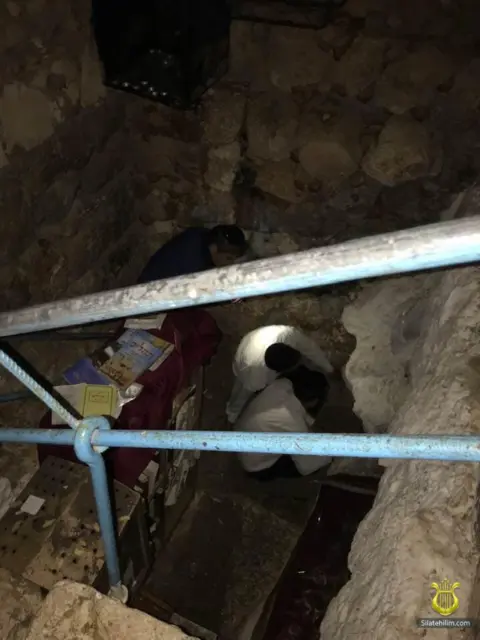
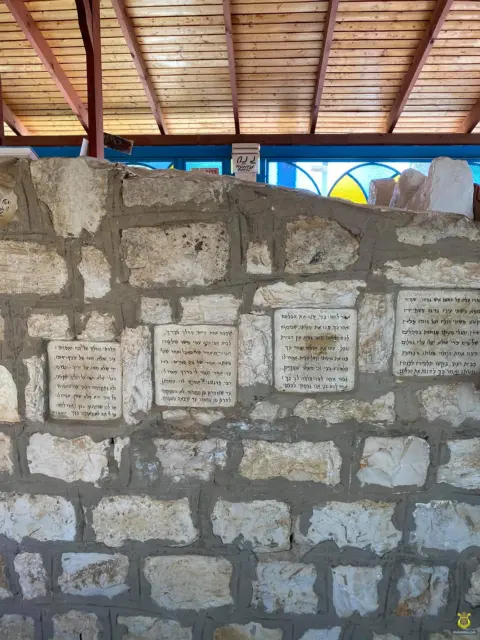
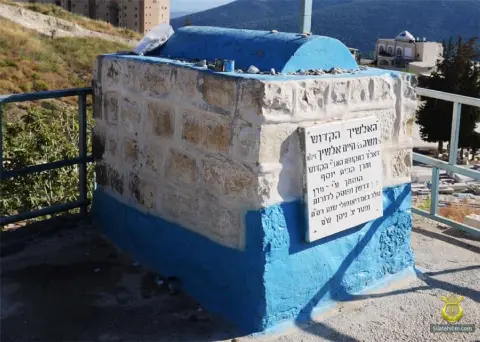
Grave
Nachum Ish Gamzu
Tanna
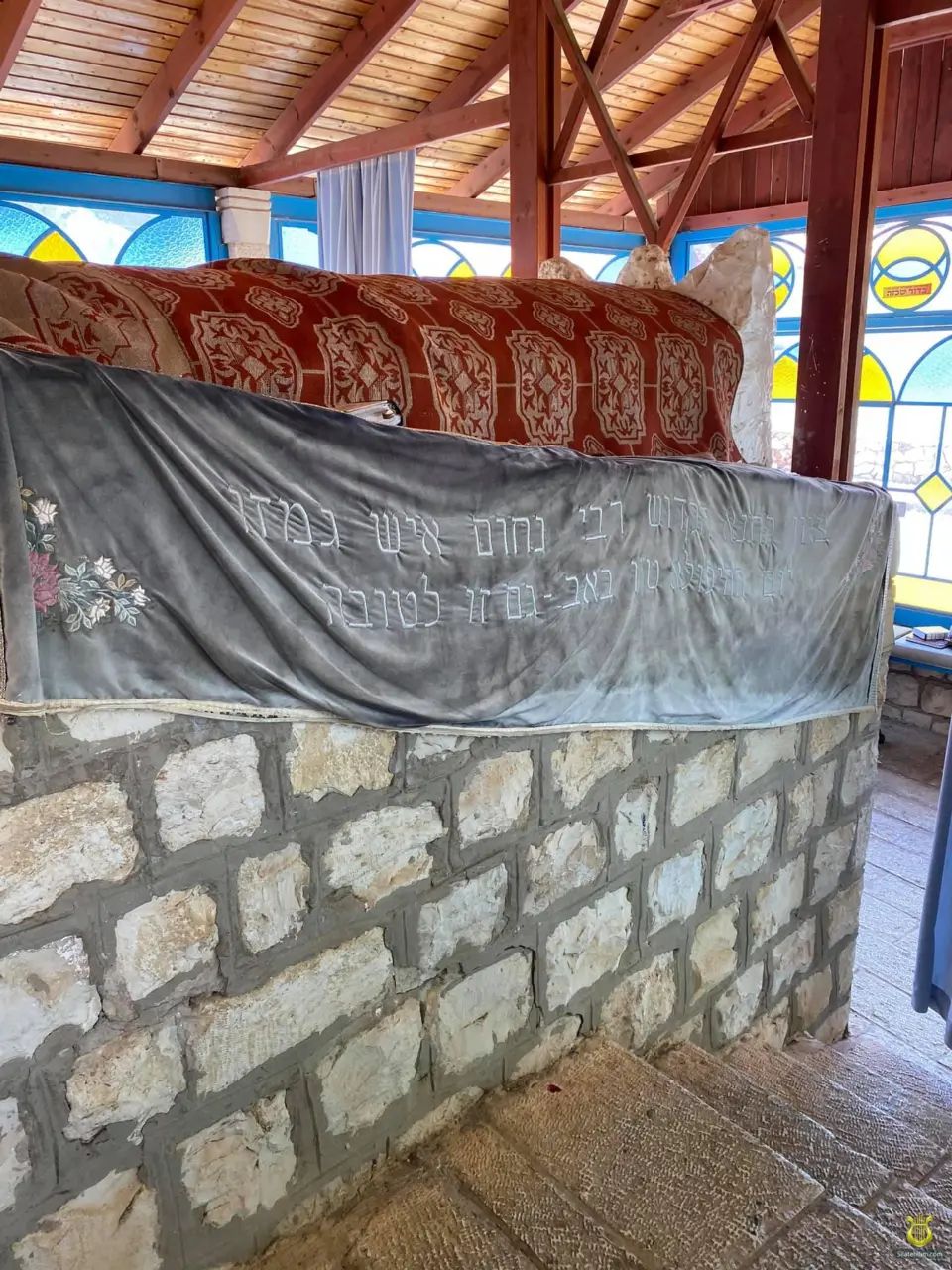
Rabbi Nachum Ish Gamzu was a Tanna of the second generation and was Rabbi Akiva's teacher for 22 years.
His famous phrase, "Gam zu l'tova" (this too is for the good), became his second name.
Yahrzeit - 15 Av
Burial place - Darom, north of Tzfat
Gam Zu L'Tova
When the Roman emperor issued a terrible decree against the Jews living in Eretz Yisrael, the Sages decided to send Rabbi Nachum of Gimzo to defend them before the emperor and ask him to rescind the decree. They provided him with a chest full of precious stones and pearls to present as a gift to the emperor, hoping to appease him.
On the way to Rome, Rabbi Nachum of Gimzo stopped for the night at an inn. From speaking with him, the innkeeper realized that his guest was carrying precious stones in his chest. In the middle of the night, he and his sons crept up to the chest, removed all the precious stones and pearls, and filled it with dirt instead. Nachum of Gimzo woke up early in the morning, took the chest, and continued on his way. Upon arriving in Rome, he asked to be brought before the emperor. He voiced the request of his people's sons to rescind the decree, and presented along with it the gift they had sent.
When the emperor opened the chest and saw that it was full of dirt, his anger flared, and he ordered the Jewish sage thrown into prison. One of the emperor's advisors — the Talmud says this was not merely an "advisor" but Eliyahu HaNavi in the guise of an advisor — came to the sage's defense.
"Do you think the Jews have lost their minds?" he asked the emperor. "After all, they wish to please you and ask a favor of you, so why would they mock you? The Jewish sage surely knows that if he brings you mere dirt, he will pay for it with his life. Therefore, this cannot be ordinary dirt. It must be something special. According to Jewish tradition, their forefather Abraham used special earth to strike down his enemies. He waged war against four powerful kings. How did he manage to defeat them? He took earth, threw it into the air, and the dust turned into swords and arrows. Perhaps the earth the Jews sent you is that very same special earth?"
The emperor agreed to test this earth. At that time, the Romans were unable to conquer a certain province. They decided to take this earth to the battlefield, and indeed, a miracle occurred before their eyes: they threw this earth into the air, and it turned into swords and arrows. The stunned enemy was quickly defeated.
The emperor was very pleased. He ordered Rabbi Nachum of Gimzo released from prison and thanked him for the wonderful gift he had brought from his people. He rescinded the decree he had established against the Jews, and also filled Rabbi Nachum of Gimzo's chest with precious stones and pearls as a token of gratitude, and sent him home with great honor.
Masters of the hidden wisdom say that Rabbi Nachum Ish Gamzu was a gilgul of Lot. Just as Abraham used earth in the battle to save Lot, who had been taken captive, which turned into spears, so too in this case the earth turns into spears and arrows — a weapon that puts enemies to flight.A Tzadik Is Held to a Higher Standard
Sick and blind, Rabbi Nachum spent his last days in a dilapidated, crumbling hut; bowls of water stood under the legs of his bed so that ants would not crawl up to the sick man. His students noticed that the hut might collapse, and said:
– Rabbi, it is dangerous to stay here. Let us carry you outside along with your bed, and then remove all the belongings from the house. But Rabbi Nachum disagreed with them:
– No, my children, take out the belongings first, and only then the bed. As long as I am here, my house will not collapse.
The students did as he said. As soon as they carried out the bed with the sick man on it, the walls and ceiling collapsed. But for what was Rabbi Nachum, a righteous man, punished with blindness and the loss of the use of his hands and feet?
One day he was walking along the road leading a donkey loaded with goods. A poor man appeared on his path and asked: "Rabbi, give me something to eat." Rabbi Nachum replied: "Wait until I unload the donkey." But before he could do so, the poor man fell to the ground and died of hunger. Then the Rabbi cried out: "Let my eyes, which had no pity for your eyes, go blind! Let me lose the hands and feet that had no pity for your hands and feet! Let my body be covered with boils!"
– Woe to us, Rabbi, – his students cried out, – that we see you in such a state! – Woe would it be to me, – Rabbi Nachum answered, – if you did not see me in such a state. It is better to suffer here than to be punished in the World to Come. A tzadik has no rest in this world. When he asks for rest, the Satan comes and says to G-d: "Is it not enough for the tzadik, what is prepared for him in the World to Come? And yet he still asks for something on earth."
Rabbi Nachum Ish Gamzu whispered the teaching of the 9 Kavim to Rabbi Akiva, who later whispered it to his student Ben Azzai, who in turn went and announced it publicly. This teaching states that 9 kavim of water may be poured over a baal keri for purification, as an alternative to immersion in a mikveh. (http://www.yeshshem.com/hilulaav.htm)Gallery