Grave
Rabbi Natan Nata Shapira of Krakow
Megaleh Amukot

Rabbi Natan Nata bar Shlomo Shapira, a great kabbalist, author of "Megaleh Amukot" (revealer of depths).
In his Sefer "Megaleh Amukot" he gave about 1000 explanations on a single pasuk from Sefer Devarim, in Parashat "Va'etchanan": "Va'etchanan el-Ado-nai Ba'et hahi lemor." Only 252 of these commentaries have survived to this day.
Rabbi Natan Nata spread the kabbalistic teachings of the Arizal throughout Poland. Thousands of people followed him as their teacher.
Rabbi Chaim of Sanz said of Rabbi Natan Nata that his powers were so great that when someone merely mentioned the name of a sick person in his presence, that person would instantly recover.
Nasi
The word "nasi" in Hebrew is an acronym for the phrase "Nitzotzo shel Ya'akov Avinu" – a spark of our father Ya'akov, father of the people of Israel (Megaleh Amukot, part 84).
"Nistar"
Rabbi Bunim noticed that ever since the young man Dov came to work in his shop, business had begun to flourish. He attributed this to Dov's diligence and productivity. It had been a good decision to take on another helper, even though the young man was a stranger whom no one in Krakow knew. When Dov offered himself for the job, he asked for only one thing – that he be allowed to go pray at the synagogue morning and evening.
One morning a huge stream of customers poured into Rabbi Bunim's shop. He was helpless without his faithful worker, who was still at the synagogue. "What could he be doing there for so long?" the owner wondered. When half an hour later the young man still hadn't come, Rabbi Bunim decided to go and fetch him himself.
"If he's praying, I won't say a word," he thought.
When Rabbi Bunim burst into the synagogue and found his charge staring at the paintings on the ceiling, he flew into a rage. He walked over and slapped him across the face. It was so loud that everyone around turned to look. Rabbi Bunim felt ashamed and quickly went back to his customers. Young Dov carefully removed his tefillin, put them in their bag, and left the synagogue forever.
He went straight to the rabbi of the city – Rabbi Natan Nata Shapira, who was his close friend – to say goodbye.
"Why are you leaving me?" Rabbi Natan Nata wept with grief.
Seeing that his pleas were of no use, he said: "At least let us part with words of Torah, as befits good friends. I have been working on my book 'Megaleh Amukot,' deciphering 252 explanations for the pasuk in Parashat Va'etchanan: "Al tosef daber elai od badavar hazeh" – (do not continue speaking to Me about this matter), referring to the numerical equivalent of "Rav lach", which also equals 252. Can you offer another explanation of this verse, in which G-d refuses Moshe Rabbeinu's pleas to enter Eretz Yisrael?"
"Yes," answered Dov, "there is one hidden explanation that your work does not reveal. There are 4 divine creatures that support the Heavenly Chariot. The Throne of G-d has 4 pedestals. Moshe Rabbeinu wished to enter the Land of Israel so that, through its holiness, he could become worthy of being the fourth support. The Almighty told him to refrain from mentioning his entry again.
"Rav lach" – (it is enough). The word "badavar" forms the acrostic "Ben David beregel revi'it" – G-d told Moshe to refrain from further prayer, because the fourth pedestal would be King David" – (the first 3 pedestals were occupied by Avraham, Yitzchak, and Ya'akov).
With these words the young man left the Rav of Krakow – the "Megaleh Amukot."
Meanwhile, Rabbi Bunim realized that Dov would never come back to work for him. He regretted his overly hasty reaction. Dov had been a devoted and hardworking employee. How could he apologize for the humiliation he had publicly subjected him to? Rabbi Bunim went to the "Megaleh Amukot" with this problem.
Rabbi Natan Nata already knew everything.
He told him: "Your employee did not even feel the slap you gave him. It meant nothing to him physically. The one you harmed is me. Because of you, I lost a dear friend, a companion, an equal. He is already far from here, and I will never see him again. The only reminder of him is the words of Torah he left me when he departed. That alone remains with me to ease my pain."
Rabbi Natan Nata left this world at the age of 48.
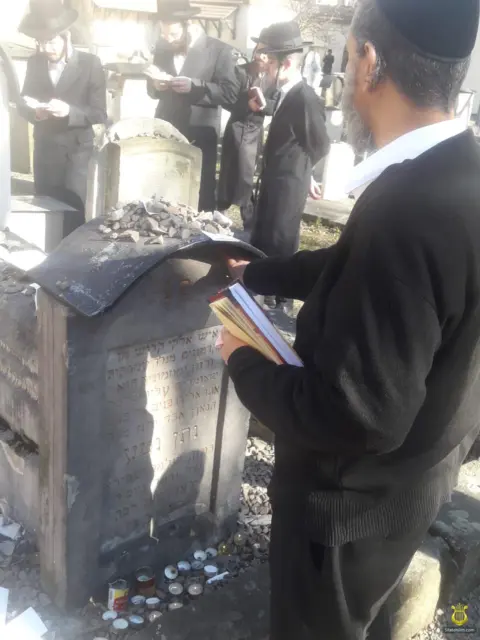
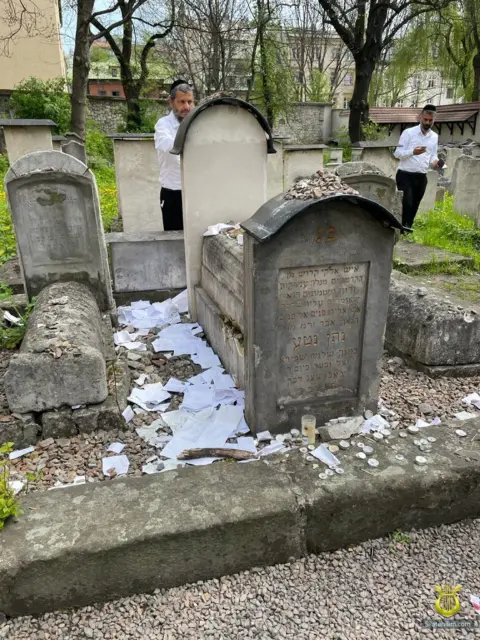
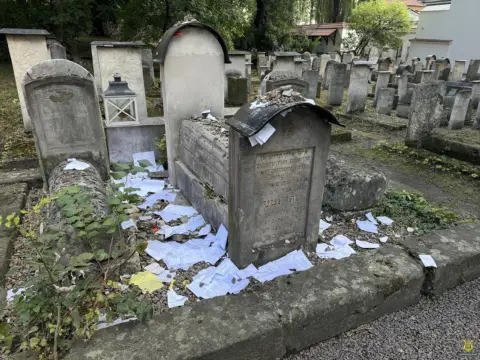
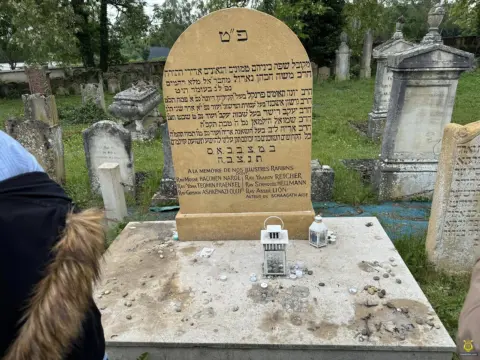
On Rabbi Natan Nata's tombstone is written:
"Here lies buried a G-dly, holy man, like the ancients, who revealed deep and hidden secrets; of whom it is said that the prophet Eliyahu spoke with him face to face – the learned rabbi and Rosh Yeshiva of blessed memory, Natan Nata ben Shlomo Shapira. He passed away on Wednesday, the 13th of Av, 5393 (1633) from the creation of the world. May his soul be bound up in the bond of life."
Yahrzeit – 13 Av;
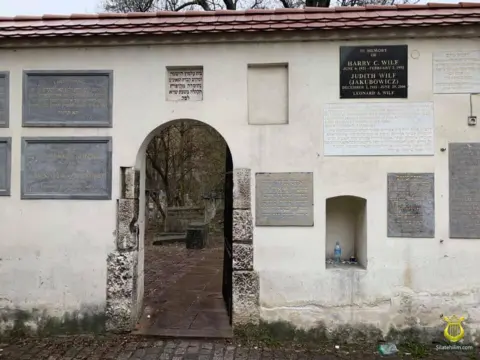
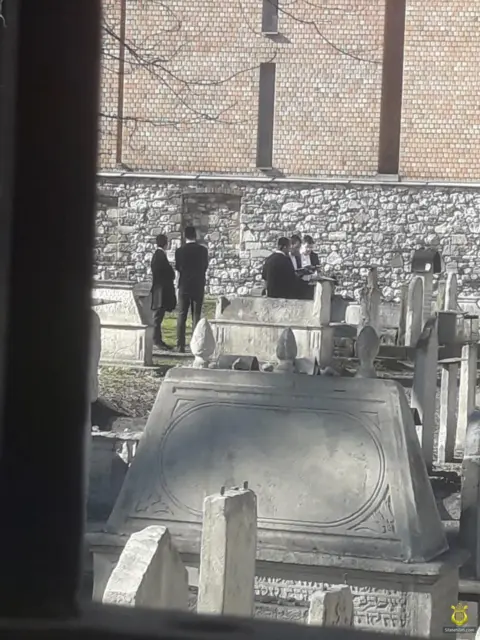
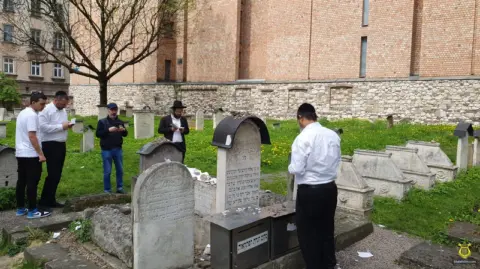
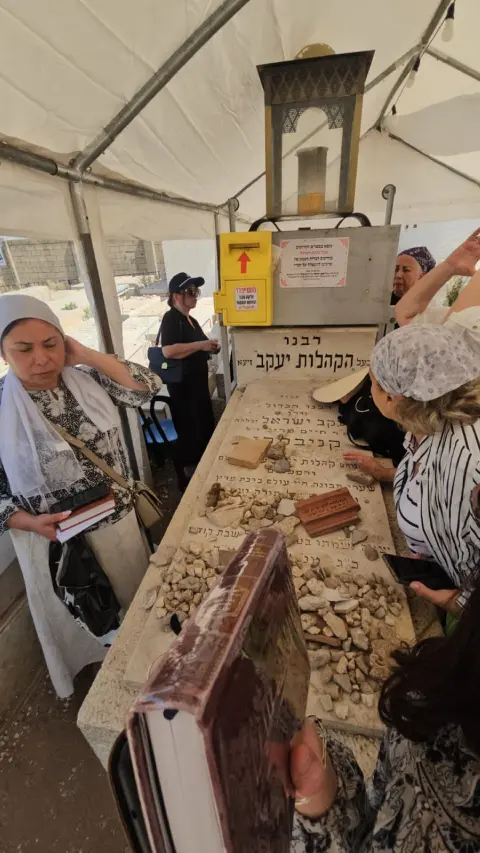
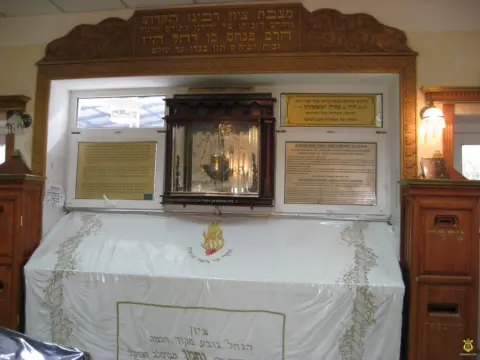
Resting place – Remuh Cemetery, Krakow, Poland
(Photo: Gaon Yaniv Assuri - Rosh Yeshiva of "Yodei Bina")
Segulot
Rav Yisrael Yakobov mentioned in a lesson on Tehillim 90 that Rabbi Natan Nata wrote 1000 commentaries on the first pasuk of Parashat "Va'etchanan." Only 206 commentaries have survived.
In the 203rd commentary, Rabbi Natan Nata says that if a person has gone through difficult trials, illnesses, very severe tzarot, and wants to change the situation, to turn these hard days into good ones – this should be done through Tehillim 90. He explains that this psalm is capable of turning everything bad into good. Moreover, Psalm 90 should be recited several times.
It is remarkable that he passed away during the week of the Torah portion "Va'etchanan" – a hint that he completed his Tikkun, having accomplished the main task of his life.
May the merit of this greatest tzadik protect our people.
(from a trip to the graves of tzadikim in Europe with the Rosh Yeshiva of "Yodei Bina" - Gaon Yaniv Assuri)Gallery