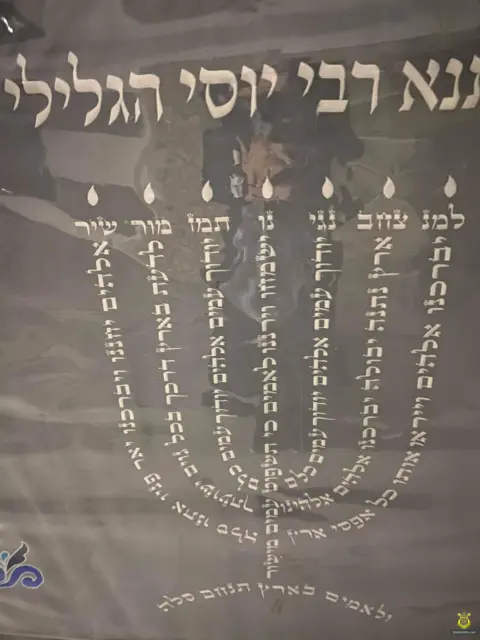
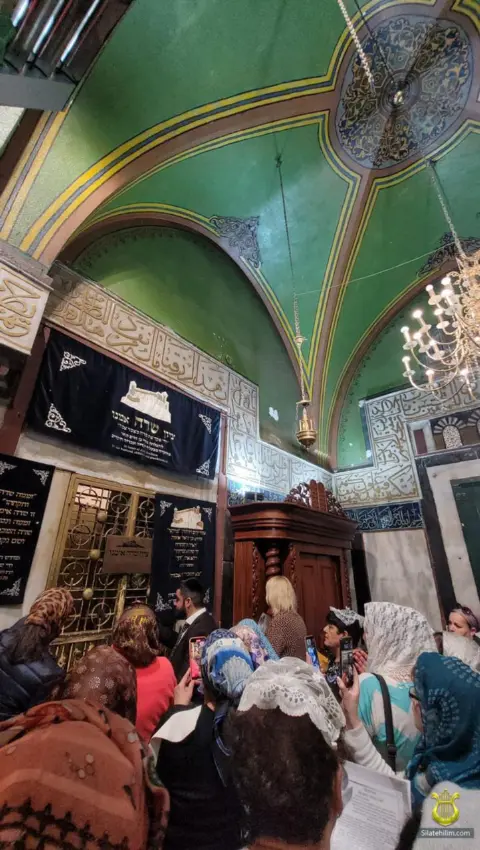
Rabbi Yosei HaGlili was a third-generation Tanna and one of the sages of Yavneh. He was close with Rabbi Akiva, Rabbi Tarfon, and Rabbi Elazar ben Azaryah. Together with Rabbi Akiva, he headed the yeshiva in Yavneh – the first spiritual center of Eretz Yisrael established after the destruction of the Second Temple.
Burial place – Dalton;
Yahrzeit – 15 Av.
What made him move there from the Galilee? A bad relationship with his wife!
A Wicked Wife
Rabbi Yosei, one of the greatest sages of the Talmud, had a wicked wife with a bad temper who did not respect him.
In those days, a wicked wife was called a "sister's daughter," that is, a niece, because a man who married his own sister's daughter would, whatever her bad character, take pity on her, since she was his close relative, and would bear with her.
So the students of Rabbi Yosei pressed him and asked him to give her a get, because she did not respect him.
He said: "The ketubah sum is large, I have no money, I cannot send her away."
They said: "We will collect the money for you, just send her away — it is unbearable to watch her torment you." In the end, they gave him the money, he gave her a divorce, and they found him a good wife, and they lived well together.
She then went and married a city watchman, who soon went blind, and she led him like a guide through the streets of the city, and he begged for alms.
He had been a watchman and knew the city well, and at some point he noticed that she never brought him to the neighborhood where Rabbi Yosei lived. He asked her why she never took him there, since the Rav was a generous man who gave charity. She then confessed that she had once been his wife. He began to beat her, and she began to scream. Rabbi Yosei came running at her screams to find out what was wrong. The watchman told him that this wretched woman never brought him to that neighborhood. Rabbi Yosei took them into his home, gave them a room, and supported them for the rest of their lives.
While Rabbi Yosei was married to her, he did not even have money to pay her ketubah, but after he married another woman, he already had a place and the means to support an extra couple.
If a wife humiliates her husband, especially publicly, and disregards his interests, the Torah calls such a wife unworthy.
Bruriah
There is a well-known episode involving Bruriah, the wife of Rabbi Meir Baal HaNes, who sharply answered Rabbi Yosei HaGlili (the Galilean), who had asked her:
"Which road should I take to Lod?"
"You foolish Galilean! Did the Sages not teach not to speak excessively with a woman? You should have asked: 'To Lod – how?' (Eruvin, 53b)."
About the Broken Tablets
"Rabbi Yosei HaGlili said: let me tell you a parable of what this may be compared to. A king of flesh and blood said to his messenger: go and betroth for me a beautiful and pious maiden. The messenger went and betrothed her. After he had betrothed her, he discovered that she had been unfaithful with another man. He reasoned with himself and said: if I give her the ketubah now, she will be condemned to death. Better that I tear up the ketubah and free her from my master forever. So too Moshe, the righteous one, reasoned with himself and said: how can I give Israel these tablets? For they impose upon them grave commandments, punishable by death for their transgression, as it is said, 'One who sacrifices to gods other than the L-rd alone shall be utterly destroyed' (Shemot, 22:19). But better that I break them and turn their hearts toward good. And the Creator agreed with him, as it is said: 'the tablets that you broke' (Devarim 10:2) — well done for breaking them!"
(Avot DeRabbi Natan 2:3).
Rabbi Yosei HaGlili and David HaMelech
Rabbi Shimshon of Ostropoli, in his wondrous segula for Erev Pesach, reveals that Rabbi Yosei HaGlili was a gilgul of David HaMelech. He explains that the Egyptians were punished in Egypt with ten plagues, and at the sea with fifty plagues, through the Name שפו, upon which David the son of Yishai relies, and the Most High spoke – and punished them. And this concerns the essence of the wondrous and astonishing matter, the dispute between Rabbi Yosei HaGlili, Rabbi Eliezer, and Rabbi Akiva. Here is the secret – for the words "Rabbi Yosei HaGlili" (רבי יוסי הגלילי), have the exact numerical value of שפ”ו - 386!!
And the essence of the statement "Rabbi Yosei HaGlili said…" is that the Name (of the Most High) שפ”ו spoke and punished them. And regarding what is said: "upon which David the son of Yishai relies" – the point is that the words "David the son of Yishai" (דוד בן ישי) also have the numerical value of שפ”ו! And it is with this very Name that the Most High punished them (the Egyptians). It is written in "Sodei Razei" that Rabbi Yosei HaGlili was a spark (of the soul) of David the son of Yishai, and it is with this very name that the Mashiach, "son of Yishai," will come. And although there are wondrous and awesome secrets in this, nevertheless, the essence is as mentioned above.
How Man Was Created
Rabbi Yosei HaGlili says:
Everything that G-d created on earth, He also created in man. They gave a parable of what this is like: a man who took a board to draw many images on it, and he suffers because there is not enough room; but if he draws on the ground, he can draw many separate images.
The L-rd, may His great Name be blessed forever and ever, created the whole world with His wisdom and understanding, and created heaven and earth, the upper and lower worlds, and created in man everything He created in the world.
He created forests in the world and created them in man – these are hairs.
He created beasts in the world and created beasts in man – these are man's worms.
He created tunnels in the world and created them in man – these are his ears.
He created wind in the world and created it in man – this is his nose.
In the world there is the sun, and in man the sun is man's forehead.
In the world there is standing water, and in man standing water is in man's nostrils.
In the world there is salt water, and in man salt water is man's urine.
In the world there are rivers, and in man rivers are his tears.
In the world there are fortress walls, and in man fortress walls are his lips.
In the world there are doors, and in man doors are his teeth.
In the world there is a firmament (sky), and in man the firmament is his tongue.
In the world there is fresh water, and in man fresh water is his saliva.
In the world there are stars, and in man stars are his cheekbones.
In the world there are towers, and in man towers are his neck.
In the world there are pillars, and in man pillars are his arms.
In the world there are stakes, and in man stakes are his fingers.
In the world there is a king, and in man a king is his head.
In the world there are clusters of grapes, and in man clusters of grapes are his breasts.
In the world there are counselors, and in man counselors are his kidneys.
In the world there are millstones, and in man millstones are part of his stomach.
In the world there are mills, and in man a mill is the spleen.
In the world there are pits, and in man pits are his navel.
In the world there is flowing water, and in man it is his blood.
In the world there are trees, and in man trees are his bones.
In the world there are hills, and in man hills are his buttocks.
In the world there are a pestle and mortar, and in man a pestle and mortar are his knees.
In the world there are horses, and in man horses are his shins.
In the world there is death, and in man death is his heels.
In the world there are mountains and valleys, and in man mountains and valleys – when he stands, he is like a mountain, and when he falls, he is like a valley.
From this you conclude: everything that G-d created in the world, He created in man. (Pirkei DeRabbi Natan 31)
Segula at the Grave for Zera Shel Kayama (Conception of a Child)
Rabbi Sahel ben Mishle (10th century CE) testifies about barren women who would come to the grave of the tzadik Rabbi Yosei HaGlili to pray. They would ask Ha-Shem to grant them a child, light candles, burn incense, and tie ribbons on the date palm that grew there, saying: "Ya Rabbi Yosei HaGlili, Batinani, Rafani" - (G-d of Rabbi Yosei HaGlili, give fruit to my womb and let it grow).
May the zechut of Rabbi Yosei HaGlili protect Am Yisrael!