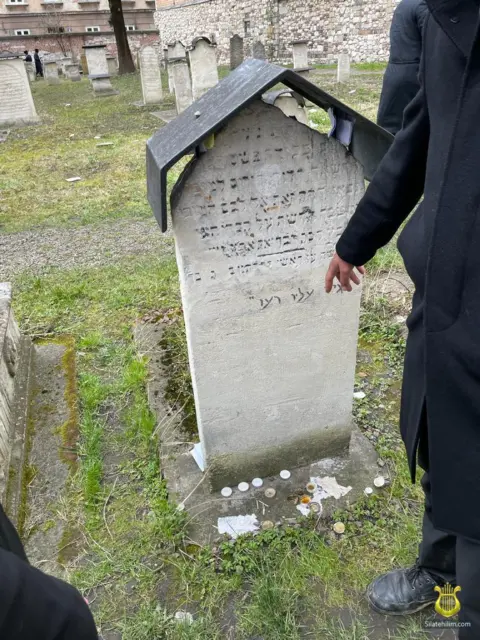
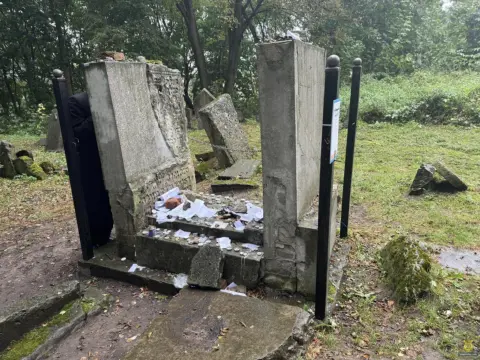
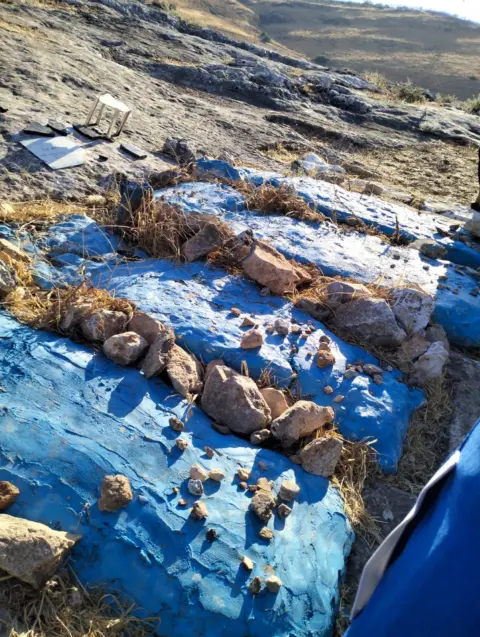
Grave
Avraham Matisyahu of Stefanesti
Yahrzeit (Hillula)
- 21 Tammuz — Rabbi Avraham Matityahu of Stefanesht - Heir to the Crown of Mashiach
Rabbi Avraham Matisyahu ben Menachem Nochum of Stefanesti (the miracle worker).
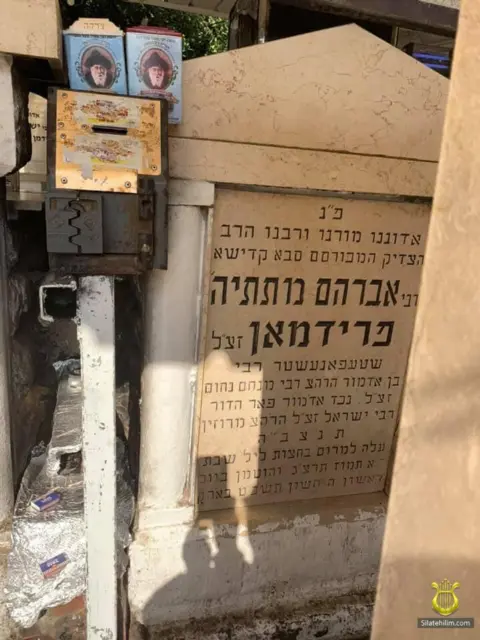
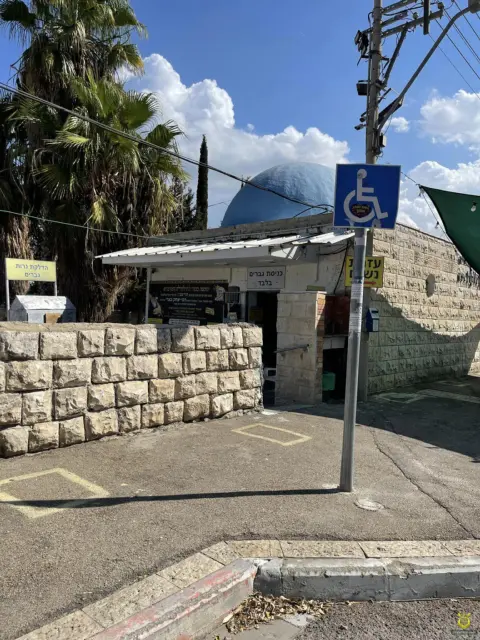
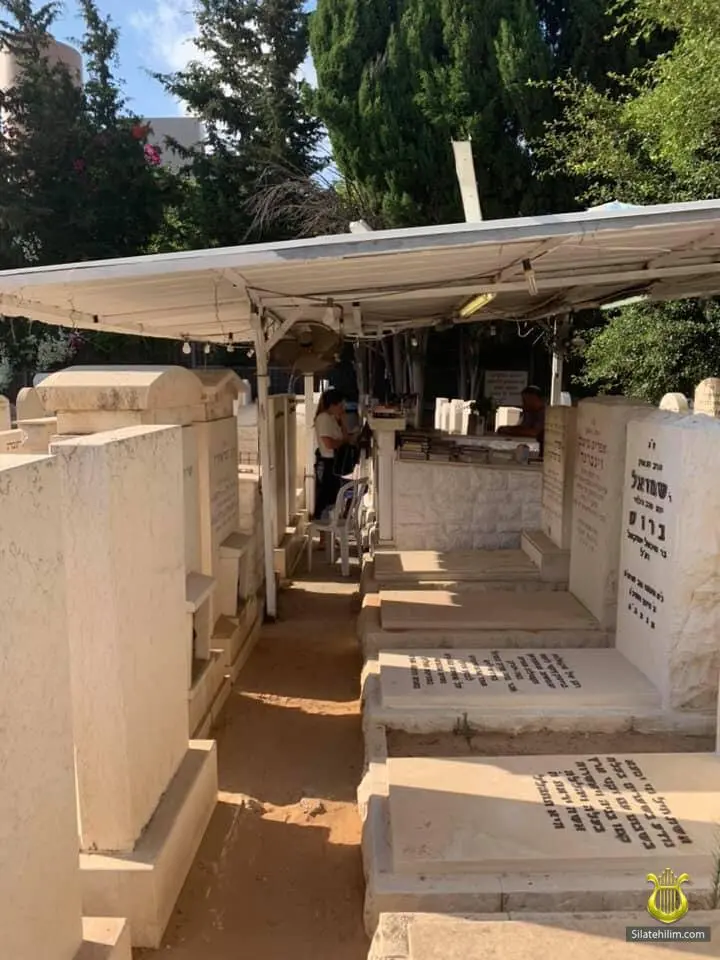
Resting place – גבעתיים – "Nachlat Yitzchak" in Givatayim, near Tel Aviv.
Yahrzeit – 21 Tammuz;
The father of Rabbi Avraham Matisyahu was Rabbi Menachem Nochum of Stefanesti (zt"l), son of the great Rabbi Yisrael of Ruzhin (zt"l).
Rabbi Avraham Matisyahu was considered one of the Hidden Tzadikim of his generation – one of the Nistarim. During his lifetime the Rebbe was revered as a great miracle worker. The Stefanesti Rebbe, like his father, was compared to an angel.
People came to him from all over the world, and his predictions always came true – and continue to come true even in the distant future. Many stories are known about his miraculous power.
The Rebbe's Spoon
On one occasion a chasid came to the Rebbe in Stefanesti, overcome with grief, and told him that his daughter had fallen ill with typhus, that her days were numbered, and that only a miracle could save her. The Rebbe gave the chasid his personal spoon, the one he used every morning at breakfast, and a piece of bread from his own table. The Rebbe instructed the chasid to feed his daughter bread from his spoon. Although the girl could not swallow and had eaten nothing in her final days, she began to accept bread from the Rebbe's spoon, and within a few days she was completely healed and lived to a ripe old age. The spoon was then passed down from generation to generation as a priceless family heirloom.
The Coin
Special were the coins received and blessed by the Rebbe, which brought luck and health – they were called "shmira" (protection). Rabbi Eliezer Zusia Portugal of Skulen (1898-1982) fell ill in his youth with some unknown stomach ailment. The illness prevented him from studying Torah and performing the mitzvot, and he turned to doctors for help. When Eliezer Zusia's condition became critical, he asked to be taken to the Stefanesti Rebbe. The first thing he asked the Rebbe for was a coin – a "shmira" for healing. As soon as Avraham Matisyahu gave him such a coin, he recovered and never fell ill again. Rabbi Eliezer Zusia Portugal of Skulen lived and studied for some time with the Rebbe of Stefanesti.
The Rebbe passed away on 21 Tammuz 5693 (1933).
He was accompanied on his final journey by 50,000 people. After the Rebbe's passing, his grave became a place of pilgrimage. The famous "Crown of Mashiach" belonging to his father was placed for safekeeping in the vault of a bank in Iasi, from which it later disappeared.
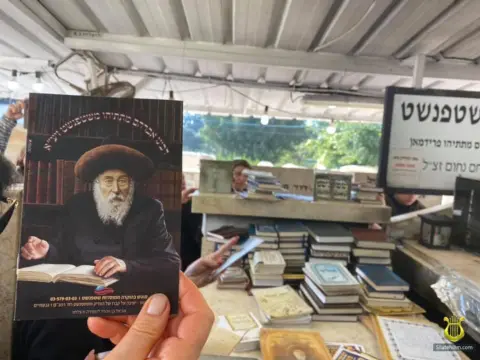
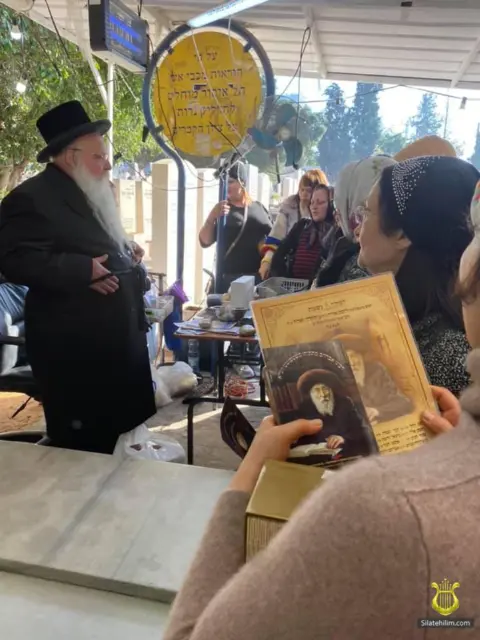
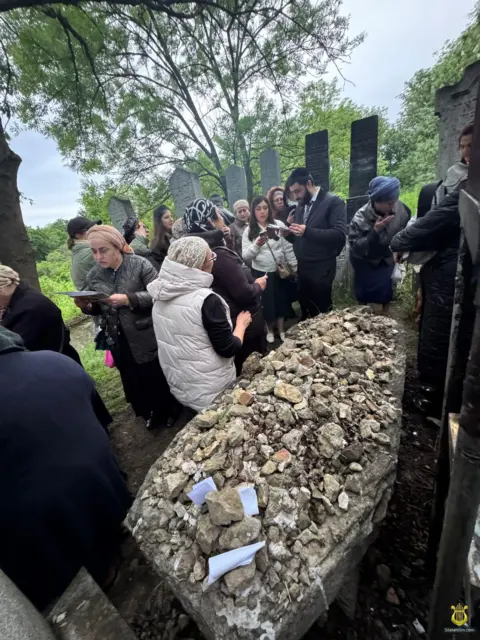
There are many well-known accounts of his posthumous intervention in the fate of his chasidim. It is worth noting that a portrait of the Stefanesti Rebbe is still revered by his followers as a great sacred object. In 1968 the remains of Rebbe Avraham Matisyahu were transferred from Romania and reburied in the "Nachlat Yitzchak" cemetery in Givatayim, one of the districts of Tel Aviv. Since then, prayers at the tzadik's grave have never ceased, and the ohel is filled with notes. Every year more and more people in Israel try to visit the grave of the Stefanesti Rebbe on his yahrzeit – 21 Tammuz.
Heir to the Crown of Mashiach
The father of Rabbi Avraham Matisyahu – Rabbi Menachem Nochum of Stefanesti (zt"l), son of the great Rabbi Yisrael of Ruzhin (zt"l) – instructed his chasidim to fashion the "Crown of Mashiach."
The palace of Rebbe Menachem Nochum of Stefanesti was an architectural masterpiece – rich finishing and magnificent furnishings, one of whose rooms was considered a sealed secret. It was called the "Chambers of Mashiach" and was always locked with several locks. Entry into it was strictly forbidden. The carved floor and doors were made from the finest kinds of wood. The ceiling was decorated with molded ornamentation. In the center of the room stood a table framed with pearls. Around the table stood six chairs, and at its head – a Throne, approached by three steps. A silver lamp stood on the table. All the furniture and the silver and gold vessels had been inherited by Rebbe Menachem Nochum from his righteous ancestors: Rebbe Dov Ber of Mezritch, his son Avraham the Angel, his son Rebbe Shalom Shachna, father of the tzadik of Ruzhin. The central place in this room belonged to a triple crown of extraordinary beauty, which had been made for the King Mashiach. A special golden case was also made for the crown.
After the fall of the communist regime, the Stefanesti chasidic community, led by Rav Solomon, actively took up the search for the missing crown. It was, of course, not found in the bank vault in Iasi. It became known that the unique item had been sold at a Sotheby's auction for $1,325,000. Rav Solomon, who traveled almost half the world in search of the famous "Crown of Mashiach," together with representatives of the Stefanesti chasidic community, appealed to the organizers of the auction and asked them to disclose the name of the person who had bought the crown, and to provide information about the circumstances under which the crown had come into Sotheby's possession. Sotheby's firmly refused. The Stefanesti chasidim relate a prophecy of the tzadik Rebbe Menachem Nochum, which he spoke shortly before his death: in the days preceding the era of Redemption, the crown will disappear, and it will be found again shortly before the coming of the long-awaited Mashiach.
After the death of Rebbe Menachem Nochum in 1886, the court in Stefanesti was inherited by his only son, Avraham Matisyahu Friedman (1847-1933).
May the merit of the tzadik protect our people!
(Yeshiva "Yodei Bina")
Gallery