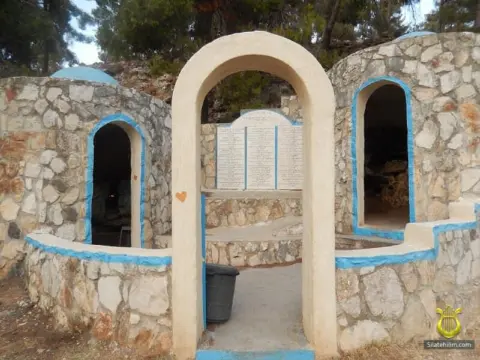
Grave
Dan ben Yaakov Avinu
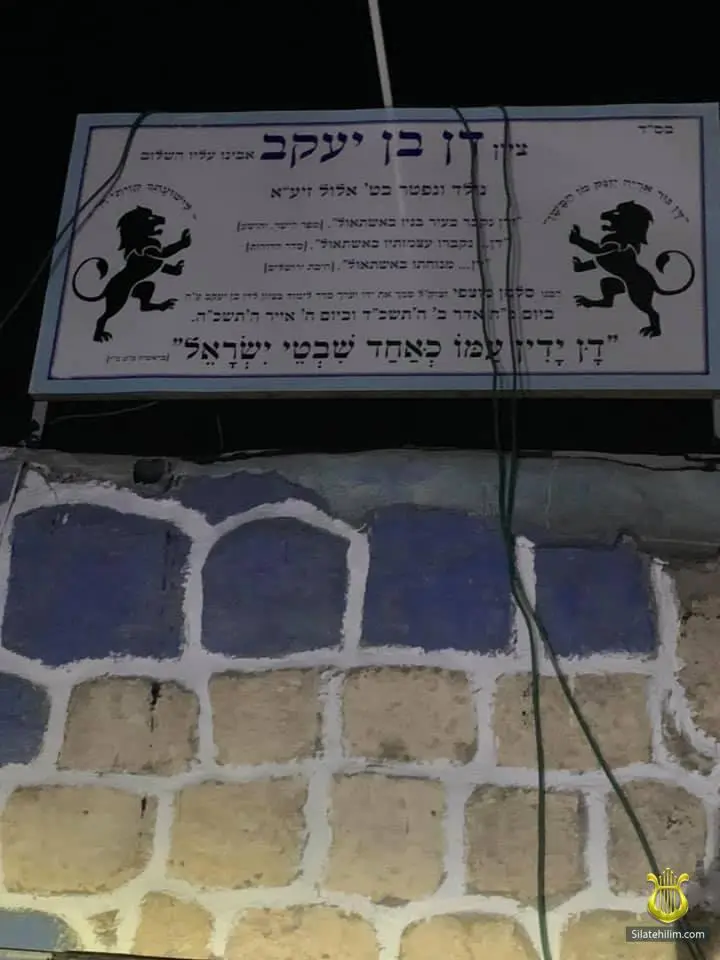
Yahrzeit (Hillula)
- 9 Elul — Dan ben Yaakov Avinu - the 12 Tribes
Dan ben Yaakov (2195—2320) — the fifth son of the patriarch Yaakov; one of the founding fathers of the people of Israel.
He was born in Haran on the 9th of Elul, in the year 2195 (Bereishit 30:5—6; Yalkut Shimoni, Shmot 162; Seder HaDorot HaKatzar).
He was the firstborn of Bilhah, Rachel's maidservant, whom Rachel gave to Yaakov as a wife (Bereishit 30:3—4).
He studied under his father's guidance (Shmot Rabbah 1:1).
He married the Moabite woman Aflalat, daughter of Chamudan (Sefer HaYashar, Vayeishev; Seder HaDorot). For many years they had no children, and then their only son was born, whom they named Chushim; he also had a second name — Shucham (Bereishit 46:23; Bamidbar 26:42, Rashi; Sefer HaYashar, Vayeishev). According to most versions, it was Chushim who killed Esav, who was preventing the burial of Yaakov in the Cave of Machpelah (Sotah 13a; Sefer HaYashar, Vayechi; Yalkut Shimoni 162). Yet according to some commentators, Chushim only wounded Esav, while the fatal blow was delivered by Yehuda (see) (Tosafot, Gittin 55b).
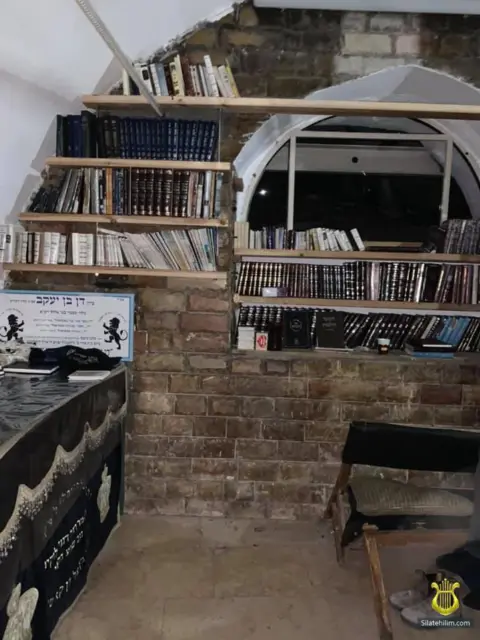
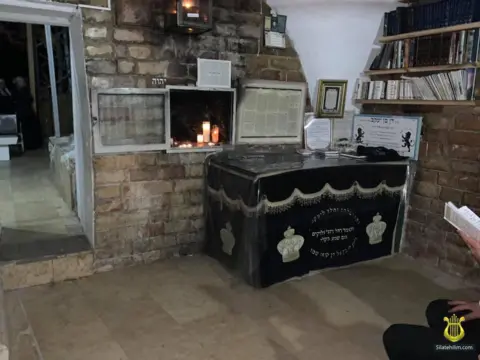
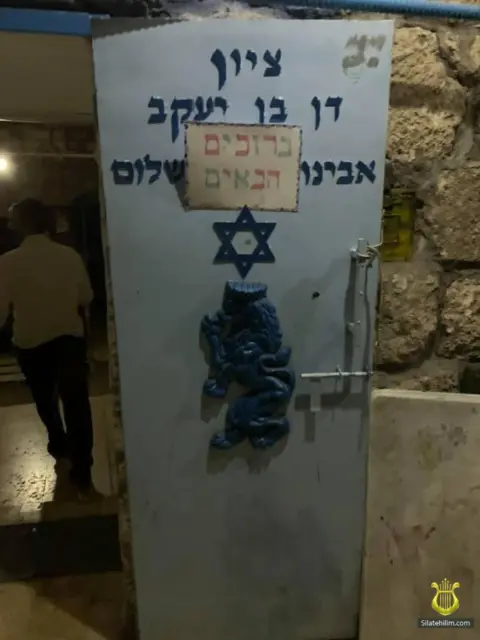
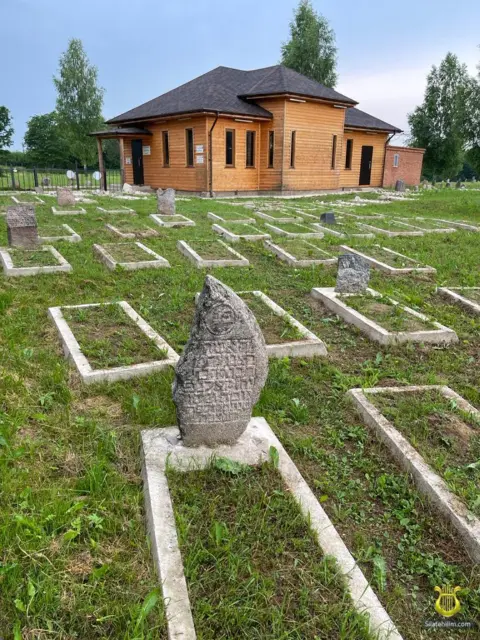
Dan died in Egypt in the year 2320 /1440 BCE/ at the age of 125 (Yalkut Shimoni, Shmot 162; Seder HaDorot HaKatzar). The coffin with his body was carried out of Egypt by his descendants on the day of the Exodus, and after the conquest of the Land of Israel it was buried in the territory of his tribe — in the town of Eshtaol (Sefer HaYashar, Yehoshua; Seder HaDorot).
Although the entire tribe of Dan's descendants came from his single son, it nevertheless became the second largest tribe after the tribe of Yehuda, numbering sixty-two thousand seven hundred men aged twenty and older at the Exodus from Egypt (Bamidbar 1:38—39), and sixty-four thousand four hundred before entering the Land of Israel (ibid. 26:42—43).
The tribe of Dan included the skilled craftsman Oholiav son of Achisamach, who was the closest assistant to Betzalel (see) in making the Tabernacle and all its furnishings (Shmot 31:6).
The camp of Dan was situated to the north of the Tabernacle, and it set out on the journey last, helping the weak and those lagging behind along the way (ibid. 2:25—31, 10:25, Daat Zekenim). The banner of the tribe of Dan was sapphire-colored, bearing the image of a serpent (Bamidbar Rabbah 2:7). For the patriarch Yaakov, blessing his sons before his death, said: "...Dan shall be a serpent by the road" (Bereishit 49:17). These words contained a hint to Dan's descendant, the judge Shimshon (see), who led the people of Israel in their struggle against the Philistines (see Shoftim 13:1—16:31) — he would strike down enemies like a mighty serpent (Onkelos, Bereishit 49:17).
When the land was divided, the descendants of Dan received a territory by the Mediterranean Sea, in the center of the country, in the area of the towns of Yaffo and Bnei Brak. But the Canaanites, who had previously inhabited this land, managed to push them out of their allotted territory. The descendants of Dan then went to the north of the country, where they conquered from the Phoenicians the large city of Leshem, also called Laish. They settled there, naming the city "Dan" in honor of the founder of their tribe (Yehoshua 19:40-48; Shoftim 1:34, 18:27—29).
In the year 2964 /796 BCE/ the Jewish state split into two kingdoms: the southern kingdom of Judah and the northern kingdom of Israel, to which the tribe of Dan belonged. And so that the Jews of the northern tribes would stop making pilgrimage to the Temple in Jerusalem, King Yeravam of Israel set up a golden calf in Dan (I Melachim 12:27—29). According to tradition, part of the tribe of Dan then rebelled against the idolatrous king, and afterward fled to Egypt, later settling even further south — in the land of Kush (Ethiopia). Subsequently, after the exile of the ten northern tribes, refugees from the tribes of Naftali, Gad, and Asher joined the descendants of Dan there, and together they established a Jewish state (Sefer Eldad HaDani; Seder HaDorot).
In the year 4640 /c. 880 CE/, a millennium and a half after the exile of the northern tribes, the Jewish communities of Babylon (Iraq), North Africa, and Spain were visited by a traveler from the land of Kush, R. Eldad HaDani, who, by his own account, belonged to the tribe of Dan. He related that these four tribes still lived in an independent state — "upon them is no yoke of other nations, but only the yoke of the Torah." They possessed the entire Tanach, but did not read the "Scroll of Esther" on Purim, since they had not witnessed that miracle. They knew nothing of the names of the sages of the Mishnah and Talmud, and transmitted all the laws of the Oral Torah in this manner: "Yehoshua bin Nun said in the name of Moshe, who heard it from the mouth of G-d." They had a Torah court authorized to impose even the four types of capital punishment. They spoke only the holy tongue (Hebrew) (Sefer Eldad HaDani; R. Menashe ben Yisrael, Mikveh Yisrael 28—29; Chipus Aseret HaShvatim, pp. 1—15).
The testimony of Eldad HaDani was cited by such outstanding Torah sages as R. Chisdai Ibn Shaprut, R. Moshe HaDarshan, R. Avraham bar David (Raavad), R. David Kimchi (Radak), R. Avraham, son of the Rambam, and many others (Mikveh Yisrael 28; Encyclopedia Beit Yisrael vol. 2). The account of his travels was first published in the holy tongue in the year 5240 /1480/, and was subsequently reprinted many times, including in other languages: Latin, Arabic, Yiddish, etc. (a Russian translation of this book was included in the edition "Three Jewish Travelers: Benjamin of Tudela, Petachiah of Regensburg, Eldad HaDani," St. Petersburg, 1881).
Three centuries after R. Eldad HaDani, another famous Jewish traveler, Benjamin of the Spanish city of Tudela, testified in his book Sefer HaMasaot that he had discovered in the Persian province of Nishapur a Jewish state populated by representatives of the tribes of Dan, Asher, Zevulun, and Naftali — and it is possible that this refers to the part of the tribe of Dan that was exiled by the Assyrians along with the other northern tribes.
In 5593 /1833/, another thread leading to the descendants of the tribe of Dan was discovered, when the head of the Jerusalem community, R. Yisrael of Shklov, sent his student R. Baruch of Pinsk to search for the "ten lost tribes," part of which, according to available information, dwelt in the inaccessible deserts of the Arabian Peninsula. Having reached Sana'a, the capital of Yemen, R. Baruch set out into the depths of the desert, toward the town of Haidan, where, according to the rabbis of Yemen, descendants of the tribe of Dan indeed dwelt. In the desert, R. Baruch's expedition met a shepherd who said he was from the tribe of Dan. However, the shepherd refused to lead them to his camp, only agreeing to deliver a letter from R. Yisrael of Shklov to the head of his tribe. Soon afterward R. Baruch was killed by order of the Imam of Yemen, and the barely-established connection was severed (VeZeh Sha'ar HaShamayim, pp. 229—230; Chipus Aseret HaShvatim, pp. 183—184).
In 5733 /1973/, the Sephardic Chief Rabbi of Israel, R. Ovadia Yosef, issued a halachic ruling recognizing the Ethiopian tribe known as the Falashas, who had preserved many laws of the Torah to this day, as descendants of the tribe of Dan, and called for every effort to be made to facilitate their return to the Holy Land — though not all authoritative halachic decisors supported this ruling. In the years that followed, most members of this tribe were brought to Israel, where they underwent "conversion out of doubt" (Encyclopedia Beit Yisrael vol. 17, p. 141).
(Tzadikim.com, Toldot.ru)
Gallery