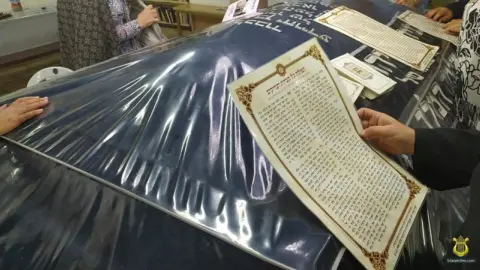
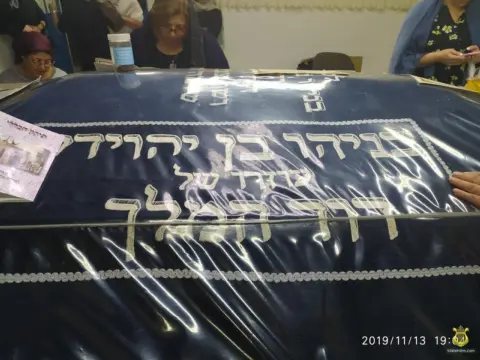
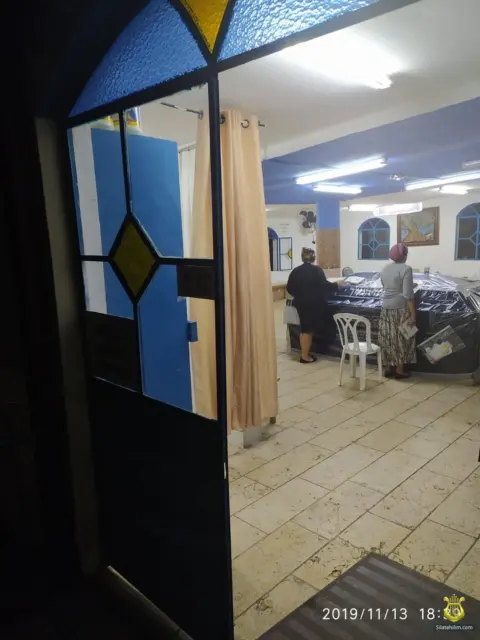
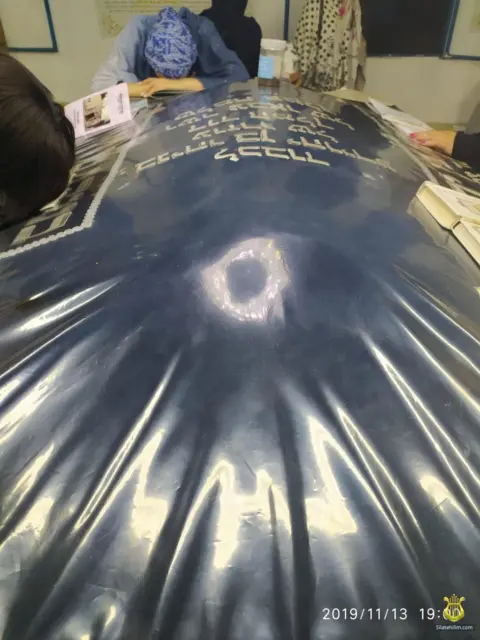
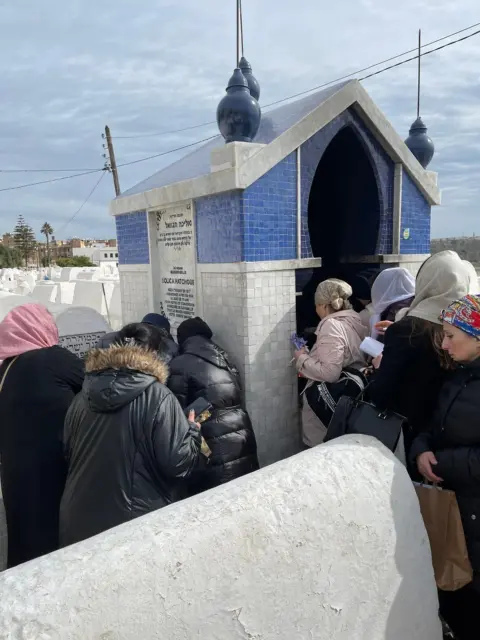
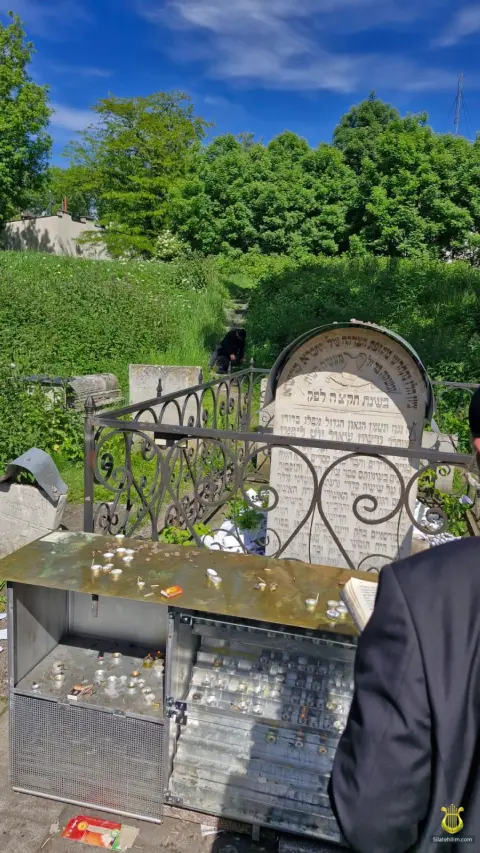
Grave
Benayahu ben Yehoyada
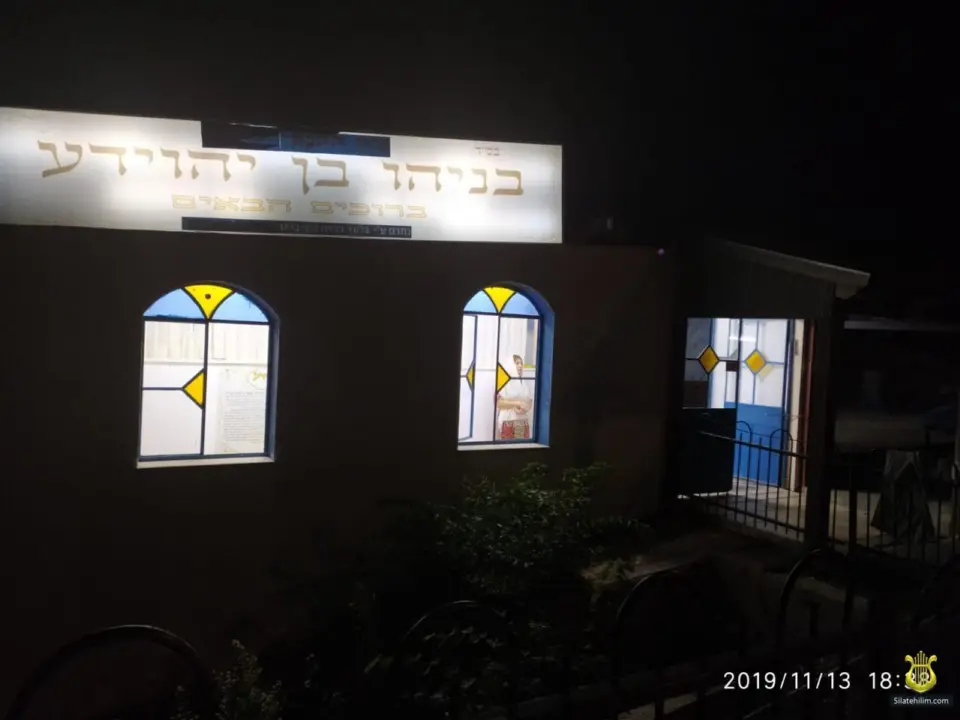
Yahrzeit (Hillula)
- 20 Elul — Benayahu ben Yehoyada
Benayahu ben Yehoyada was a great military commander who served two Kings of Israel – David and Solomon.
He was the son of Yehoyada the Kohen.
Benayahu had a son named Ammizabad, who assisted him in overseeing the military divisions, as his father served as the commander of King David's army, which was divided into 12 divisions, each serving the king for one month of the year. Benayahu was responsible for the third month (Sivan). He also served as the twelfth head of the Sanhedrin during the reign of King David.
Benayahu was a kabbalist, known for his practice of Yichudim meditations.
It is written in Shmuel II (23:20): "And Benayahu ben Yehoyada, the son of a valiant man (Ben Ish Chai), great in deeds, from Kabzeel; he struck down two mighty men of Moab. He also went down and killed a lion in the midst of a pit on a snowy day. He killed an Egyptian, a striking man. The Egyptian had a spear in his hand; but he went down to him with a staff, and wrenched the spear out of the Egyptian's hand, and killed him with his own spear. These things Benayahu ben Yehoyada did, and he had a name among the three mighty men. He was more honored than the thirty, but he did not attain to the first three. And David set him over his guard."
The Zohar on Benayahu ben Yehoyada
The Zohar HaKadosh (1:7a) states: "Benayahu never departed from the innermost chambers of David's heart. There will never be any separation between them."
According to the Zohar HaKadosh, Benayahu ben Yehoyada was the most important of the 30 tzadikim who existed in the world.
The name Benayahu derives from the word "binah" – understanding.
The gematria of his name בניהו equals 73, which is also the gematria of the word "chochmah" – חכמה (wisdom), equal to 73 – indicating that he made full use of his intellect.
The Arizal teaches that Benayahu ben Yehoyada is the tikkun (rectification) of Eliezer (the servant of Avraham).
The name בניהו literally means "son of Yahu", where Yahu refers to the first three letters of G-d's Name – Havayah (Yud, Heh, Vav).
His father's name, Yehoyada – יהוידע – literally means "one who knows Yahu." Thus, the Arizal teaches that the soul of Eliezer was reincarnated into both father and son.
The first part of his name, בנ, alludes to the completion of G-d's essential Name, Havayah, which corresponds to the sefira of Malchut (Kingship) and the Oral Torah. Together, the two parts of his name indicate that he was the one who added the lower wisdom – the wisdom of the Oral Torah – to the first three letters of G-d's essential Name, which correspond to the Heavenly, Written Torah.
Indeed, his full name בניהו בן יהוידע בן איש חי has a gematria of 611, which equals the gematria of the word Torah – תורה.
The Zohar states that both Temples existed in the merit of Benayahu ben Yehoyada, that his entire generation received Shefa (Divine abundance) through him, and that after his passing, "the flow from above" ceased.
How the Grave of Benayahu ben Yehoyada Was Found
Rabbi Chaim Vital was sent by his teacher, the Arizal, to perform Yichudim meditations at the graves of Abaye and Rava in Ovnit. When he returned, he was surprised to find that the Arizal had risen in his honor, greeted him warmly, extended his right hand, and received him with great joy. When Rabbi Chaim Vital asked the reason for his teacher's unusual behavior, the Arizal answered that he had risen in honor of the soul of Benayahu ben Yehoyada, which had accompanied Rabbi Chaim Vital.
Three months later, the Arizal and his disciples were passing by a certain location when the Ari pointed to a pile of stones and said that he could see through Ruach HaKodesh that the grave of Benayahu ben Yehoyada lay there. Rabbi Chaim Vital then recalled that on his way to visit the graves of Abaye and Rava, needing to rest, he had sat on that very same pile of stones and practiced the Yichud his teacher had given him. As the Arizal explained, through the power of that Yichud, Benayahu had attached himself to Chaim Vital.
Ashmedai and the Shamir Worm
When King Solomon needed the Shamir worm for the construction of the Temple, he commanded Benayahu ben Yehoyada to capture Ashmedai (the king of the demons).
For this purpose, the king gave him a chain and a ring engraved with the Divine Name. He also gave him a bundle of wool fleece and flasks filled with wine.
Benayahu set out to the mountain and found Ashmedai's well.
He dug a second pit beneath it, bored a hole in the bottom of the well, and diverted the water into the lower pit. He then filled Ashmedai's well with wine and sealed the opening with the bundle of fleece that Solomon had given him.
Returning in the evening, Ashmedai found wine in his well and was greatly puzzled. Though reluctant to drink wine (fearing it might be poisoned), he could not resist his thirst, drank, and fell asleep.
Benayahu then climbed down from the tree in which he had been hiding and fastened the chain around Ashmedai's neck. When Ashmedai awoke and found himself in chains, he struggled desperately to break free.
"Stop!" cried Benayahu. "The Name of the Al-mighty, your Master, is upon you!" Ashmedai allowed Benayahu to bring him before King Solomon, but along the way a spirit of destruction overtook him: he uprooted trees and demolished houses.
As they passed the hut of a poor widow, she begged him not to destroy her home. Ashmedai took pity on her, but in turning aside so forcefully, he broke his own collarbone. "The words of Solomon are just!" he exclaimed. "A soft tongue can break a bone." (Mishlei 25:15) (The demon meant that his strength had yielded to the gentle plea of the poor widow.)
Then they passed a blind man who was groping his way along the road, and Ashmedai helped him. He also helped a drunkard who was stumbling on his way. When they passed a wedding procession, Ashmedai wept; and upon hearing a man instruct a cobbler, "Make me shoes that will last seven years without wearing out," he burst out laughing. He was also greatly amused by a sorcerer who was displaying his magical arts.
They then arrived in Jerusalem and, after waiting three days, were received by King Solomon.
After the audience with King Solomon, Benayahu asked Ashmedai about his strange behavior along the way.
"Why did you help the blind man?" he asked. "I heard in Heaven," replied Ashmedai, "that this man is a tzadik gamur (a perfectly righteous person). Whoever helps him will receive a share in the World to Come."
"But why did you help the drunkard find his way?" asked Benayahu. "I heard a proclamation in Heaven," replied the king of the demons, "that he is a rasha gamur (a completely wicked person). By doing him a kindness, I repaid him for whatever good deeds he may have performed in his lifetime. Therefore, he will receive his full punishment in the World to Come."
"And why did you weep when you saw the groom and bride?" "I know that the groom is destined to die within a month, and his wife will remain a widow for twelve years."
"And why," Benayahu continued, "did you laugh at the man who told the cobbler to make him shoes that would last seven years?"
"Because I know," replied Ashmedai, "that he will not live even seven more days."
"And what amused you so much about the sorcerer we passed?" asked Benayahu. Ashmedai answered: "He claimed to know about events happening at the ends of the earth, yet he did not even know that a treasure was buried right beneath his feet!"
Benayahu did not ask about the houses and trees that Ashmedai had destroyed along the way, for he knew that demons are destructive by nature.
But that a demon could help someone struck him as strange. From Ashmedai's answers, Solomon and his advisors learned much of great importance: it turns out that demons are empowered to harm those who believe themselves to stand firmly and securely on the ground. Yet they come to the aid of the poor and humble, as well as of the righteous who are destined for the World to Come.
The Queen of Sheba
When the Queen of Sheba came to visit King Solomon, he sent Benayahu ben Yehoyada to greet her.
Benayahu was so handsome that the queen assumed he was the king himself. His beauty is described thus: "he resembles a special light that rises and shines in the morning, like the brilliance of the planet Venus among the stars, and like a rose growing beside flowing streams of water."
The Lioness's Milk
Once, when the King of Persia was gravely ill, his physicians told him that his only hope was to drink the milk of a lioness. In desperation, he sought the help of the wise King Solomon, who charged Benayahu ben Yehoyada to obtain the lioness's milk. Benayahu took ten goats, found a lioness's den, and came to her each day with one goat, gradually accustoming her to his presence. After ten days, the lioness allowed her benefactor to approach, and Benayahu was able to take her milk. [Midrash Tehillim, 49]
Ben Ish Chai
When the Ben Ish Chai visited the grave of Benayahu ben Yehoyada as a pilgrim, he underwent a profound spiritual illumination, and great kabbalistic secrets were revealed to him.
Concluding that he was a gilgul (reincarnation) of Benayahu ben Yehoyada, he named all of his books in his honor, including "Ben Ish Chai," "Ben Ish Chayil," "Rav Pe'alim," and others.
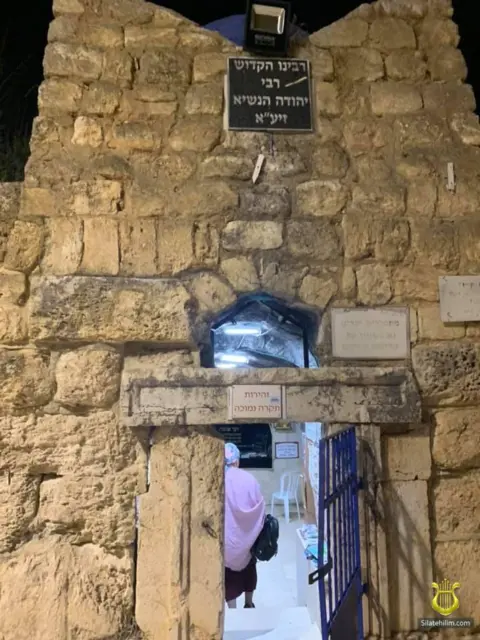
Benayahu ben Yehoyada is buried in Biria, in northern Israel near Tzfat. For a long time the location of his burial place was unknown, until the Ari HaKadosh revealed it to his disciple Chaim Vital. In the "Kitvei Ari" there are special meditations that can be performed at the grave of Benayahu ben Yehoyada.
The residents of the village of Biria, where the grave of Benayahu ben Yehoyada is located, have preserved a tradition of observing the yahrzeit of this great commander every Rosh Chodesh Adar.
Segulot at the Grave of the Tzadik: 1. Mekubalim today perform Tikunim with "Shir HaShirim" at the tzadik's grave; 2. It is a segula to pray there for the soldiers of Tzahal (the IDF) and for success in legal proceedings.
May the merit of the righteous Benayahu ben Yehoyada protect our people!
Gallery