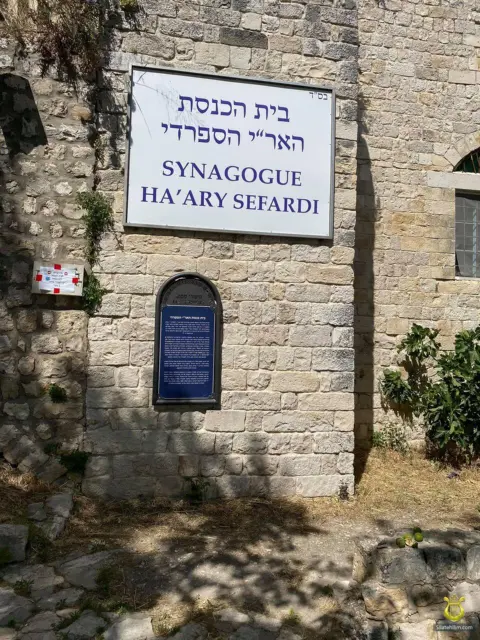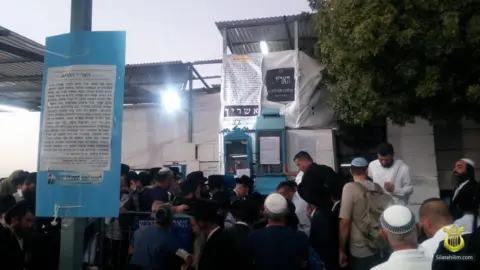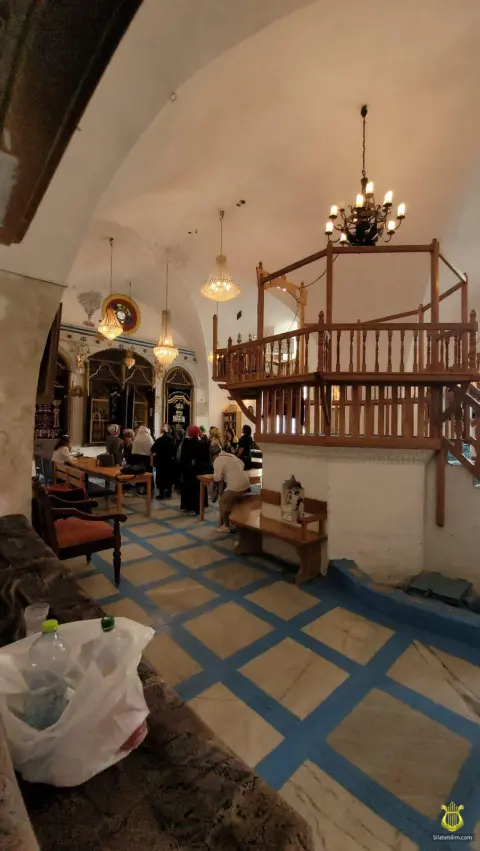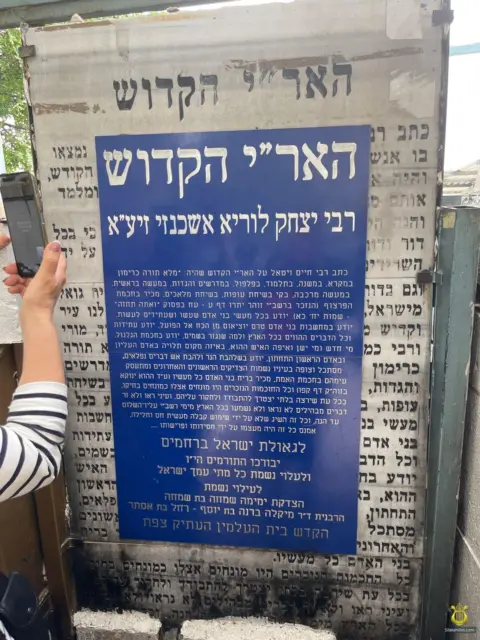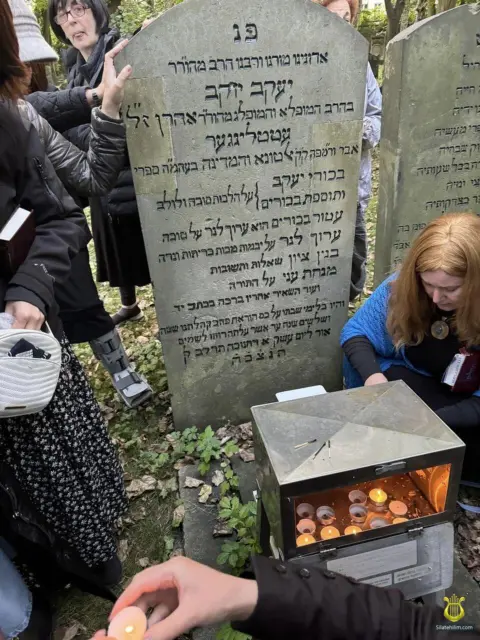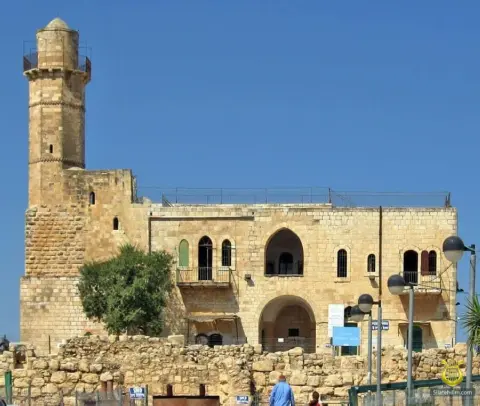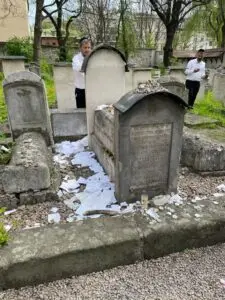

Grave
Arizal
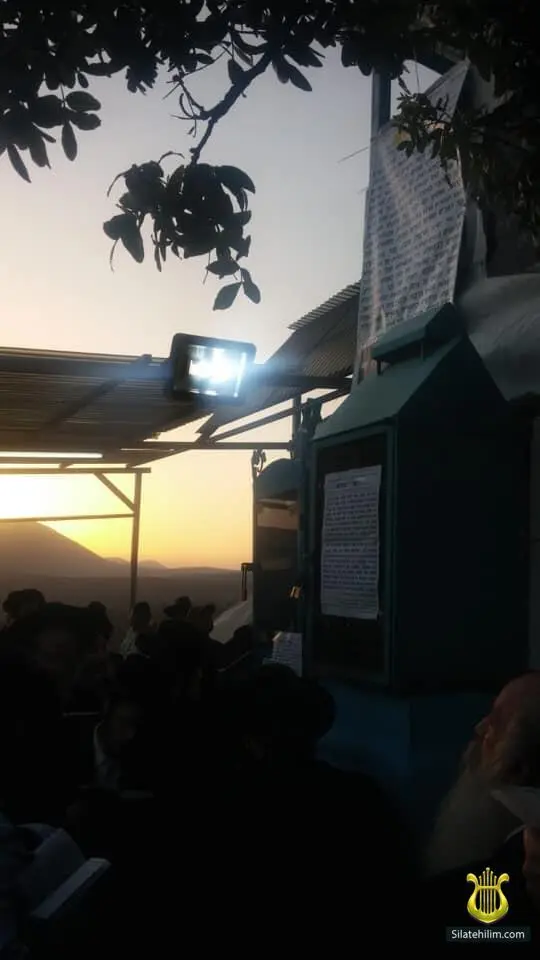
Yahrzeit (Hillula)
- 5 Av — Arizal
Rabbi Yitzchak Luria ben Shlomo Ashkenazi - the Ari HaKadosh - the Arizal.
Yahrzeit - 5 Av;
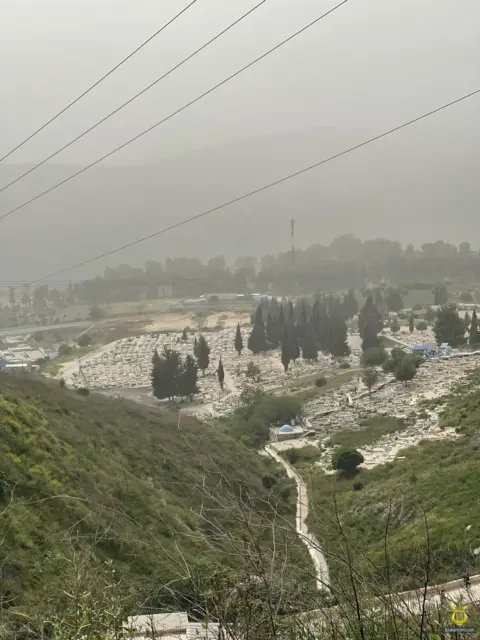
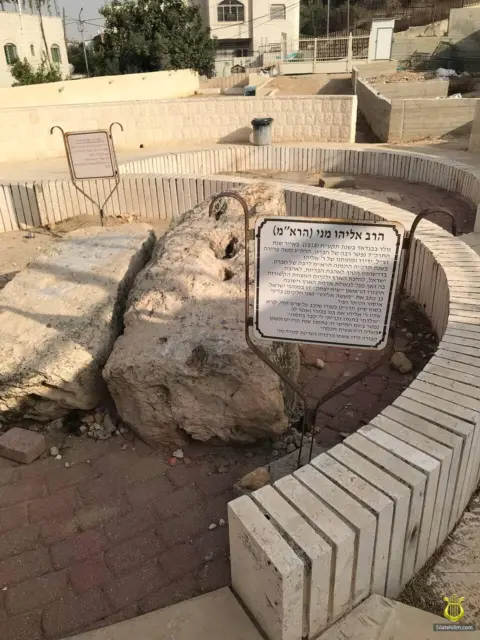
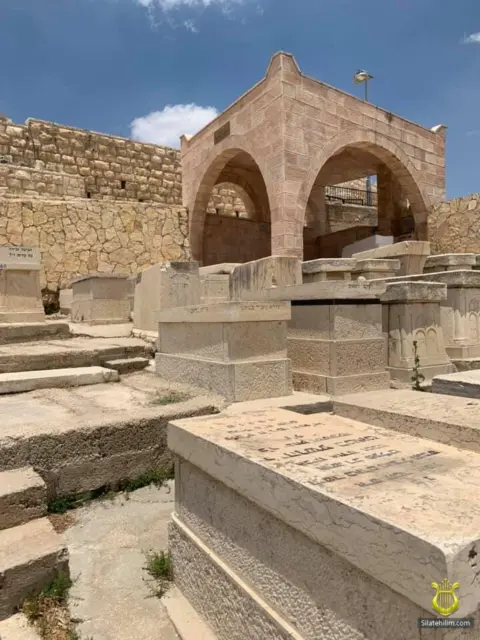
Resting place - Safed, old cemetery;
After the completion of the Talmud, only 4 of all the great Jewish giants of spirit and thought merited the title "kadosh" (holy):
Rabbi Chaim ibn Attar (Ohr HaChaim), Rabbi Moshe Alshich, Rabbi Shlah HaKadosh, Rabbi Yitzchak Luria Ashkenazi.
In Hebrew he is usually called the Ari HaKadosh or the Arizal.
Ari is an acronym for "Ashkenazi Rabbi Yitzchak," and at the same time the Hebrew word "arye" means "lion." After the Ari left this world, the acronym "zal" - from the words "zichrono livracha" (may his merit protect us) - began to be added to his name.
The Ari was a potential Mashiach, the redeemer of the entire world, but his contemporaries did not give him the opportunity to fulfill his role.
The Arizal was born in Jerusalem. According to tradition, the prophet Eliyahu appeared to his father, Rabbi Shlomo, and foretold that a son would be born to him: "And you shall call him by the name Yitzchak, and he will free Israel from beneath the klipah… thanks to him, the study of Kabbalah will be revealed in Israel."
Rabbi Naftali of Frankfurt, author of the book "Emek HaMelech," writes:
"Thinking about this man, one comes to the conviction that his soul had nothing in common with the souls of that generation. The Ari was a direct emissary of the Almighty, called to purify and illuminate people's souls with the true wisdom of the Zohar.
However, the behavior of those around him was such that he was not permitted to live in this world long enough to fulfill his mission. Had he lived in the Holy Land for five years instead of two, he would have explained the entire Torah in light of the book of the Zohar.
"He must be regarded as Mashiach, as the apple of our eye, as our defender from the hands of the nations. He left our world at a very young age, through our fault…"
It is said of him: "The crown has fallen from our head." (Eichah 5:16) The first letters of these words in Hebrew (nafla ateret rosheinu) form the word "na'ar" (youth), hinting that he died young because of our many sins."
The disciple of Rabbi Chaim Vital - Rabbi Chaim HaCohen wrote: "Mashiach, who is destined to be the redeemer of Israel… will suffer from pains and ailments… and these signs were found in my teacher, the Arizal."
Rabbi Moshe ben Menachem of Prague: "The source of the emanation of the Supreme Will granted him the right to open the sources of Divine knowledge and the channels through which it flows, so that he could penetrate the secrets of the Torah."
The Vilna Gaon: "The Arizal is a man chosen by G-d. What can we say and how can we reason about such a person, sanctified by the Almighty, about a man chosen by G-d, holy and awe-inspiring! And ever since he merited the revelation of the prophet Eliyahu to him, his capacity for comprehension miraculously doubled and grew to unprecedented heights. A 'maggid' (literally 'a teller') appeared to him - the soul of a great person from past generations, which descends to earth to teach a Jew the secrets of the Torah and the souls of the prophets and sages of the Talmud, as they appear at the call of the angel of the Almighty."
Rabbi Chaim Yosef David Azulai (the Chida) writes in his book "Shem HaGedolim": "Our teacher the Arizal is a spark of the soul of Moshe Rabbeinu himself, a man filled with the spirit of holiness, knowing all wisdom."
The Maggid of Mezeritch relates in the name of the Arizal himself:
"My teacher told me that there are 12 pathways in the heavens, and the prayer of each of the 12 tribes of Israel enters through the gate designated for it. One of 12 separate paths leads to each of these gates. For the order of a person's prayer must correspond to the root and source of the soul of that tribe of Israel. Therefore, it is fitting for each person to adhere to the order of prayer that was the custom of his ancestors.
However, you should know that all this applies only to changes in the order of words in the middle of the prayer and the like. But that which is based on the clear Law set forth in the Talmud applies equally to every soul, and there is no difference in this among all the tribes of Israel."
The great disciple of the Arizal, Rabbi Chaim Vital, mentions such an episode in his notes.
Whose Gilgul Was Rabbi Chaim Vital
After his teacher's death, he was living in Jerusalem. One day the Sultan of Jerusalem came to him and ordered him to open the waters of the Gichon. The Gichon was an underground water source flowing beneath Jerusalem. King Chizkiyahu had sealed it, as stated in the Talmud, against the will of the sages of that generation. Evidently, the closing and opening of these waters had a far deeper meaning than mere technical considerations. The Sultan knew that the great kabbalist Rabbi Chaim Vital possessed sufficient transcendental power to "unseal" the source hidden many centuries earlier. Rabbi Vital was afraid to carry out this order, but he knew that he faced death if he refused. So, using a special kabbalistic technique, he instantly transported himself to Damascus. That same night his teacher the Arizal appeared to him in a dream. "Why did you refuse to open the Gichon today?" he asked his disciple.
- "I was afraid to use the holy names of G-d to carry out this order," answered Rabbi Chaim.
- "And how did you end up in Damascus?"
Rabbi Chaim apparently had no answer, and the Arizal continued: "Do you know that your soul is the 'gilgul' (reincarnation) of King Chizkiyahu, and that you came into this world to reopen this source, sealed so many years ago?"
Rabbi Chaim answered: "I will go back there tomorrow and do it all."
The Arizal said: "No, now you will not be able to do anything. Today was the day, but the opportune moment has been irretrievably lost."
The Karliner Rebbe, Rabbi Aharon, author of the book "Beit Aharon," testifies that the Ari gave us the key to understanding the Zohar.
Chametz on Pesach
The following is related in the name of the Arizal: he promised that anyone who most scrupulously observes the prohibition against chametz on the holiday of Pesach would be protected from sins committed by mistake throughout the entire year (for example, accidentally lighting a fire on Shabbat is directly related to this prohibition). In connection with this, it has become customary in many Jewish communities not to consume "matzah shruya" (soaked matzah) on Pesach - that is, matzah is not boiled, crumbled into soup, tea, etc. Moreover, if water has spilled on matzah, it is not eaten, out of concern that particles of unbaked flour may remain on it, which could ferment - although the law does not strictly require this.
How Angels Are Created
The Arizal points out that the key to understanding how a message from Above can come to a person is given by the saying of our sages: "One who performs one mitzvah acquires for himself one defender, and one who commits one sin acquires one accuser" (Avot 4:11).
That is, through his deeds and even his words, a person is constantly creating angels: good ones through good deeds, bad ones through bad deeds, and they testify about him. Good angels speak of good things and thereby defend the person before the Heavenly court, while bad angels report the person's sins and thereby accuse him.
According to the Arizal, it greatly helps in having children to add extra time to Shabbat both at its beginning and its end (that is, not to wait until the last moment to light the Shabbat candles, and after Shabbat not to begin work immediately, but to extend the rest of Shabbat a bit longer).
The holy books state that every "male" soul has a "female" soul destined to be its spouse. However, the Arizal teaches that nowadays many people cannot find their "other half," since the souls of their true other halves are deep within the klipot (impure worlds) and cannot emerge from there. Such people receive their zivug (match) according to their merits. The Arizal writes that even Aharon was not married to his true other half.
How to Atone for Sins
Once the Ari, of blessed memory, turned to his students with a question:
- "How do you wish to atone for your sins?"
- "Do you wish to endure poverty?" The students answered: no.
- "Illness?" - the students answered: no.
- "Quarrels with neighbors?" - the students answered: no.
- "Exile?" - the students answered: no.
Then he said to them: "If so, accept humiliation and insults with love - and this will be the atonement for your sins!"
So the Shoulder Won't Hurt
Once Rabbi Chaim Vital, of blessed memory, had a severe pain in his shoulder. The holy Ari asked him: "Do you always recite Birkat HaMazon immediately after the washing of the fingers after a meal (mayim acharonim)?"
Rabbi Chaim Vital admitted that he did not always pay attention to this. The Arizal answered him: "That is precisely why your shoulder hurts, since the letters of the word "shoulder" - (KaTeF) - are the same as in the word "immediately" (TeKheF), as our sages teach (Berachot 42a). Since you violated the rule that the blessing must follow immediately after the washing, you were given a hint of this through the pain in your shoulder." (Shaar HaMitzvot, Eikev, p.106)
Where Our Rectification Lies
It is said in the name of the Arizal: a person should know that wherever he encounters a difficulty, there his rectification lies hidden. As long as a passion or desire is tolerable, a person does not feel the extent to which it distances him from the Creator, and he does not exert effort to rid himself of it. When some passion overtakes him, he awakens to rectification and is ready to do everything to get rid of it. (Shalom Arush, "The Garden of Faith")
The disciples of the Arizal relate that it is incorrect to think of Shabbat as the end or the beginning of the week. The most accurate comparison is to the Menorah, whose 6 side branches grow out from its central shaft and direct their light toward it. This shaft, the heart of the Menorah, is Shabbat.
The Burial of the Ramak
Rabbi Moshe Cordovero (the RAMAK) passed away on the 23rd of Tammuz, 5330 (1570), leaving the world his now-classic works on Kabbalah: "Pardes Rimonim" ("Pomegranate Orchard") and "Or Ne'erav" ("Precious Light"), as well as his book of ethical teachings, "Tomer Devorah" ("The Palm Tree of Devorah"). His grief-stricken students came out to accompany him on his final journey, together with ordinary residents of Safed, who deeply revered the sage. The Arizal saw that the gravediggers intended to bury the body of Rabbi Moshe Cordovero in a place other than where a pillar of Divine light - which accompanied the procession and was visible to his eyes alone - was pointing. He was compelled to intervene:
- "Go over there, a bit higher, to where the pillar of cloud stands," Rabbi Yitzchak directed the gravediggers. They obeyed, though they saw no pillar at all. Rabbi Moshe Cordovero's students heard the words of their colleague and were themselves utterly stunned: could it be that this newcomer, this arrival from Egypt, this quite young and unknown Jew, would now be their leader? Their attempts to see the mysterious, light-filled pillar were unsuccessful… The burial took place exactly according to Rabbi Yitzchak's instructions. In his eulogy at the grave, the Arizal said:
- "It is written in the book of Devarim: 'If a man has committed a sin worthy of death, and he is put to death, and you hang him on a tree...' I interpret this verse as follows: if a completely sinless person, sentenced to death by the Heavenly Court with no apparent grounds, is nevertheless deprived of life, attribute his death to the Tree of Knowledge of Good and Evil, since by tasting its fruit, Adam and Chava brought death upon all people. Had Adam not eaten from the Tree of Knowledge, the righteous could have lived forever. As for our dear teacher Rabbi Moshe Cordovero, he had no sins of his own. He had to die because of that same original sin, which brought death into the world."
The Arizal's interpretation is based on the following: the word "chet" (sin) also means "absence" in Hebrew; the word "vetalita" (hang him) also means "attribute/connect."
Kiddush of Shabbat
In the Arizal's siddur "Tikunei Shabbat" it is written: "One should make Kiddush before nightfall, since the beginning of the night of Shabbat is the time of the influence of Mars - the overseer of wars and destruction, whose responsible angel is Samech-Mem, while the end of Friday is the time of Jupiter and its angel Tzadkiel, and they are 'two angels: one evil and one good.' For this reason, one should make Kiddush during the time of Jupiter, or wait until the time of Mars has passed."
The first mention of this custom is brought by the Anaf Yosef (in the name of the Abudraham) in his commentary on the Talmud (Shabbat 119b): Rabbi Yossi bar Yehuda says: "Two ministering angels accompany a person when he returns home from the synagogue on Friday evening: one a good angel, the other an accusing angel. If, upon arriving home together with the master of the house, they see lit candles, a set table, and a made bed, the good angel says: 'May it be His will that it be so next Shabbat as well.' And the evil angel is compelled to answer 'Amen.' Otherwise, the evil angel says: 'May it be His will that it be so next Shabbat as well.' And the good angel is compelled to answer 'Amen.'" According to his commentary, the good angel is Tzadkiel, and the evil one is Samech-Mem.
The Arizal recommended lighting 7 candles on Shabbat, corresponding to the 7 days of the week. (Magen Avraham 263:2)
"And these days are remembered and observed in every generation" (Megillat Esther 9:28). The Arizal explains that these words apply not only to the events of Purim, but to all Jewish holidays and significant dates. Events that occurred on certain days recur every year on that same day - only on a spiritual plane. Or, in the language of Kabbalah, the stream of Divine light that brought about a certain supernatural event the first time pours into the world again on the anniversary of that event. Therefore, in particular, the inner meaning of the blessing of thanksgiving "…Who performed miracles in those days, at this time" is this: the miracle performed by the Almighty "in those days" is repeated again "at this time," that is, now.
Nusach Arizal
The main difference between the Nusach Ashkenaz prayer book and the Nusach Sefard prayer book is that the latter clearly follows the teachings of Kabbalah in general and the teachings of the greatest kabbalist, the Arizal, in particular. It was precisely with the legacy of the Arizal in mind that a new prayer book was compiled, a version of Nusach Sefard, which came to be called Nusach Arizal. Its specific character was explained by Rabbi Dovber, the Maggid of Mezeritch, in his statement: "Our teachers, of blessed memory, said: 'Thirteen bows were made in the Temple opposite thirteen gates' (Mishnah, Shekalim 6:2; see also Middot 2:3)… Twelve were for those who knew which of the twelve tribes of Israel they belonged to; the thirteenth gate was for those who did not know through which gate to enter the King's courtyard… And so the Divine Arizal, to whom all the paths of Heaven were clear, taught those of the people who do not know to which tribe of Israel they belong, and established the order of words in the prayers, selected from several nusachot… In our time, when people do not know their tribe… let everyone follow the path of the Arizal, equally suited for any soul."
("Maggid Devarav LeYaakov" [He Declares His Words to Yaakov], § 133).
According to the teaching of the Ari, as a result of Adam's sin, practically all the souls of future humanity were affected, though not to the same degree: some underwent minor changes, others fell to the very lowest levels of the klipot. Therefore, when the time comes for a soul to be renewed and rectified, it must pass through a process within malchut - similar to pregnancy - and only afterward can it unite with a physical body and enter this world. Souls can rise to the level of this "pregnancy" only through the mitzvot and prayers performed by Jews. (Shaar HaGilgulim 12-13)
May the merit of the Ari HaKadosh protect our generation!
Gallery