Grave
Yochanan ben Zakai
Tanna
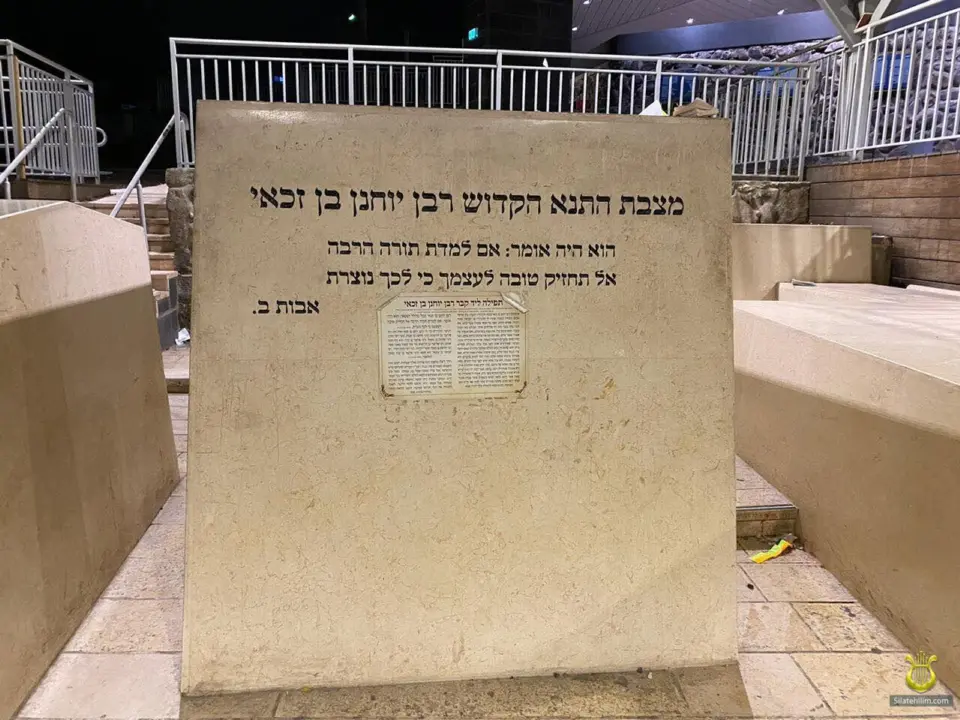
Rabbi Yochanan ben Zakai was a Tanna of the first generation and the leader of the Jewish people during the destruction of the Second Temple.
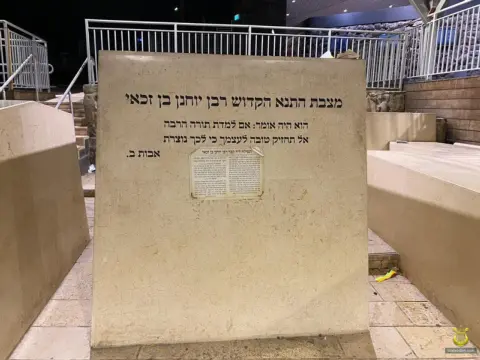
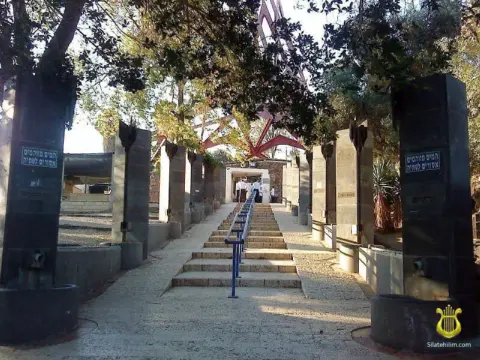
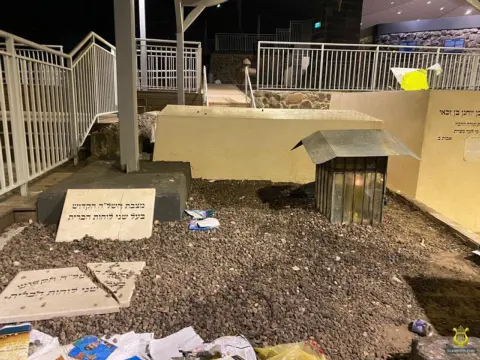
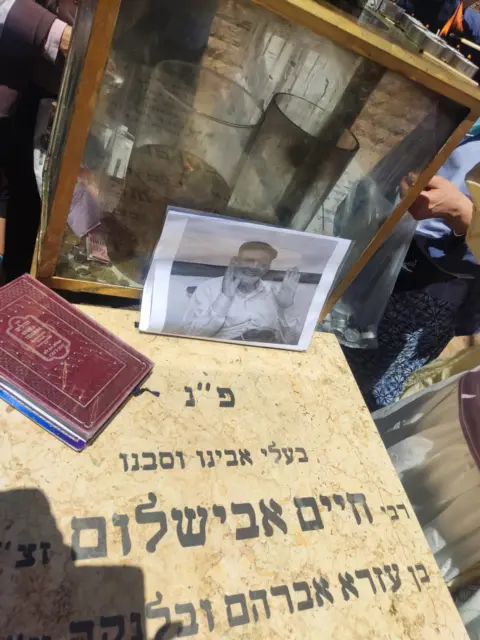
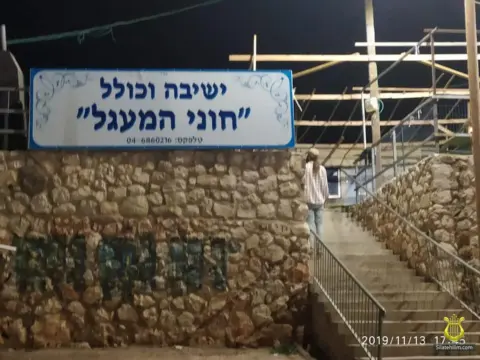
His resting place is in Tiberias, near the Shlah HaKadosh.
Rabbi Yochanan ben Zakai was a student of Hillel the Elder. He succeeded him as Nasi, [followed by] Rabban Shimon ben Gamliel. Foreseeing the coming destruction by Rome, Rabbi Yochanan ben Zakai founded the academy at Yavneh several years before the destruction of the Temple. During the siege of Jerusalem, Rabbi Yochanan advocated for a peaceful resolution with the Romans, but was restrained by the Biryonim (zealot militants). His two chief disciples, Rabbi Yehoshua and Rabbi Eliezer, managed to smuggle him out of the city in secret by having him feign death, after which he was able to meet with Vespasian, though he could not save the city. He lived 120 years. For forty years he engaged in trade, for forty years he studied, and for forty years he taught others. Never once in his life did he engage in idle talk, nor did he walk four cubits without words of Torah... Whenever he met anyone, he was the first to greet him, even a non-Jew.
When the great Hillel lay dying, his students came to see him. All of them entered the house, but the youngest of his students — Yochanan ben Zakai — remained outside, as there was no room for him. When the commotion caused by the arrival of the people had settled, Hillel raised himself up on his bed and asked, "Where is ben Zakai?" They answered him, "He remained outside for lack of room." And the dying patriarch said, "I beg you, bring ben Zakai in, for he is a pillar of wisdom and a father to the generation."
The words of the great Hillel came true. In that terrible moment for the Jewish people, when the Temple lay in ruins, when the enraged Romans imposed "order" on the land with an iron hand, when tens of thousands of Jews perished or were sold into slavery, and the fragile shoots of scholarship were torn out or trampled into the mud, a great man rose up and stepped forward. He raised the banner that had fallen from the hands of the fallen, carefully gathered the surviving shoots and seeds of the Jewish people, and replanted them in prepared soil; he cleared away the ruins and laid a new course for the mighty ancient spiritual river — Judaism.
Yochanan ben Zakai was the true heir and disciple of Hillel. Just as majestic, wise, and calm, similar to his teacher in humility and love of peace, experienced in worldly affairs, and extraordinarily proficient in Torah. He managed to instill his all-consuming passion for learning in his students, and it became the most striking trait of the Tannaim who followed — the teachers of the Mishnah.
"If you have learned much Torah, do not take credit for yourself, for that is the purpose for which you were created," said ben Zakai. The Talmud tells of him: "Rabbi Yochanan ben Zakai lived 120 years. For forty years he engaged in trade, for forty years he studied, and for forty years he taught others. Never once in his life did he engage in idle talk, nor did he walk four cubits without words of Torah. No one ever arrived at the yeshiva before him, and he never left the yeshiva while even one person remained there. No one ever found him occupied with anything but study. He never allowed anyone else to open the doors for his students — he always did it himself... He never said, 'It is time to end the lesson,' except on the eve of Pesach or Yom Kippur. Whenever he met anyone, he was the first to greet him, even a non-Jew.
Nothing was left by him without thorough study — in Scripture, Mishnah, Halacha, Aggadah, and the finest details of the Law with its commentaries..."
By the start of the great revolt (66 CE), Rabbi Yochanan ben Zakai was the only surviving student of Hillel. All the political factions into which the Jewish people had then split saw him as a pillar of the ancient teaching, the supreme guardian of the Oral Law.
Rabbi Yochanan ben Zakai, having become convinced that war with Rome was impossible, was opposed to its senseless continuation. At the very height of the siege of Jerusalem, when the fury of the zealots had reached its extreme limits, he never ceased urging the leaders of the revolt toward the voluntary surrender of the city. And if we recall the history of the Jewish War, we will understand that the great rabbi also possessed extraordinary courage.
Yes, Yochanan ben Zakai knew that there was a grim truth in the desperate fearlessness of the zealots, in their fierce determination to fight to the last. He, better than others, remembered how the Roman emperors had twice turned Judea into a Roman province, each time increasing the burden of taxes; how Pilate, for his own amusement, set up idols on the streets of Jerusalem, plundered the Temple treasury, and carried out a bloody massacre in the city; how the mad Caligula desired to set up his own image inside the Temple; how Cumanus left ten thousand dead in Jerusalem alone, not counting the thousands slain in the provinces; how Felix and Festus filled the land with murders and executions; how the vile Florus openly flaunted his crimes, mocked the people, put the noblest Jews to death, ransacked the markets and workshops, and beat thousands of people for no reason at all. The elderly rabbi keenly felt the pain of his people: not a single festival passed without mass bloodshed; the Jews were not masters of the Temple or the city. The Sanhedrin had no authority to judge or punish. All institutions, sacred places, and the welfare of the people depended on the whims of emperors, the caprices of their mistresses, the arbitrariness of the procurators, the greed of an entire pack of Roman officials, and the lawlessness of every Roman soldier. On the eve of every Yom Kippur, the High Priests had to humbly beg a Roman official for their sacred vestments, and these countless, faceless High Priests themselves were appointed by the procurators — not for merit, but for ever-larger bribes.
The leaders of the zealots preached that Jews must obey only the One G-d and His Torah, that either the Kingdom of G-d would be established in Judea, or, as many, many years before, Jerusalem would be turned into a heap of stones, and the enemy would reign over a wasteland.
Yes, Yochanan ben Zakai knew all this well. But he was a great sage, and his mind, armed with the Divine Torah, penetrated into realms inaccessible to the warlike soul of the zealot. Can the Kingdom of G-d truly be established by the sword, and the knowledge of G-d be spread by force of arms? Can falsehood become the herald of truth? Can the demon of evil show people the way to the angel of good? Let Esau raise his sword and draw his bow, let Edom glory in the strength of its muscles — Jacob must place his trust in G-d, Israel must glorify the Name of the Creator! What will become of our people if the zealots keep their terrible oath to the end? What will become of our Torah?
Rabbi Yochanan ben Zakai decided to risk his life to save the Torah. First, a rumor spread throughout Jerusalem that he was gravely ill, and then everyone in the city heard the sorrowful news: "Ben Zakai has died!"
A dead body must not remain overnight in the Holy City, where the House of G-d stands. The remains of Rabbi Yochanan ben Zakai were carried past the guards by his students Eliezer and Yehoshua, and soon, causing no small confusion in the Roman camp, the great elder... rose up from the coffin and appeared before Vespasian.
The majestic figure and silver-gray hair of the sage-teacher made a deep impression on the Roman commander. And after the prediction Rabbi Yochanan had made at their first meeting came true, and Vespasian was proclaimed emperor, he gave the elder the opportunity to voice any request and promised in advance to fulfill it (it was stipulated, however, that he could not ask for Jerusalem). And then ben Zakai asked the emperor for permission... to settle with his students in the small town of Yavneh, and to spare the family line of the Patriarch Gamliel. Vespasian was astonished. After all, he had shown the elder such goodwill that he could have requested incomparably greater privileges for himself and his relatives: Roman citizenship, vast landholdings, numerous slaves, various favors. It could never have occurred to the proud Roman that in his small school the great master would begin to forge such a mighty spiritual weapon — one that would prove stronger and more enduring than Roman steel, one that would enable the defeated Israel to triumph over the Roman spear, the Islamic sword, and the shield of the Crusaders. The Yavneh school of Yochanan ben Zakai would become the foundation of an invincible spiritual state built of twenty-two letters, passed from mouth to mouth, from father to son, from community to community — a state whose territory would be the entire world of G-d, whose Temple would be the Law proclaimed at Sinai, and whose priests would be the entire Jewish people.
When word reached Yavneh of the fall of Jerusalem and the destruction of the Temple, a great wail and weeping arose among the Jews. It seemed that everything had perished along with the splendor of the Sanctuary, and there was no hope for the future: now that sacrifices had become impossible, how could Israel atone for its sins, how could it serve its Creator? It seemed that the Jewish people must vanish, like so many other peoples of the East whose sanctuaries and capitals had been destroyed.
Grief and sorrow overtook Yochanan ben Zakai as well. Yet he found within himself the strength to straighten his shoulders and, without wasting a precious moment, set to work rebuilding.
First of all, he summoned his students — the flower of Israel's scholarship. Not all answered the teacher's call; there were some who considered him a deserter. They left, and from then on their names were lost to the Jewish people. But many were there in Yavneh, and among them the best: Eliezer, Yehoshua, Yose HaKohen.
The Yavneh school united the nation in its hour of hardship, breathing new life and new hope into it. Its students, along with the Oral Torah, inherited Rabbi Yochanan ben Zakai's vision of the spiritual mission of the Jewish people. Regardless of place or historical upheaval, the school served for long centuries as the spiritual center of the Jewish people, calling it to serve the highest moral ideals.
It was in this school that ben Zakai proclaimed that, although sacrifices had become impossible, we still have two other pillars on which the world stands: Torah and good deeds (Avot 1:2). He tirelessly repeated to his students the words of the prophet: "For I desire kindness, not sacrifice, and knowledge of G-d more than burnt offerings." These words became his motto. The service of the heart took the place of sacrifices — and by this, the Jewish people were saved from destruction.
Sometimes Rabbi Yochanan ben Zakai is portrayed as a visionary, a superman, a man who foresaw the exile and dispersion of the Jews across the entire earth and worked out principles of national life in anticipation of a long wandering among hostile peoples. But this was not so: like his contemporaries, Rabbi Yochanan ben Zakai believed in the speedy restoration of the Temple — any lasting existence of G-d's people without G-d's House seemed to him entirely impossible. But like his teacher Hillel, ben Zakai, through his wisdom, perceived the very essence of Jewish teaching and managed to express that essence — which, though closely tied to the Temple in Jerusalem, is nonetheless not limited to that connection.
He died surrounded by his many students; for generations afterward, whenever people recalled the name of Rabbi Yochanan, they would repeat: "With his death, the brilliance of wisdom was extinguished."
May the merit of the tzadik protect us!
(Rabbi Tzvi Wasserman)
Gallery