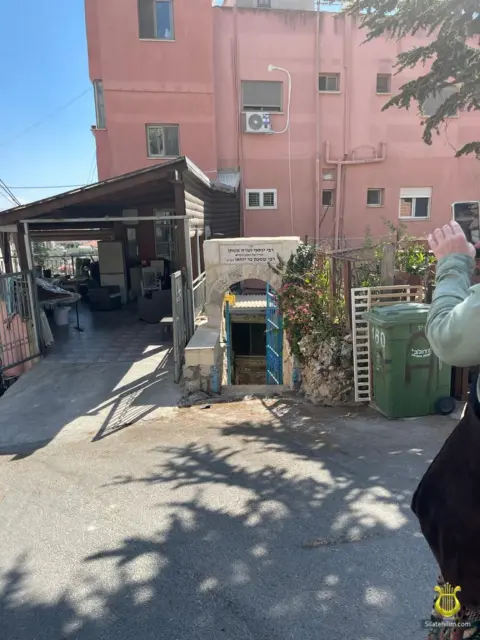
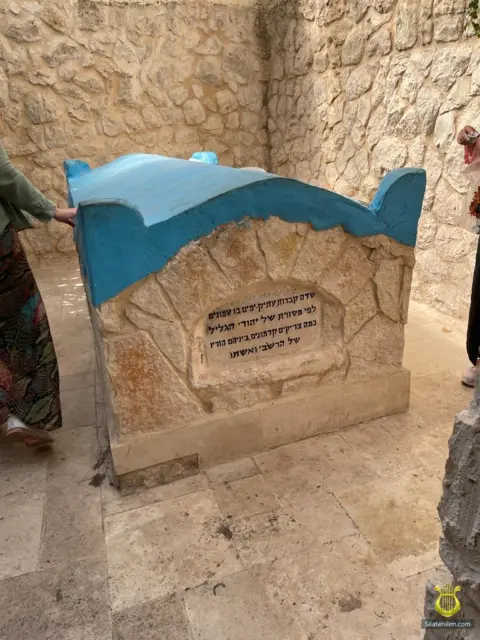
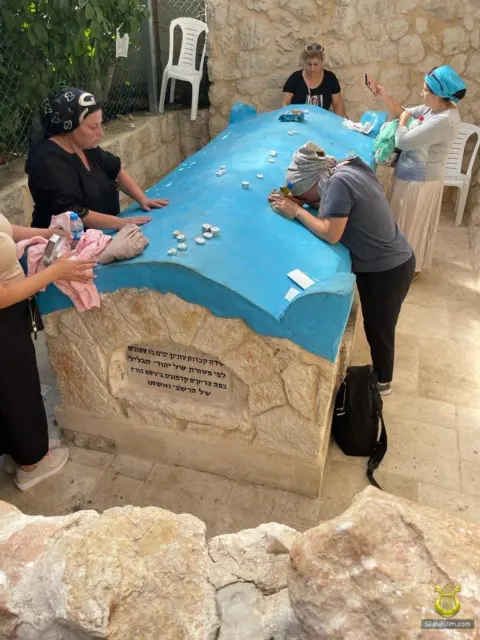
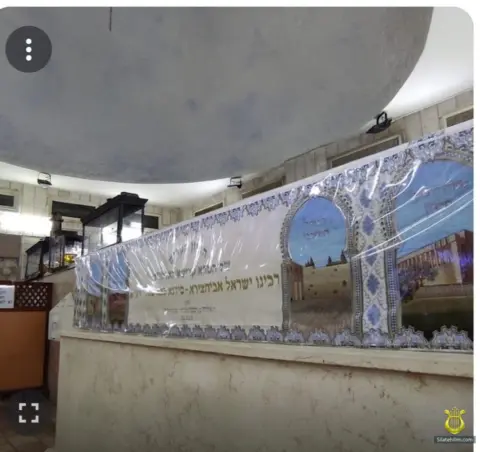
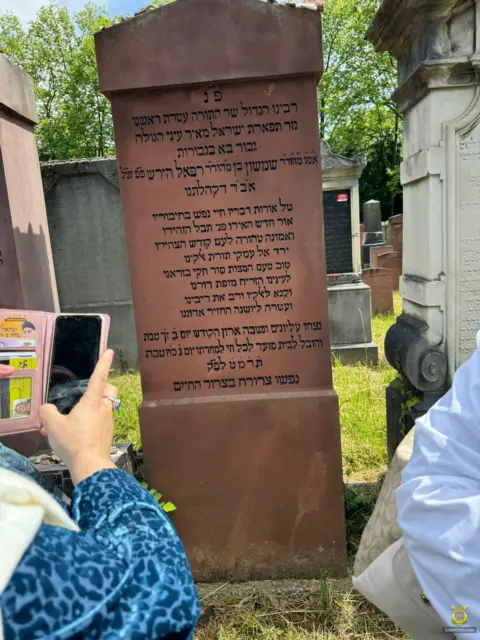
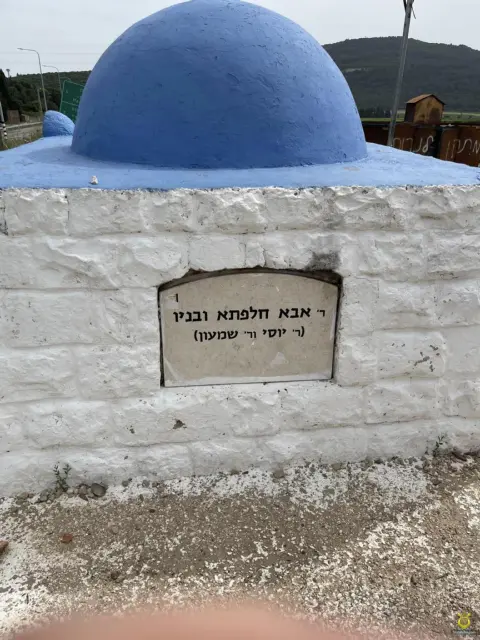
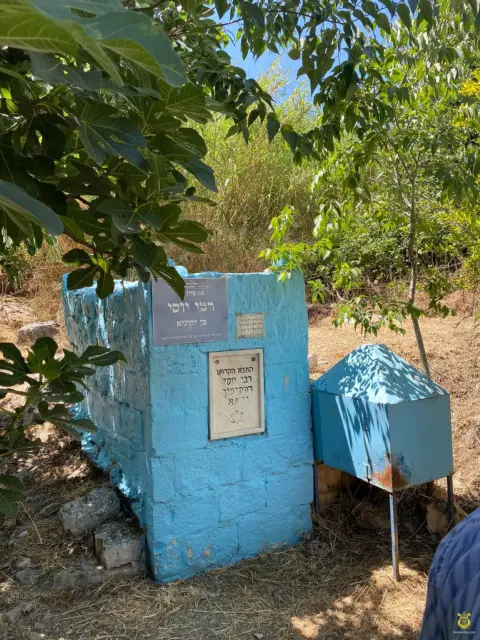
Grave
Yochai
father of Rashbi - Gush Chalav
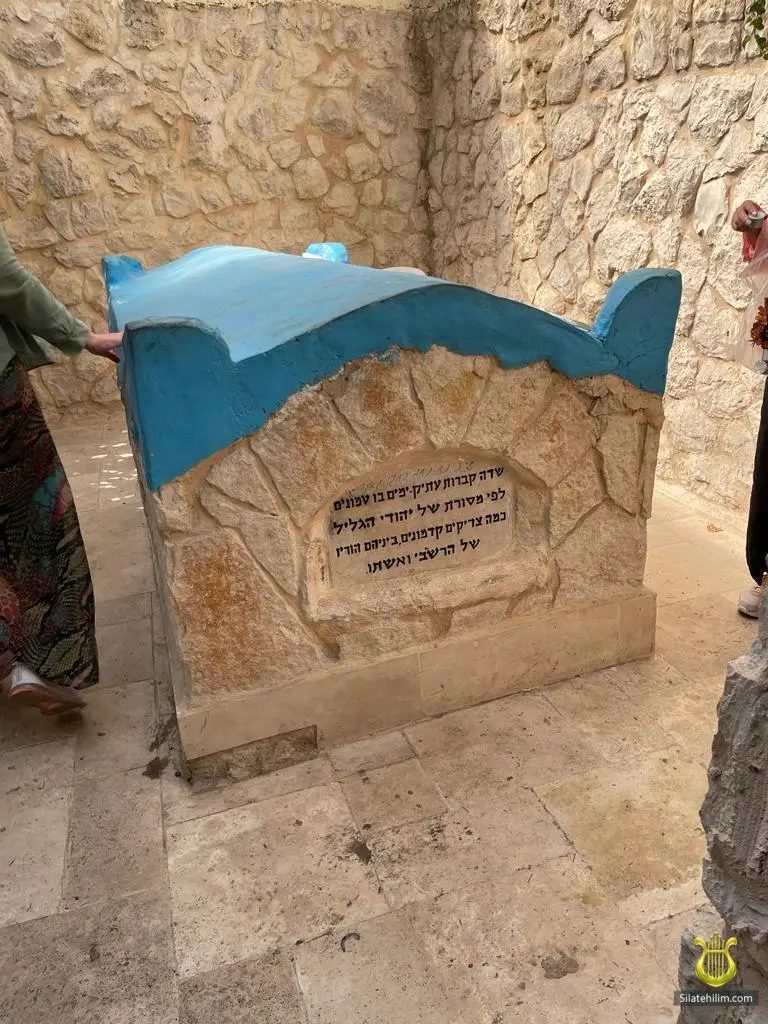
Rabbi Yochai was the father of the holy Tanna – Rashbi.
The book Nachalat Avot states that Yochai was from the tribe of Yehuda and was one of the greatest men of his generation – wealthy, respected, and close to the ruling powers.
Yochai's wife, Sarah, was from the tribe of Hillel.
Sarah was barren and had no sons. When Yochai saw that many years had passed and she still had not given birth, he began to consider divorce. When his wife Sarah learned of this, she said nothing to him, but continued to fast, give charity, and pray before G-d with a broken heart and tears, that she might be spared from divorce. And G-d heard the voice of her prayer.
It was on the night of Rosh Hashanah that Yochai saw in a dream that he was standing in a great forest among thousands upon thousands of trees – some of them alive and bearing fruit, and some of them dry. He, Yochai, was leaning against a dry tree. Yochai lifted his eyes and saw a man whose appearance was very frightening, carrying what looked like a jug full of water. The man went throughout the forest and watered several of the dry trees. He passed by other trees and comforted them even though they were dry, without watering them. When he reached the tree against which Yochai was leaning, he took from his lap a small saucer full of living water and watered the tree. Yochai noticed that a blessing had been poured out with that small amount of water; he grew very proud, and it spread over the whole area around the tree he was leaning against. Soon the tree bore fruit and grew very large. Yochai was overjoyed at the sight he saw in his dream, and in his joy he exclaimed: "Moshivi akeret habayit em habanim smeicha, halleluyah" - (He transforms the barren woman who sits at home into a joyful mother of children. Halleluyah).
He told his dream to his wife and said to her: "I had a dream, and its meaning, it seems to me, is simple: the forest is the world, and the trees are women – some of them bear fruit, and some of them are barren. On Rosh Hashanah, some of them blossom, and some remain barren. You are the tree against which I was leaning, which I watered from the source of blessing, so that you would bear righteous and wise sons. But there is one thing I still do not understand: why did the man water all the other trees from a jug, but water the tree I was leaning against from a saucer?"
Sarah, his wife, said to him: your puzzlement is justified. Well then, let me go to the holy Rabbi Akiva, tell him the dream, and he will reveal its meaning to us. Her husband Yochai said to her: "That is good. Let us both go to him together and tell him the dream, and through the holy spirit with which G-d has graced him, he will tell us its interpretation.".
At the end of Rosh Hashanah, the two of them went to the holy Tanna, Rabbi Akiva. Yochai told him his dream, and indeed Rabbi Akiva interpreted it: know, Yochai, that your dream is a parable about barren women, and your wife Sarah is one of the barren ones, and it was only her prayers and the tears she shed before G-d that vindicated her, so that she will cease to be barren and will give birth. The saucer that you saw is the saucer filled with the tears she shed for the sake of having sons.
Rabbi Akiva turned to Sarah and said: "This year you will conceive and bear a son who, through his wisdom and deeds, will illuminate Israel."
Yochai and his wife Sarah rejoiced greatly at Rabbi Akiva's words and went home in peace. Yochai then knew his wife, and indeed she conceived and gave birth to a son on Shavuot, the day the Torah was given to Israel. The house was filled with light from the greatness and splendor surrounding him, and all who saw him knew that he would eventually shed great light upon Israel. His parents rejoiced greatly over him and praised G-d, gave charity, and held a great feast on the day of his birth, naming him Shimon, because G-d had heard the voice of his mother's prayer and the sound of her weeping.
From that day on, they watched over him and guarded him from all impurity, raising him in holiness and purity. When he began to speak, he was taught only holy words. At the age of five, he was sent to the Beit Ulpan that Rabbi Gamliel had founded in Jerusalem, and he became a source of strength there. Even as a small boy, he was already posing difficult questions to Rabbi Yehoshua ben Chananiah and Rabbi Gamliel. And so he grew in Torah until he became great.
Yochai was friends with Rabbi Pinchas ben Yair, and they arranged marriages between their children.
Rabbi Yochai and Rabbi Shabtai
In the last year of the Baal Shem Tov's life, one Shabbat, he sensed that there was a special joy in Heaven, caused by an elderly Jewish bookbinder named Shabtai. At the conclusion of Shabbat, using "kefitzat haderech" (the miraculous shortening of the way), he instantly covered a great distance and arrived with his disciples in Shabtai's town. Shabtai told the Baal Shem Tov that he had earned nothing all week, and that on Shabbat he would simply have to go hungry and sit without light. But he had instructed his wife not to ask anyone for help, as that was his principle. However, when he returned home from Shabbat prayers, he saw that lights were burning in his house and the smell of Shabbat dishes filled the air. He grew angry at his wife for not listening to him, but she told him a miracle had happened: while sweeping the floor, she had found her husband's old gold button that had rolled away and been lost. She sold it and was able to prepare everything for Shabbat with the proceeds. Shabtai was so overjoyed by this miracle that he broke into dance. The Baal Shem Tov said that it was precisely this joy that had caused such celebration in Heaven. Shabtai and his wife had no children, and the Besht blessed them, promising that a son would be born to them, and asked that the boy be named after him, since by the time the boy was born, he himself would no longer be in this world. Thus the Maggid of Kozhnitz was born. From childhood he was of frail health, often ill, and spent much time in bed. Even in summer, a bearskin was placed under his feet so that he would not catch cold. Nevertheless, during prayer special powers would come upon him; he often served as chazzan, and the sounds of his prayer could be heard from a great distance. The Maggid was an outstanding expert in Kabbalah, composing commentaries on various Kabbalistic works as well as on the writings of the Maharal of Prague. He studied under the great Maggid of Mezeritch, and after his passing, under Rabbi Levi Yitzchak of Berditchev and the Rebbe Elimelech. Every day he received many people, including non-Jews and nobility close to the court of Tsar Alexander I. He was a miracle worker, reconciling families that had quarreled. In the last year of his life, together with the Chozeh of Lublin, he made the famous attempt to bring Mashiach into the world.
Once, on Simchat Torah, he was filled with a special joy. He related that in Gan Eden, the palace of his father Shabtai and the palace of Yochai, the father of Rashbi, stand next to each other, and what distinguishes both of them is that their sons became greater than they were. Once Shabtai asked Yochai to take him along on Lag BaOmer to the palace of Rabbi Shimon, for the celebration there. In return, Yochai promised to bring Shabtai on Simchat Torah to his own son, the Maggid of Kozhnitz. "Today he fulfilled his promise, and they are both my guests," said the Maggid of Kozhnitz.
May the merit of this tzadik protect the people of Israel!
(https://www.arachim.org/ArticleDetail.asp?ArticleID=307)
Gallery