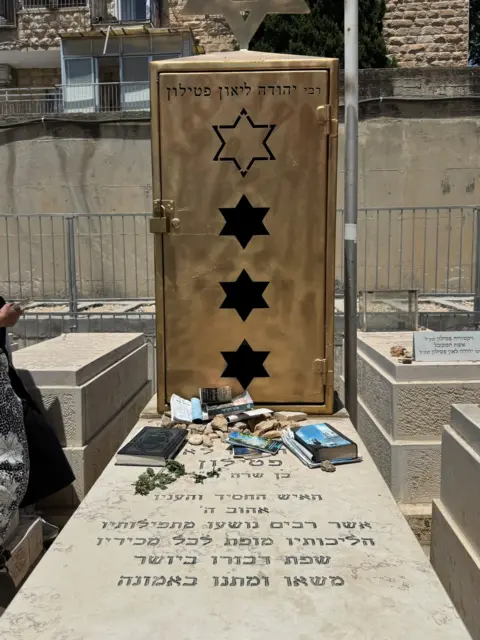
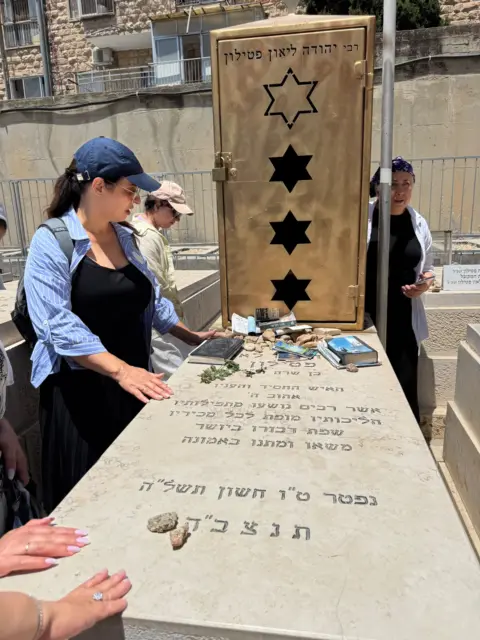
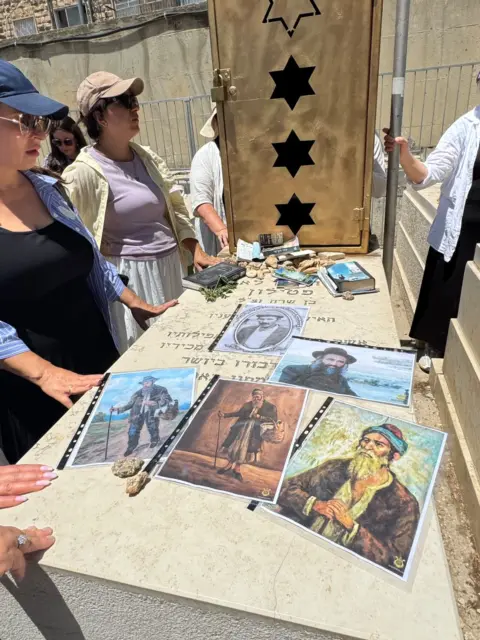
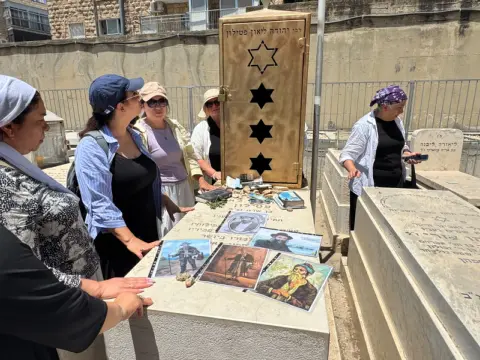
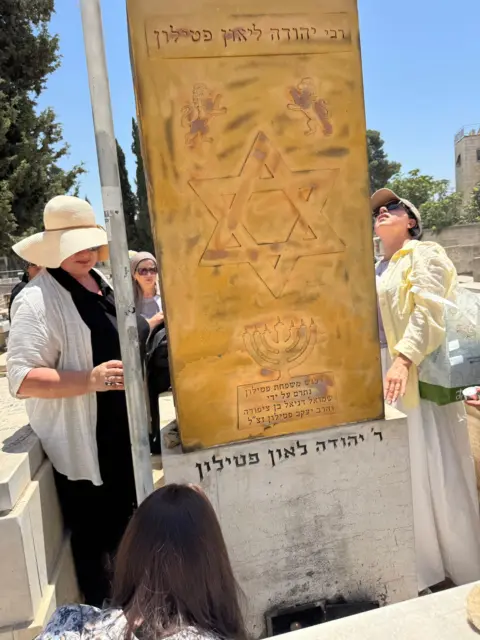
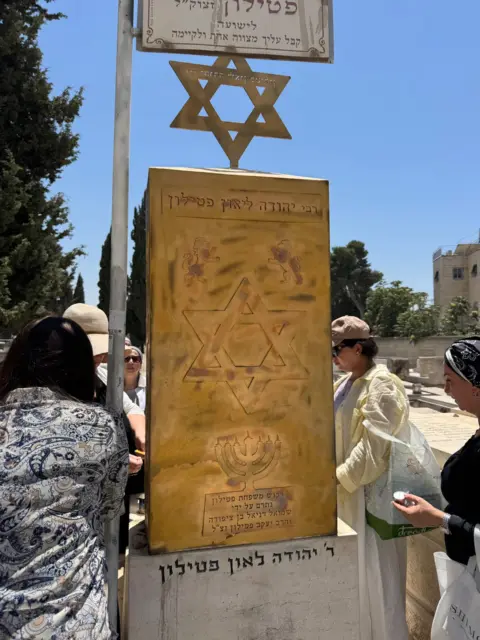
Grave
Yehuda Leon Patilon (Lamed-Vav Tzadikim)
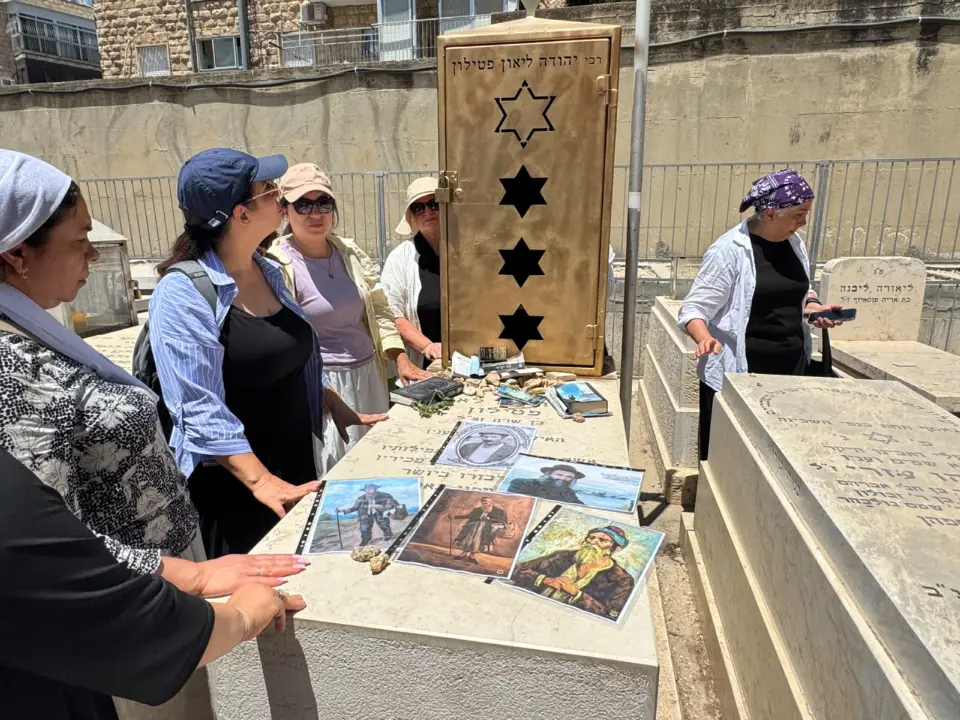
Yahrzeit (Hillula)
- 15 Cheshvan — Rabbi Yehuda Leon Patilon - "The Holy Painter" - A Hidden Tzadik
Rabbi Yehuda Leon Patilon (1905-1974) – the "Holy Artist" – a Hidden Tzadik from the circle of craftsmen.
Yahrzeit – 15 Cheshvan
Resting place – Jerusalem, Har HaMenuchot (Beit HaChaim), Sanhedria
He was one of the 36 hidden tzadikim (Lamed-Vav Tzadikim) from the circle of kabbalist craftsmen (in the year 1960) in Israel, who studied the hidden Torah together. They bore names according to their trade:
"The Shoemaker" – Rabbi Yaakov Moshe Rabikov
https://silatehilim.com/events/22-тишрея-йорцайт-илула-рабби-моше-яаков/
"The Janitor" – Rabbi Yosef Voltuch
https://silatehilim.com/events/20-ияра-йорцайт-рабби-йосеф-волтух-дво/
"The Tiler" – Rabbi Avraham Fish
https://silatehilim.com/events/13-элула-йорцайт-рабби-йехиэль-авраам-фи/
"The Milkman" – Halban – Rabbi Chaim Avishalom Cohen Perachya
https://silatehilim.com/events/12-ава-йорцайт-илула-хальбан/
Rabbi Yehuda Leon Patilon was born in Salonika, Greece (1905-1974). He studied under his grandfather, who was one of the greatest kabbalists in Salonika, and on every matter he turned to Ha-Shem, blessed be He, as a son turns to his father. He made aliyah to Eretz Yisrael and lived in the Shabazi neighborhood of Tel Aviv-Yafo.
He earned his living as a painter, but he never painted the female form. Because of his difficult financial situation he did not marry until nearly 40, when, after receiving a blessing from the kabbalist Rabbi Hillel Simchon, he married a young woman named Victoria from the Nissan family. Weary of all worldly pleasures, content with little, he served G-d with joy and was one of the hidden tzadikim.
He would pray before the stars came out, recite the Shema and lie down to sleep, only to wake at midnight to recite Tikkun Chatzot in tears, study Mishnayot and the Zohar, immerse in the mikveh, and then say the morning prayers. He prayed simply, constantly shedding tears, ate very little, and worked only a few hours a day to support his household, while his wife helped him sell his paintings — yet their livelihood remained meager. He was once awarded a large cash prize for his paintings, but he refused to travel to Paris to collect it. He always kept the Name of Ha-Shem before his eyes, took great care to guard his eyes — "Shmirat Einayim" — and held that every Jew must safeguard three things: the Brit, modesty, and speech.
Through diligent study of Torah he knew by heart the entire book of Tehillim, as well as Mishnayot and the Zohar. He was known as a "Baal Mofet" (miracle-worker) and as one to whom angels revealed the future. Souls that had departed this world would come to him so that he might grant them tikkunim (rectifications), and he understood the language of animals, in which souls would beg him for healing.
He loved every Jew, spoke with everyone who came to receive his blessing and advice, and gave away to charity the money that people brought him. Once, sitting at home, he saw an angel sitting beside the grave of Benayahu ben Yehoyada, wearing a hat, khaki-colored trousers, and holding a book of kavanot (intentions) in his hand — and he asked two of his students to take him to that place so he could see it up close.
Twice a year he organized a trip with his companions to the hillula of the Rashbi in Meron, and from the moment of his arrival in Meron he would give charity to everyone. After a stroke left part of his body paralyzed, he refused to go to a hospital so that no nurse would touch him, and he assured his wife, who devotedly cared for him, that she would be with him in Heaven. When he was hospitalized, he said that three weeks after the festival of Sukkot he would leave this world, and exactly three weeks from the first day of Sukkot in the year 5705 he returned his soul to the Creator.
His paintings were realistic — the figures that often appear in his landscapes carry a somewhat mysterious quality (for example, when one of his paintings shows a man carrying baskets, this usually alludes to his close friend, the hidden tzadik "the Janitor" — Rabbi Yosef Voltuch, who is often depicted with baskets, traveling to holy sites in the Galilee).
The magazine "Mishpacha" has often published astonishing stories about his knowledge of Kabbalah and his encounters with Eliyahu HaNavi, told by people who, through the "Holy Artist," merited salvation.
May the merit of the Tzadik protect Am Yisrael!
Gallery