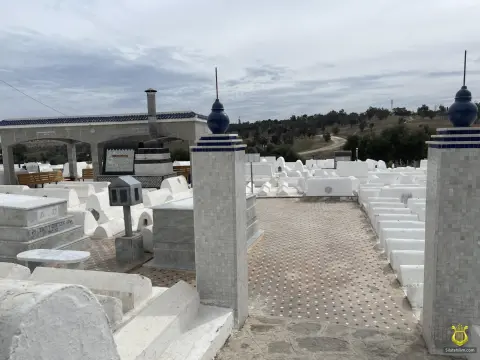
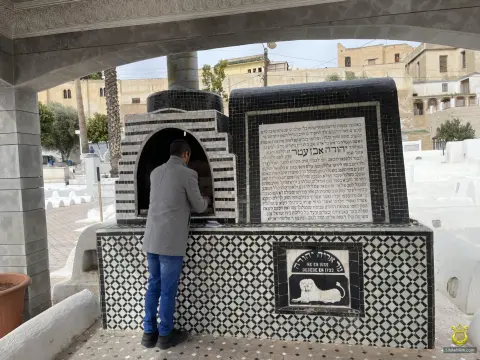
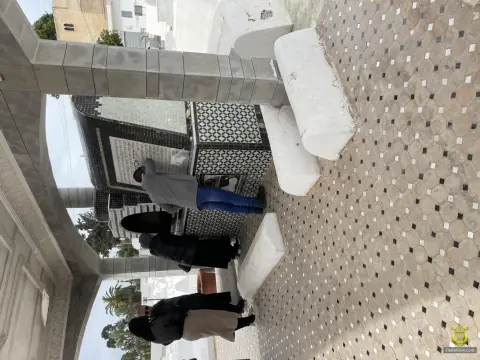
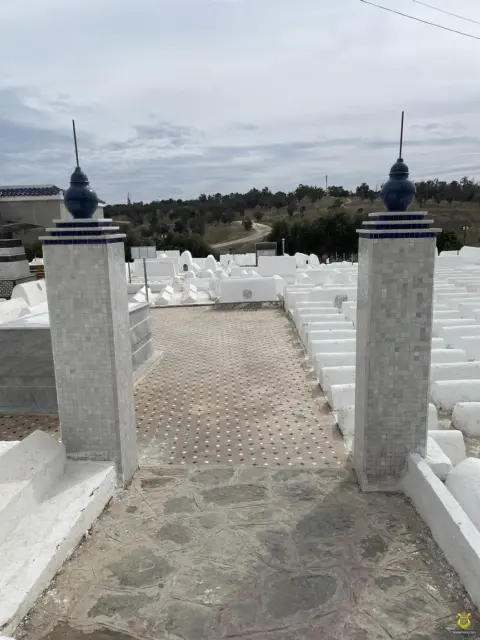
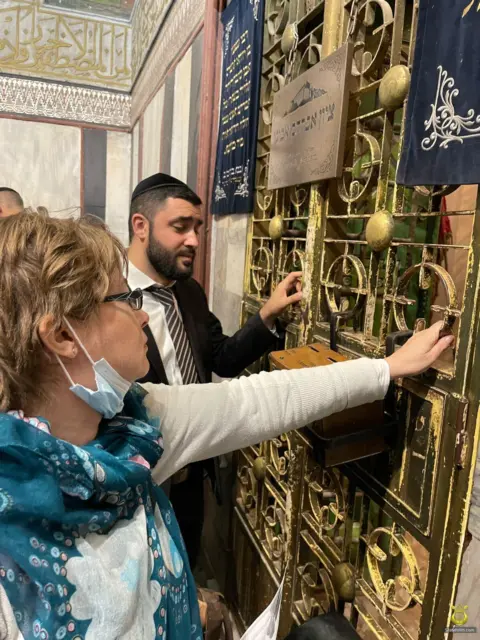
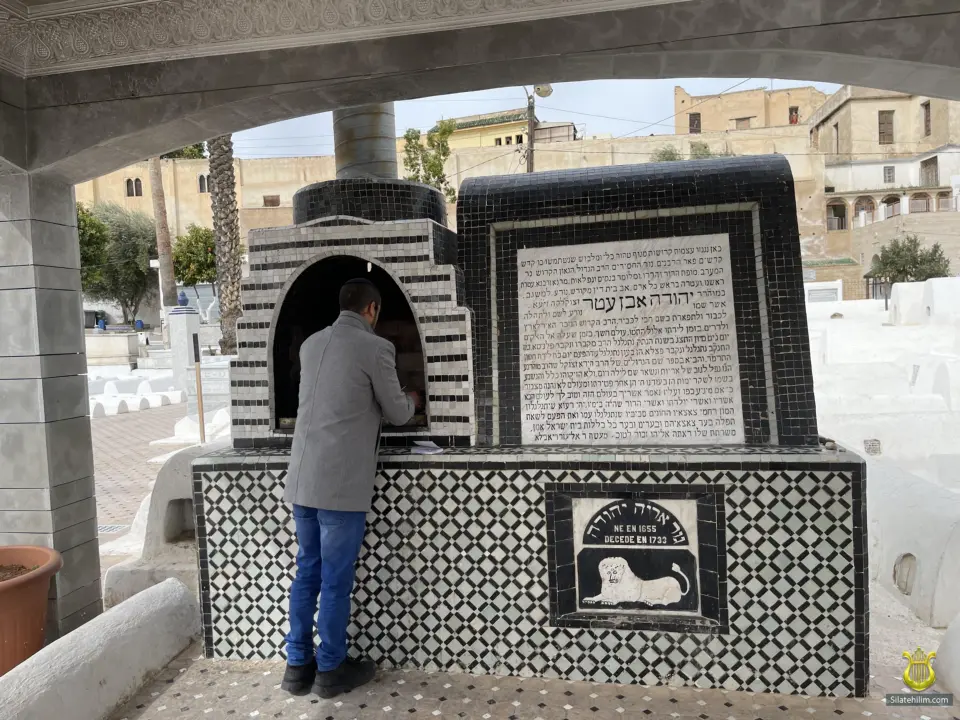
Grave
Yehuda Ibn Attar
Fes
Rabbi Yehuda ben Yaakov Ibn Attar studied under Rabbi Vidal Tzarfati and Rabbi Menachem Serero.
Yahrzeit - 19 Sivan Resting place - Fes, Morocco - Cimetière Israelite de FesAmong his students were Rabbi Eliyahu Ha-Tzarfati and Rabbi Shem Tov ben Amuzeg.
His surname "Attar" means "perfumes" in Arabic, as his ancestors were engaged in selling perfumery.
He was the grandfather of the Or HaChaim HaKadosh.
At a young age he was appointed judge in the city of Fes. Known as a genius and well-versed in all areas of Torah, he wrote books on halachic matters.
During the persecutions of 1701, when he came to the city of Meknes, Rabbi Moshe Toledano and his brother Rabbi Chabib Toledano treated him with great respect.
He earned his living as a jeweler, making necklaces and rings from gold and silver during the day. At night he studied Torah and received revelations from Eliyahu Ha-Navi, and during holidays the entire community would come to his home to kiss his hands and receive his blessing.
His descendant, Rabbeinu Chida, wrote about him that he was a master of miracles, and miracles were performed in his name both during his lifetime and after his death... and that he heard from the sages of the West that he was a holy man of G-d.
By order of the governor of Morocco, he was thrown into prison, and when the Jewish community did not have the money necessary for his ransom, the governor ordered him thrown into a pit with hungry lions. And how astonished the Muslims were when the next day they witnessed the following scene: the lions, instead of tearing apart the Jew who had been thrown to them, sat obediently around Rabbi Yehuda and listened to Divrei Torah from the mouth of the tzadik.
After he spent a day with the lions and was saved, Jews and gentiles alike began to revere him, calling him "Rabbi Alkabir" [our great rabbi], swearing oaths by his name, and those who swore falsely could die.
After the introduction of high taxes and persecution of Jews in the city of Fes, he moved to the city of Meknes (Morocco).
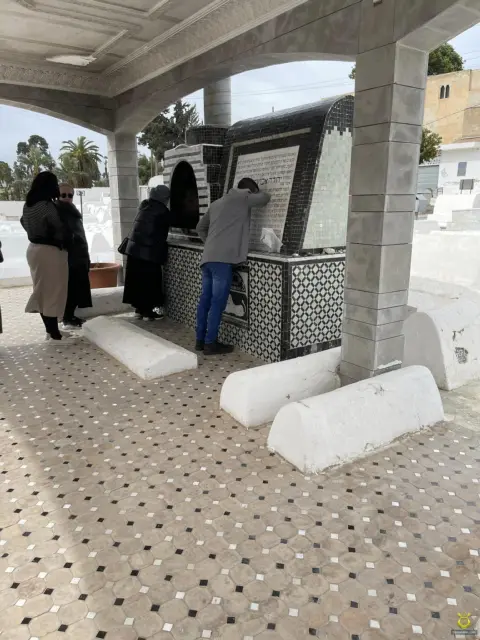
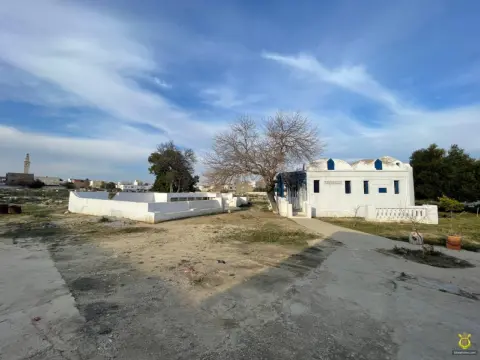
He passed away from this world in the year 5493 (1733) at the age of 77.After his death he was buried in Beit HaChaim in Al-Mellah, but when the Jews left this place and resettled in Kasbah de Zirara, they took his bones with them and buried him in Alghis. When the Jews returned to Al-Mellah, they brought his bones back. When the King of Morocco took over the territory of the cemetery located near his palace and gave the Jews a new burial place, they again moved his bones to their current resting place - in Fes.
The False Oath Once Rabbi Yehuda Ibn Attar, head of the rabbinical court in the city of Fes, who lived 300 years ago, arrived in Tunis. There lived a Jew there who used to borrow money from Arabs, invest it in business, and then share the profit with the creditors. Once this Jew borrowed a rather large sum from an Arab, hid the money among barrels in the cellar, and denied the very fact of the loan. The Arab summoned him to court, but the Jew denied in court as well that he had received the money. The judge demanded that the Jew confirm his testimony with an oath. The Arab insisted that the Jew swear in the name of Rabbi Yehuda Ibn Attar. The Jew allowed himself to deceive the Arab by confirming his testimony with a false oath. The Arab returned home upset, while the Jew decided to celebrate his easy gain by inviting acquaintances and friends to a feast. To bring up wine, he went down to the cellar with a candle, poured the wine into jugs, and went back upstairs, forgetting the burning candle in the cellar. The flame of the candle set fire first to a wooden shelf, then to sulfur that was stored in the cellar. As a result, the house together with all its contents burned down. The Arab saw in this the hand of the Creator. He, of course, lost his money, but the Jew also did not escape punishment for the false oath! The Arab went to Fes to tell Rabbi Yehuda about the fate of the Jew who had falsely sworn in his name, and as a sign of respect he offered the rabbi a gift. Rabbi Yehuda did not want to accept the gift, since it was prompted by the misfortune that had befallen the Jew, and so he distributed the money to the poor. If a person who swears by the name of a tzadik is punished so severely, what punishment awaits one who swears falsely by the Name of the Creator! Help In the court of the city of Fes in Morocco, Rabbi Yehuda Ben Attar was returning home for lunch after a difficult court session. Rabbi Ben Attar was absorbed in thoughts about the case under review, and the testimonies given in court and the verdicts in similar cases passed before his eyes, when suddenly a coal merchant approached him and asked for his help and kindness. "Could you watch over my shop while I go home to eat?" Rabbi Yehuda Ben Attar agreed without hesitation: "Gladly, my son, go and eat your bread with joy," - and sat down at the door of the shop. A few minutes later, Rabbi Yaakov Ibn Tzur (Yavetz) - a member of Rabbi Ben Attar's court - was walking down the street and was surprised to see the great judge sitting at the door of a coal warehouse. "Your Honor, what happened," to which Rabbi Ben Attar replied: "The owner of the shop asked me to watch his shop while he goes to have a bite to eat." Rabbi Ibn Tzur was astonished: "But what about the honor of the Torah?! What about the honor of the head of the court sitting at a coal warehouse?!" Rabbi Ben Attar calmly answered him: "Thanks to the coal seller, I was able to understand a certain matter in the Gemara." Seeing the puzzled look on Rabbi Ibn Tzur's face, Rabbi Yehuda explained: "According to the Gemara, Rabbi Yehuda HaNasi was very humble: 'Whatever anyone tells me, I will do.' Isn't this considered the pinnacle of humility and devotion? Isn't it obvious that if a person needed help, Rabbi Yehuda HaNasi would come to his aid? But now I understand the words of the Gemara. When a poor man asked for charity from Rabbi Yehuda HaNasi, who was very wealthy, of course he gave to him. When Rabbi Yehuda HaNasi was asked a halachic question, of course he answered. It is understood that even if he were asked to do something that would affect his dignity - he would still fulfill the request. If the rabbi of all Israel, of such a level, behaved this way, then how can I behave any differently?" May the merit of the tzadik protect Am Yisrael! (https://www.mytzadik.com/tzadik.aspx?id=267)Gallery