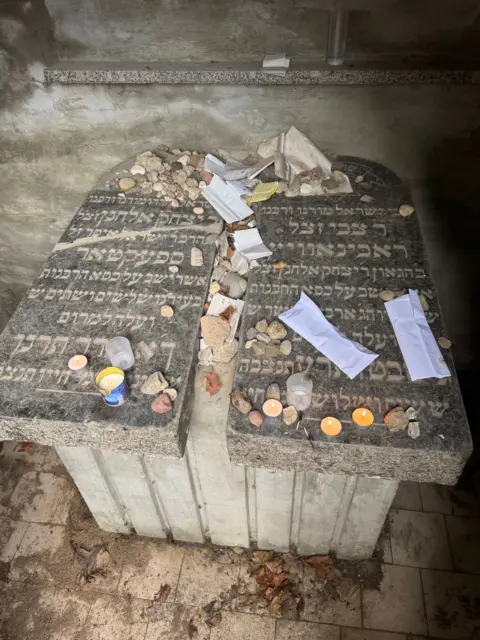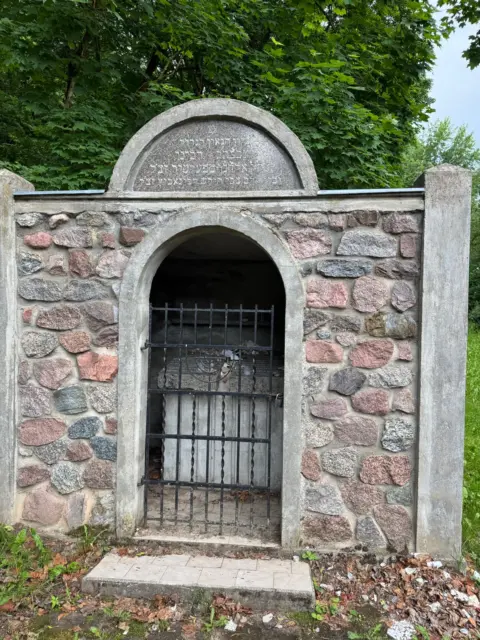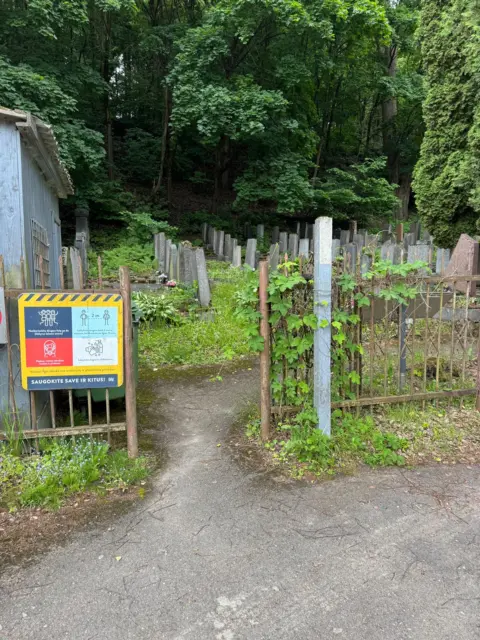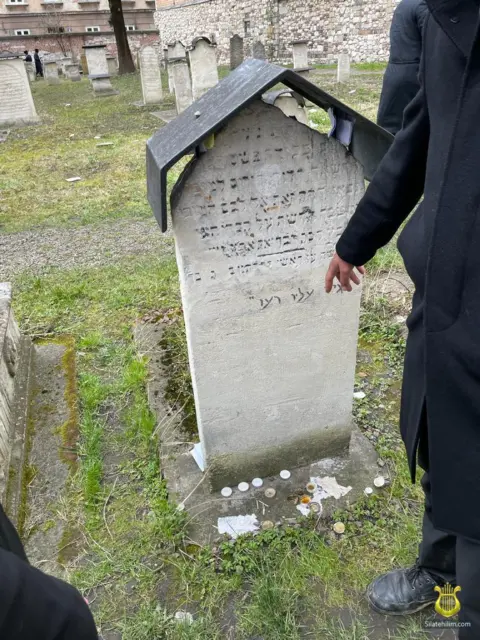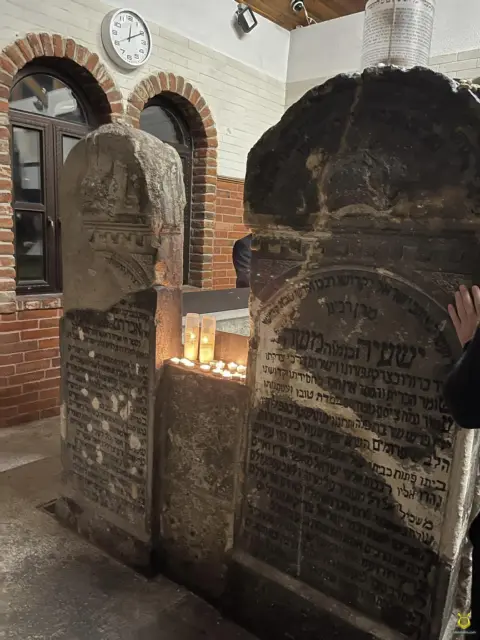

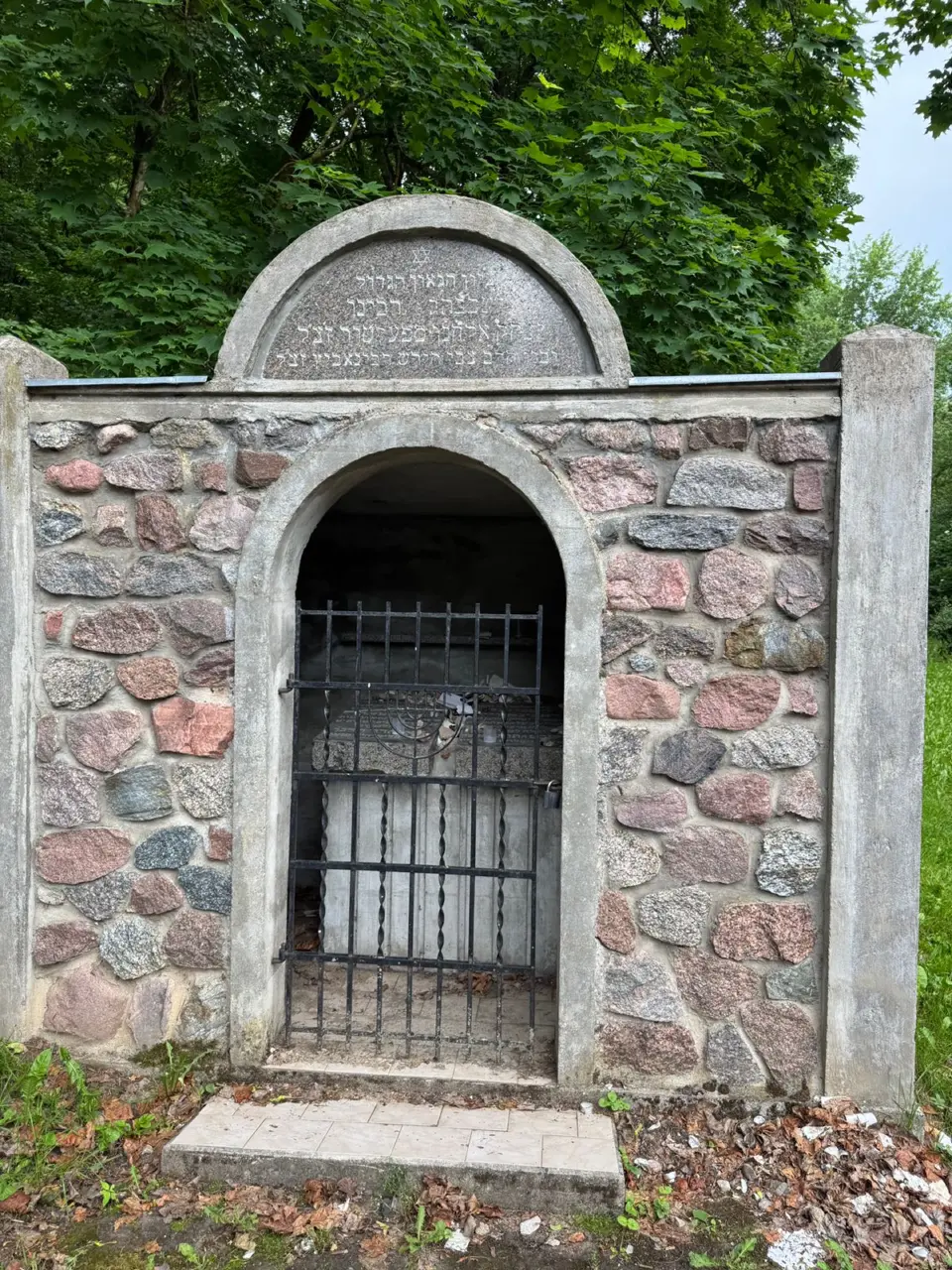
Grave
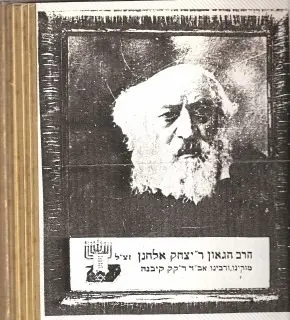
Yitzchak Elchanan Spektor
Yahrzeit (Hillula)
- 21 Adar — Rav Yitzchak Elchanan Spektor
Rabbi Yitzchak Elchanan ben Yisrael Isser Spektor (1816-1896)
Yahrzeit — 21 Adar
Burial place — Kaunas (Kovno)
Rabbi Yitzchak Elchanan Spektor was one of the most renowned rabbis and Talmudic sages of the 19th century. One of the greatest poskim of the 1800s, he was called "Rashkabahag" — רבן של כל בני הגולה, "the Rabbi of all the sons of the exile." He was especially celebrated for his efforts to find solutions for agunot — women left without a husband and without the ability to remarry.
He was born in Reshe, in the Grodno province, then part of the Russian Empire. His father, Yisrael Isser, was the rabbi of Reshe and Rabbi Yitzchak Elchanan's first teacher. The young Yitzchak Elchanan achieved great success in his study of Talmud and soon became known as a prodigy. After marrying at the age of thirteen to Sora Reizel Yezerski, daughter of Leizer-Itzko and Bluma Yezerski, he settled in the town of Vilkoviske, where his wife's relatives lived, and he and his wife continued to live there for six years.
It is told that in his youth he wanted to give up his studies in order to help support his family. One night he dreamed of the Heavenly Court, where he was told, "You have killed." He asked, "Whom?" And he was answered, "You have killed the great rabbi you could have become." After this he returned to Torah study with tremendous energy. This story is told as mussar — as a lesson in how a person must never "kill" his own potential. He was not only a rigorous genius in halacha, but also a rabbi of immense compassion.
In a year of famine, he permitted temporary leniencies so that the poor would not suffer, and in general he sought a path to relief where others saw only prohibition. He received a large dowry from his father-in-law to invest, so that he could continue his studies. For a time he studied under Rabbi Eliyahu Shik, and then under Rabbi Binyamin Diskin, rabbi of Vilkoviske, who was so impressed with him that he paired him in study with his beloved son, the prodigy Rabbi Yehoshua Leib Diskin, who would later become a widely renowned chief rabbi. Rabbi Yitzchak Elchanan Spektor received his rabbinic ordination from Rabbi Binyamin Diskin, as well as from the great Gaon Rabbi Yitzchak Isaac Chaver, rabbi of Tiktin and Suwalk.
In 1837, when Rabbi Spektor was only twenty years old, he was forced to seek employment, since his dowry had been lost due to his debtor's bankruptcy. He became rabbi of the town of Sabelin, near Vilkoviske. Two years later he went to the town of Karlin, where he met the famous Rabbi Yaakov Bruchin, chief rabbi of Karlin and author of "Mishkenos Yaakov" and "Keilat Yaakov," who was considered one of the outstanding rabbis of Russia. Rabbi Yaakov Bruchin was so impressed with Rabbi Yitzchak Elchanan that he recommended him to the community of Bares (Bereza), which hired him as its chief rabbi. His reputation in communal affairs and rabbinic rulings grew rapidly. In 1846, Rabbi Spektor was appointed chief rabbi of Nishvez in the Minsk province.
In 1851 he accepted the position of chief rabbi of Novogrudok. In 1864 he was appointed chief rabbi of Kovno, the most prominent rabbinic position at the height of 19th-century Lithuanian Jewry. Rabbi Spektor held this position until his passing in 1896. Rabbi Spektor was a tireless worker, and during the last forty years of his life, as he steadily became more and more recognized as the outstanding rabbinic authority in Russia, he maintained an extensive correspondence with rabbis, communities, philanthropists, and representatives from many regions of the world who sought his advice and guidance on all matters concerning Jews and Judaism. His sound reasoning and love of peace made him truly one of the great leaders of Russian Jewry.
He left behind great Talmudic works, published under the titles Be'er Yitzchak, Ein Yitzchak, and Nachal Yitzchak. Rabbi Yitzchak Elchanan was in close contact with all the developments in the Holy Land and among the Jewish communities living there. He collaborated with Rabbi Shmuel Salant (1816–1909), chief rabbi of Jerusalem, on all pressing matters concerning Palestine and the welfare of the Old Yishuv. He assisted Rabbi Salant with the charitable organization of Rabbi Meir Baal HaNes and maintained an active correspondence on matters of charity.
Rabbi Yitzchak Elchanan passed away in Kovno on March 6, 1896. He was mourned by Jews throughout the world. May his memory be a blessing.
Segula at the Grave
Since Rav Elchanan was, during his lifetime, a great "matir" — able to untangle difficult knots according to halacha — people pray at his grave in Kaunas for finding the right solution to a difficult matter, for release from a tangled situation, for a shidduch, for children, for favor in court or with documents, and so on.
Prayer to Recite After Lighting a Candle at the Grave of Rabbi Yitzchak Elchanan ben Yisrael Isser Spektor
בזכות הצדיק רבי יצחק אלחנן בן רבי ישראל איסר ספקטור, שיתמתקו הדינים ויפתחו שערי רחמים וישועה
"Bi-zchut ha-tzadik Rabbi Yitzchak Elchanan ben Rabbi Yisrael Isser Spektor, she-yitmatku ha-dinim ve-yipatchu sha'arei rachamim vi-yeshua" — (In the merit of the tzadik Rabbi Yitzchak Elchanan, son of Rabbi Yisrael Isser Spektor, may harsh judgments be sweetened and may the gates of mercy and salvation be opened).
Stories of the Tzadikim
Once Rav Spektor and the Netziv traveled to St. Petersburg on business connected with the pogroms of 1881-82. They had expected to return in time for Yom Kippur, but were forced to delay. The sages went to the only synagogue within walking distance — that of the Cantonists (Cantonists being one of the few categories of Jews permitted to live in the capital). Before Kol Nidrei, an elderly Cantonist stood up and said: "Everyone knows that on this day it is customary to pray for three things — children, life, and livelihood. What should we pray for? Not for children — we are not permitted to marry in the army. For life? But what is the value of our life, when at any moment we may lose it defending this country? For livelihood? The Tsar feeds us. We have nothing to pray for on our own behalf — let us instead pray that the great Name of the Creator be exalted and sanctified!" Everyone wept. Both giants of Torah considered that Day of Atonement the finest of their lives. (Rabbi Aryeh Yudasin)
(https://www.geni.com/people/Rav-Yitzchak-Elchanan-Spektor/6000000021165049419)
Gallery