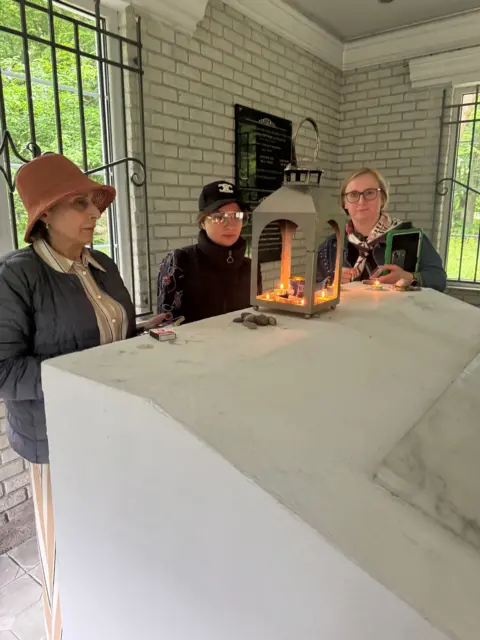
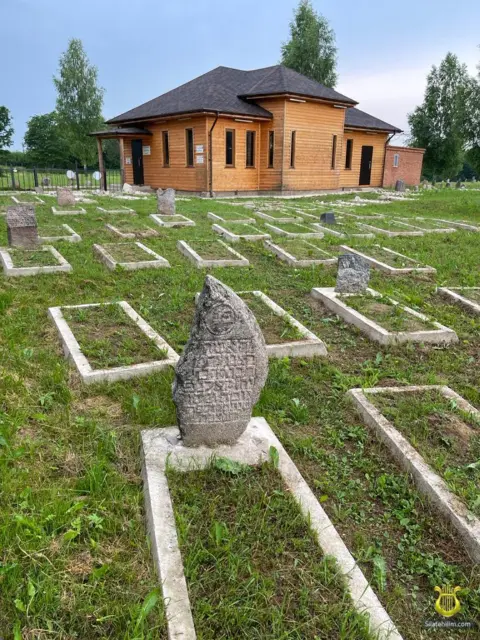
Grave
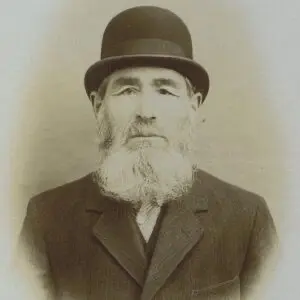
Israel Salanter

Yahrzeit (Hillula)
- 25 Shevat — Rabbi Yisrael Salanter (Rabbi Yisrael Lipkin of Salant)
Rabbi Yisrael ben Zeev Wolf Lipkin — "Israel Salanter" — founder of the Mussar movement. (Lithuania).
Yahrzeit — 25 Shevat
Resting place — Kaliningrad, Russia
He was born on November 3, 1809 in the town of Zhagare (Lithuania). His father, Rabbi Zeev Wolf Lipkin, was a well-known Talmudic scholar. As a boy he studied under Rav Tzvi Hirsch Broide of Salant.
Already at the age of 14 he compiled a collection of Chidushei Torah — a book of insights clarifying difficult passages in the Talmud — and, on the advice of Rav Tzvi Broide, sent it to Rabbi Akiva Eiger in Posen. However, the outstanding rabbi did not respond. Some time later, one of the Jews of Salant happened to be passing through Posen and, at Rav Tzvi Broide's request, visited Rabbi Akiva Eiger to pay respects on behalf of the Salant community. Taking the opportunity, Rabbi Akiva Eiger told the visitor that he had received an extraordinarily talented manuscript from a brilliant young man from Salant, but had not replied, since he was puzzled as to why the work had been sent so far away when there was a sage like Rav Tzvi Broide right there in the town. He was concerned that the author of the manuscript might be in conflict with the community's rabbi and wished to use another authority's response to diminish his standing.
The Match
When Rav Yisrael turned 14, he was matched with the daughter of Rav Yaakov Levi Eisenstein of Salant — a descendant of the author of the book Shnei Luchot HaBrit — the Shelah HaKadosh. Rav Yaakov committed to give a dowry of 300 rubles for his daughter, but unfortunately his affairs fell into decline, and he could not fulfill his promise. Word of this reached one of the wealthiest men in the country, who offered Rav Yaakov 10,000 rubles to break off his daughter's engagement to Rav Yisrael in favor of his own daughter. Rav Yaakov traveled to Zhagare to see Rav Zeev Wolf and told him of the situation. He said he was willing to cancel the marriage agreement if the 10,000 rubles could instead go to Rav Yisrael as a dowry. These words did not sway Rav Zeev Wolf in the slightest, and he called his wife to seal the engagement by setting a wedding date.
Rav Yisrael spent about 18 years in the town of Salant. His wife kept a small shop, enabling her husband to devote himself entirely to Torah study. One of the wealthy men of Salant, Rav Eliyahu son of Rav Nechemiah, provided him and the other Torah sages of the town with the upper floor of his house, where they immersed themselves in study. Rav Yisrael rose to the heights of greatness and knowledge, becoming a renowned sage of the generation from an early age. It was written of him: "Rav Israel Salanter shed new light on ways of studying and understanding."
Founder of Mussar
In the Beit Midrash of Salant, where Rav Yisrael devoted all his time to study, he took notice of the devotion of Rabbi Zundel and began to observe him and his conduct. Rav Yisrael followed Rabbi Zundel, studying and grasping the ways of his holy service and character refinement, carefully watching his every step. When Rabbi Zundel went out of town to study and review the wisdom of fear of Heaven and Mussar, Rav Yisrael would follow him unnoticed, observing his actions and listening to his words. One day Rav Zundel noticed him and said: "Yisrael! Study Mussar and you will attain fear of Heaven!" This encounter left a deep impression on Rav Yisrael's sensitive soul and led to great changes in his service of G-d. Rav Salanter himself said: "When I heard my teacher's call to study Mussar, my heart immediately burned with the desire to follow him." From then on, Rav Yisrael grew close to Rav Zundel and followed him, "holding his hand." And although Rav Yisrael was already a genius and a prominent Torah sage, he regarded Rabbi Yosef Zundel as his teacher and rabbi and learned from him the ways of fear of Heaven and Mussar in the holy service of the Creator, "pouring water on his hands" for many years, until his teacher ascended to the holy city of Jerusalem.
The Epidemic in Vilna
In 1848, events took place that revealed to the entire Jewish community of Vilna the greatness of Rav Yisrael, when he showed an extraordinary attitude toward his fellow man and a readiness to sacrifice himself for his people. That year a cholera epidemic broke out in Vilna, claiming many lives. Caring for the sick was not among the duties of the town's rabbis, but Rav Israel Salanter did not see it that way. In saving lives and showing kindness to others he saw the duty of every Jew, and first and foremost of the sages of Torah. He was convinced that rabbis must be concerned with people's property and physical health just as much as with their spiritual welfare, and he took upon himself the leadership of this effort. Rav Salanter founded a committee to organize measures against the epidemic. He set up a hospital with 1,500 beds, despite the fact that this required substantial funds, and he himself had no source of income at the time. A well-known wealthy Vilna merchant named Apatov offered to provide meat and candles for all those in need throughout the epidemic, but Rav Salanter agreed to this only as an exception, and after much persuasion. It seems he believed that his own efforts had already fulfilled the necessary measure of human striving, and that beyond that one should rely entirely on G-d. His son, Rav Yitzchak, told an interesting story in this connection: "Once, on the eve of Shabbat, the grandson of Rav Yosef Halfan, one of the town's G-d-fearing Jews, fell ill. When the volunteers from the emergency relief committee arrived, one of them, Rav Yaakov Dimitzener, said: 'We will not disobey our teacher, and we will under no circumstances allow a non-Jew to perform the necessary work on Shabbat!' But what was to be done about the honored Rav Yosef Halfan? They led him to the Beit Midrash, and meanwhile chopped wood, heated water, boiled the Shabbat kettle, and prepared everything necessary. After some time, once they were certain the danger had passed, the volunteers returned to the committee. A few days later Rav Yosef Halfan came to them and thanked them for saving his grandson's life. Rav Salanter replied: 'There is nothing to thank us for. He recovered by the will of the Creator.' At this Rav Yosef said cautiously: 'Forgive me, for who am I to instruct you, but the young men, the pride of our town, transgress the laws of Shabbat all too easily…' At this the teacher, apparently fearing that such words might shake the volunteers' devotion to doing everything necessary to save lives on Shabbat, answered angrily (note that Rav Salanter never addressed anyone informally, never grew angry, and never praised himself, but in this case it concerned saving thousands of lives among the people of Israel): 'You are ignorant! Are you the one to teach me what is permitted and what is not? I called upon seventy young men to devote all their time to helping the sick. I promised their fathers and mothers that, with G-d's help, they would all return alive and well. And so it is — all of them are healthy, not one of them fell ill! Are you capable of such a thing?' Immediately after this, Rav Yosef Halfan removed his shoes, sank to the ground, and begged forgiveness."
Segulot and the Teachings of Rav Israel Salanter
"Rachmana Liba Ba'i"
Rav Israel Salanter (may his merit shield us) taught the following segula: in order to focus during prayer, a person should find for himself a verse from the Torah that expresses and conveys precisely his own feelings in communicating with the Creator, and concentrate on it. And it should be a verse that "speaks to you." For example, there are words from the Torah that pierce you, move you, stir feelings within you, while there are other, great words that nevertheless leave you indifferent, untouched. There is an expression from the Holy Zohar in Aramaic — "Rachmana Liba Ba'i":
"Rachmana" ("G-d" in Aramaic), "liba" (heart), "ba'i" (wants) — (G-d wants the heart). He does not expect from us lengthy, superficial prayers. G-d wants us to turn to Him with all our heart, with all our feelings. G-d wants our heart.
https://silatehilim.com/сгула-как-правильно-молиться-или-в-чем/
Stealing Sleep
"Gezel Sheina" — stealing sleep. This expression is used when a person wakes up his fellow without a valid reason. The Chofetz Chaim said that stealing someone's sleep is a more serious transgression than "ordinary" theft, because a person who has stolen an object can repent and return it to its owner, but stolen sleep can never be returned. The book "Meorot HaGedolim" (Rabbi Yisrael, 90) cites a statement of Rabbi Israel Salanter that stealing sleep is forbidden by the Torah. The prohibition against waking one's fellow without good reason is based on the Torah's commandment "you shall not wrong one another" (Vayikra 25:17). From this the prohibition against causing suffering to one's fellow is derived. In addition, one who wakes his fellow without a valid reason transgresses the Torah's commandment "love your fellow as yourself" (Vayikra 19:18).
https://silatehilim.com/почему-нельзя-будить-спящего-человек/
Tehillim 109:31 — When G-d Is Driven Away
— "Ki ya'amod limin evyon, lehoshia mishofetei nafsho" — (for He stands at the right hand of the needy one, to save him from those who judge his soul).
There are people who, in the World of Truth, will be asked: "why did you drive G-d out of your house?" And when they, bewildered, ask: "when was that?" — they will be told: "when a poor man came to your house and G-d was with him — as it is said, 'for He stands at the right hand of the needy one' — you drove out the poor man together with G-d." "You shall surely open your hand to your brother" (Devarim 15:7-8) — "surely open" refers to the poor man who is too ashamed to ask himself; "open your hand" — even to the poor man who demands brazenly.
May the merit of this great tzadik protect our people!
(http://istok.ru/library/5-svet-izrailya-musar-mudretsov-litvy-2-biografiya-r-israelya-salantera-ch-1.html)
Gallery